Note: If you wish to receive, via e-mail, (1) my weekly newsletter or (2) daily copies of these posts, write to me at rrbates1951@gmail.com. Comments may also be sent to this addss. I promise not to share your e-mail with anyone. To unsubscribe, write here as well.
Wednesday
Author Ursula K. Le Guin once contended that, in science fiction, the future is a metaphor for the present. Something similar can be said about historical fiction, in which case it’s the past that’s a metaphor for the present. I’ve just completed two novels in which the U.S. history casts dark light on our tumultuous times, Dennis Lehane’s Small Mercies (2023) and Will Martin’s self-published Surrection (2022). (Warning: the following contains spoilers for both.)
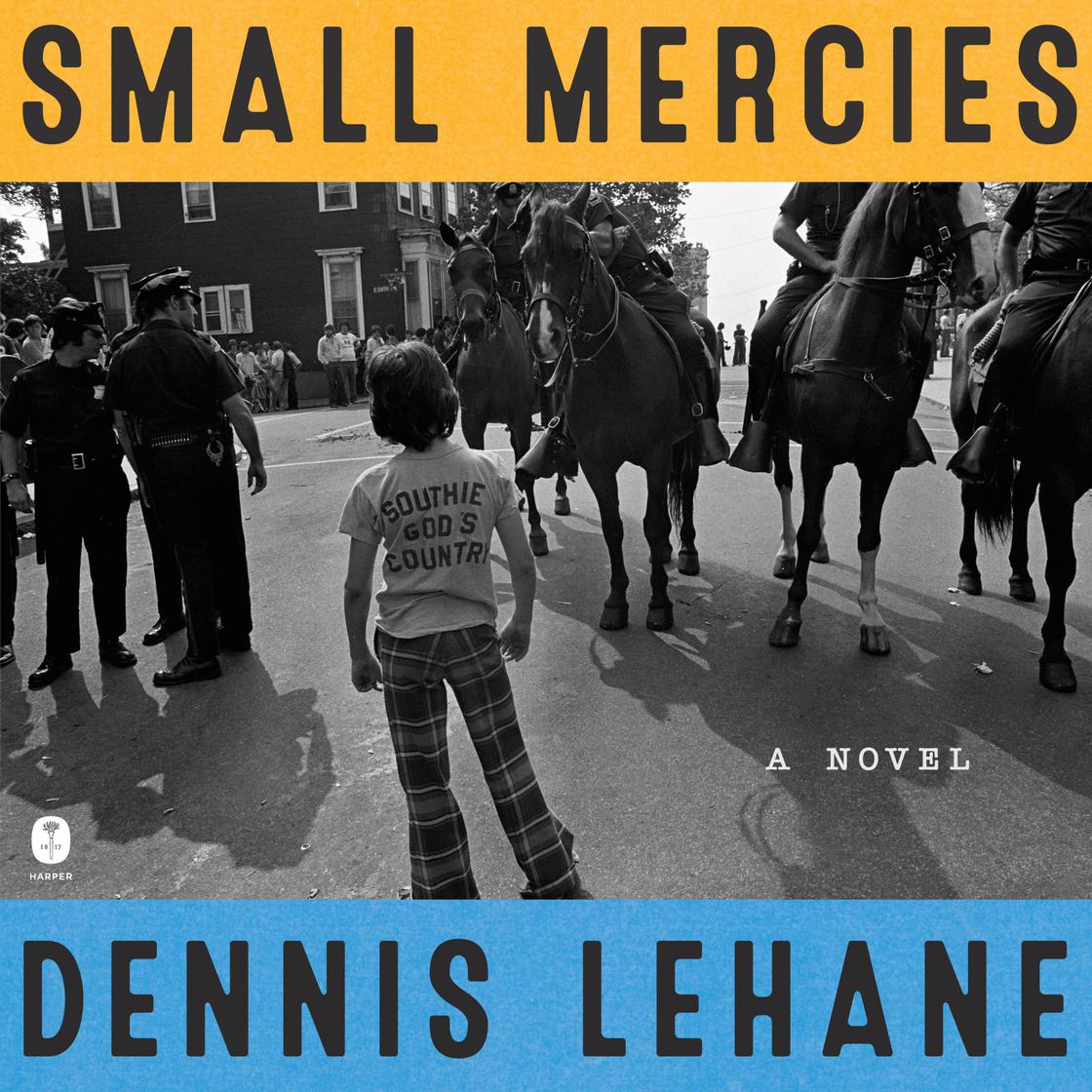
I discovered Small Mercies (2023) on a “Best Mysteries of the Past 25 years” list and then located an audiobook version on Libby. The novel threw me back to the summer of 1974—Julia and I had graduated from college the year before—and I recalled the racial unrest that greeted enforced busing in Boston. At the time I had just returned to Tennessee, where overt racism was alive and well, but it was dispiriting to see it so nakedly displayed in the north.
The novel is not for the fainthearted as the n-word is thrown around with abandon, along with a dozen other racial slurs and stereotypes. One of the novelist’s two protagonists, Mary Pat, is a tough Irish American mother who has unthinkingly imbibed the racism of her Irish neighborhood and then passed it along to her children. Her husband has left her because of the hate, and living as she does from paycheck to paycheck, her bleak life becomes even bleaker when her 17-year-old daughter goes missing.
Desperate to find out what has happened to Jules, who is the one bright spot in her life, she looks everywhere. Then she goes on the warpath when she discovers that the Irish godfather who rules Southie—a man she grew up with—is mixed up in Jules’s murder. She also discovers that he is running the local drug trade, which connects him as well with the death of Mary Pat’s son, who died from a heroin overdose after returning from Vietnam.
Although she faces impossible odds, she is tough herself, with detective Bobby Coyne, the novel’s other protagonist, describing her as “irretrievably broken and wholly unbreakable.” In a doomed Billy Jack-type rebellion, she manages to take down some of those responsible for her daughter’s death before she herself is killed. While one roots for her, there are no moments of easy grace in the novel. For one thing, she learns that her daughter is mixed up in the killing of a Black man whose car breaks down.
Yet even this horrific act includes an act of small mercy, with Jules first speaking up for the man and then killing him with a rock before her friends can subject him to a gruesome death. This is part of the reason why she herself is killed. Coyne observes, “The worst of us has good in him. The best of us has pure fucking evil in his heart. We battle. It’s all we can do.”
Although Coyne is also from Irish Boston, his parents were comparatively enlightened. At any rate, they weren’t racists. As he explains them,
Something about the idea of [racism]—the pure irrationality of it—offended them. They didn’t think black people were necessarily good, don’t get me wrong, they just thought everyone—regardless of what color they were—was probably an asshole. And to say you were less of an asshole because your skin was lighter was reprehensible to them. It just made you a bigger asshole.
Partly because he served in Vietnam, partly because he’s a police officer, Coyne has a clear view of how racism works:
Call them gooks, call them niggers, call them kikes, micks, spics, wops, or frogs, call them whatever you want as long as you call them something—anything—that removes one layer of human being from their bodies when you think of them. That’s the goal. If you can do that, you can get kids to cross oceans to kill other kids, or you can get them to stay right here at home and do the same thing.
As I listened to the book, I sensed that I was encountering some of Trump’s diehard supporters, those to whom he has given permission to indulge in their worst instincts. Lehane wrote the novel in 2023 so he has seen how this permission structure works under Trump. In fact, his description of an anti-busing rally is reminiscent of the January 6 demonstration on the mall.
There’s also a passage that anticipates the rise of ICE. Coyne sees too clear what happens when society starts militarizing the police:
Several of the major weapons companies have been sending urban police departments amped-up military-grade weapons for years. New law enforcement philosophies coming out of L.A. and New York have begun to advocate for special teams of combat-ready police cells. In L.A., the first of these has been given a name, SWAT, and they took on the Black Panthers and the SLA in sustained firefights that armchair John Waynes love to believe put the order back in law and order. In reality, Bobby knows, those gunfights led to limited results, a shitload of property damage, and a new micro-generation of substandard cops who think they can compensate for bad instincts, poor people skills, and limited intelligence with high-powered weaponry.
Small Mercies doesn’t hold out much hope that people will move past their prejudices. Still, even Mary Pat, confronted by the father of the man her daughter helped to injure and kill, accepts rather than defensively rejects an accusation that he levels at her:
You raised a child who thought hating people because God made them a different shade of skin was okay. You allowed that hate. You probably fostered it. And your little child and her racist friends, who were all raised by racist parents just like you, were sent out into the world like little fucking hand grenades of hate and stupidity.
The other book, Surrection, goes back to a time when emotions were even rawer, if that is possible. “Bleeding Kansas” served as an opening act for the Civil War as slaveowners and abolitionists battled over whether Kansas would enter the union as a slave state or a free state. Author Will Martin, a Nashville lawyer and a friend, became interested in the period after reading T.J. Stiles’s biography, Jesse James, Last Rebel of the Civil War, and his novel is a riveting account of the guerilla warfare that occurred before, during, and even after the Civil War.
The novel reminds me somewhat of Cormac McCarthy’s nightmarish novel Blood Meridian. Two historical figures featured by Martin are John Brown and Jesse James. If Brown’s righteous religious fury is hard to take, James’s psychopathic killing is even worse. The bushwhackers (as the southern guerillas are called) even take scalps of their union enemies.
Eventually Jabez, one of their number, is sickened by the carnage and flees. He recounts to his future wife a story that brings to mind the “second tap” that killed two survivors of Trump’s September boat attacks. The noncombatant victims in the book are decommissioned union soldiers who are returning home following Sherman’s southern campaign:
Jabez took a deep breath and filled them in on what had transpired. His voice quavered. “Those Union soldiers on the train were just heading home. They were unarmed. It’s not like they were fighting us in a battle. Nothing would be accomplished by killing them. But Anderson and Clement lined them up and our men shot them down in cold blood, Slaughtered ’em like pigs at a hog killing.
The Christian justification for such behavior is not unlike some of the rationalizing of Trump’s violence that we’re getting from MAGA Christians. Here’s Jabez recounting a conversation with a bushwhacker preacher:
“Preacher said he believed the Yankees are the aggressors, and we are just seeking to keep our way of life, so he said yes he believed God was on our side.
“I said, ‘But what about the Commandment against killing?’
He said, ‘Jaybird, the proper interpretation of the Sixth Commandment is that thou shalt not murder and that’s different from killing in war.’ Then I said, “But did Jesus ever kill anyone? Or command his disciples to kill anyone? They had enemies.’
Cait interrupted. “What did Preacher say to that?”
“Well, he acted like he didn’t hear me. He started to walk away, but I said to Preacher, ‘There’s another thing I would like to ask. What does the Bible say about scalping and cutting off ears and noses and such in a war?’
“Preacher stopped and turned around. For a long time, he didn’t say anything. Then he stroked that red bear and said ‘Jaybird, I do not do those things.’ That’s all he said.”
I’ll share one other excerpt from the book since it shows Shakespeare getting abused as much as Jesus. Frank James, Jesse’s older brother, is relating what he regards as the bloodiest scene in Shakespeare: Gloucester having his eyes poked out in King Lear. When people want to know what lesson to draw, their leader observes, “Maybe the point was you need to be cruel sometimes to get what you want.”
Which indeed is Goneril, Regan and Edmund’s ruling philosophy, as well as that of Trump, Pete Hegseth, and Stephen Miller. “Thou, Nature, art my goddess,” Edmund thunders as he rejects all human constraints.
Both Small Mercies and Surrection use the past to remind us that our current warring is not new. Indeed, it’s remarkable that we achieved as much as we have when it comes to the rights of Jews, African Americans, Native Americans, Hispanics, LGBTQ+ folk, Asians, and, yes, immigrants from Ireland and others who now self-identify as white. Progress has always involved a struggle, and it’s when we become complacent that reactionary forces storm the gates.