Thursday
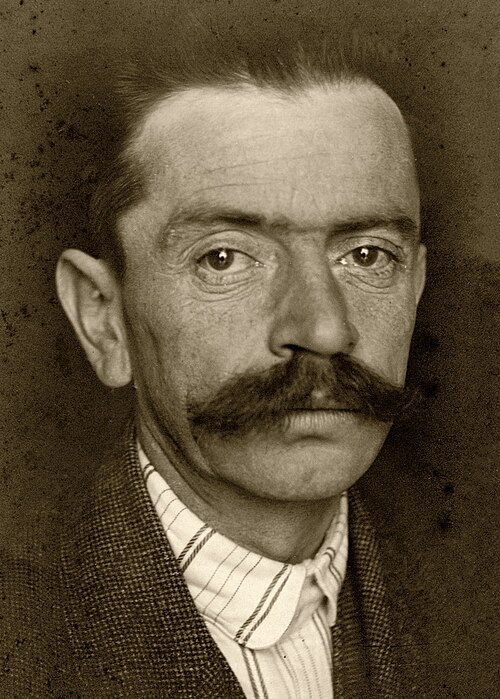
It shouldn’t have taken so long but, after hearing about Ivan Cankar’s short story “A Cup of Coffee” for years, I’ve finally read it. Cankar is Slovenia’s most famous author, and visiting Cankar’s childhood home provided extra incentive.
“Cup of Coffee” is a story of remorse, which reminded me of a Yeats poem I read 53 years ago but that has eluded me ever since. Thanks to Google AI, however, I was finally able to track it down. It in turnhen, since “way leads on to way” (Robert Frost), this poem in turn reminded me of another poem that I loved at that time, D. H. Lawrence’s “The Snake.” Today’s essay is about what all of these poems teach me about painful thoughts.
Often when I am reading or writing, I’ll recall an embarrassing moment from long ago and groan aloud. Julia will ask me about it and always I will refuse to tell her. Perhaps it is too painful, perhaps it is embarrassingly trivial, but in any case I choose to keep it private.
Cankar describes such pain in “Cup of Coffee,” a story that every Slovenian school child has read. Confessing a sin he committed when returning home from his university, the author writes,
Sometimes the sin is forgotten, eroded from your life, drowned in the eventfulness of the days; but suddenly, perhaps in the middle of a beautiful enjoyable day, perhaps at night, it comes back upon you, to weigh down your soul, to pain and burn your conscience as though you have just committed it. Almost every other sin or bitter memory may be washed away with atonement and good thought, except this sin of injustice against someone whom you love. It becomes a black spot in your heart and there it remains.
So what is this “sin”? Cankar, as we saw from his house, grew up in extreme poverty, and he writes about asking his mother for a cup of coffee when she could ill afford it. He was in the midst of writing a story at the time:
One day I craved black coffee. I don’t know how it came to my mind; I simply wanted some black coffee. Perhaps because I knew that there was not even a slice of bread in the house and that much less coffee. Sometimes a person is merciless, cruel.
Mother looked at me with her meek, surprised eyes but would not speak. After I informed her that I wanted some black coffee, I returned to the attic to continue my love story, to write how Milan and Breda loved each other, how noble, divine, happy and joyful they were.—”Hand in hand, both young and fully alive, bathed in morning dew-drops, swaying—”
The sin was committed when she showed up with the cup:
Then I heard light steps on the stairs. It was mother, ascending carefully, carrying a cup of steaming coffee. Now I recall how beautiful she was at that moment. A single ray of sun shone directly into her eyes through a crack in the wall. A divine light of heaven, love and goodness were there in her face. Her lips held a smile as those of a child bringing one a gift. But—
“Leave me alone!” I said harshly. “Don’t bother me now! I don’t want any coffee!”
As he saw the light in her eyes die and the smile on her face disappear, he realized what he has done and tried to rectify the situation:
“Give it to me, mother.”
But it was too late.
Compounding the sin, he never apologized:
As I drank the coffee, I said to myself:
“Tonight I shall speak tenderly to her and make up for what I have done.”
In the evening I could not speak to her kindly, nor the next day.
Time passed and then he had one of those moments I’m describing:
Three or four months later a strange woman brought a cup of coffee to my room. Suddenly I felt a sting in my heart. I wanted to cry out from pain. I shivered, my whole being trembling in stark agony.—For a man’s heart is a just judge; a man’s heart does not concern itself with paragraphs in statute books or trifles.
The writing of the story worked as a confession:
A man may perhaps try to lie to his soul.—”It wasn’t so bad as that. Your restlessness has created a black night out of mere shadows. It was but a trifle, an every-day occurrence.”—Such words are lies, and the man knows it.
And further:
Pardonable is a sin which can be described by word of mouth and atoned for. But heavy, tremendously heavy, is a sin which remains with you—in your heart—indescribable, formless. You confess it to yourself when you tremble in fear before death, or at night when the covers of your bed seem like mountains piled upon you.
There are layers upon layers in the story that I will not go into here. A headmistress friend of mine who has written her dissertation on “Bad Mothers in Victorian Literature” tells me that Slovenians’ relationships with their mothers are particularly charged, and who’s to say what emotional power games get played between the mother and her adult son in this interchange. I want to return now, however, to the issue of painful memories that explode suddenly in the mind, knocking us back on our heels.
The Yeats poem in which I recognized myself is “Vacillation,” which contains the following stanza:
Things said or done long years ago,
Or things I did not do or say
But thought that I might say or do,
Weigh me down, and not a day
But something is recalled,
My conscience or my vanity appalled.
I like the way that Yeats mentions “conscience” and “vanity” in the same line since sometimes it’s not clear which is involved. In Cankar’s case, it appears to be conscience, but perhaps he is also chagrined that he is not the noble person he thought he was. In my own moments of sudden shame, often it is vanity. I think of myself as a rational and controlled person and yet recall moments when I fell short.
The discrepancy between elevated self image and an action that contradicts it marks D. H. Lawrence’s “Snake,” one of my favorite of his poems. Encountering a poisonous snake at an Italian water trough, he has mixed feelings. While inner voices tell him he should kill it, he feels honored by its magnificent presence:
And truly I was afraid, I was most afraid,
But even so, honored still more
That he should seek my hospitality
From out the dark door of the secret earth.
He drank enough
And lifted his head, dreamily, as one who has drunken,
And flickered his tongue like a forked night on the air, so black,
Seeming to lick his lips,
And looked around like a god, unseeing, into the air,
And slowly turned his head,
And slowly, very slowly, as if thrice adream,
Proceeded to draw his slow length curving round
And climb again the broken bank of my wall-face.
So far, so good. When the snake begins to withdraw into its hole, however, Lawrence experiences a sudden feeling of revulsion and acts without thinking:
And as he put his head into that dreadful hole,
And as he slowly drew up, snake-easing his shoulders,
and entered farther,
A sort of horror, a sort of protest against his withdrawing into
that horrid black hole,
Deliberately going into the blackness, and slowly drawing
himself after,
Overcame me now his back was turned.
I looked round, I put down my pitcher,
I picked up a clumsy log
And threw it at the water-trough with a clatter.
A holy moment has been spoiled, and Lawrence is disgusted with himself, just as Cankar is disgusted with himself. From one who prides himself on appreciating nature’s magnificence, Lawrence now sees himself is paltry, vulgar, and mean. He even invokes Coleridge’s Ancient Mariner killing the albatross:
And immediately I regretted it.
I thought how paltry, how vulgar, what a mean act!
I despised myself and the voices of my accursed human education.
And I thought of the albatross,
And I wished he would come back, my snake.
For he seemed to me again like a king,
Like a king in exile, uncrowned in the underworld,
Now due to be crowned again.
With this ending we realize that Lawrence is writing his poem for the same reason that Cankar writes his story: as an act of expiation. Cankar never apologized to his mother and Lawrence can’t apologize to the snake but, by expressing their guilt publicly, perhaps they can they achieve the relief promised by the confessional.
Which leads me to wonder whether, when I groan aloud and Julia asks me about it, I would be better off sharing the moment. Maybe that would loosen the incident’s hold on me.