Wednesday
I’ve turned to Mary Oliver’s “University Hospital, Boston” several times when I’ve had friends in hospitals, and I did so again last week when my dear friend Rachel Kranz was in the Bronx’s Einstein Hospital. The poem notices what I noticed.
For instance, I saw up close the contrast between “intricate machines” that “chart with cool devotion/that murmur of the blood” and “the despair of the mind.” The technology was remarkable, with the nurses wheeling in computer stations, going through various electronic protocols to make sure Rachel received the proper medications, and taking note of every variation in blood pressure and temperature. In contrast, there was the very human patient, fighting against hopelessness as the cancer ravaged her body.
Despite the sophistication of the technology, it wasn’t, in the end, enough. Like the suffering union soldiers who once suffered and died under the front yard’s sycamore tree, I too found myself longing for “tools still unimagined, medicines still unfound,/wisdoms still unguessed at.”
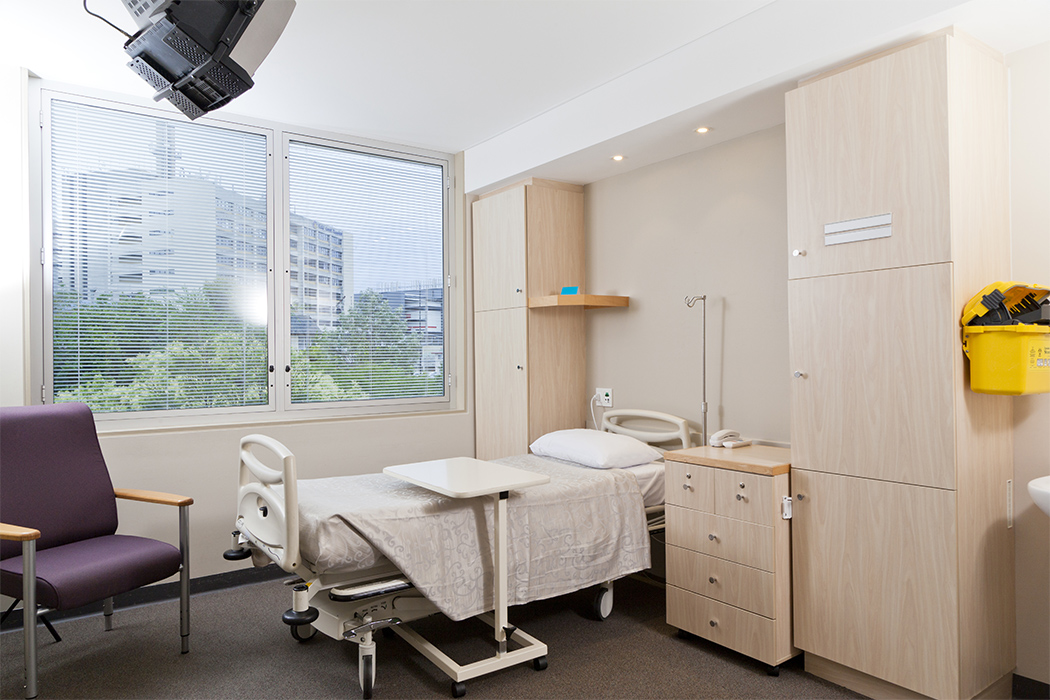
And when Rachel was moved from the oncology ward to the intensive care unit, I could imagine how the room I emptied out would look to a stranger:
Later walking the corridors down to the street,
I turn and step inside an empty room.
Yesterday someone was here with a gasping face.
Now the bed is made all new,
the machines have been rolled away.
Like the poet’s friend, Rachel was high above the city—you could see the Manhattan skyline from her 11th floor room—and like the friend, Rachel too was getting the best of care. Like the poet, I sat holding Rachel’s hand as we assured ourselves that she was getting better. Like the patient, Rachel’s eyes were often grey and missing her customary humor.
Trees function in the poem as images of fertility. With Rachel gone, the world does indeed feel like “a place of parched and broken trees.”
University Hospital, Boston
By Mary Oliver
The trees on the hospital lawn
are lush and thriving. They too
are getting the best of care,
like you, and the anonymous many,
in the clean rooms high above this city,
where day and night the doctors keep
arriving, where intricate machines
chart with cool devotion
the murmur of the blood,
the slow patching-up of bone,
the despair of the mind.
When I come to visit and we walk out
into the light of a summer day,
we sit under the trees —
buckeyes, a sycamore, and one
black walnut brooding
high over a hedge of lilacs
as old as the red-brick building
behind them, the original
hospital built before the Civil War.
We sit on the lawn together, holding hands
while you tell me: you are better.
How many young men, I wonder,
came here, wheeled on cots off the slow trains
from the red and hideous battlefields
to lie all summer in the small and stuffy chambers
while doctors did what they could, longing
for tools still unimagined, medicines still unfound,
wisdoms still unguessed at, and how many died
staring at the leaves of the trees, blind
to the terrible effort around them to keep them alive?
I look into your eyes
which are sometimes green and sometimes gray,
and sometimes full of humor, but often not,
and tell myself, you are better,
because my life without you would be
a place of parched and broken trees.
Later walking the corridors down to the street,
I turn and step inside an empty room.
Yesterday someone was here with a gasping face.
Now the bed is made all new,
the machines have been rolled away. The silence
continues, deep and neutral,
as I stand there, loving you.