Transfiguration Sunday
As today is Transfiguration Sunday, I have been revisiting John Gatta’s illuminating study The Transfiguration of Christ and Creation. As the Sewanee English professor sees it, the vision of Christ being transfigured so that “his face shone like the sun, and his clothes became dazzling white” is not just an account of how the disciples became aware that God was present in Jesus and within themselves. The story also makes clear that God is present within the unfolding process of all creation. In other words, God is not limited to human beings.
Before moving to this third area, however, let’s revisit Matthew’s account of the transfiguration and look at its implications for humanity. Here’s Matthew:
Six days later, Jesus took with him Peter and James and his brother John and led them up a high mountain, by themselves. And he was transfigured before them, and his face shone like the sun, and his clothes became dazzling white. Suddenly there appeared to them Moses and Elijah, talking with him. Then Peter said to Jesus, “Lord, it is good for us to be here; if you wish, I will make three dwellings here, one for you, one for Moses, and one for Elijah.” While he was still speaking, suddenly a bright cloud overshadowed them, and from the cloud a voice said, “This is my Son, the Beloved; with him I am well pleased; listen to him!” When the disciples heard this, they fell to the ground and were overcome by fear. But Jesus came and touched them, saying, “Get up and do not be afraid.” And when they looked up, they saw no one except Jesus himself alone. (Matthew 17:1-8)
Gatta writes that what we learn from this account is that
God wills to make us new, to enlarge our capacity for glory, without destroying the uniqueness of our old personality. Our original human nature is to be fulfilled, not annihilated, even though we know ourselves to be inherently flawed, sinful, and downright quirky creatures.
One of literature’s most powerful depictions of a transfigured human occurs in Dante’s Paradise:
While ascending from earth at noon of the vernal equinox, the pilgrim-narrator in the opening canto of Paradise undergoes an inward transformation when he gazes at his beloved Beatrice who, in turn, reflects the radiance of the sun. He finds himself momentarily elevated (Italian trasumanar) above his normal human nature. Then by the 23rd canto, when he reaches the eighth heaven of the fixed stars, he is able to behold the divine substance of Christ streaming forth its radiance amid the Church Triumphant, much as it had on the mount of Transfiguration.
Gatta cites a passage from “The Transfiguration” by Scottish writer Edwin Muir that seeks to capture what the disciples experienced:
We would have thrown our clothes away for lightness,
But that even they, though sour and travel stained,
Seemed, like our flesh, made of immortal substance,
And the soiled flax and wool lay light upon us
Like friendly wonders, flower and flock entwined
As in a morning field. Was it a vision?
Or did we see that day the unseeable
One glory of the everlasting world
Perpetually at work, though never seen
Since Eden locked the gate that’s everywhere
And nowhere?
Transfiguration of Christ and Creation, however, is most interested in how the process extends beyond the human realm: Christ is a cosmic symbol of how God is present in everything. Dante says as much when his pilgrim sees “not only the beauty of Beatrice transfigured beyond human telling, but also the universe itself, all substances and accidents, enfolded into one.”
Gatta wants to move us past the tired debates over the Genesis creation story, which fundamentalists use to disavow Darwinian evolution. God didn’t just create the universe and then step back, Gatta counters. There is “a continuously evolving transformation of matter and energy, a dynamic immediacy, rather than a one-time leap from nothingness situated in the distant past.” He says that, by virtue of the Incarnation, “God became not only human but material, allied to the physical world.” God, in short, is in everything, including the evolutionary process.
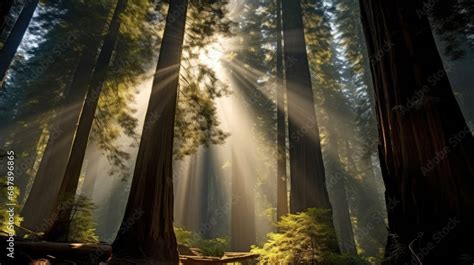
Gatta turns to one of Wendell Berry’s Sabbath poems to capture this truth. The poem is an account of reforestation:
Slowly, slowly, they return
To the small woodland let alone:
Great trees, outspreading and upright,
Apostles of the living light.Patient as stars, they build in air
Tier after tier a timbered choir,
Stout beams upholding weightless grace
Of song, a blessing on this place.They stand in waiting all around,
Uprisings of their native ground,
Downcomings of the distant light;
They are the advent they await.Receiving sun and giving shade,
Their life’s a benefaction made,
And is a benediction said
Over the living and the dead.In fall their brightened leaves, released,
Fly down the wind, and we are pleased
To walk on radiance, amazed.
O light come down to earth, be praised!
Gatta writes that “great trees, despite their seemingingly inert solidity, support vital processes involving light and energy, microorgqnisms, motile fluids, and the exchange of atmospheric gasses.” The dynamics of “this physical synergism,” he contends, “corresponds to a divine economy of grace and transformation.”
The line “to walk on radiance, amazed,” Gatta notes, leads to the poem’s closing benediction: “O light come down to earth, be praised.” Thus, he concludes, “the multilayered metamorphosis enacted through and within these ‘great trees’ parallels the transformation of human awareness described through the course of Berry’s poem.”
To return to Matthew’s account, what we see by virtue of God entering Christ and being witnessed by the disciples is the emblematic story of how divinity works in the world. Through Jesus we learned that there is no ultimate separation between the world of spirit and the world of matter, that they are inextricably intertwined. When, gazing at great trees, we get a sense of the divine, we are connecting with the Godhead within all of us.