Thursday
My faculty study group has been discussing Shakespeare’s Measure for Measure, a play about a pious but corrupt judge that I’ve never fully appreciated until now. When I think of the rot that has overtaken MAGA Christians, along with the cynical religiosity of its political leaders, it seems all too timely.
The sanctimonious Angelo believes that Vienna’s strict morality laws apply to others but not to himself. He is in charge because his brother the Duke, realizing he has been too lax in his enforcement of these laws, takes a leave of absence.
Angelo’s first act is to condemn to death one Claudio for premarital sex with Juliet. Now, the two of them are fully intending to get married—they have just not yet completed all the legal technicalities—but that matters not the least to Angelo. In his eyes, fornication is fornication.
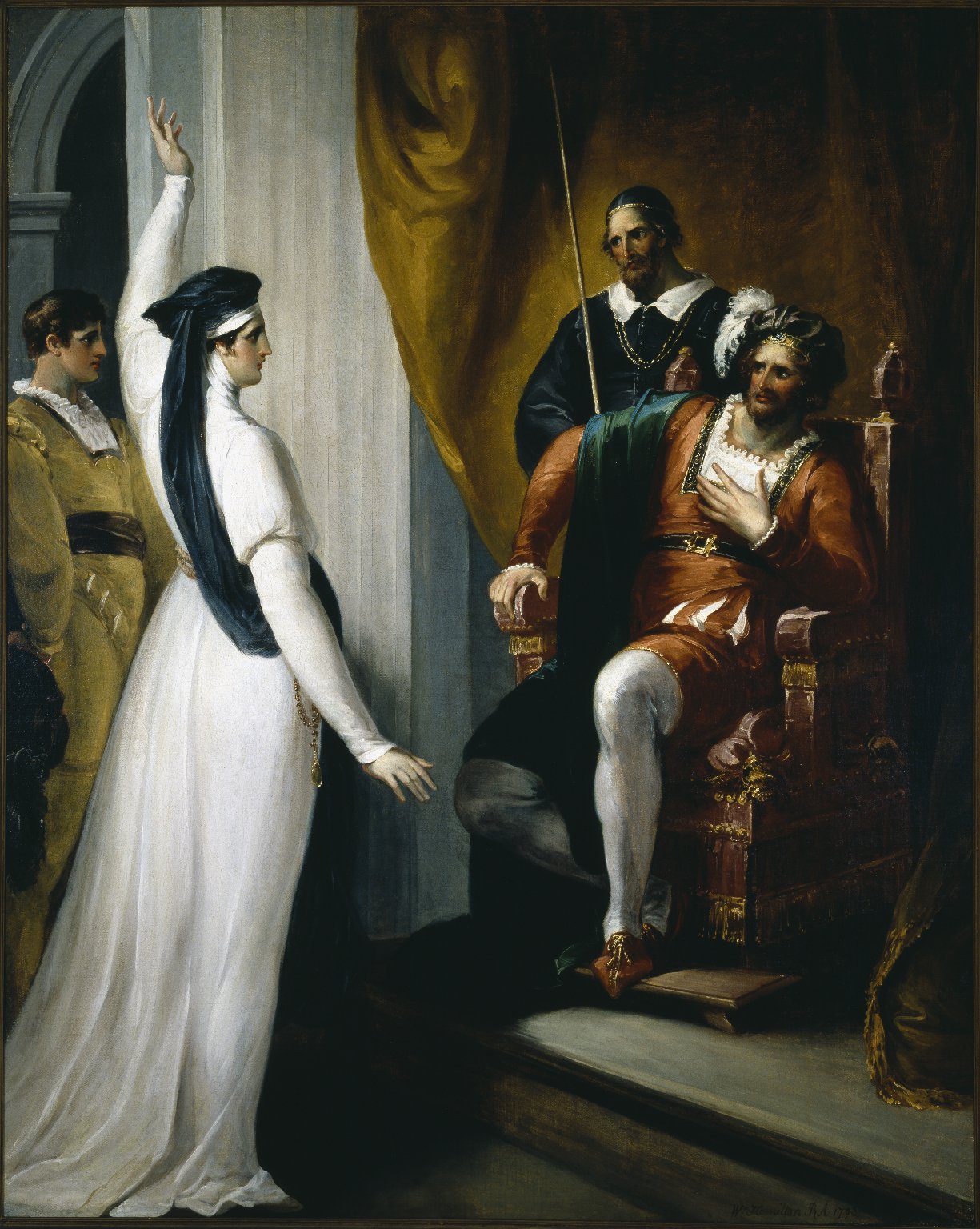
Claudio’s sister Isabella, a devout woman intent on becoming a nun, goes to Angelo to plead for a pardon. While she doesn’t disagree with the seriousness of the offense, she asks that justice be tempered with mercy. In response, the smitten Angelo makes her a Trumpian offer: her brother’s freedom for her body (although these days Trump demands money in return for his pardons).
Shocked at such a proposition from a supposedly moral man, Isabella—after rejecting the offer—seeks consolation from her brother. He, however, surprises and unsettles her by urging her to accept the offer. After all, he’s about the die. Only the intervention of the Duke, who has been secretly monitoring his brother in the disguise of a friar, brings about a happy ending.
So who are our Angelos? Well, we’ve got a lot of them in the GOP these days. There’s Pete Hegseth, a Christian fundamentalist who has been trying to bring back the Crusades: a Guardian profile reveals that on his arm is tattooed “Deus Vult” (God Wills It), which Crusaders in 1095 chanted as they followed Pope Urbana’s call to reconquer the Holy Land from the infidels. Hegseth “has promised to give ‘no quarter’ to the ‘barbaric savages’ of the Iranian regime and called on the American people to pray for victory ‘in the name of Jesus Christ.’” Claiming that the war is divinely sanctioned and that “Jesus has the final say over all of it,” he has been invoking Matthew 10:
If our Lord is sovereign even over the sparrow’s fallings, you can be assured that he is sovereign over everything else that falls in this world, including Tomahawk and Minuteman missiles …
Like Angelo, however, Hegseth’s personal life has failed to live up to his supposed Christian beliefs:
He was elevated to leadership roles at two different advocacy groups for veterans only to be forced out over what the New Yorker called “serious allegations of financial mismanagement, sexual impropriety, and personal misconduct”. Twice divorced due to reported infidelity, he is now raising seven children with his third wife, whom he married in 2019. He paid $50,000 to a woman who accused him of rape in 2017, though he denies the allegation.
Then there’s Vice President J.D. Vance, who has been proudly proclaiming his conversion to Catholicism, only to criticize the pope for quoting Jesus’s views on war (“Blessed be the peacemakers”). “I think it’s very, very important for the Pope to be careful when he talks about matters of theology,” Vance opined. For the vice-president, “theology” means not opposing the things that Trump does.
Trump, meanwhile, has angered even conservative Catholics, first by posting an image of himself as the pope and then, most recently, of himself as Jesus Christ. In one way, however, it makes sense that he would do so as many Christian evangelicals have been seeing him as, if not the messiah, at least as a version of the Persian king Cyrus, who freed the Israelites held captive in Babylon. If your devoted Christian followers are proclaiming you as Christianity’s best and last hope, it’s understandable why you might think of yourself as Jesus.
When I compare these figures to Angelo, I hasten to add (with my eldest son’s critique that such comparisons elevate the real life counterparts) that Angelo is a deeper figure than any of these. That’s because, in private soliloquies, he admits to having qualms. He knows that Isabella is devout and pure but still wants to defile her. In fact, he wishes to defile her because she is pure:
What, do I love her,
That I desire to hear her speak again,
And feast upon her eyes? What is’t I dream on?
O cunning enemy, that, to catch a saint,
With saints dost bait thy hook! Most dangerous
Is that temptation that doth goad us on
To sin in loving virtue…
I can’t imagine Hegseth, Vance, or Trump experiencing such inner doubts.
The somewhat naïve Isabella—I’d compare her to the Trump-disillusioned Marjorie Taylor Greene except that Isabella is far superior—fails to pick up on Angelo’s broad hints and initially believes him to be acting out of higher principle. Greene too once believed in Trump, only to be shocked by his threat to obliterate Iran:
Everyone in his administration that claims to be a Christian needs to fall on their knees and beg forgiveness from God and stop worshipping the President and intervene in Trump’s madness. I know all of you and him and he has gone insane, and all of you are complicit.
Greene has accused Trump of “blasphemy” for depicting himself as Christ. Nor is she the only MAGA Christian to do so.
Isabella, when she finally realizes what Angelo wants, is similarly horrified and threatens to expose him. At this point, he plays the card that abuse victims know all too well:
Who will believe thee, Isabel?
My unsoil’d name, the austereness of my life,
My vouch against you, and my place i’ the state,
Will so your accusation overweigh,
That you shall stifle in your own report
And smell of calumny.
She will pay a price if she goes public, not he.
Interestingly, when she reports the corrupt proposal to her brother, expecting him to back her up, she is similarly horrified to discover that he wants her to take the deal: what is her virtue to his life? We can perhaps put him in the category of those Trump Christians who are willing to excuse immorality if it gives them what they want although, in Claudio’s defense, he’s under far greater pressure than they are.
Fortunately for Claudio and Isabella, the Duke has witnessed all that has happened. While I suppose he could just reveal himself, expose Angelo’s perfidy, pardon Claudio, and set everything right, what would be the fun of that? Instead, he engages in some trickery. The woman who gives her body to Angelo under cover of darkness is not Isabella but Mariana, a woman to whom Angelo was once betrothed but then jilted. Then we learn how little a tyrant’s word is worth: despite having slept (he thinks) with Isabella, Angelo goes back on his bargain and condemns Claudio to death anyway.
To use the framing of authoritarianism expert Timothy Snyder, Isabella would have gained nothing from surrendering in advance.
In the end, Shakespeare assures us that justice will prevail. The Duke steps forth, pardons Claudio, and condemns Angelo to death. (Mariana and Isabella plead for his life, however, so he too is pardoned and marries Mariana.) The Duke, meanwhile, marries Isabella and presumably they live happily ever after.
Given how accustomed we have gotten to corrupt officials escaping accountability, I find Angelo getting exposed more satisfying than the marriages.
Further note: I’ve blogged once in the past on a passage in Measure for Measure that only too well describes Trump and Hegseth, who think that their access to military might gives them the right to do anything. It is when Isabella calls out Angelo:
O, it is excellent
To have a giant’s strength, but it is tyrannous
To use it like a giant.