Friday – Life Installment #30
Today I look back at the year following what C.S. Lewis calls “the second death,” which is the death of the grieving. As I noted in a previous post, the intensity of my grief over Justin was a means of keeping him present so that diminishing emotions felt like losing him a second time. One should never say to the bereaved that “things will get better” because, in addition to its being a trite cliché, it also fails to acknowledge that those grieving may not want things to get better. The resumption of daily routine after I had been living at a knife edge of perception felt like a surrender to something lesser.
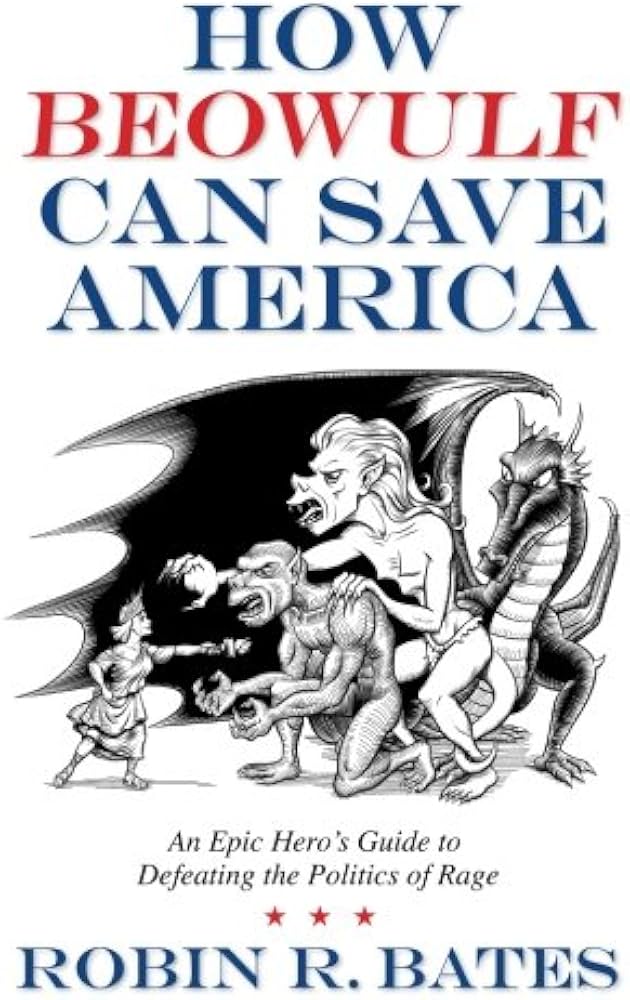
Thankfully, 19-year-old Darien helped shake me out of this state. A year after the death, as we were traveling to Iowa to visit family, Darien exploded as I was talking about Justin, berating me for what he felt had become an obsession. Now Darien, like Toby, had taken Justin’s death very hard, although he dealt with it in his own way. He had a cross and the date tattooed on his ankle—the only tattoo any of us have—and the day after Justin’s death he went swimming in the spot where Justin had drowned (he didn’t tell us) so that the river wouldn’t have power over him. But now, as was only right, he was ready to step into the future and saw me as trying to drag everyone back. And because I had vowed to put family first—to wield Beowulf’s giant sword in the face of troll grief—I heard the message and started the process of letting go.
I did the same for our youngest. For my sabbatical year I had planned to apply for a third Fulbright to Slovenia, but Toby, who had a very strong friend group and was entering his senior year of high school, declared very firmly that he would stay behind if we went. Again I declared to myself that family comes first and that Toby deserved to get what he wanted. I would spend most of my sabbatical year at home working on my book while watching him have what proved to be a stellar senior year. (He starred in soccer and lacrosse, bonded deeply with his friends, had a fun girlfriend, and made a smart and very funny film that entranced his high school.)
There were other ways that the death would continue to dwell with me, however. At the end of the previous year I had received the college’s Teacher of the Year award—the award rotates between Teaching, Scholarship, and Service and I received it for Service—and while my service record was in fact stellar, part of me wondered whether it was a sympathy award. I resolved, as I was thanking the College and my colleagues, that I would make sure there were no doubts. To prove myself worthy—to prove to myself and everyone else that I was “of use” (as John Irving puts it in Cider House Rules)—I took on far too much when I returned from sabbatical.
I’ll tell that story in next week’s post but, for the moment, I note that intense service was already a family characteristic. Both my parents gave their lives to the Sewanee community and I married a woman who had community commitment branded into her by her Moravian upbringing. In other words, the tendency was already there. Justin’s death just pushed it to 11.
Fortunately, however, my sabbatical gave me another year of reprieve, and I threw myself into my book. I would look at nine canonical British works, examining how each addresses a specific life issue. Written more as self-help than scholarship, it would be accessible to a general audience, drawing on my skills as a journalist. Each chapter would contain a plot summary and recommended resources, along with five or six exercises. It took me seven years to write and, as it turned out, never saw the light of day as the financial crisis of 2008 prompted the publisher to rescind his offer.
Here’s what was to have been its table of contents:
Better Living through Beowulf: How the Early British Classics Can Guide You beyond Terrorism Fears, Relationship Anxieties, Consumer Emptiness, Racial Tension, Political Cynicism, and Other Contemporary Challenges
Introduction: Harnessing the Power of Literature
Chapter 1 – ANGER & FEAR
Using Beowulf to Subdue Your Inner Demons and Find a Lasting Peace
Chapter 2 – DEATH
Using Sir Gawain and the Green Knight to Transform Your Fear of Dying into a Deep Joy
Chapter 3 – MARRIAGE
Using Geoffrey Chaucer’s Wife of Bath to Save Your Relationship
Chapter 4 – SOUL
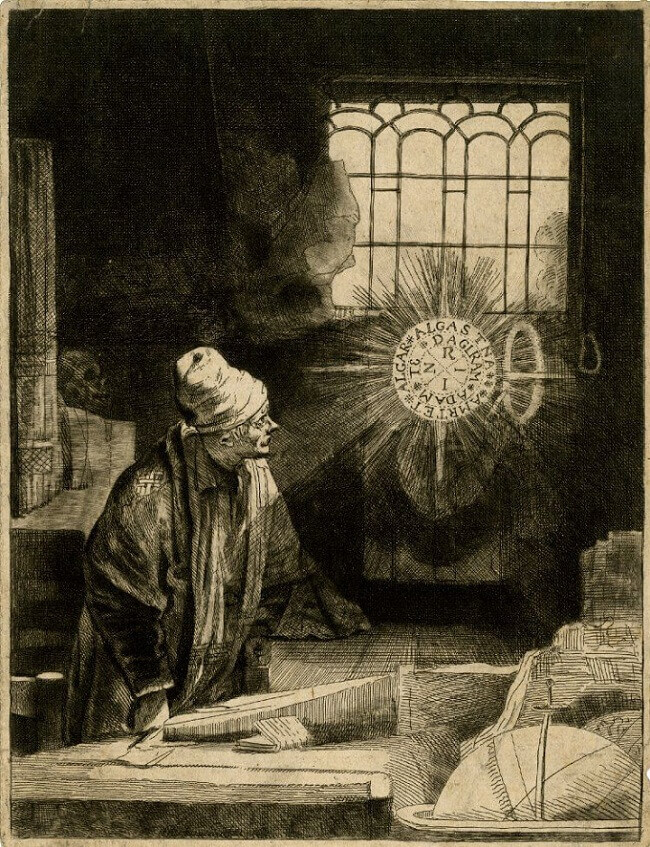
Using Christopher Marlowe’s Doctor Faustus to Escape Your Private Hell
Chapter 5 – GENDER
Using William Shakespeare’s Twelfth Night to Discover Alternate Selves
Chapter 6 – RACE & CLASS
Using Aphra Behn’s Oroonoko to Negotiate Difficult Friendships
Chapter 7 – INJUSTICE
Using Jonathan Swift’s Gulliver’s Travels and “Modest Proposal” to Keep Fighting the Good Fight
Chapter 8 – BEAUTY
Using Alexander Pope’s Rape of the Lock to Reach beyond Star Worship and Touch the Star Within
Chapter 9 – COURTSHIP
Using Jane Austen’s Pride and Prejudice to Find Your Soul Mate
Bibliography
To provide a sense of the book’s exercises, here are a couple. The first draws from Doctor Faustus:
Reflection Exercise – Facing Death
When you are dying or know someone who is dying—or even if you know someone with a heightened fear of death—keep an eye out for the following (very common) Faustus behaviors. Acknowledging and examining the behaviors will not necessarily make the fears go away. With awareness, however, comes the possibility of spiritual breakthrough.
1. Resorting to shallow distractions
Is there some version of carousing with colleagues and fantasizing about Helen of Troy?
2. Wallowing in regret, guilt, and self-recrimination
Is there unhealthy regret and an obsessive fixation on opportunities squandered? (“Wretch, what hast thou done! Damned art thou, Faustus, damned; despair and die.”)
3. Complaining about helplessness
Is there despair about being helpless, a Faustus blaming the devil for his inability to repent and find peace?
4. Lashing out against others
Are there attacks against others, even those (like the old man) who offer a healing perspective? Are those who seem to have come to terms with death seen as an implicit reproof?
5. Bargaining with death
Is the individual, like Faustus, prepared to say and do anything to avoid facing up to the inevitable?
The second applies to Pride and Prejudice:
Bad reasons for getting married
As the dream of marriage or committed partnership involves honoring the deepest part of ourselves, we sell ourselves short when we settle for a superficial or compromised relationship. The romance story turns sour for anyone who wants a relationship but won’t undergo the necessary self-transformation. Thus, when seeking a partner, it is good to first ask yourself what your motivations are and how committed you are to the process. Pride and Prejudice presents us with a number of dubious reasons for getting married. They include
Security – Charlotte Lucas and George Wickham want someone to support them and will marry virtually anyone with money (Collins, Mary King);
Vanity and a desire for power – Caroline Bingley is driven by the dream of becoming mistress of a great estate while Mrs. Bennet vicariously pursues the same dream through her daughters;
Custom – Collins marries because Lady Catherine de Bourgh expects her rector to be married. Miss de Bourgh, similarly under the sway of Lady Catherine, might also feel pressured by custom;
Sexual desire – Mr. Bennet, to his everlasting regret, has married a once pretty face, and Lydia is attracted to anyone in a soldier’s uniform. Lydia needs marriage if she is to follow her inclinations legally.
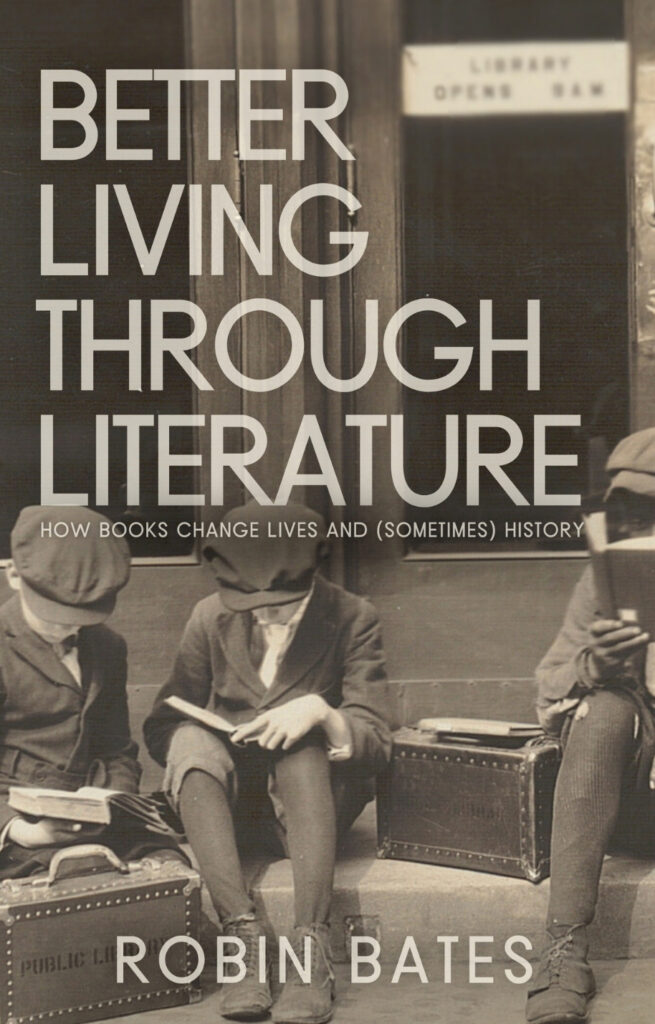
As I look back at the book, I’m somewhat relieved it was never published. It always felt vaguely inauthentic as I never entirely bought the self-help genre. After all, how many people sit down with a proposed exercise and follow it? Meanwhile, my intentionally flippant title (it’s an allusion to Dupont’s “Better Living through Chemistry” slogan) seemed to clash at times with my seriousness.
And then there’s the fact that people use literature for lots of different things, many unpredictable. My book, I came to realize, was too prescriptive and too pat. Better to approach literature as my blog does, which cites endless instances of literature impacting lives with no definitive conclusions drawn. The title works better in that case, capturing the playfulness of literature even as it acknowledges its seriousness.
In my book’s defense, however, I was desperately looking for ways to make literature relevant to society at large—we humanities teachers have been in a defensive crouch for a while now–which means that a wrong turn or two were to be expected. Furthermore, writing it supercharged my teaching, providing me with new tools and perspectives with which to engage my students. To cite one instance, it allowed me to encourage an older student to use Pride and Prejudice as a marriage manual.
Ashley was in the process of escaping from a controlling husband who didn’t want her taking college classes, and the novel provided her a forum in which to explore her life options. A courtship novel, she said, is just what she needed given that she had started dating again. Furthermore, realizing that literature could function as a life guide, Ashley would go on to write a senior project for me about three novels by Margaret Atwood, who she said had “saved her life.” You can read about her inspiring story here.
Returning to my sabbatical year, I see how writing the book also helped me deal with the second death. Three of the chapters—the ones on Beowulf, Sir Gawain and the Green Knight, and Doctor Faustus—deal directly with death, and all are about using crisis to turn one’s life around.
To complete the year, I took a trip to Barcelona to visit the college’s former guitar teacher, Gustavo Thiem, a very spiritual man who had known Justin and who brought his funeral service to a powerful and fitting close by playing “Brahm’s Lullaby.” (I still see him sitting on the steps leading up to the altar.) Although he had been performing with orchestras all over the United States, Gustavo had left that behind to return to Catalonia to take care of his father, stricken with Alzheimer’s, and was remaking his career there. In turn, he introduced me to a close friend, a Franciscan monk, who gave me the best spiritual guidance I received about Justin’s death. The man noted that young people are often in intense spiritual search—he said he loves that about young people his age—and that Justin’s search was no less meaningful for having been cut short. As we walked around Barcelona, I recognized Justin in his words and felt the full force of the life that Justin had actually lived.
I then went on to Slovenia, reconnecting with friends, former students, and colleagues and visiting places that Justin had loved. And then returned to see Toby graduate from high school. Life was set to continue on.
Past Installments of A Life Lived in Literature
A Life Lived in Literature: How It All Began (Sept. 5, 2025)
Early Reading Memories (Sept. 12, 2025)
Childhood Confusion: Reading to the Rescue (Sept. 19, 2025)
Confronting Segregation (Sept. 26, 2025)
School Reading vs. Real Reading (Oct. 10, 2025)
Childhood in Paris (Oct. 17, 2025)
My Time at Sewanee Military Academy (Oct. 24, 2025)
Existentialism for High School Seniors (Oct. 31, 2025)
Why I Majored in History, Not English (Nov. 7, 2025)
My College Search for Authenticity (Nov. 14, 2025)
On D. H. Lawrence and a Sexual Awakening (Nov. 21, 2025)
My Life as a Bildungsroman (Nov. 28, 2025)
Grad School: Literary Baptism by Fire (Dec. 5, 2025)
Early Scenes from a Marriage (Dec. 12, 2025)
Bringing Up Baby in Grad School (Dec. 19, 2025)
Grappling with Racism (Jan. 2, 2026)
Journal of a Young Teacher (Jan. 16, 2026)
Teaching and Reading in Yugoslavia (Jan. 23, 2026)
Life at 40: Barely Controlled Chaos (Jan 30, 2026)
From Secular Humanist to Christian Believer (Feb. 6 2025)
Looking Back at a Lifetime Together (Feb. 13, 2026)
To Ljubljana with Love (Feb. 20, 2026)
Forging a Separate Identity from My Father (Feb. 27, 2026)
“Better Living” Emerged from a Midnight Epiphany (March 6, 2026)
The Golden Years before Tragedy Struck (March 13, 2026)
Using Lit to Grapple with a Death (March 20, 2026)
Lit in the Year following Justin’s Death (March 27, 2026)
My Eldest Son, Named after a Keats Sonnet (April 3, 2026)
Sterne’s Uncle Toby and My Own Toby (April 10, 2026)
After the 2nd Death, a Book Project (April 17, 2026)