Comics Play Cheshire Cat to DJT’s Queen

Tenniel, illus. from Alice in Wonderland

Note: If you wish to receive, via e-mail, (1) my weekly newsletter or (2) daily copies of these posts, write to me at rrbates1951@gmail.com. Comments may also be sent to this address. I promise not to share your e-mail with anyone. To unsubscribe, write here as well.

Monday

Credit to political blogger Tom Sullivan of Hullabaloo for observing that “Trump was always going to go Red Queen. His Truth Social post from Saturday makes clear we have arrived at the ‘off with their heads’ phase.” Sullivan was responding to Trump’s recent Truth Social post to the Attorney General:

Pam: I have reviewed over 30 statements and posts saying that, essentially, “same old story as last time, all talk, no action. Nothing is being done. What about Comey, Adam “Shifty” Schiff, Leticia??? They’re all gilty as hell, but nothing is going to be done….We can’t delay any longer, it’s killing our reputation and credibility. They impeached me twice, and indicted me (5 times!), OVER NOTHING. JUSTICE MUST BE SERVED, NOW!!! President DJT

Is it necessary to remind readers that the Attorney General and the Justice Department are supposed to be independent of the presidency? Neither Bondi nor Kash Patel of the FBI should be Trump’s personal enforcers, although that is what they have become.

Several times during Alice in Wonderland we see the Queen of Heart engaging in Trumpian-like temper tantrums. One instance is during the chaotic croquet games when the balls, played by hedgehogs, keep running off:

The players all played at once without waiting for turns, quarrelling all the while, and fighting for the hedgehogs; and in a very short time the Queen was in a furious passion, and went stamping about, and shouting “Off with his head!” or “Off with her head!” about once in a minute.

Alice began to feel very uneasy: to be sure, she had not as yet had any dispute with the Queen, but she knew that it might happen any minute, “and then,” thought she, “what would become of me? They’re dreadfully fond of beheading people here; the great wonder is, that there’s any one left alive!”

That dispute will actually happen during the trial at the end of the book when Alice speaks truth to power. The royal court is prepared to execute the Jack of Hearts for having stolen a platter of tarts before his trial. “Sentence first—verdict afterwards,” declares the Queen, which is a version of Stalin’s “Show me the man and I’ll find the crime.” Increasingly Trump is behaving this way, demanding that federal prosecutors find people like New York attorney Leticia James and Federal Reserve governor Lisa Cook guilty of mortgage fraud (of which both are innocent) and then firing the prosecutors when they fail to deliver.

Meanwhile, those prosecutors who are in fact following Trump’s orders—say, attempting to indict a Department of Justice employee of felonious assault for throwing a Subway sandwich at national guardsmen—are increasingly finding themselves thwarted by grand juries. A DC federal grand jury also has refused, three times, to indict a woman accused of assaulting an FBI agent.

Needless to say, these people would not escape punishment if Stalin were in charge so we can be thankful for that at least. To this point, everyone, from ordinary citizens to federal prosecutors to law firms, universities, media companies, and others, should be responding as Alice does:

“Stuff and nonsense!” said Alice loudly. “The idea of having the sentence first!”
“Hold your tongue!” said the Queen, turning purple.
“I won’t!” said Alice.
“Off with her head!” the Queen shouted at the top of her voice. Nobody moved.
“Who cares for you?” said Alice, (she had grown to her full size by this time). “You’re nothing but a pack of cards!”

Granted, as a child I used to find terrifying by what happens next—as much by Tenniel’s illustration as the action:

At this the whole pack rose up into the air, and came flying down upon her: she gave a little scream, half of fright and half of anger, and tried to beat them off, and found herself lying on the bank, with her head in the lap of her sister, who was gently brushing away some dead leaves that had fluttered down from the trees upon her face.

Unfortunately, the Trump administration can mete out more harm than a pack of cards. We can’t say, as the Griffin says of the Queen, “It’s all her fancy, that: they never executes nobody.” Those who have been dragged off the streets and sent to prisons in Louisiana and concentration camps abroad can attest that Trump’s axes have some bite. So can comedians Stephen Colbert and Jimmy Kimmel. 

Still, Trump isn’t able to silence these comedians altogether. In a way, think of them as the Cheshire Cat, whose head mysteriously appears at the croquet game and frustrates royalty no end. Upon hearing that the king wants the cat removed, we are told that the Queen “had only one way of settling all difficulties, great or small. ‘Off with his head!’ she said, without even looking round.”

There’s a problem, however, as the executioner points out:

The executioner’s argument was, that you couldn’t cut off a head unless there was a body to cut it off from: that he had never had to do such a thing before, and he wasn’t going to begin at his time of life. 

Just because Colbert and Kimmel are no longer connected to their pusillanimous media companies doesn’t mean that they will shut up. Like the Cheshire Cat, they will keep grinning.

Further thought: The Queen of Hearts and the Red Queen in Through the Looking-Glass were inspired by Queen Victoria, and it may be—as power shifted from the monarchy to Parliament—that the emptiness of the Queen’s threats capture this shift. One may become more strident as one loses power. To her credit, Victoria herself was a huge fan of the Alice books, and if she recognized herself at all in Carroll’s queens, it meant that she had a sense of humor about the matter. Trump, by contrast, is frustrated by the fact that he doesn’t have the power he believes he should have—he dearly would like to be a dictator—so that his bluster smacks of desperation. It’s why some people still don’t take his threats seriously. 
Posted in Uncategorized | Tagged , , , , , , , , , | Comments closed

Rosh Hashanah and the American Dream

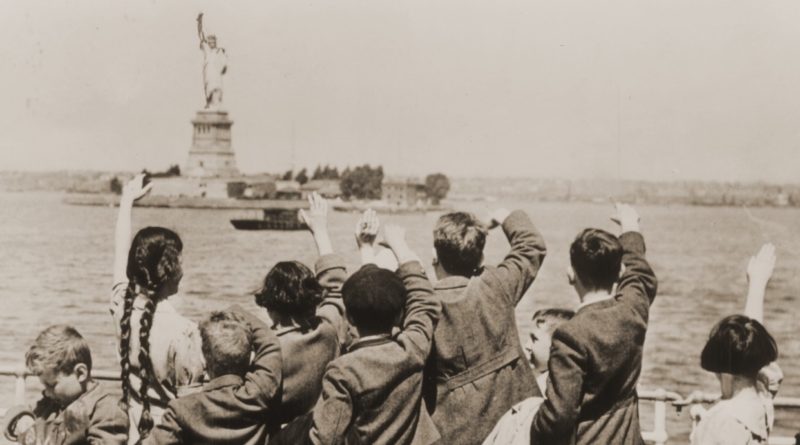
Jewish children as refugees in 1939

Note: If you wish to receive, via e-mail, (1) my weekly newsletter or (2) daily copies of these posts, write to me at rrbates1951@gmail.com. Comments may also be sent to this address. I promise not to share your e-mail with anyone. To unsubscribe, write here as well.

Sunday

Rosh Hashanah, when Jews celebrate their new year and reflect upon their lives, begins tomorrow evening. Emma Lazarus’s “New Year” notes the difference between celebrating the occasion during the harvest season and in the bleak midwinter. Why not turn over a new leaf “when orchards burn their lamps of fiery gold” and when the grape “glows like a jewel”? Lazarus calls this time of year “the mother of months.”

In this context, the horn of plenty makes sense, and the poet links it with the shofar, the ram’s horn or “sacred cornet” that is sounded in the synagogue to mark the High Holy Days. Whatever anguish has been “wrought by priest and mob”—Lazarus is thinking here of the murderous pogroms in Russia that were occurring in the 1880s—is giving way to new hope (“undreamed of morn”).

The promise of America is part of this vision. Lazarus, of course, is best-known for “The New Colossus,” inscribed on the Statue of Liberty. People especially know the final lines:

Give me your tired, your poor, 
Your huddled masses yearning to breathe free, 
The wretched refuse of your teeming shore, 
Send these, the homeless, tempest-tost to me, 
I lift my lamp beside the golden door!

Lazarus recycles one of the images in today’s poem: “Through fire and blood and tempest-tossing wave.” The journey she describes was first set in motion by the Roman destruction of the Temple in 70 AD, which set off a Jewish diaspora. In the 19th century, when Lazarus wrote the poem, Jews were moving from the steppes of Russia to as far west as the “snow-capped Sierras.” Their goal: the freedom “to proclaim and worship Him” in a country that promised freedom of religion for all. 

Lazarus draws on Isaiah (52:2-4) to provide a prophetic framework for the journey:

Enlarge the place of your tent,
    stretch your tent curtains wide,
    do not hold back;
lengthen your cords,
    strengthen your stakes.
For you will spread out to the right and to the left;
    your descendants will dispossess nations
    and settle in their desolate cities.

Isaiah is drawing here on God’s promise to Abraham in Genesis 15:5: “Look now toward heaven, and tell the stars, if thou be able to number them: and he said unto him, So shall thy seed be.”

Lazarus acknowledges both those Jews who are traveling westward into an America of hope and promise and those who are journeying back to Palestine. “In two divided streams the exiles part,” she writes, 

One rolling homeward to its ancient source, 
One rushing sunward with fresh will, new heart.

In both instances, however, 

                  the truth is spread, the law unfurled, 
Each separate soul contains the nation’s force,
And both embrace the world.

The reference to “the silver candle’s seven rays” in the last stanza is to the seven branched menorah, which an internet search informs me represents the original Temple menorah and functions as (1) a symbol of human wisdom and enlightenment and (2) a symbol of God’s creation of the world (six days of creating and the central seventh branch for Shabbat). The “garnered spoil of bees,” meanwhile, refers to the practice of dipping apples in honey during the Rosh Hashanah ceremonies in the hope of a sweet and fruitful new year. Through the prayer and praise of the occasion, Lazarus writes,

                             once more we prove 
How strength of supreme suffering still is ours
For Truth and Law and Love.

The New Year
By Emma Lazarus
Rosh-Hashanah, 5643 [1883]

Not while the snow-shroud round dead earth is rolled,
And naked branches point to frozen skies.—
When orchards burn their lamps of fiery gold,
The grape glows like a jewel, and the corn 
A sea of beauty and abundance lies,
Then the new year is born.

Look where the mother of the months uplifts 
In the green clearness of the unsunned West,
Her ivory horn of plenty, dropping gifts,
Cool, harvest-feeding dews, fine-winnowed light; 
Tired labor with fruition, joy and rest
Profusely to requite.

Blow, Israel, the sacred cornet! Call
Back to thy courts whatever faint heart throb
With thine ancestral blood, thy need craves all. 
The red, dark year is dead, the year just born
Leads on from anguish wrought by priest and mob,
To what undreamed-of morn?

For never yet, since on the holy height,
The Temple’s marble walls of white and green 
Carved like the sea-waves, fell, and the world’s light
Went out in darkness,—never was the year 
Greater with portent and with promise seen,
Than this eve now and here.

Even as the Prophet promised, so your tent
Hath been enlarged unto earth’s farthest rim.
To snow-capped Sierras from vast steppes ye went, 
Through fire and blood and tempest-tossing wave,
For freedom to proclaim and worship Him,
Mighty to slay and save.

High above flood and fire ye held the scroll,
Out of the depths ye published still the Word. 
No bodily pang had power to swerve your soul:
Ye, in a cynic age of crumbling faiths,
Lived to bear witness to the living Lord,
Or died a thousand deaths.

In two divided streams the exiles part,
One rolling homeward to its ancient source, 
One rushing sunward with fresh will, new heart.
By each the truth is spread, the law unfurled, 
Each separate soul contains the nation’s force,
And both embrace the world.

Kindle the silver candle’s seven rays,
Offer the first fruits of the clustered bowers,
The garnered spoil of bees. With prayer and praise
Rejoice that once more tried, once more we prove 
How strength of supreme suffering still is ours
For Truth and Law and Love.

Integral to Rosh Hashanah, and to Judaism generally, is the command to welcome the stranger. We all of us need such reminders in these days of ICE raids and immigrant crackdowns. Lazarus conveyed this vision in “New Colossus” and she saw its renewed necessity in the 1880s.

America at its best has functioned as a promised land for the world’s dispossessed. Keep this in mind as you gather with friends and loved ones.

Happy New Year! Shana Tovah!

Past Posts about the High Holy Days
–Lucille Clifton – Running into a New Year
–Alicia Ostriker – Poems for Judaism’s High Holy Days 
–Marge Piercy – The Light You Seek Hides in Your Belly 
–Grace Schulman May God’s Love Be Taught at Last in Jerusalem 
—Rachel Barenblat–Rosh Hashanah: How to Keep It New
—Enid Shomer–How Rosh Hashanah Is Like Swimming
—Marge Piercy–Let My Words Turn into Sparks
—Yehuda Amichai–Theoretically, a Season for Everything
—Emma Lazarus–High above the Flood and Fire Ye Held the Scroll
—Kadya Molodowsky–Blowing for Hope in the Face of Darkness
—Alicia Ostriker–Entering the Days of Awe
—Muriel Ruykeyser and Denise Levertov: Rosh Hashanah – A Stirring of Wonder
—Marge Piercy: Rosh Hashanah – Weave Real Connections
—Lucille Clifton: On 9-11 Firemen Ascended Jacob’s Ladder
—Rashani: Blowing for Hope in the Face of Darkness
—A Ninth Century Prayer for Yom Kippur
—Adrienne Rich’s Yom Kippur Thoughts about Conflict 
—Jane Kenyon: Thirsting of Disordered Souls
—Rashani: Out of Darkness, Sanctified into Being 
–Stanley Kunitz: Live in the Layers, Not on the Litter 
—Philip Schultz: Believe in the Utter Sweetness of Your Life

Posted in Uncategorized | Tagged , , , | Comments closed

Childhood Confusion: Reading to the Rescue

Version 1.0.0

Note: If you wish to receive, via e-mail, (1) my weekly newsletter or (2) daily copies of these posts, write to me at rrbates1951@gmail.com. Comments may also be sent to this address. I promise not to share your e-mail with anyone. To unsubscribe, write here as well.

Friday

Today’s post covers my interactions with literature from third through seventh grade since there are some particularly revealing moments. I look especially at those works where I can remember the exact time and place of our encounter. 

For instance, I was standing in a large commons area in the old wooden apartment (Van Ness Hall) when I first heard about Narnia. The year was 1959 and I was eight at the time. Chris Mayfield, my best friend and the eldest daughter of the seminarian family that lived upstairs, was describing The Silver Chair. I remember her wanting us, like Jill and Eustace, to hold out our arms and invoke Aslan so that we would be whisked off to that magical land.

I also remember, that same year, sitting on our family couch, probably with my brother Jonathan, as my father read to us about the dwarfs piling into Bilbo’s house. 

Partly because of that first encounter with C.S. Lewis, Silver Chair has always been my favorite Narnia book. Drawing on the Arthurian quest narrative, Lewis appealed to my childhood longing to live a meaningful life. It wasn’t only the adventures, the strange creatures, and the talking animals that pulled me in, however, but also Eustace and Jill. They weren’t sentimental fabrications but vividly and sometimes uncomfortably real, what with their quarreling and their missteps. Although they sometimes fail certain ethical tests, however, in the end they step up and do the right thing. Perhaps I saw Chris and me in them. 

As one who was always concerned about doing the right thing, I didn’t like it when children came up short—Edmund betraying in siblings in Wardrobe, Digory overriding Polly and ringing the bell in Magician’s Nephew, Eustace being a jerk in Dawn Treader, Jill forgetting the signs in Silver Chair, Shasta and Aravis arguing in Horse and His Boy—but such unpleasant moments added dimensionality to my engagement. They prompted me to develop as a human being.

Thinking about it now, I was prepared for children wrestling with moral dilemmas from having been immersed in E. Nesbit’s Bastable books. I identified with Oswald, the eldest, who has a strong sense of morality, even though he and his four siblings, in their group projects, sometimes mess up in the performance (thus their self designation as “the Wouldbegoods”). There’s no magic in the Bastable books so they didn’t enthrall me the way Narnia did, but I can see their influence. 

For instance, I enrolled my siblings and the neighborhood kids (all younger) in large group activities. We would play such games as freeze tag, capture the flag, red rover, wiffle ball, and something called ka-seep (spelling unclear), in which everyone ran from one line to the other, with anyone tagged joining the one in the middle until all are caught. Everyone got to pick a game and, to insure everyone participated in all the games, I had them step in something we called “the sacred circle.” This was a circle drawn in chalk on one of the paving stones leading up to the house. (We were no longer living in Van Ness Hall but now had a university-owned stone house a couple of blocks away.) By stepping into the circle, you signaled your commitment.

We also played a game I invented called “Romans and Barbarians” in which I now detect a masochistic streak. We would divide into two groups and, whenever the Romans captured a barbarian, they would tie him/her to our jungle gym and apply various tortures until he or she agreed to be a Roman. The challenge lay in how long you could hold out as we beat each other with plastic swords or hung each other up by the armpits. I always insisted on being a barbarian and, since I was the eldest, I was usually the last one caught. It was fairly mild, all things considered, but a fascination with B&D has always been with me. I hasten to add that I don’t act on my B&D fantasies. Doing so would be a disappointment as nothing in actuality can ever live up to the pictures in my head.

I note that, while I thought of us all participating equally in our games, my brother Jonathan, three years younger, notes that I always got my own way. This contributed significantly to our sibling rivalry, and he would go on to be far more in tune with the broader world than I was, whether it took the form of rock music, sex, drugs, or peer engagement. If, as I’ve noted earlier, I was trying to remain a child to please my father, Jonathan went storming into the world of traditional adolescence and so in some ways seemed older than I was.

Back to Lewis and Tolkien. If Lewis shook my world, Tolkien hit with the force of a tsunami. I sometimes say that Tolkien’s world-building fiction saved my childhood, and it was certainly the work (to borrow from Yeats) that had all my thought and love. I didn’t do what other boys did—play Little League baseball and football or engage in fights or hang around in guy groups—but Tolkien’s world was so immense and all-encompassing that, by entering it, I could imagine doing all the things a boy/man was supposed to do.

My favorite character was the dwarf Gimli, perhaps because he was short (as was I), perhaps because—in my low self-esteem—I saw myself as hunkered down and plodding (this in contrast to my more athletic peers). When those of whom not much is expected rise to the occasion—as Gimli does in his competition with Legolas at the Battle of Helm’s Deep and of course as Frodo does in destroying the ring—I could imagine myself triumphing against the odds.

After my father read us The Hobbit and The Fellowship of the Ring, we had to wait two months for Two Towers and Return of the King to be sent to us from Blackwell’s Bookstore in London since Tolkien didn’t yet have an American publisher. I also wrote a fan letter to Tolkien (this in 1961) and several months later received a reply. I have the letter, along with the famous signature, framed and hanging in my office. 

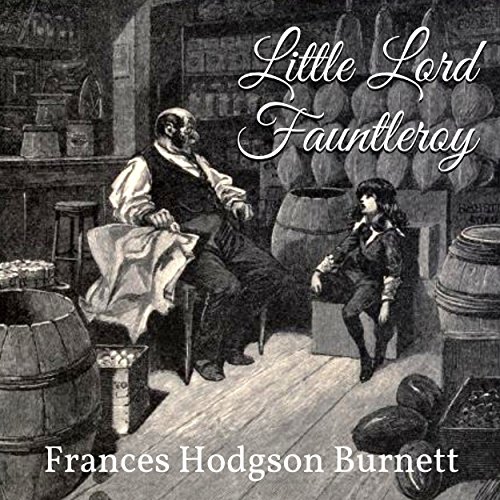
I’ll mention one other beloved set of works that help me see the boy I was then. I identified intensively with stories of boys who are girl-like or who even become girls. These included L. Frank Baum’s The Land of Oz, Francis Hodgson Burnett’s Little Lord Fauntleroy, a Superman comic in which a young Clark Kent is temporarily turned into a girl, and Shakespeare’s Twelfth Night (although in that one a woman passes herself off as a man).

My explanation for my fascination is that, in trying to figure out why I was so different from the other boys around me, I at times wondered whether some cosmic mistake had been made. (I remember thinking this as early as eight or nine.) Sometimes, when riding my bike down steep Curlicue Lane on my way to a piano lesson, I imagined having hair that streamed out behind me, even though this was 1960 and all the boys had buzz cuts back then. (I would have long hair when I was in college in 1969-73.) In Land of Oz, the boy Tip turns out to be Ozma under enchantment, and while Fauntleroy is very much a boy—he’s a fast runner, as was I—he wears velvet suits with lace collars while sporting long flowing locks.

As an aside, my grandmother would dress up my father as Fauntleroy in the late 1920s (he was born in 1923). While some boys kicked against it—”Mighty glad I ain’t a girl–ruther be a boy,/ Without them sashes, curls, an’ things that ‘s worn by Fauntleroy!” declares the defiant speaker in Eugene Field’s “Jest ’Fore Christmas”—my father reportedly loved it. I know that, as an adult, he always wanted a daughter (in which case my name would have been Ann), so maybe that’s partly where my longing came from, another way I wanted to please him. In any event, he read me the book as a child and I identified with Fauntleroy, even though I now see that the novel is overly thick with sentimentality. It’s nothing like Burnett’s far superior Secret Garden, which my father also read to us.

Of all these gender crossing works, Twelfth Night is the one that most stands out. In seventh grade I was home sick with a long bout of mono—probably brought on by stress over the civil rights turmoil (more on that next week)—and my father brought home Shakespeare records from Sewanee’s English Department. Twelfth Night was my favorite, with Taming of the Shrew second and Midsummer Night’s Dream third.

Shakespeare’s subtitle for Twelfth Night is As You Will, and much of the magic in the play lies in how one can enter it from multiple points. Whether you are gay or lesbian or a male who has inner female longings (me) or a female who has inner male longings (my wife Julia), you can find characters acting out your drama. I identified with Viola and was particularly struck by the scene where Sir Toby, taken in by her male guise, goads the cowardly Sir Andrew into challenging her to a duel. There she is, appearing to be a male while having a female interior.

I also found satisfying the later scene where Sebastian, Viola’s twin who has been separated from her, shows up and—upending Toby’s assumption that the person who looks like this is a wimp—thrashes both him and Sir Andrew. Perhaps it wasn’t so much that I wanted to be a girl as someone whose whole self was acknowledged and honored. 

Incidentally, Julia as a girl had a different favorite scene. Viola has a relationship with Orsino where gender doesn’t get in the way (because he thinks she’s Cesario). “Men and women can’t be friends,” declares Billy Crystal in the movie When Harry Met Sally, but Orsino and Viola/Cesario are friends in this relationship. Gender doesn’t get in the way.

Gender confusion certainly made life hard for me. My sixth grade teacher once called me a sissy, and, in football-mad Tennessee, I can see how it was hard to categorize a boy like me. As I now interpret the lightning strike that destroys Viola and Sebastian’s ship, it is Shakespeare telling us that, very early, society divides us into two gender stereotypes. The division seems to come out of nowhere, it can be violent (society polices it in a variety of ways), and it appears irrevocable. Like Plato’s divided beings, we spend the rest of our lives longing for the missing twin. 

Or so, I suspect, was the case with Shakespeare. It has certainly been the case with me.

Posted in Uncategorized | Tagged , , , , , , , , , , | Comments closed

A Poem by Our Latest Poet Laureate

Arthur Sze, 2025-27 National Poet Laureate

Note: If you wish to receive, via e-mail, (1) my weekly newsletter or (2) daily copies of these posts, write to me at rrbates1951@gmail.com. Comments may also be sent to this address. I promise not to share your e-mail with anyone. To unsubscribe, write here as well.

Thursday

I’m reposting this essay from 2021 as Chinese-American Arthur Sze has just been named our national poet laureate, a post that over the years has been occupied by such luminaries as Robert Frost, William Carlos Williams, Gwendolyn Brooks, Stanley Kunitz, Howard Nemerov, Robert Penn Warren, Rita Dove, Billy Collins, W.S. Merwin…the list goes on and on.

Sze’s family immigrated to America in the 1930s, fleeing the Japanese. Thus his memories of the Yangtze River are family memories, not his own. The poem in some ways works as a riddle only the riddle is the mystery of life, which means an answer can never be pinned down.

But we know that, if we do not pluck the apple from the tree, it will die on the branch. We must go searching, even if we never find this mysterious “it.” Sze doesn’t call it “God” because that word is too heavy and seems too definite (even though God is never definite). What the poet knows is that it’s in the capillaries of our lungs, “in a corpse burning on the Ganges,/ in rain splashing on banana leaves.”

The ever-flowing river, like ever-flowing life, captures this spirit of this “it.” So does the ever-spinning top, describing a cone as it gathers together past, present, future. Look for it “in the smell of an avocado blossom, and in the true passion of a kiss.” Plato may inform us that the apple we know is only a shadow of the ideal form, but given that we can only know that apple that we see, taste, smell, and hold in our hand, that’s where we must go to find mystery.

The Unnamable River
By Arthur Sze

1
Is it in the anthracite face of a coal miner,
crystallized in the veins and lungs of a steel          
worker, pulverized in the grimy hands of a railroad engineer?
Is it in a child naming a star, coconuts washing
ashore, dormant in a volcano along the Rio Grande?

You can travel the four thousand miles of the Nile
to its source and never find it.
You can climb the five highest peaks of the Himalayas
and never recognize it.
You can gaze though the largest telescope
and never see it.

But it’s in the capillaries of your lungs.
It’s in the space as you slice open a lemon.
It’s in a corpse burning on the Ganges,
in rain splashing on banana leaves.

Perhaps you have to know you are about to die
to hunger for it. Perhaps you have to go
alone in the jungle armed with a spear
to truly see it. Perhaps you have to
have pneumonia to sense its crush.

But it’s also in the scissor hands of a clock.
It’s in the precessing motion of a top
when a torque makes the axis of rotation describe a cone:
and the cone spinning on a point gathers
past, present, future.

2
In a crude theory of perception, the apple you
see is supposed to be a copy of the actual apple,
but who can step out of his body to compare the two?
Who can step out of his life and feel
the Milky Way flow out of his hands? 

An unpicked apple dies on a branch:
that is all we know of it.
It turns black and hard, a corpse on the Ganges.
Then go ahead and map out three thousand mile of the Yantze;
walk each inch, feel its surge and
flow as you feel the surge and flow in your own body.

And the spinning cone of a precessing top
is a form of existence that gathers and spins death and life into one.
It is in the duration of words, but beyond words—
river river river, river river.
The coal miner may not know he has it.
The steel worker may not know he has it.
The railroad engineer may not know he has it.
But it is there. It is in the smell
of an avocado blossom, and in the true passion of a kiss.

Posted in Uncategorized | Tagged , , , | Comments closed

The Grand Inquisitor Explains Trumpism

Note: If you wish to receive, via e-mail, (1) my weekly newsletter or (2) daily copies of these posts, write to me at rrbates1951@gmail.com. Comments may also be sent to this address. I promise not to share your e-mail with anyone. To unsubscribe, write here as well.

Wednesday – Constitution Day

On September 17, 1787 the American Constitution officially became the law of the land, and while it contained significant flaws (especially with regard to slavery and women’s rights), it has been amended in the years since to ensure that “we the people of the United States” includes all the people. The result has been a strong, diverse, and vibrant nation.

How strange, then, that the Constitution should be under such assault now. Trumpism’s success at dismantling many of the rights we take for granted has many combing through early American history to determine whether mistakes were made at the beginning. It is some reassurance that the document has endured severe trials before, especially the Civil War. Still, we worry that we are witnessing some kind of end as a Supreme Court and a Republican Congress capitulate to an authoritarian White House.

A thoughtful Atlantic article from this past April has me wondering whether American democracy is more fragile than I thought. I write about it in this literature blog because it reminds me of the argument put forth by the Grand Inquisitor in Fyodor Dostoevsky’s Brothers Karamazov.

In the article, Megan Gaber returns to an argument made by the legendary columnist Walter Lippmann in 1923. Quoting Lippman, she says that one of the threats to the American experiment is American democracy itself. Lippman, she writes, noted that “the works of self-governments asks far too much of its citizens and, more specifically, too much of our minds.”

As Lippman saw it, the challenge to our minds was mass media and propaganda, which Gaber notes is now working on us in ways beyond anything that the columnist could have conceived. As she explains,

Democracy is a task of data management; ours is premised on the idea that voters’ political decisions will be based on reliable information. But it is also a matter of psychology, and of cognition. The atomic unit of democracy is the human brain. Everything will come down to its capabilities, its vulnerabilities, its biases—for better and, definitely, for worse.

And further on:

The information people rely on to do the work of citizenship—voting, arguing, shaping a shared future—is data. But those data are processed by notoriously fickle hardware. The data inform our brains’ impressions of the world: the images that Lippmann called “the pictures in our heads.” The pictures are subjective. They are malleable. And, perhaps most of all, they make little distinction between things that are true and things that are merely believed to be.

Gaber notes that Lippman’s fears have proved only too prescient as he realized

how readily propaganda could make its way into a nation that was officially at peace. He outlined how seamlessly the false messages could mingle with, and override, true ones. He argued that Americans’ unsteady relationship with information made our democracy inherently fragile. The philosopher John Dewey, alternately impressed and horrified by Public Opinion, called it “perhaps the most effective indictment of democracy” ever written.

Gaber concludes, “Democracy, under the sway of lies, becomes a form of anarchy,” something that Plato was pointing out 2500 years ago.

In his novel rational brother Ivan embarks on a thought experiment: what would happen if Christ were to return? Dostoevsky imagines him being examined by the Grand Inquisitor of the Spanish Inquisition, who accuses him of unleashing misery on the population in the form of free will. He considers executing him before letting him go.

The author is discussing Christianity, not democracy, but the parable is relevant as there are overlaps between democracy and Christianity, with its emphasis on truth, freedom, and equality. Castigating Jesus, the Grand Inquisitor says, “Thou didst so repeatedly tell the people: “The truth shall make you free,” before sarcastically adding, “Behold then, Thy ‘free” people now! Yea!… it has cost us dearly.’ 

The problem, the Grand Inquisitor says, is that Jesus expects more of human beings than they can deliver:

I swear man is weaker and lower than Thou hast ever imagined him to be! Can he ever do that which Thou art said to have accomplished? By valuing him so highly Thou hast acted as if there were no love for him in Thine heart, for Thou hast demanded of him more than he could ever give…

The Grand Inquisitor says that it is inhuman to ask people to believe without miracles. (“Blessed are they that have not seen, and yet have believed,” Jesus reportedly said to doubting Thomas.) Even if a few elect souls can pull this off, most cannot. Certain conservative thinkers say the same about democracy: isn’t asking the mass of voters to make intelligent decisions in a complex, multicultural republic a more demanding task that they can be expected to accomplish.

Thomas Jefferson believed that an informed electorate was essential if democracy was to work and so advocated for tax-funded public education. Even if we were better informed, however, we would still have before us the problems that Lippmann anticipated, the difficulty of distinguishing fact from fiction.

As the Grand Inquisitor sees it, not only does Christ ask too much but people experience free will as an agonizing burden. There follows a two-fold response, the first rebellious, the second submissive. In the end, the Inquisitor contends, people will only be happy if they are given miracles, mystery, and authority—which is to say (translating this to our own situation) the belief that someone wielding mystical and authoritative power can give us what we want.

In Trump’s most ardent supporters, one finds this duality of rebellion and submission. On the one hand, they storm the capitol, send out death threats to anyone who disagrees with them, and flaunt weapons of war as they stroll through the streets. On the other hand, they make an idol of Trump, giving themselves over to him utterly. The Grand Inquisitor, describing first their rebellion and then their submission, says that ultimately they experience a huge sense of relief. First, here’s their rebellion:

Man is weak and cowardly. What matters it, if he now riots and rebels throughout the world against our will and power, and prides himself upon that rebellion? It is but the petty pride and vanity of a school-boy. It is the rioting of little children, getting up a mutiny in the class-room and driving their schoolmaster out of it. But it will not last long, and when the day of their triumph is over, they will have to pay dearly for it. They will destroy the temples and raze them to the ground, flooding the earth with blood. But the foolish children will have to learn some day that, rebels though they be and riotous from nature, they are too weak to maintain the spirit of mutiny for any length of time. 

And now their submission: 

Under our rule and sway all will be happy, and will neither rebel nor destroy each other as they did while under Thy free banner. Oh, we will take good care to prove to them that they will become absolutely free only when they have abjured their freedom in our favor and submit to us absolutely. Thinkest Thou we shall be right or still lying? They will convince themselves of our rightness, for they will see what a depth of degrading slavery and strife that liberty of Thine has led them into. Liberty, Freedom of Thought and Conscience, and Science will lead them into such impassable chasms, place them face to face before such wonders and insoluble mysteries, that some of them—more rebellious and ferocious than the rest—will destroy themselves; others—rebellious but weak—will destroy each other; while the remainder, weak, helpless and miserable, will crawl back to our feet and cry: “‘Yes; right were ye, oh Fathers of Jesus; ye alone are in possession of His mystery, and we return to you, praying that ye save us from ourselves!”

Both Jesus and the American Founders were preaching a radical gospel about what humans could achieve. Adam Gopnik, writing shortly before Trump’s first election, noted that it’s remarkable that American democracy worked at all:

The more tragic truth is that the Trumpian view of the world is the default view of mankind. Bigotry, fanaticism, xenophobia are the norms of human life. [The real question is] not what causes them but what uncauses them, what happens in the rare extended moments that allow them to be put aside, when secular values of toleration and pluralism replace them.

And

Human groups, particularly those fueled by religious fanaticism or the twentieth-century equivalent, blind nationalism, always tend towards exclusion. To eliminate the tribal instinct may be impossible, but to raise the accidental practice of pluralism to a principle is what enlightened societies struggle to accomplish. And they have. It just turns out to be a horribly hard triumph to sustain. Along comes 1914 or 1933—or, God forbid, 2016—and the work comes crashing down. What really needs explaining is not why the Trumps of the world come forward and win. It is why they sometimes lose.

The Grand Inquisitor helps us understand why Christianity has not lived up to the words of Jesus and why the current moment is not living up to the vision of the Founders. It’s an insight that liberals would do well to consider.

Then again, there’s every reason to doubt whether the Grand Inquisitor is really providing the people with happiness. Power corrupts, as we well know from church history. Nor does Ivan’s Grand Inquisitor mention the remarkable developments that have arisen from both the words of Jesus and from democracy, including the flowering of individual potential that would otherwise remain shackled. “A man’s reach should exceed his grasp, or what’s a heaven for?” declares Robert Browning’s Andrea del Sarto, and whether it’s establishing God’s kingdom on earth or a nation of the people, by the people, and for the people, both the Christian vision and the democratic vision surpass anything that fear-driven mobs can imagine. 

In short, democracy may not come easy or naturally but, as Churchill once said, it beats the alternatives. And it’s absolutely worth fighting for.

Posted in Uncategorized | Tagged , , , , , , , , | Comments closed

Poetic Advice for Those Feeling Exhausted

Irish poet and priest John O’Donohue

Note: If you wish to receive, via e-mail, (1) my weekly newsletter or (2) daily copies of these posts, write to me at rrbates1951@gmail.com. Comments may also be sent to this address. I promise not to share your e-mail with anyone. To unsubscribe, write here as well.

Tuesday

People who live under authoritarian regimes risk becoming exhausted and dispirited, which is in fact what authoritarian leaders want. In response to Donald Trump’s assaults on American democracy, various political commentators have been counseling their audiences to pay attention to their emotional well-being. I’ve heard MSNBC’s Ali Velshi advise us to step away from television news from time to time, including his own show, and the spirited blogger Jeff Tiedrich does the same. At the end of his daily off-color rants about rightwing extremists and those who enable them, Tiedrich always adds the following caution: 

this is going to be my closing message for the foreseeable future: practice self-care. do what you need to do to keep sane. if that means you need to disengage with my daily posts for a while, I get it. this community of ours will still be here when you return.

If you do step away, here’s some poetic advice about what to do next. Irish poet and Catholic priest John O’Donohue first describes the exhaustion and then the process of entering what he calls “empty time” or “slow time.” “You have traveled too fast over false ground;” he tells us. “Now your soul has come to take you back.”

Reconnecting includes being “excessively gentle with yourself” and staying clear “of those vexed in spirit.” In the end, he assures us, “you will return to yourself,/ Having learned a new respect for your heart.”

In the dark days of the American Revolution, Thomas Payne famously wrote, “These are the times that try men’s souls.” One must care for this soul, however, if one wants to draw upon its power. O’Donohue tells us how to do so in the form of a poem that is also a blessing. 

For One Who Is Exhausted, a Blessing
By John O’Donohue

When the rhythm of the heart becomes hectic,
Time takes on the strain until it breaks;
Then all the unattended stress falls in
On the mind like an endless, increasing weight.

The light in the mind becomes dim.
Things you could take in your stride before
Now become laborsome events of will.

Weariness invades your spirit.
Gravity begins falling inside you,
Dragging down every bone.

The tide you never valued has gone out.
And you are marooned on unsure ground.
Something within you has closed down;
And you cannot push yourself back to life.

You have been forced to enter empty time.
The desire that drove you has relinquished.
There is nothing else to do now but rest
And patiently learn to receive the self
You have forsaken in the race of days.

At first your thinking will darken
And sadness take over like listless weather.
The flow of unwept tears will frighten you.

You have traveled too fast over false ground;
Now your soul has come to take you back.

Take refuge in your senses, open up
To all the small miracles you rushed through.

Become inclined to watch the way of rain
When it falls slow and free.

Imitate the habit of twilight,
Taking time to open the well of color
That fostered the brightness of day.

Draw alongside the silence of stone
Until its calmness can claim you.
Be excessively gentle with yourself.

Stay clear of those vexed in spirit.
Learn to linger around someone of ease
Who feels they have all the time in the world.

Gradually, you will return to yourself,
Having learned a new respect for your heart
And the joy that dwells far within slow time

Don’t let Trumpism rob you of joy. Of course, it’s proper to be vigilant, but we can stay centered as we step up to the challenges.

Posted in Uncategorized | Tagged , , , , | Comments closed

Racial Profiling in LA? Call in Brecht

Bertolt Brecht

Note: If you wish to receive, via e-mail, (1) my weekly newsletter or (2) daily copies of these posts, write to me at rrbates1951@gmail.com. Comments may also be sent to this address. I promise not to share your e-mail with anyone. To unsubscribe, write here as well.

Monday

Lost in all of last week’s news was the Supreme Court approving racial profiling in armed ICE raids in the Los Angeles area. Apparently the six rightwing justices approve detaining people based solely on the fact that they speak Spanish or are day laborers waiting outside Home Depot. 

The fourth amendment of the Constitution, in case you need reminding, protects individuals “from unreasonable searches and seizures by the government.”

For a while now the Supreme Court has been using the so-called Shadow Docket to overturn intricately reasoned decisions of lower courts. It doesn’t have to explain, just declare, “Because I said so.” In this instance, however, Justice Kavanagh felt so sure of his position that he provided an explanation, which revealed his inability to see the world from anything other than his position of white, upper-class privilege. 

Essentially he claimed that those who are innocent have nothing to fear because “the questioning in those circumstances is typically brief, and those individuals may promptly go free after making clear to the immigration officers that they are U.S. citizens or otherwise legally in the United States.” As he sees it, even if some innocent people are abused in the process, it’s worth it because most Latinos are undocumented people seeking to evade the police. As an opinion writer for Yahoo News observed, “Kavanaugh glosses over the interests of millions of Latino U.S. citizens and legal residents who do not want to risk getting gang-tackled on their way to work.”

The ruling brings to mind Bertolt Brecht’s play The Exception and the Rule, about a merchant who must cross a desert to make his fortune. In the process, we watch the mixed relationship he has with his guide, which culminates in his killing the man after mistaking a helpful gesture as a hostile move. Although the porter has offered him some of their dwindling water supplies, he thinks he is being attacked and shoots.

There is a trial and, although it is agreed that the porter was not in fact attacking the merchant, the merchant is still found to be innocent. The judge rules, “In the circumstances as established, it was inevitable that he should believe himself threatened.” 

Think about that for a moment. The circumstances in this society are such that lower class people are assumed to be hostile. The rule is that they are a threat, the exception is that they are not. Therefore, if mistakes are made, they can be excused.

Isn’t this our situation at present? It is assumed by ICE that anyone who has brown skin and speaks Spanish is here illegally. If they can produce papers, then they are the exception.

And because they are the exception, if ICE agents get it wrong and rough up or imprison a citizen or someone with papers, they are not accountable. After all, “in the circumstances as established, it was inevitable that they would make a mistake.”

When Kavanah says that all they must do is “mak[e] clear to the immigration officials,” I think of the Manuel Muñoz short story I recently wrote about. When an old man is asked why he used to flee the authorities even though he had papers, he laughs:

You think anybody ever believed me? You think they believe you just because you say something? You think all you have to do is say you have papers? Here, my father said, thrusting his hands out as if in offering. Here, my papers.

Brecht’s play, which was intended to awaken workers to society’s double standard, ends with the actors telling their audience to resist normalizing the situation:

There ends
The story of a journey
You have heard and you have seen.
You saw the normal, that which happens every day.
But please, we say to you now:
Even when ordinary, find it strange
Even when familiar, find it ineplicable
Even when quite normal, it must astound you
Even when the rule, recognize it as an abuse
And wherever you have recognized abuse
Put it right!

One person intent on calling out the Kavanagh’s attempt at normalization is Supreme Court Sonia Sotomayor, who protested is the most powerful way available to her,

We should not have to live in a country where the Government can seize anyone who looks Latino, speaks Spanish, and appears to work a low wage job. Rather than stand idly by while our constitutional freedoms are lost, I dissent.”

Not that the rightwing justices care.

Posted in Uncategorized | Tagged , , , , , | Comments closed

Touched by a Presence with No Hands

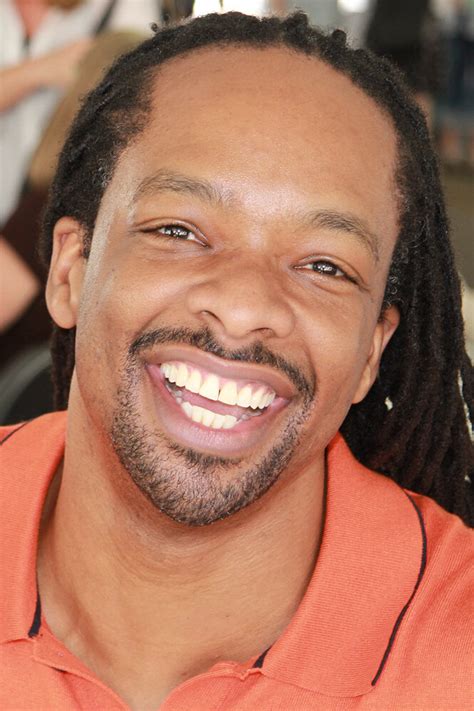
Poet Jericho Brown

Note: If you wish to receive, via e-mail, (1) my weekly newsletter or (2) daily copies of these posts, write to me at rrbates1951@gmail.com. Comments may also be sent to this address. I promise not to share your e-mail with anyone. To unsubscribe, write here as well.

Sunday

In a recent sermon, our curate Kelly Moody introduced me to the poetry of Jericho Brown, a poet steeped in the Bible whose collection The Tradition won the 2020 Pulitzer Prize for Poetry. Our desire to get closer to God, to experience the numinous, she found captured in a passage from Brown’s poem “I Know What I Love”:

I wanted what anyone with an ear wants– 
to be touched, 
and touched by a presence that has no hands

Kelly said that the passage “describes the universal longing and fear that we all have as humans to come closer to the holy.” She noted that the longing is particularly strong in contemporary society, where we’ve “become accustomed to everyday terrors in our culture as though they are acceptable: racism, gender-based violence, school shootings, the realities of death, and the like.”

Kelly detects a prophetic strain to Brown’s poetry, which may be linked to his religious upbringing in an African American church. According to Britannica, during services poems when he was growing up, poems by Maya Angelou, Nikki Giovanni, and other Black writers were read alongside Biblical passages. Brown also says that these church services

put me in contact with the fact that words can have a powerful effect on emotions. That the well said thing could very well lead to shouting and clapping and crying.

Unfortunately, Brown’s church did not accept his homosexuality, and many of his poems capture the separateness he feels in this culture as a gay Black man. Kelly quoted from the poem “Stake”—which invokes images of being tethered to a stake or staked on a cross–and describes what it is like to be a “they,” not a “we”:

I am a they in most of America,
Someone feels lost in the forest of we, 
so he can’t imagine a single tree. 
He can’t bear it. 
A cross. A crucifixion.

In turning to Brown, Kelly was responding to Jeremiah 23:23-28, where the Lord tells the prophet,

Am I a God who is only close at hand? No, I am far away at the same time.

And further on: 

Is not my word like fire, says the Lord, and like a hammer that breaks a rock in pieces?

When Kelly described Brown, like Jeremiah, using prophetic language, she meant “poetic imagery and experiential language that draws us in, deepening our understanding of God’s intimate presence in a world.”

Although we may long for such intimacy, however, it can also be unsettling. Kelly said that sometimes we “would rather imagine God as far away, like a clockmaker, keeping some heavenly peace in another dimension, safely uninvolved in our worldly kingdoms.” By contrast, the prophetic tradition believes that we must be made uncomfortable if we are to remain engaged with God.” After all, God’s word is “like fire and like a hammer that breaks a rock in pieces.” Prophets, she noted “are people who come so close to God, and God comes so close to them, that they know what is most important.”

And that, she said “is the invitation to all of us this morning: to come close, and to be transformed into people who can bear the nearness of God in a world that would rather keep God at arm’s length.” 

After the sermon, I borrowed Brown’s Tradition from Kelly and looked up the poems she had cited. In “I Know What I Love,” I could see Brown engaging in the same back and forth with Love that Kelly described with God. After all, Love, like God, comes to us on its own terms, pulling us out of our comfort zones. Brown notes that it can enter at inconvenient times, and that, furthermore,

It can hurt me if it 
Means to…because 
That’s what in love
Means.

Here’s the poem:

I Know What Love Is
By Jericho Brown 

It comes from the earth.
It is green with deceit.
Sometimes what I love 
Shows up at three 
In the morning and 
Rushes in to turn me
Upside down. Some-
Times what I love just
Doesn’t show up at all.  
It can hurt me if it 
Means to…because 
That’s what in love
Means. What I love 
Understands itself 
As properly scarce.  
It knows I can’t need 
What I don’t go without.  
Some nights I hold 
My breath. I turn as in
Go bad. When I die 
A man or a woman will
Clean up the mess 
A body makes. They’ll
Talk about gas prices
And the current drought 
As they prepare the blue-
Black cadaver that still,
As the dead do, groans:
I wanted what anyone 
With an ear wants— 
To be touched and 
Touched by a presence
That has no hands.

Love for Brown is foundational, rooted in the earth. But for all its promise, it is also “green with deceit,” which I interpret as attached to unreliable bodies. (In his poem “Fern Hill, Dylan Thomas writes about how “Time held me green and dying.”) Some of what Brown says about Love is more about the lover than about Love itself: when he says it is “properly scarce,” this just means that we find it difficult to be fully open to it at all times. I read the lines, “It knows I can’t need/ What I don’t go without,” as Love’s sarcastic refusal to show up on demand (as in, “You can’t really need me if you think this is how love works”).

To emphasize what is at stake, Brown turns to thoughts of his death at the end of poem, along with how unimportant it will seem to other people. Our lives may be transient but our longing for Love’s touch— “a presence”—is transcendent.

Back to Kelly’s sermon, where she proceeded to talk about the nature of such transcendence. “No kind of suffering, or failure, or terror,” she said, “can divide us from what is holy. And by our baptism into Christ’s death and resurrection, we are transformed into people who can bear the nearness of God, too—people who do not make peace with the everyday terrors of this world, but will not normalize or avoid them, either.” She also quoted Biblical scholar Walter Brugemann, who wrote that “prayer is the refusal to accept things as they are.” 

Kelly concluded, 

Prayer empowers us to name our longing to be touched by a presence that has no hands, to name the everyday terrors around us, and to come closer to both our longings and our fears with renewed faith that we will meet God there. 

Brown has said that “poems are like prayers,” adding that, as prayers, “they’re also like chants and spells.” And while he doesn’t use a religious framework to explain poetry’s power in the following quotation, he is essentially saying that poetry can connect us with our inner divinity:

I think poetry evolved to save us from ourselves. It questions our understanding of what it means to be human and, in the process, deepens our humanity. History teaches us — and the daily news reminds us — how easily we forget what it means to be human. Probably no other art form is better than poetry at getting us directly inside another’s mind, experience, perspective. The ability to imagine someone else’s inner life is where compassion begins. 

Amen.

Posted in Uncategorized | Tagged , , , , , | Comments closed

Early Reading Memories

Note: If you wish to receive, via e-mail, (1) my weekly newsletter or (2) daily copies of these posts, write to me at rrbates1951@gmail.com. Comments may also be sent to this address. I promise not to share your e-mail with anyone. To unsubscribe, write here as well.

Friday

I am giving over my Friday blog posts to a memoir I am writing on “My Life through Literature.” Today’s essay is the second in the series. The first can be found here.

We returned to the States when I turned two, and although my parents tried to keep my French going—including reading the books they had picked up in Paris—the language didn’t stick and I would have to relearn it the hard way when I turned 13. We spent a year in Evanston close to my grandmother as my father wrote his dissertation, with my brother Jonathan arriving in August of 1954. A couple of weeks after the birth we headed for Sewanee, Tennessee, where my father had landed a one-year post at the University of the South at Sewanee.

Located 2000 feet up on the western edge of the Cumberland Plateau, Sewanee is breathtakingly beautiful. Nevertheless, we came only because my father hadn’t received any other offers. Or do be precise, he had received an offer from the University of California, Riverside, but thanks to former California Sen. Richard Nixon he would have had to sign a loyalty oath to get the job. So Sewanee it was.

Although my father would be offered a position in the Carleton French Department the following year, the Sewanee position had opened up and he opted to stay. An ardent birdwatcher, he had fallen in love with the mountain environment and had bonded with Stratton Buck, a Flaubert scholar and head of the French Department. As a result, I would grow up in the segregated south rather than in liberal Northfield, Minnesota. Stratton, who served as a father figure, became my father’s staunch defender when his advocacy of integration landed him in hot water with the administration. 

I am still amazed at some of the works that he taught in those early years, including a special seminar for seniors on Proust’s In Search of Lost Time. I, of course, was oblivious to this. The book I remember was The Cat in the Hat.

Doctor Seuss’s classic was somewhat controversial at the time for the way that it acknowledged that children have anarchic alter egos that would take great satisfaction in trashing a house. (Thing One and Thing Two anticipate Max and the monsters in Where the Wild Things Are). Because of my determination to be a good little boy, I was horrified—and yet nevertheless fascinated—by the devastation the characters unleash. Torn in two directions, I ultimately came down on the side of the fish, functioning as the book’s superego. “They should not be here when your mother is out!” he warns continually, and I remember sharing the general panic when the mother is spotted returning. In my memory I can vividly see the glimpse we are given of her red dress and a stylish shoe striding purposefully towards the house. Given the intense anxiety I experienced at the mayhem, the Cat’s special pickup machine came as an intense relief.

The book triggers another memory as well. I distinctly recall standing on the long porch that fronted our three-story wooden apartment building and excitedly explaining to an adult how, by simply changing the first letter of a word, you could create a whole new word (I think I used the example of “cat” to “hat”). This must have been one of those cognitive leaps described by child psychologist Jean Piaget where a child suddenly sees a larger system at work. The fact that I so vividly remember my excitement indicates the importance of the moment. 

Another book I remember from those years, which is very self-revealing when I explore why I loved it so much, is Little Bobo and His Blue Jacket, from the Little Golden Book series that one could purchase in supermarkets. Bobo is an elephant whose mother makes him a blue jacket, which he proudly shows off to his animal friends. Unfortunately he slips in the mud while he’s strutting around and they all laugh at him. To add insult to injury, the coat shrinks when it is being washed—an old monkey washerwoman mishears the mother’s instructions—so that it no longer fits. After a brief moment of sadness, resilient Bobo thinks that maybe the coat will fit one of his friends (those who have laughed at him). Big Brother Hippo is determined to wear it and, in the process of pushing his large arms into the sleeves—he can barely move–he inadvertently stretches it so that Bobo can don it again. Happy ending.

What lessons did I take away? One was not to strut your stuff because it makes you vulnerable to the mockery of others. Another is that, instead of acknowledging your own hurt, you should be selfless and help others. If you do so, you will be rewarded.

I’m not sure which comes first, the book or the character trait—I’m sure they feed off each other—but I grew up fearful of drawing attention to myself (no strutting) and believing it was a good thing to ignore one’s hurt. In other words, I’ve always been a bit repressed, a theme I will return to regularly in these pages.

Other cherished books from these early days were Ruth Krauss’s The Carrot Seed (illustrated by Crockett Johnson) and her collaborations with Maurice Sendak (A Hole Is to Dig and A Very Special House); Eve Titus’s Anatole series; and Kay Thompson’s Eloise.

Then there were the Dick, Jane and Sally series that we had in school and that helped reinforce in me the sense that a white middle class family—woman at home, father at work–was the social norm. It certainly coincided with my own experience of family: my mother stayed at home with the children (David arrived in 1956, Sam in 1960), cleaned the house, and cooked the meals, while my father came home for a sit-down supper at six. After dinner he read to us on the couch in the living room while my mother washed up. 

All parents should read regularly to their children (also share the housework, but that’s another story), but I’m pretty sure my father had an extra motive: by revisiting the books he loved as a child, he reconnected with that childhood. He was obsessed with what he called “the desecration of innocence,” and as I look back at his history I can understand why. At 18 this thin, short-sighted, sensitive, introverted, and very bookish boy was thrust into what Ken Burns’s describes as “the worst war ever,” at one point witnessing firsthand the bodies stacked up in Dachau. If (as my mother frequently informed me) he was enthralled with me when I was born, it was because I was an embodiment of the innocence that he longed for. Reading to me and then later to my brothers allowed him to return to his own innocence.

I think I owe my name in part to his desire to have a relationship with me such as Christopher Robin has with Pooh. Because of that desire, he wouldn’t read to us the final chapter of House on Pooh Corner, which hints that Christopher Robin will be leaving Pooh as he enters grows up. “Pooh, promise you won’t forget about me, ever. Not even when I’m a hundred,” he says, as well as, “Pooh, whatever happens you will understand, won’t you?” By the same token, my father hated the ending of Peter Pan when Wendy grows up. Part of him wanted to be the boy who never aged. 

This desire of his proved to be a double-edged sword as far as I was concerned, however. I’ll talk more about this as my memoir proceeds but it meant that, to be the innocent he wanted me to be, in certain ways I deliberately tried not to grow up. I tried to shut down awareness of the dark things going on in the world and cultivated a certain cluelessness. This became more difficult when I hit middle school, but I still avoided the profanity and sex talk of the other boys and I tried to persuade myself that I didn’t like rock music (I felt guilty for my secret love of the Beatles).

It was a little easier to play the perpetual innocent because, throughout my childhood, we did not have a television. As a result, we could be more easily cloistered in my father’s childhood books. Every night each of us got a chapter and then, when we were in bed, a poem. I’m not sure when I was introduced to certain books (with the exception of Narnia and Lord of the Rings, which I’ll talk about later), but my inner landscape was peopled by Ratty, Mole, Toad and Badger from Wind in the Willows; Lewis Carroll’s Alice; George MacDonald’s Princess and Curdie; E. Nesbit’s Bastable family;  Jim and Long John Silver; Peter and Wendy; the Borrowers; Maria and the professor from Mistress Masham’s Repose; the boys from Cecil Day-Lewis’s Otterbury Incident; a vast array of characters from the Oz books (especially Dorothy, Tip, and the Shaggy Man); Andersen’s Little Mermaid (although I was traumatized by the ending); Tom Sawyer; Penrod; the five little Peppers; Mowgli and the wolves; Charlotte and Wilbur, Phileas Fogg and Passepartout; Alcott’s Little Men (but not Little Women), and the three musketeers.

The poems my father read us included lyrics by Dorothy Alcott, Robert Louis Stevenson, Walter de la Mare, Alfred Noyes, A.A. Milne, James Whitcomb Riley, Ogden Nash, Edward Lear, Lewis Carroll and countless others. We also read Lucy Fitch Perkins’s twin books (The Scottish Twins was my favorite); V.M. Hillyer’s A Child’s History of the World; and J. Walker McSpadden’s How They Carried the Mail. Most of these we still own.

Above all I loved the works of fantasy. Perhaps we were a bit like the Bronte family, who in their childhood buried themselves in their invented world of Gondal. Through our bookish upbringing, it was as though we had entered a magic portal that separated us from the rest of our society. E.D. Hirsch may talk about the importance of cultural literacy in holding a society together, but the common referents for the world in which I grew up were Father Knows Best, Leave It to Beaver, The Flintstones, The Beverly Hillbillies, Get Smart, and The Ed Sullivan Show, not Alice in Wonderland and The Jungle Books.

I don’t regret this upbringing—in fact I’m grateful for it—but it does mean that I’ve often felt out of sync with those around me. I’ve often felt naïve and vulnerable to people who know more about the broader world than I do. Some of the problems caused will become clearer as my memoir proceeds.

Posted in Uncategorized | Tagged , , , , , , | Comments closed

  • Sign up for my weekly newsletter