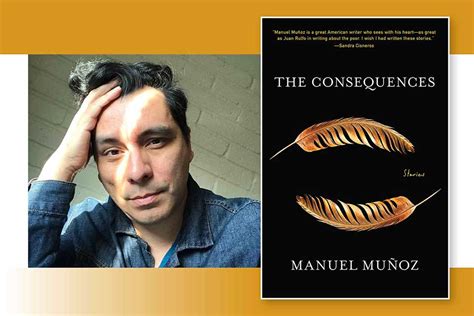
Latino Author Battles Caricatures

Note: If you wish to receive, via e-mail, (1) my weekly newsletter or (2) daily copies of these posts, write to me at rrbates1951@gmail.com. Comments may also be sent to this address. I promise not to share your e-mail with anyone. To unsubscribe, write here as well.

Thursday

One of my book groups recently discussed Manuel Muñoz’s The Consequences (2022), a collection of short stories about Mexican Americans living in California’s Fresno Valley in the 1980s and 1990s. This account humanizes people that MAGA is currently demonizing and that ICE is chasing down. Could Trump get away with his fascistic caricatures if more people read stories like this?

I think of how, in my book Better Living through Literature, I write about the power of the literary imagination to open minds. I explored how, in the 18th century, the Imagination became seen as a major force and was used to expand the franchise. By entering into the lives of formerly invisible people, figures like William Wordsworth and Percy Shelley encouraged their fellow citizens to

l step beyond their own narrow class boundaries in ways that would have been, well, unimaginable in earlier times. Through literature authors have entered the lives of the marginalized (Walt Whitman), the urban poor (Charles Dickens), American slaves (Harriet Beecher Stowe), Dorset dairy maids (Thomas Hardy), French coal miners (Émile Zola), Nebraska pioneers (Willa Cather), Harlem residents (Langston Hughes), African American sharecroppers (Jean Toomer), African American homosexuals (James Baldwin), bankrupted Oklahoma farmers (John Steinbeck), Laguna Pueblo war veterans (Leslie Marmon Silko), transplanted Pakistanis (Hanif Kureishi), West Indian immigrants (Zadie Smith), American lesbians (Alison Bechdel), and on and on.  

Many of the dramas Muñoz handles involve deportations. In “Anyone Can Do It,” a mother and child must figure out how to live after the husband/father has been deported. A neighbor reassures her,

Sometimes they don’t come back right away. But don’t worry. They’ll be back soon. All of them. If they take them together, they come back together. 

In “The Happiest Girl in the World,” the drama involves going to a border town to retrieve a husband who has been deported. We learn about a helpful bank teller servicing the narrator:

She knows the bus from Fresno stops once a week in our town now, Saturday midafternoon in front of the barbershop, as if the whole drama of deportation and return was a big plan between the migra and the charter companies. She hurries, and though she never says much of a pleasant word to any of us, I think it is because she doesn’t want us to miss the only bus going out of town, the only way to get our men back.

Often, the narrator tells us, the immigration authorities are alerted by the farmers themselves, always on a Thursday so that they don’t have to pay the week’s wages. Of the women taking the bus, the narrator reports,

Some of us have rings on our fingers and some of us don’t, but we all know what it means to watch the calendar turn to the last of the month. We know what some of the farmers do on final Fridays, and we know what to do on Saturday mornings. The farmers put their dusty hands on a phone receiver and very calmly place a call to the migra. Then the men in the green uniforms arrive at the rows of whatever crops are in season—grapes or peaches or plums—and round up the men into vans. No one ends up paid for the week’s labor, and everyone gets a standard booking in either Visalia or Fresno before being hustled back onto the vehicles. By nighttime, the vans reach Bakersfield and start the slow ascent into the mountains. They will head through Los Angeles—where all our men know it’s easy to get lost, but expensive to live—then on to San Diego, where it’s just expensive to live. Finally, they’ll reach the border itself and Tijuana, where the van doors open to let all of the men out so they can start over again.

The narrator is “the happiest girl in the world” because her man shows up.

In another story, we see enacted a scene with which we are becoming only too familiar:

That’s when it happened, the bad thing. They were all deep in the orchard, far away from the road, but still close enough to see the shape of one of those green migra vans, its bright gold star winking at them from the road. They saw two officers come out, bulky and towering over Eliseo, more slender than ever. They watched like rabbits in the field, statue-still, resisting the urge to run, the two officers putting Eliseo’s arms behind his back and leading him to the van.

The story “Fieldwork” has the most extensive account of the work that the men are doing. The narrator’s father is in rehab following a stroke and, to get him talking, the son reminds him how he used to wire money to his Mexico relatives, earned from picking oranges, grapes, and peaches:

Naranjas, right, Dad?

When he heard the Spanish, he nodded and continued recalling in his own language. Cotton and tomatoes, too. And almonds, my father added, and figs and nectarines, there was so much work. Apricots, plums, corn, pistachios, the lemon groves over on the eastern slope of the Valley into the Sierras. Walnuts and cauliflowers. Cherries and pears. He kept remembering things. Strawberries hiding in the dirt. Pecans. Persimmons. Avocado trees in the prettiest green rows you’ve ever seen. Olives and wheat. Hay bundled up for the horses and the cows. Apples, because the Americans liked their pies. 

The father also remembers fleeing with the other laborers, even though he had the necessary papers. It is an experience a number of people caught up in the ICE raids can relate to. The father here is responding to his son’s question about why he didn’t inform the authorities:

He laughed. You think anybody ever believed me? You think they believe you just because you say something? You think all you have to do is say you have papers? Here, my father said, thrusting his hands out as if in offering. Here, my papers.

For all the mentions of the “migra,” however, they are more of a backdrop than a focus. The richness of the stories lies in how the Mexicans and Mexican Americans interact with each other. Sometimes there are betrayals, sometimes there are unexpected acts of kindness, but always there are people being people. As a Christian Science Monitor review observes, each character “receives the gift of consideration: these are lives as deserving of attention and grace as any other.”

Providing us with such three-dimensional depictions is what good literature does, which is why we must keep turning to it if we are to hold on to our souls. Forces are at work seeking to strip us of our humanity, but authors like Muñoz give us the stories we need to resist.

Posted in Uncategorized | Tagged , , , | Comments closed

Questions about the Reading Experience

Marie Bashkirtseff, Young Woman Reading (1880)

 Note: If you wish to receive, via e-mail, (1) my weekly newsletter or (2) daily copies of these posts, write to me at rrbates1951@gmail.com. Comments may also be sent to this address. I promise not to share your e-mail with anyone. To unsubscribe, write here as well.

Wednesday

Yesterday I wrote about a series of questions about the reading experience that the Guardian asked author Barbara Kingsolver. The questions were so good that I started answering them myself and also invited readers to send in their own answers. Since then I have thought of additional questions, which are included at the end of today’s essay and which I will address in a later post. Again, please feel free to write in with your own answers since I love hearing other people’s reading stories.

Here are the responses, Kingsolver’s and my own, to the remaining questions asked by the Guardian:

The book I reread
Kingsolver mentions George Eliot’s Middlemarch, which many contend is England’s greatest novel. The author reports that she rereads it “at least once per decade, because it’s about everything, for every person, at every age.” 

It’s harder for me to come up with a book because there are so many of them. When I was an active teacher, I couldn’t teach a work without rereading it first, no matter how many times I had thumbed through its pages. I vaguely recall Julian Barnes’s narrator in Flaubert’s Parrot mentioning this as an occupational hazard of literature teachers, how they wear works out for themselves through constant revisiting. 

While this can indeed be a problem, the compensation is discovering how multi-leveled the greatest works are. But to answer the question, I used to ritually reread Pride and Prejudice after turning in spring semester grades, using it to find peace following the frenzy of the school year. Other works that I particularly loved teaching, and so reread once or twice a year, were Jane Eyre, Sir Gawain and the Green Knight, Homer’s Odyssey, King Lear, and of course Beowulf.

The book I enjoyed as a teenager but could never read again
Kingsolver mentions J.D. Salinger’s Franny and Zooey, saying that, now that she knows that the author groomed young women, this has “poisoned the well.” 

It’s interesting that she mentions Salinger since I had the opposite experience with a work of his: I loathed Catcher in the Rye when I read it at 15 but was impressed when I read it again in my 40s. I came to realize that my aversion arose from how it captured my adolescent insecurities only too well. In other words, I couldn’t handle the truth. (Regarding Salinger’s taste for young women, I have only just now learned about it.)

For books that I enjoyed as a teen but can’t read again, I’d have to point to certain D. H. Lawrence novels, especially Lady Chatterley’s Lover and Women in Love. All that focus on male phallic energy I now find tiresome. I speak as one who was so in love with Lawrence in college that I included a poem about turtles mating (“Tortoise Shout”) in our wedding ceremony.

I once heard Sandra Gilbert say (the author of Madwoman in the Attic visited our college in the 1980s) that there are more unfinished female dissertations on D. H. Lawrence than on any other author. Energized initially by his acknowledgement of female sexuality, these female fans would become disenchanted as they explored the man further. My own growth away from him has been slower but I haven’t reread any of his novels in decades (with the exception of The Man Who Died).

All of which is to say that some authors are best encountered when we are young. Unlike, say, Shakespeare, who has something for every age group.  

The book I discovered later in life
For Kingsolver, it’s Willa Cather’s My Ántonia, which she says she resisted until late in life. Since both are regional authors (Cather for Nebraska, Kingsolver for southern Appalachia), the love affair makes sense. I too have fallen in love with Willa Cather’s novels in recent years, but the work I resisted reading—but now consider to be one of the great books of my life—is Tolstoy’s War and Peace.

The book I am currently reading
For Kingsolver, it’s Nikole Hannah-Jones’s The 1619 Project, which American conservatives (not just MAGA) have been demonizing ever since it appeared. I myself am currently listening to Antelope Woman by Louise Erdrich, whom Kingsolver mentions in her next answer.

My comfort read
Kingsolver responds, 

For long plane trips I grab a contemporary novel I can trust to be fabulous, because I’ve loved everything that author has written: Louise Erdrich, Margot Livesey, Maggie O’Farrell, Amor Towles, Russell Banks and Richard Powers, to name a few. The list is comfortingly long.

I recently wrote about how my go-to comfort read are novels by Haruki Murakami, especially 1Q84, which is a blend of magical realism, mystery suspense, and love story, with a very attractive hero and heroine. And I too have certain writers whose new novels I will read as soon as they come out, including Erdrich, Margaret Atwood, Kate Atkinson, and Kingsolver herself. Oh, and Philip Pullman, whose final volume in his Dust series I’ve been breathlessly awaiting for years.

Now to my own Guardian-style questions, which I’ll respond to in a future post. I limit my answers to poetry, drama, and prose fiction:

–Who is your favorite hero and heroine? (they can be from different works)
–Who is your favorite villain?
–What work has held you in the greatest suspense?
–What work has given you the greatest shock?
–What work has given you the greatest erotic thrill?
–What literary ending do you find the most satisfying?
–What literary ending do you find the least satisfying?
–If you could change an ending to a work, what would you do?
–What work do you most wish had a sequel? (fan fiction is driven by such works)
–What is a work that you believe has damaged you?
–What is a work you wish you had never encountered?
–If you could have any character as a partner, who would it be?
–If you could have any author as a partner, who would it be?
–What literary family would you most like to belong to?
–What is a work that had you laughing out loud?
–What’s your favorite open ending?
–Add your own question and answer.

Posted in Uncategorized | Tagged , , , , , , , , , , , , , , , , , | Comments closed

Kingsolver on Life-Changing Lit

Author Barbara Kingsolver

Note: If you wish to receive, via e-mail, (1) my weekly newsletter or (2) daily copies of these posts, write to me at rrbates1951@gmail.com. Comments may also be sent to this address. I promise not to share your e-mail with anyone. To unsubscribe, write here as well.

Tuesday

I’m revisiting an old Barbara Kingsolver interview because, in addition to providing insight into one of my favorite contemporary authors, it also has a series of questions that all literature lovers will benefit from answering. Along with Kingsolver’s responses, I’m providing some of my own. If any of you write back, I’ll share your answers as well. Here are the questions:

–Earliest reading memory
–Favorite book growing up
–The book that changed me as a teenager
–The writer who changed my mind
–The book that made me want to be a writer
–The book or author I came back to
–The book I reread 
–the book I enjoyed as a teenager but would never read again
— The book I discovered later in life
–The book I am currently reading
–My comfort read

My earliest reading memory

For Kingsolver, it was encountering the word “orange” when reading a newspaper over her father’s shoulder, at which point “my brain flooded with the thrills of colour and taste. I was hooked, forever.”

For myself, I remember being enchanted by the fact that, by simply changing the first letter of a word, you could change the word (as in “cat” to “hat”). I was four or five at the time and I can still remember where I was standing when, in my excitement, I explained this to a grown-up.

My favorite book growing up

For Kingsolver, it was Katharine Lee Bates’s fairytale collection Once Upon a Time, which scared her senseless. As she notes, 

This collection was no holds barred, with fully grotesque illustrations: two-headed giants, stolen babies. Toads and Diamonds, featuring a curse that made toads crawl out of a girl’s mouth instead of words. I credit this book with launching me into adult literature at the age of 12.

I’ve written numerous times about the book that saved my childhood was The Hobbit and Lord of the Rings, which I encountered in fourth or fifth grade. Tolkien’s vast “world building” fantasy taught me that the imagination has no limits.

The book that changed me as a teenager

Kingsolver says she was embarrassed to be cast as Juliet in 10th grade English and so clowned around. As a punishment, she had to “copy out sonnets until I was truly sorry,” which prompted her to fall for language, meter and Shakespeare. To this day she thanks her teacher.

I was really upset at having to attend a military high school (the only good school in the area), but having a teacher who had us read the entire Iliad aloud cushioned the blow. I had always loved Greek myths and, for the first time in my life, an English class was assigning reading I cared about.

The writer who changed my mind

For Kingsolver, this was Dorris Lessing, especially her Children of Violence novels. Kingsolver explains that she “suddenly had new eyes for racism, sexism, southern Africa and my own segregated town in Kentucky. Also, new eyes for what literary fiction can be and do in the world.” One sees in Kingsolver’s own novels a determination to make the world a better place.

In my book Better Living through Literature I express gratitude to the two novels that gave 11-year-old me a firm foundation as my parents joined black parents to fight for integration in segregated Tennessee: Huckleberry Finn and To Kill a Mockingbird. While I saw racism all around me, these books let me know that good people did not think this way.

The book that made me want to be a writer

Kingsolver names John Steinbeck’s Cannery Row, which she describes as a funny, beautiful novel about an odd little scramble of not-important people.” She thought, “I could try to write a book like that,” and she went on to produce her first novel, The Bean Trees.

When I was in high school, the fiction writer I imitated was Albert Camus, especially his allegorical short stories. They seemed at once mysterious and filled with deep import. I stopped writing fiction when I got to college, however.

The book or author I came back to

Kingsolver names Charles Dickens, which comes as no surprise since Demon Copperhead owes its structure and many of its characters to David Copperfield. About Dickens Kingsolver writes,

I liked him well enough as a younger reader but didn’t appreciate his genius. The craft is so solid, you don’t see the director backstage manipulating plot and point of view. Now, as a novelist, I’m back there with him asking after every scene, “How the heck did you pull that off?”

I find myself choosing Dickens as well. I too found him pleasant enough but now am dazzled by his depth. Another work, which as a teenager I read in a French abridged version, is Victor Hugo’s Les Misérables. As with Dickens, I enjoyed it at the time but now, upon rereading, I now rank it up there with War and Peace in its sweeping portrayal of the human condition.

I’ll return to the rest of the questions in tomorrow’s post.

Posted in Uncategorized | Tagged , , , , , , , , , , , , , , , , , , , | Comments closed

Trump as Mrs. Elton and Ozymandias

Note: If you wish to receive, via e-mail, (1) my weekly newsletter or (2) daily copies of these posts, write to me at rrbates1951@gmail.com. Comments may also be sent to this address. I promise not to share your e-mail with anyone. To unsubscribe, write here as well.

Monday

Compared to how Donald Trump and his administration are dismantling American democracy, his turning the White House into a tacky version of Versailles, gilding with gold its classical white marble, seems a minor matter. Still, it reveals his dream of being a monarch, which is at the heart of his rot. When I see photographs of his restoration job, I can’t help but think of Mrs. Elton in Jane Austen’s Emma.

Mrs. Elton is the foil of Austen’s protagonist, a daughter of new money who marries the suitor that Emma has rejected. Determined to replace Emma as the head of Highbury society, she talks incessantly about the barouche-landau owned by her wealthy brother and sister, and she is determined to show this backwater hamlet how things ought to be run. Her criticisms in the following passage are delivered aloud so that everyone can hear them:

She was a little shocked at the want of two drawing rooms, at the poor attempt at rout-cakes, and there being no ice in the Highbury card-parties. Mrs. Bates, Mrs. Perry, Mrs. Goddard and others, were a good deal behind-hand in knowledge of the world, but she would soon show them how everything ought to be arranged. In the course of the spring she must return their civilities by one very superior party—in which her card-tables should be set out with their separate candles and unbroken packs in the true style—and more waiters engaged for the evening than their own establishment could furnish, to carry round the refreshments at exactly the proper hour, and in the proper order.

One can imagine Mrs. Elton looking at the White House and concluding, like Trump, that it needs an attached ballroom.

In many ways her relationship to Emma is like Trump’s relationship to Barack Obama, who has a natural class that Trump hungers for and thinks he can achieve by amassing money and power. Oh, and by tarting up the president’s residence. 

Emma, who represents old money, also has natural class. The drama of the novel, however, is whether Emma can live up to potential or whether she will descend to Mrs. Elton’s level. There are times when she is in danger of doing just that, whether by snobbishly rejecting Roger Martin as an appropriate partner for her protégé Harriet or by making a cheap joke at impoverished Miss Bates’s expense. In each case, neighboring squire John Knightley has to coach her into behavior expected of society’s leaders.

In the end, through honest self-reflection, Emma rises to the occasion, and the reward is marriage to Knightley. They have a classy and dignified wedding, and it is Mrs. Elton’s reaction to the ceremony that came to mind when I saw contrasting pictures of the White House Oval Office under Joe Biden and under Donald Trump (see picture above). Austen’s novel concludes with the following subtle and pitch perfect putdown: 

The wedding was very much like other weddings, where the parties have no taste for finery or parade; and Mrs. Elton, from the particulars detailed by her husband, thought it all extremely shabby, and very inferior to her own.—“Very little white satin, very few lace veils; a most pitiful business!—Selina [her sister] would stare when she heard of it.”

To which Austen adds,

But, in spite of these deficiencies, the wishes, the hopes, the confidence, the predictions of the small band of true friends who witnessed the ceremony, were fully answered in the perfect happiness of the union.

Chef’s kiss for “in spite of these deficiencies.”

Speaking of Trump’s Obama envy, he also can’t stand that his predecessor won the Nobel Peace Prize, so much so that he even threatened the Norwegian finance minister with tariffs if Norway doesn’t give him one. This made blogger Greg Olear at Prevail think of “Ozymandias,” the well-known Percy Shelley sonnet about Egyptian pharaoh Ramesses II. 

After noting that Trump has also taken over the Kennedy Center so that he can host the awards ceremony and name the recipients, Olear observes, “He wants the thing to be named after him, probably”:

This is a guy who basically spent his entire career putting his name on everything. He literally made money by licensing other people to put his name on things. So he’s big into this vainglory, right? This kind of “Me, me, me! I want to be the best. I want to be acknowledged as the greatest, as the genius, as the peacemaker, as the best supporting actor,” whatever. That’s what he wants.

Now for the poem:

I met a traveler from an antique land
Who said: “Two vast and trunkless legs of stone
Stand in the desert . . . Near them, on the sand,
Half sunk, a shattered visage lies, whose frown,
And wrinkled lip, and sneer of cold command,
Tell that its sculptor well those passions read
Which yet survive, stamped on these lifeless things,
The hand that mocked them, and the heart that fed:
And on the pedestal these words appear:
‘My name is Ozymandias, king of kings:
Look on my works, ye Mighty, and despair!’
Nothing beside remains. Round the decay
Of that colossal wreck, boundless and bare
The lone and level sands stretch far away.”

To be sure, Trump is no Ramesses II. “Lone and level sands” pretty much captures the barrenness of his interior landscape, however. And he shares Ozymandias’s ego.

Posted in Uncategorized | Tagged , , , , | Comments closed

Poetry – Music of the Sky and Heart

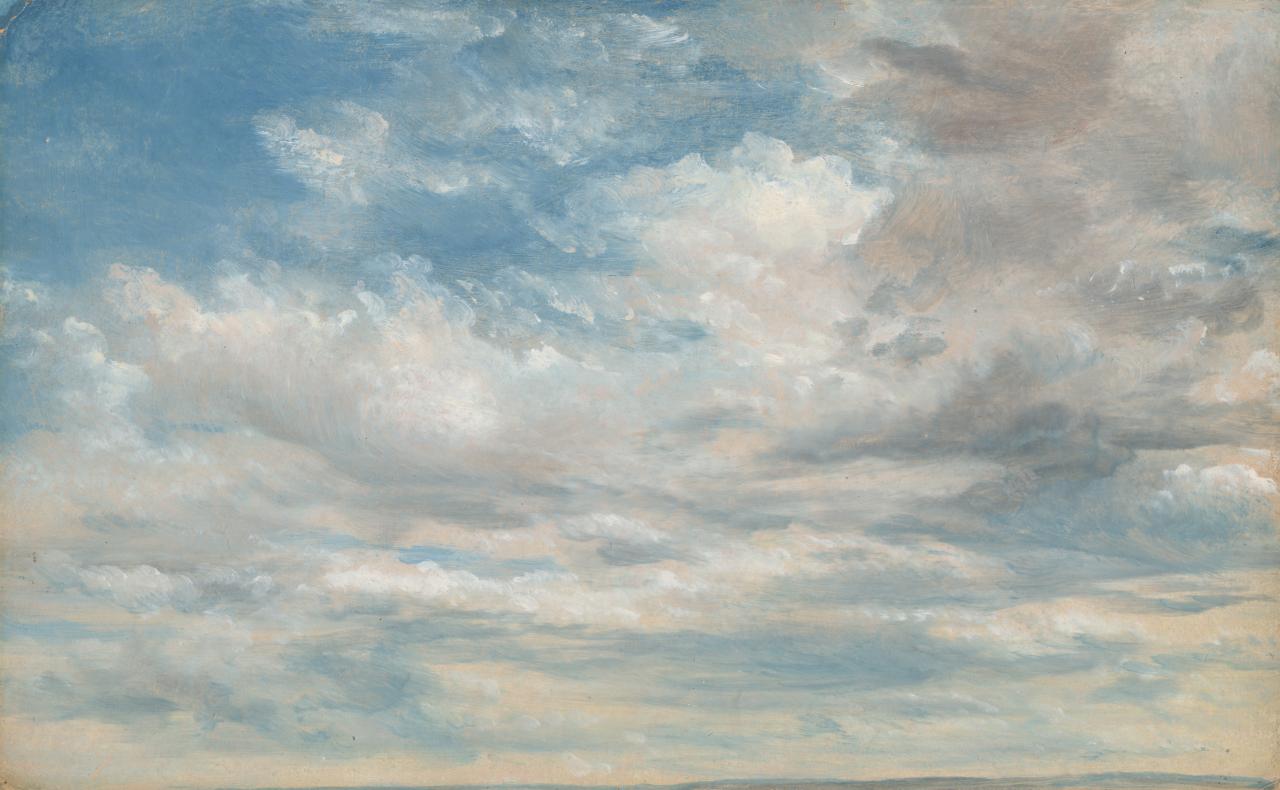
John Constable, Clouds (1822)

Note: If you wish to receive, via e-mail, (1) my weekly newsletter or (2) daily copies of these posts, write to me at rrbates1951@gmail.com. Comments may also be sent to this address. I promise not to share your e-mail with anyone. To unsubscribe, write here as well.

Sunday

Reprinted from Nov. 17, 2013

I’ve been thumbing through Music of the Sky, a wonderful collection of spiritual poetry from a wide range of faiths. The title comes from a poem by Frithjof Schuon, a 20th century German poet who, according to the book’s short blurb about him, wrote more than 300 short poems during the last three years of his life. This one was written in English:

The Song

A finite image of Infinity:
This is the purpose of all poetry.
All human work to its last limits tends;
Its Archetype in Heaven never ends.
What is the sense of Beauty and of Art?
To show the way into our inmost Heart–

To listen to the music of the Sky:
And then to realize: the Song was I. 

In their very interesting preface and introduction, editors Barry McDonald and Patrick Laude expound on how poetry is a “finite image of Infinity.” McDonald says that “the music of the sky” manifests itself through poetic rhyme and meter:

Apart from the content of the poem as such, the most important components of poetry are rhyme and meter. The “music” and the “rhythm” of the poem evoke what Frithjof Schuon has called “the metaphysical transparency of phenomena.” Just as it is the ordering principle of the Logos which enters into manifestation and allows us to realize that God is immanent, so it is the Logos, understood as Sound and Word, which is reflected in the prosodic norms of all authentic spiritual poetry. From the perspective of traditional metaphysic, only God is Real; and it is this Reality unfolding in all of creation which permits us to see that the world is a manifestation of the Sacred. It is this underlying aspect of the deep nature of things which points to the essential function of rhyme. If God is the fundamental unity allowing for all living things to exist in harmony, then, translated into the language of poetry, God is what makes all things rhyme. This is its most profound meaning, and it explains why, since time immemorial, the formal element of rhyme has been a part of the great poetic traditions of the world; without it, the world of the poem ceases to reflect the Logos; it ceases to reflect the deep, underlying homogeneity of creation.

McDonald says something comparable about rhythm:

Similarly, in union with rhyme, we note that the role of the rhythmic component of meter also possesses an essential meaning which we may associate with the contemplative life. Understanding the heart as a symbol of the logos in the human microcosm, we begin to realize the importance of the metrical norm in poetry: without the beating of the physical heart we cannot live; and without the prosodic “heartbeat” a poem is devoid of a rhythmic center—it loses its living pulse. The iamb, which is an unstressed followed by a stressed syllable, echoes the human heartbeat; it is one of the most ancient metrical forms, and it is as a result of the iambic meter that we are drawn into the spell of Shakespeare’s sonnets. Also, it is rhythm which largely contributes to the readers’ ability to interiorize the beauty of the poem; the rhythm of the poem, so to speak, allows the meaning to dance into the soul and to lodge in the memory.

Now, there are many spiritual poems that do not rhyme—those of Mary Oliver leap first of mind as I have just been teaching her—and of course many poems do not have an iambic rhythm. That being said, however, I would agree that there are musical dimensions of poetry that serve to put us in touch with the spiritual dimensions of life, which rhythm being essential.

Or as Schuon points out, we think we are listening to the music of the sky, only to discover that we have found the way to our inmost heart.

Posted in Uncategorized | Tagged , , | Comments closed

Discovering Parental Love Letters

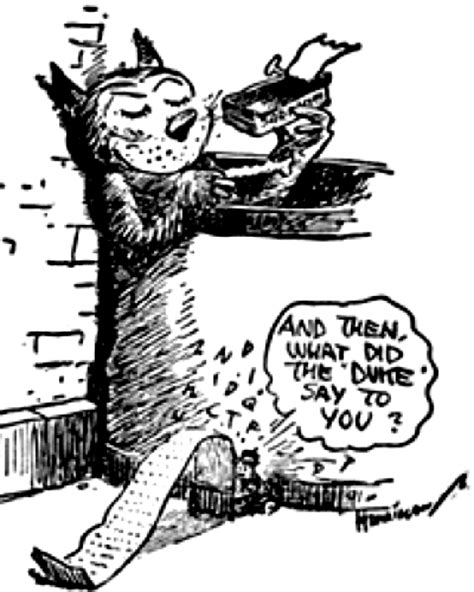
Illus. of Don Marquis’s Archy and Mehitabel

Note: If you wish to receive, via e-mail, (1) my weekly newsletter or (2) daily copies of these posts, write to me at rrbates1951@gmail.com. Comments may also be sent to this address. I promise not to share your e-mail with anyone. To unsubscribe, write here as well.

Friday

Going through the many boxes of correspondence that my mother kept, Julia came across the love letters from my father in the summer of 1946. This was the summer when my mother, who had been going steady with my father for a semester, decided that she really should try out other options. What one sees in the letters is my father’s heart breaking, which he hides under a barrage of self-deprecating humor, thinly disguised jealousy, and poetry. I focus on the poetry in today’s post.

When Phoebe Strehlow from Peoria, Illinois attended the first day of her Carleton College English class in the spring of 1946, she noted a new male student—men had been in short supply during the war years—and went and sat next to him. Scott Bates from Evanston, Illinois fell in love instantly (my mother was a gorgeous woman) and they started dating. Scott, knowing instantly that she was the love of his life, started thinking marriage.

What did the two see in each other? Phoebe, I suspect, was impressed by my father’s life experiences—he was two years older and had been in Normandy, liberated Paris, and Munich—as well as by his poetry, his sense of humor, his lively intelligence, and (as she always said) his smile. He meanwhile was drawn to her beauty, her own considerable intelligence, and above all her innocence, which he clung to after witnessing the horrors of Dachau.

But I imagine that my mother, who had had an upper-class upbringing in Peoria, was also somewhat overwhelmed by this restless and imaginative man, which is why she retreated to more conventional dates over the summer and following fall, including the heir of a major watch company and someone who would later ascend to the upper echelons of the American Boy Scouts administration. These men looked like the kind of man she was supposed to marry once she got what was often called the M.R.S. degree.

She discovered, however, that no one fascinated her anywhere near as much as this poet. So when my father told her at the end of their senior fall semester that he was finally over her—and she, realizing she was in danger of losing him and his wonderful smile, responded by inviting him to a smorgasbord in Minneapolis—and he accepted—the relationship was on again. They wanted to get married following graduation, as Julia and I did, but her parents persuaded her to wait a year. 

Their marriage involved a very different life than the one Peoria would have given her. After all, professors didn’t make much in those days. Rather than being a Peoria socialite, she found herself first scraping by as a grad school wife, then becoming fluent in French thanks to a two-year Fulbright, then plunged into the civil rights movement, and all the while having a front row seat to my father’s battles with the Sewanee administration over integration, the admission of women, LGBTQ+ rights, and his erotic film series. Their marriage lasted 65 years, with my father dying at 90. My mother died eight years later at 96.

As I go through their letters, I’m struck by the role poetry played in their relationship. They were big fans of Don Marquis’s Archy and Mehitabel, a poetic series that appeared in the Baltimore Sun. It featured cockroach Archie, who writes in lower case letters since he can’t work the shift key on the typewriter, and alleycat Mehitabel, who claims that she is Cleopatra reincarnated and whose watchword is “toujours gai” (always joyous).

 “Toujours gai” became their motto that first semester, and my father would use it in his desperate letters to her over the summer as he tried to win her back. “Laugh, be merry, be gay, raise hell” he wrote her in August of that summer, along with some cutting remarks about that “old soak” Bill, whom she was dating at the time. (If he knew about Bill, then my mother must have been telling her about him, perhaps using my father as “a friend.” Years later she would confide to me that Bill, whom she corresponded with into their nineties—her exploration of a road not taken?–was one of the most boring men she had ever known. My father, who was always stirring things up, could be unpredictable and unsettling and exasperating but he was never boring.)

I note in passing that “toujours gai” is the epitaph my brothers and I inscribed on my mother’s plaque in the Sewanee cemetery.

In my father’s letters to her that summer, my father also channeled the great humorist and cartoonist Milt Gross, whose characters deliver a mixture of English and Yiddish. In the following paragraph, he hints that he could have come to see her return from visiting “Jim” at the airport, Jim being the watch guy who had also been in the navy [“da gobs,” “da middies,” “da fleet”]. He imagines Jim being carried off in a stretcher and being hit by a train. Or maybe it’s he who feels like he’s been run over by this train:

Almost came down to the airport Thursday to see you in but thought you might have changed your plans or something’.  Sorry now I didn’t.  Mama, that woulda been delicious! I can see myself leaping into your waiting arms (joke!) while they carried Jim off in a stretcher.  “hi, kids, meet Bates, your daughter’s latest! What goes wit da gobs? Ha. Ha. What makes wit da’ middies? Ha, Ha. Bin flirtin’ wit’ da fleet, baby? Oh, ha. Ha, Ha. The lifeless, shattered remains found under the caboose of the Peoria Rocket have been identified as formerly belonging to a Miss Phoebe Strehlow, late of ….” Sorry, honey I would have liked to have seen you though.

I’m struck by my father’s use of jazz age lingo, here and in the next paragraph. Notice the agony in his tone as he describes a knife being twisted by all her “extra-curricular activities” (which, again, indicates that she must have been telling him about them):

Darling, if you missed me for a day, that’ wonderful, and I will always remember it, but Jesus, Phoebe, I’ve been like that ever since, strictly laughin’ on the outside, crying on the inside, and your letters usually have so much penicillin in them.  Baby, they vibrate and sing! I guess you must be pretty shot, tho’ from all the extra-curricular activities. It’s swell that you had a bang-up time on your trip and God knows I want you to be livin’ on a rainbow toujours, but please don’ twist the blade. I’m too young to be an alcoholic! Jeez, I’m sorry honey, I shall now commence kicking myself around the block for being so dodard (surprise!) jealous; you must think I’m a damn’ fool sometimes, Phoebe.

So now to one of the poems that he wrote during this time, perhaps in the fall in a creative writing class. He knew well the tradition of unrequited love poetry and about poets lamenting their broken hearts. Perhaps the following poignant but bitter poem provided some comfort. I think “crashing chords” is a reference to wedding music:

Orpheus, you played and overplayed your hand.
Your mystic ripples lapped on shifting sand
Ahead: instead of crashing chords you planned
You touched raw, clanging dissonances, and
Found magic nothing more than sleight-of-hand.

What most strikes me about these letters is how my parents’ relationship foreshadowed my own with Julia, albeit without the heartbreak. We too met at Carleton our junior year and we too were brought together by poetry: Julia had started a poetry group and I wowed her by showing up and reciting the opening lines of a Gerard Manley Hopkins poem (“The Leaden Echo”)—and then disappointed her by not joining the group because I was so busy with my duties on the Carletonian, which I would go on to edit. 

We didn’t start dating right away but, later that school year, we started talking in more depth and found each other endlessly fascinating. I too sent her poetry over the following summer and would go on to sprinkle poetry liberally into our commencement day wedding ceremony (including a sexually explicit D. H. Lawrence poem). 

I imagine that my sons will someday discover the letters I wrote to Julia over that summer, which are stored somewhere. Unfortunately, like my father, I didn’t hold on to Julia’s letters to me.

We think we are different from our parents until we discover that, in many ways, we are not.

Posted in Uncategorized | Tagged , , , | Comments closed

Dachau and Hiroshima Remembered

Dachau when liberated by allied troops

Note: If you wish to receive, via e-mail, (1) my weekly newsletter or (2) daily copies of these posts, write to me at rrbates1951@gmail.com. Comments may also be sent to this address. I promise not to share your e-mail with anyone. To unsubscribe, write here as well.

Thursday

Last week, when marking the 80th anniversary of the bombing of Hiroshima and Nagasaki, I recounted how my father was in Munich taking German citizens through required tours of Dachau when he heard the news. Julia and I have been looking through old papers of my parents, including old love letters, and came across this account. I already knew the story but hadn’t realized—or perhaps just didn’t remember—that he had written it down. 

Imagine being 22 years old and encountering first the Holocaust and then the atom bomb. It helps explain my father’s fatalistic determinism, which he and I used to argue about. How can you have devoted your entire life to fighting for social justice, I would ask him, while declaring that we’re all going to end up wiping ourselves out? In response, he would just shrug and say that one does what one can. 

Even though he died at 90 during Barack Obama’s second term—which is to say, he saw the reward for having worked tirelessly for civil rights and racial justice—I imagine that would not have been at all surprised at Donald Trump’s ascendency. If someone had told him that, a little more than a decade later, masked storm troopers would be grabbing people off the streets and the national guard would be occupying Democratic cities, he would have felt affirmed in his view of the world.

Perhaps his pessimism served to insulate him against the kind of disappointment that causes people to withdraw from politics. Expecting nothing, he kept fighting. When I think of him organizing against segregation and homophobia and climate destruction, I am put in mind of a song that I remember singing in a civil rights workshop we attended in Charleston, South Carolina in 1967. Present there were Fanny Lou Hamer, Septima Clark, Stokely Carmichael and others activists who would go on to become legends. The following stanza stands out:

My mother, she was a soldier
She had her hands on the gospel plow
One day she got old, she couldn’t fight anymore
She said, “I’ll stand here and I’ll fight anyhow.”

Here my father’s war story:

A Memoir
By Scott Bates

We passed by the gate
In the back of ten-ton trucks and couldn’t see much
But the smell was terrible.
          They had piled up the bodies
In long symmetrical stacks like cord wood
Next to fright cars hoping to ship them out before we came.
But they hadn’t had time to get rid of them.
We drove on by into Munich with the Seventh Army
          And set up shop in the City Hall.
But we found out later that
The infantry men who took the camp were so sick at
What they found that they rounded up all the guards
And shot them on the spot.
          They also killed the SS officers.
It was our job to show to the German public
The movies we took and the ones we captured
Which pictured graphically the horrors of the camp.
We required the people to watch them. They didn’t like it.
          They didn’t believe them either.
It was just a lot of war propaganda to them.
But still after a couple of months we were
Making some headway in breaking through all that Nazi propaganda when we read in
The Stars and Stripes about the bomb dropped at Hiroshima.

We couldn’t believe it. Had the Air Force lost its mind?
How could they be so dumb as to do a stupid thing like that!
          Here we were
Trying to get the idea through to the Germans about what their government had done
And with one single bomb we had made a dozen Dachaus.
We also realized with terrible foreboding
That we had started a new and potentially fatal arms race.

Julia and I have also come across my father’s old war letters. They’re actually pretty boring—perhaps intentionally so as he didn’t want to disturb his parents—and only twice does this kind man express anger. Once was at the Merchant Marines for delaying deployment of the troops back to the States but the other, more significant, was at the Germans for refusing to take responsibility for what they had done. 

This, however, meant that Hiroshima and Nagasaki hit him doubly hard. As he puts it in his memoir, “with one single bomb we had made a dozen Dachaus.”

Posted in Uncategorized | Tagged , , | Comments closed

Travel to Innisfree—in Your Mind

The lake isle of Innisfree in Sligo, Ireland

Note: If you wish to receive, via e-mail, (1) my weekly newsletter or (2) daily copies of these posts, write to me at rrbates1951@gmail.com. Comments may also be sent to this address. I promise not to share your e-mail with anyone. To unsubscribe, write here as well.

Wednesday

These hot and humid August days are the time when (to cite three cities I know something about) New Yorkers head to Maine, Parisians sets out for southern countryside, and the citizens of Ljubljana head for the Alps or the Dalmatia coast. For his part, W. B. Yeats dreams of “The Lake Isle of Innisfree.”

When I revisited this well-loved poem, I was startled to discover something that I’m sure many have noted but that I was only seeing for the first time. Yeats appears to be responding directly to William Wordsworth’s Romantic classic “Lines Written a Few Miles above Tintern Abbey.” 

Wordsworth is revisiting a site he remembers from five years before. In the intervening time, he says, memories of the place have come back to him so that he sees them as though they are actually there, not just there as a blind man would remember a landscape from the days when he could still see. When the poet is feeling weary and depressed, he returns to this memory  and is restored:

These beauteous forms,
Through a long absence, have not been to me
As is a landscape to a blind man’s eye:
But oft, in lonely rooms, and ‘mid the din
Of towns and cities, I have owed to them,
In hours of weariness, sensations sweet,
Felt in the blood, and felt along the heart;
And passing even into my purer mind
With tranquil restoration

The reference to “din of towns and cities” came to mind as I was reading “Innisfree,” with Yeats standing “on the roadway, or on the pavements grey” as he imagines the sanctuary. Here’s the poem: 

The Lake Isle of Innisfree
By William Butler Yeats

I will arise and go now, and go to Innisfree,
And a small cabin build there, of clay and wattles made:
Nine bean-rows will I have there, a hive for the honey-bee;
And live alone in the bee-loud glade.

And I shall have some peace there, for peace comes dropping slow,
Dropping from the veils of the morning to where the cricket sings;
There midnight’s all a glimmer, and noon a purple glow,
And evening full of the linnet’s wings.

I will arise and go now, for always night and day
I hear lake water lapping with low sounds by the shore;
While I stand on the roadway, or on the pavements grey,
I hear it in the deep heart’s core.

In “Tintern Abbey,” at the end of the stanza about beauteous mental forms Wordsworth talks about becoming “a living soul” that can “see into the life of things. This, I think, is what Yeats is expressing as he talks about always hearing, in his deep heart’s core, the lake water lapping. Here’s Wordsworth describing where the feelings generated by the memory take him:

Nor less, I trust,
To them I may have owed another gift,
Of aspect more sublime; that blessed mood,
In which the burthen of the mystery,
In which the heavy and the weary weight
Of all this unintelligible world,
Is lightened:—that serene and blessed mood,
In which the affections gently lead us on,—
Until, the breath of this corporeal frame
And even the motion of our human blood
Almost suspended, we are laid asleep
In body, and become a living soul:
While with an eye made quiet by the power
Of harmony, and the deep power of joy,
We see into the life of things.

Both poets are telling us that, even if you’re stuck in the city, you’re not really stuck. You can travel to Innisfree in your mind.

Posted in Uncategorized | Tagged , , , , | Comments closed

Is Vance Cassius to Trump’s Caesar?

Gielgud, Mason as Cassius, Brutus in Julius Caesar

Note: If you wish to receive, via e-mail, (1) my weekly newsletter or (2) daily copies of these posts, write to me at rrbates1951@gmail.com. Comments may also be sent to this address. I promise not to share your e-mail with anyone. To unsubscribe, write here as well.

Tuesday

Normally I wouldn’t pay attention to speculation on whether tiny cracks are opening up between Donald Trump and J.D. Vance, any more than I pay attention to distinctions between Kim Jong Il and Kim Jong Un. What point is there in such Kremlinology given that both men are bent on dismantling our democracy? 

When Shakespeare is brought into the conversation, however, I take note, if only to highlight the issues at stake. Thus I read with interest William Kristol contending that Vance is attempting to play Brutus to Trump’s Caesar in the Epstein affair. At a time when Trump has been praying for his friendship with the child rapist to disappear, Vance (so Kristol argues) has stabbed him in the back by deliberately drawing attention to it. “Et tu, Brute?” Kristol imagines Trump saying to his supposedly trusted lieutenant.

Kristol then shifts, however, to seeing Vance not as Brutus but as his co-conspirator Cassius. He imagines Trump viewing his vice-president as Caesar views the senator:

Yon Cassius has a lean and hungry look.
He thinks too much. Such men are dangerous . . .
Such men as he be never at heart’s ease
Whiles they behold a greater than themselves,
And therefore are they very dangerous.

Kristol believes that Vance has deliberately blown fresh life into the Epstein scandal. First, he leaked news of a special meeting he was setting up on how to handle the affair and then he said on Fox News that “a lot of Americans want answers. I certainly want answers.” Kristol points out that the leak and the interview reminded everyone that Trump is hiding something: 

Perhaps Vance was simply being clumsy. But if one had a suspicious mind, one might think Vance knows what he’s doing. Perhaps he doesn’t mind seeing Trump embroiled in the Epstein scandal. Vance presumably had no connection to Epstein, so he’s at no risk if the files are released. And to the degree Trump gets damaged by the Epstein matter, it would make it harder for Trump to run again in 2028—something Trump obviously wants to do, something Vance is intelligent enough to see that Trump wants to do, and something Vance presumably doesn’t want Trump to do.

Running again in 2028 really would be Trump crossing the Rubicon given that it is blatantly unconstitutional. Recall that it is Caesar threatening the Roman republic that galvanizes Brutus into action. “What means this shouting? I do fear, the people choose Caesar for their king,” he says when he hears that Marc Antony is angling for exactly that. 

Cassius further goads Brutus by pointing out that Rome is in danger of being ruled by “one man” rather than a “breed of noble bloods” (i.e., the Senate). The words resonate with us today given that our own Republican-run Congress has surrendered its power to Trump: 

Upon what meat doth this our Caesar feed,
That he is grown so great? Age, thou art shamed!
Rome, thou hast lost the breed of noble bloods!
When went there by an age, since the great flood,
But it was famed with more than with one man?
When could they say till now, that talk’d of Rome,
That her wide walls encompass’d but one man?
Now is it Rome indeed and room enough,
When there is in it but one only man.

Yes, America was once famous for being ruled by more than one man. It used to have wider walls. 

If Vance is indeed attempting to stab Trump in the back, however, it is not because he is a Brutus desiring to save the American republic. Think instead Cassius, who for all his talk of Senate rule would set himself up as a dictator if he had the chance. Caesar reads him right when he says that “such men as he be never at heart’s ease/ Whiles they behold a greater than themselves.” Vance is willing to sell out every principle he once professed for power. 

Our historical moment calls for our own Senate, along with the House, to stand up for the ideals of the Republic. I’m obviously not asking them to assassinate their head, as Brutus and Cassius do, but they could hold fast to cherished American ideals. If they did so, we could indeed call them (echoing Marc Antony on a dead Brutus) the noblest Republicans of them all. We have done so already with Adam Kinzinger and Liz Cheney.

Instead, panicked at how they hear the MAGA faithful cheering their idol, GOP members of Congress have abandoned all they professed to believe, starting with fealty to the Constitution. Trump strides amongst them like a colossus and they, as “petty men,”

Walk under his huge legs and peep about
To find [themselves] dishonorable graves.

Posted in Uncategorized | Tagged , , , , , | Comments closed

  • Sign up for my weekly newsletter