Note: If you wish to receive, via e-mail, (1) my weekly newsletter or (2) daily copies of these posts, write to me at rrbates1951@gmail.com. Comments may also be sent to this address. I promise not to share your e-mail with anyone. To unsubscribe, write here as well.
Friday
One of the most gratifying aspects of last week’s book trip to St. Mary’s College of Maryland, where I taught for 36 years, was seeing students that I’d lost contact with. I learned that one of them, Angela DiBenedetto (now Edwards), has been exploring her father’s Sicily and Manhattan heritage in fiction and poetry. At a time when immigrants are being demonized and rounded up, it’s good to remember the richness that immigrants have brought with them from the beginning of our republic. It’s what makes America America.
In her forthcoming poetry collection Tribute, Angela’s “Pictures of the West” talks about the courage that it took for immigrants to
strike out, as in a storm, into a quagmire of Prairie grass and Indian hatchets, Sod huts, salt pork, and newspaper cut-outs Hung in windows to make their Holes in the ground Look sweet.
Then, updating the trek, she notes that it also took courage to strike out for Manhattan,
a quagmire of Skyscrapers and liberty statues, button hooks, white bread, and chalk marks signifying Who stays and Who gets tossed back.
So how is she to find her own courage? Retrieving family stories is a good start.
Pictures of the West By Angela Edwards
There they are: paragons of legend. Settlers from near and far: Swedes and Chinamen, Mormons, Mexicans, Irishmen, and Negroes. Sophisticated Bostonians who left Behind the sinking vestiges of civilization To strike out, as in a storm, into a quagmire of
Prairie grass and Indian hatchets, Sod huts, salt pork, and newspaper cut-out Hung in windows to make their Holes in the ground Look sweet. Women rip-roaring on Sleigh-footed horses over the plains of Kansas. A stoic, unsmiling brood of Scandinavians, Mother at the helm, holding on to her cooking spoon— Her last link to the newness, the vastness, Of the unknown West— And everything she’s left behind. I see the courage in their eyes. And wonder… Am I courageous? Who are my paragons? My marble statues? Are they anchored on prairie grass, beneath a yawning sky swallowing clouds on western breezes? Are they windmills tilted by tornadoes, Indian Wars, whims of nature weaving a Locust net across fields of plenty? Perhaps.
But the look of the woman with the spoon is haunting. I’ve seen it in my own yellowing pictures Of a girl, a young woman, who shot across The foaming grasses of the Atlantic To strike out, as in a storm, into a quagmire of
Skyscrapers and liberty statues, Button hooks, white bread, and chalk marks signifying Who stays and Who gets tossed back. An innocent who navigated New York in ankle skirts and laced boots, Slowed by arcane notions of family honor, cumparatu, And Etna’s smoking fury.
Looking in her eyes, I see I don’t need to transect a prairie in a wagon to know what courage is. I don’t have to Cross an ocean in a sallow-bellied hunk of steel. Only to think of the ones Who did these things: Look at their pictures, ponder their lives. And wonder how I will live my own life without their steel-anchored hearts and wisdom-weighted words To guide me.
What kind of stories will be passed down to their descendants by those immigrants fleeing from violence and poverty in Central America, Venezuela, and the Caribbean? This country was forged by people undertaking such dangerous undertakings. We impoverish ourselves, and desecrate our own histories, when we turn our backs on them.
Note: If you wish to receive, via e-mail, (1) my weekly newsletter or (2) daily copies of these posts, write to me at rrbates1951@gmail.com. Comments may also be sent to this address. I promise not to share your e-mail with anyone. To unsubscribe, write here as well.
Thursday
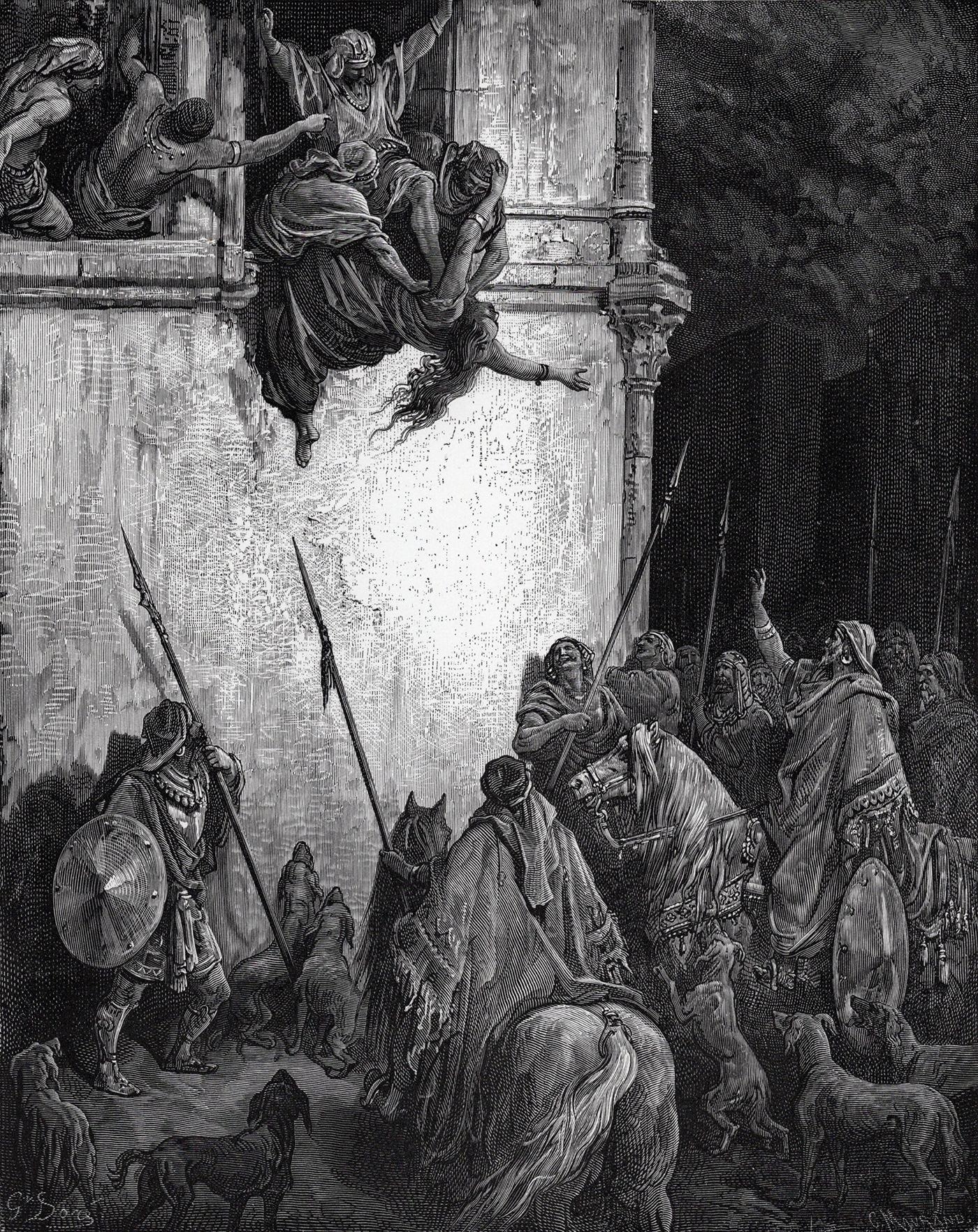
I’m laid up with a bad cold so today’s essay comes to you late. Having just heard about the death last week of comic novelist Tom Robbins, I am repurposing a post I wrote four years ago about his take on the Biblical figure of Jezebel. In the 2020 election, various Christian Trump supporters were accusing Kamala Harris of being a Jezebel so I used Robbins to show how this could be a compliment rather than an insult.
Jezebel is best known for arraying herself in all her beauty before being thrown out of a window in a palace coup. Anne Branigan in a Washington Post columnreports that various Southern Baptist preachers were associating Harris with the queen in 2021, including Tom Buck and Steve Swofford. In a videotaped sermon, Swoffrod, after calling Joe Biden “cognitively dysfunctional,” asked, “What if something happens to [Biden] and Jezebel has to take over? Jezebel Harris, isn’t that her name?”
Branigan explains the significance:
The “Jezebel” reference is…highly specific, a trope that speaks to deeply entrenched views about power and what is “normal” or “traditional” in American culture, especially when it comes to racial and gender hierarchies….Calling Harris a Jezebel accomplishes multiple things: It delegitimizes her power and dehumanizes her.
According to William and Mary religious studies professor Jessica Johnson, whom Branigan interviewed for her article, “Jezebel” has historically been used as a justification for racial violence against Black women. Branigan notes that Christian nationalists, who are always searching for an authoritarian father figure, saw in “Jezebel Harris” their worst fears realized: “that they will be replaced; that their fate is in the hands of a godless, amoral Black woman.”
This view of Harris played no small part in the 2024 election. And what Tamura Loman says of Jezebel in Jezebel Unhinged can also be said of attacks on Harris: Jezebel, Loman points out, “never did anything sexual. They hated her for her power.” All the sexual connotations that were later attached to Jezebel were just further ways to “both undermine her and further highlight her deviance.”
Fundamentalists invoke Jezebel’s name in Robbins’s Skinny Legs and All. After fundamentalist preacher Buddy Winkler catches his daughter wearing lipstick and attending a life drawing class in her college, he and other members of the congregation set upon her, scrubbing her face until it’s raw while calling her a Jezebel. Robbins fights back with an historical explanation of Jezebel’s real crime. The queen, he writes, worshipped the earth goddess Astarte, who was
the Goddess, the Great Mother, the Light of the World, the most ancient and widely revered divinity in human history. Shrines to her date back to the Neolithic Period, and there was not one Indo-European culture that failed to remove with its kiss the mud from her sidereal slippers. In comparison, “God,” as we moderns call Yahweh (often misspelled “Jehovah”) was a Yahny-come-lately who would have approached her enormous popularity. She was the mother of God, as indeed, she was the mother of all.
It’s no surprise, then, that, when
King Ahab’s Phoenician bride started building shrines to Astarte, and when the Israelites started flocking to those shrines—the populace apparently favored Astarte’s voluptuous indulgence over Yahweh’s rigid asceticism—the patriarchs reacted violently against her.
Robbins provides an interesting side note:
[O]ne of the crimes charged to Jezebel, according to the historian Josephus, was the planting of trees. Since the Goddess always has been honored in sacred groves, it is understandable that patriarchs, then as now, leaned toward deforestation.
Because the devotion to Astarte was “contagious,” Robbins writes, and because “it weakened the grip of the Yahweh cult, “Jezebel” was slandered, framed, and finally murdered.” Robbins gives his own account of her death:
When the moment arrived, Jezebel was thoroughly aware that she was to be assassinated. She put up her ergot-black hair, donned her tiara, rouged her cheeks and lips, applied kohl to the lids of her huge Phoenician eyes, and went to face her killer with the style, dignity and grace befitting a reigning queen. So much for painted hussies.
While Harris fans were celebrating Harris’s infectious laugh and her multicultural background when she ran first for vice-president and then for president, we may have underestimated how she was triggering hatreds that went as deep as those directed against Barack Obama and Hillary Clinton. While there are scores of explanations as to why she lost to Donald Trump, the fact that she was an assertive black woman must figure prominently. Maybe what’s most amazing about the 2024 election is that she came as close as she did to winning.
At the end of Skinny Legs and All, Buddy Winkler attempts to strangle a Middle Eastern woman dancing the dance of the seven veils, with each veil representing one of the ways we blind ourselves to the richness of life and human possibility. Such men were active in Jezebel’s time, and they remain a lethal threat today.
Further thought: I’m thinking, in Trump’s attempted January 6 coup, that another powerful women–Nancy Pelosi–was in danger of being thrown from a window in a reenactment of the Jezebel murder.
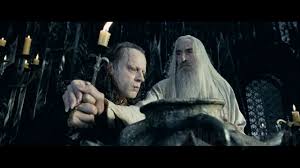
Dourif, Lee as Wormtongue, Saruman in Lord of the Rings
Note: If you wish to receive, via e-mail, (1) my weekly newsletter or (2) daily copies of these posts, write to me at rrbates1951@gmail.com. Comments may also be sent to this address. I promise not to share your e-mail with anyone. To unsubscribe, write here as well.
Tuesday
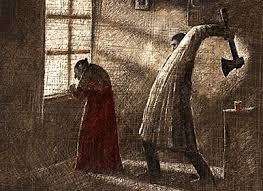
Yesterday I compared Donald Trump to Raskolnikov in Dostoevsky’s Crime and Punishment but noted a dramatic contrast: because Dostoevsky’s axe-murdering protagonist has a complex inner life, his punishment ultimately originates within himself. Unable to withstand the horror at his act, he confesses to his crime and takes his punishment.
Trump, because he is a sociopath who appears to have no internal complexity, crimes without remorse. To be sure, I think he lives a miserable life as a result, but this is of scant consolation to his victims.
I find myself wondering if the same can be said of his eminence grise Elon Musk. (An eminence grise is a person who exercises power or influence in a certain sphere without holding an official position.) Musk is one who has read widely (if articles about him are to be believed) and who at times has had intelligent things to say. Yet his reading hasn’t prevented him from selling his soul for political power, and it is this issue that I take on today.
One of the works that Musk has mentioned frequently is Tolkien’s Lord of the Rings. A 2024 article in Times Now contends that Tolkien’s themes of “rich storytelling, complex characters, and themes of courage and perseverance…have resonated with Musk throughout his life.”
It so happens that Lord of the Rings was the most important book of my own childhood and I certainly can see how it bolsters one up. In my case, I was a shy, short, and bookish child who did not play football (almost a sin for a boy growing up in 1950s rural Tennessee) so to see short characters like Frodo and Gimli Son of Gloin triumph over adversity was inspirational. If it did the same for Musk, I’m happy for him.
Unfortunately, some of the problematic aspects of Tolkien’s fantasy epic are showing up in Musk’s current view of the world. Tolkien’s longing for a pastoral, class-based society meant that he turned in horror from an industrialized world in which workers demand their rights. While the goblins and orcs may stand in for Nazis in thrall to Hitler (Sauron) and Bolsheviks in thrall to Stalin (Saruman), they are also a threat in their own right. The elites of Tolkien’s world—the Men of the West and the Elven aristocracy—regard the orcs as vermin, to be exterminated wholesale. Musk, who grew up white and rich in apartheid South Africa, would have felt right at home in this vision. In his reading of the text, he may have substituted Nelson Mandela and the African National Congress for the orcs.
I can see Musk preferring the peaceful hierarchy that we see in the shire, where the Bagginses and Tooks are held in special regard while the servant class—Gaffer Gamgee and his son Samwise—know their place. In this way, he sees eye to eye with Trump, who after all has always been reluctant to pay anyone who ever worked for him. Together they are going after trade unions, the working class, and government workers.
But even if Musk’s class politics align with Tolkien’s (with Tolkien having the excuse of belonging to an earlier age), he is clearly missing Tolkien’s major lesson, which is that power corrupts. Musk may like to think of himself as a heroic Frodo, but he’s behaving much more like Gollum. Whatever contributions that Musk has made to the world are being undone by his craving for power. As he seeks it, he is hollowed out as Gollum has been hollowed out. Here is the ring-obsessed figure as he tracks Frodo and Sam in The Two Towers:
He was getting lower now and the hisses became sharper and clearer. “Where iss it, where iss it: my Precious, my Precious? It’s ours, it is, and we wants it. The thieves, the thieves, the filthy little thieves. Where are they with my Precious? Curse them! We hates them.”
When Gollum finally gains possession of the ring, he cavorts around like Musk on the stage with Trump:
But Gollum, dancing like a mad thing, held aloft the ring, a finger still thrust within its circle. It shone now as if verily it was wrought of living fire.
‘Precious, precious, precious!’ Gollum cried. ‘My Precious! O my Precious!’
While Musk would disavow any similarity to Gollum, he might acknowledge some kinship with Saruman, the onetime good wizard who has gone over to the dark side. The “two towers” of the second book are Sauron and Saruman, and Musk might see himself and Trump in an unstable but necessary alliance that allows them to rule the world together. Like Saruman, he might even regard Sauron as the junior partner.
Musk, however, lacks Trump’s power base and is, to borrow from T.S. Eliot’s “Love Song of J. Alfred Prufrock,” no leading player but rather someone in attendance:
No! I am not Prince Hamlet, nor was meant to be; Am an attendant lord, one that will do To swell a progress, start a scene or two, Advise the prince; no doubt, an easy tool, Deferential, glad to be of use, Politic, cautious, and meticulous; Full of high sentence, but a bit obtuse; At times, indeed, almost ridiculous— Almost, at times, the Fool.
When it comes down to it, Musk is not Saruman but Wormtongue, the wizard’s lickspittle attendant. In short, a fool. He just doesn’t know it yet.
Note: If you wish to receive, via e-mail, (1) my weekly newsletter or (2) daily copies of these posts, write to me at rrbates1951@gmail.com. Comments may also be sent to this address. I promise not to share your e-mail with anyone. To unsubscribe, write here as well.
Tuesday
Over the weekend Donald Trump, with his flair for the grandiose, quoted Napoleon in what some are calling the most frightening presidential pronouncement in history: “He who saves his country does not violate any law.” Napoleon, of course, hijacked the French government, became dictator and emperor, upended Europe, and ran his country into the ground.
Reader Luke Ross, a political science major, recently reminded me that, back in August of 2017, I wrote a blog essay comparing and contrasting Trump to Raskolnikov in Fyodor Dostoevsky’s Crime and Punishment. While I didn’t mention that the axe-murdering protagonist has a Napoleonic complex, it seems time to mention that now.
To be clear, in my essay I noted that there are more differences that similarities. True, both have a vision that they are superior to common people, believing they can run roughshod over all that is sacred: Raskolnikov kills an old pawnbroker just to prove to himself that he can while Trump is attempting to murder American democracy. But Raskolnikov is reflective and he has a conscience. This means that he is redeemable whereas I have seen nothing to indicate that Trump is salvageable.
But back to Napoleon. In one of his numerous diatribes, Raskolnikov regards the French leader as one of the greats who have murdered to achieve notable ends. In his own version of Trump’s “he who saves his country does not violate any law,” Raskolnikov says that
an ‘extraordinary’ man has the right… that is not an official right, but an inner right to decide in his own conscience to overstep… certain obstacles, and only in case it is essential for the practical fulfilment of his idea (sometimes, perhaps, of benefit to the whole of humanity).
Note the “perhaps” in his parenthetical comment, which is a weak attempt to justify his argument.
The argument doesn’t get stronger when Raskolnikov gets specific. He contends that Kepler or Newton would have been right—indeed, would have been “duty-bound”—to eliminate “the dozen or the hundred men for the sake of making his discoveries known to the whole of humanity.” Of course, neither did so. Had he known of Josef Mengele, the Nazi doctor who performed medical experiments on life concentration camp victims, would he have the courage of his argument to applaud him?
He’s on more familiar ground when he cites political figures like Lycurgus, Solon, Mahomet, and Napoleon, who did in fact claim victims. In the following century, he could have cited fellow countrymen Lenin and Stalin. As he says of Napoleon et. al., they were “all without exception criminals.” He explains how:
Making a new law, they transgressed the ancient one, handed down from their ancestors and held sacred by the people, and they did not stop short at bloodshed either, if that bloodshed—often of innocent persons fighting bravely in defense of ancient law—were of use to their cause. It’s remarkable, in fact, that the majority, indeed, of these benefactors and leaders of humanity were guilty of terrible carnage. In short, I maintain that all great men or even men a little out of the common, that is to say capable of giving some new word, must from their very nature be criminals—more or less, of course. Otherwise it’s hard for them to get out of the common rut; and to remain in the common rut is what they can’t submit to, from their very nature again, and to my mind they ought not, indeed, to submit to it.
Later, confessing his crime to prostitute-with-heart-of-gold Sonia, Raskolnikov says, “I wanted to become a Napoleon, that is why I killed her…. Do you understand now?”
Sonia doesn’t.
What particularly bothers Raskolnikov, once he starts reflecting, is the wide gulf between a student who kills a feeble old lady and a general who (to use his summation) “storms Toulon, makes a massacre in Paris, forgets an army in Egypt, wastes half a million men in the Moscow expedition and gets off with a jest at Vilna.” The Russian student shudders at the contrast: “Napoleon, the pyramids, Waterloo, and a wretched skinny old woman, a pawnbroker with a red trunk under her bed…It’s too inartistic. ‘A Napoleon creep under an old woman’s bed! Ugh, how loathsome!’” He seeks to be great and ends up a hideous jest.
Which might be something that he and Trump actually have in common.
In his thinking, Raskolnikov may be drawing on Friedrich Nietzsche’s notion of the Übermensch, the figure who soars above the sheep-like masses. Trump, despite never having read Nietzsche (although he has read Hitler), has the same contempt for these masses, even (or especially) those who worship him. And they, like Napoleon’s Polish soldiers in War in Peace, are ready to commit suicide for their emperor.
If Trump were to read Crime and Punishment—not that it would ever happen—he would lambaste Raskolnikov for confessing what could be a perfect crime. In his view, you’re either on top or you’re a pathetic loser.
Note: If you wish to receive, via e-mail, (1) my weekly newsletter or (2) daily copies of these posts, write to me at rrbates1951@gmail.com. Comments may also be sent to this address. I promise not to share your e-mail with anyone. To unsubscribe, write here as well.
Monday
While others today are celebrating presidential birthdays, we’ll be celebrating my wife’s, who shares February 17 with Michael Jordan. (Julia played basketball in college and so is happy with the pairing.) When we are young, of course, each birthday has its own individual importance, but after a while anniversaries start to merge together. What really is the difference between 73 and 74?
In “On the Eve of a Birthday,” Timothy Steele uses the occasion to reflect on his life. “Calendars aren’t truthful,” he observes—is he suggesting that he feels younger than his years?—and the Scotch sloshing in his glass is contributing to his jaunty buoyancy. I am reminded of the aging Eben Flood in E.A. Robinson’s “Mr. Flood’s Party.”
As the speaker looks towards the future, sometimes he sees himself stepping into a richly furnished dining room and sometimes into a spare garret. Yet when pulled down by “bad dreams” (Steele borrows from Hamlet here), he rallies and toasts the future, which will be “the best year yet.”
I think of a friend from our days in St. Mary’s City, MD, an actress who had made her way from Texas to New York (she did so as a burlesque dancer) in 1934 and who was one of the most upbeat people I have ever known. Maurine Holbert Hogaboom used to insist that each decade was better than the one before—or at least she said this about her sixties, seventies, and eighties. (She died at 96.)
In any event, the fact that time is running out is all the more reason to regard life as precious. No point in regrets about “mixed joys,“ “harum-scarum prime,” or “auguries reliable and specious.” When he talks about “constellated powers” swaying him, I think of William Ernest Henley thanking “whatever gods there be/For my unconquerable soul” in “Invictus.” The speaker toasts them all.
The wonderful thing about reaching this age—I join Julia at 74 later this year—is that we have been able to spend 53 of those years together. Nor have we needed sloshing Scotch to value what we’ve been through, the unsuccesses as well as the successes, the tragedies as well as the victories. Each passing year deepens the bond.
Happy birthday, my dear.
On the Eve of a Birthday By Timothy Steele
As my Scotch, spared the water, blondly sloshes About its tumbler, and gay manic flame Is snapping in the fireplace, I grow youthful: I realize that calendars aren’t truthful And that for all of my grand unsuccesses External causes are to blame.
And if at present somewhat destitute, I plan to alter, prove myself more able, And suavely stroll into the coming years As into rooms with thick rugs, chandeliers, And colorfully pyramided fruit On linened lengths of table.
At times I fear the future won’t reward My failures with sufficient compensation, But dump me, aging, in a garret room Appointed with twilit, slant-ceilinged gloom And a lone bulb depending from a cord Suggestive of self-strangulation.
Then, too, I have bad dreams, in one of which A cowled, scythe-bearing figure beckons me. Dark plains glow at his back: it seems I’ve died, And my soul, weighed and judged, has qualified For an extended, hyper-sultry hitch Down in eternity.
Such fears and dreams, however, always pass. And gazing from my window at the dark, My drink in hand, I’m jauntily unbowed. The sky’s tiered, windy galleries stream with cloud, And higher still, the dazed stars thickly mass In their long Ptolemaic arc.
What constellated powers, unkind or kind, Sway me, what far preposterous ghosts of air? Whoever they are, whatever our connection, I toast them (toasting also my reflection), Not minding that the words which come to mind Make the toast less toast than prayer:
Here’s to the next year, to the best year yet; To mixed joys, to my harum-scarum prime; To auguries reliable and specious; To times to come, such times being precious, If only for the reason that they get Shorter all the time.
Note: If you wish to receive, via e-mail, (1) my weekly newsletter or (2) daily copies of these posts, write to me at rrbates1951@gmail.com. Comments may also be sent to this address. I promise not to share your e-mail with anyone. To unsubscribe, write here as well.
Sunday
As political chaos appears to be the order of the day, causing Americans like me to experience deep feelings of dread, it is comforting to turn to a poem like Henry Vaughan’s “My Soul, There Is a Country.” Written during times yet more turbulent than our own—England was in the grip of a civil war—the poet assures us that there exists a realm of “sweet peace” far beyond “noise and danger.”
When we are feeling powerless and dispirited, we can choose to focus on Jesus’s vision of “pure love.” This love will guard us like “a winged sentry,” Vaughan writes, drawing an image from the war he was witnessing. “The rose that cannot wither,” he continues on, provides us with a fortress and a place of rest.
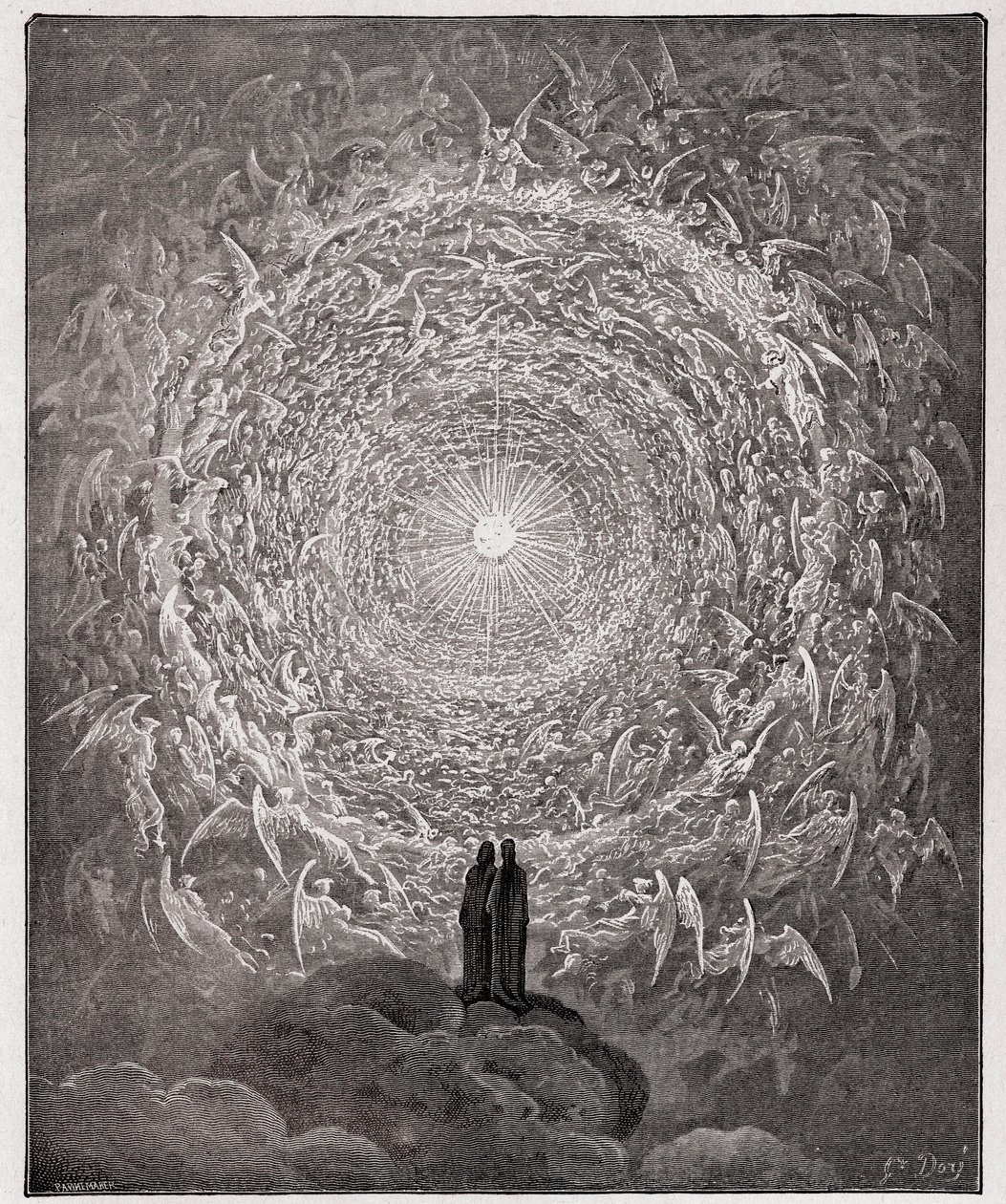
Perhaps the rose is the celestial rose of Dante’s Paradiso, the “Love that moves the sun and the other stars.” The poem is a wake-up call to our own souls.
My Soul, There Is a Country, 1650 By Henry Vaughan
My soul, there is a country Far beyond the stars, Where stands a winged sentry All skillful in the wars:
There, above noise and danger Sweet Peace sits crowned with smiles And One, born in a manger Commands the beauteous files.
He is thy gracious friend And, O my soul, awake! Did in pure love descend To die here for thy sake.
If thou canst get but thither, There grows the flow’r of Peace, The Rose that cannot wither, Thy fortress and thy ease.
Leave then thy foolish ranges, For none can thee secure But One who never changes, Thy God, thy life, thy cure.
Note: If you wish to receive, via e-mail, (1) my weekly newsletter or (2) daily copies of these posts, write to me at rrbates1951@gmail.com. Comments may also be sent to this address. I promise not to share your e-mail with anyone. To unsubscribe, write here as well.
Friday – Valentine’s Day
I find it fascinating that the author of England’s most beloved courtship novels never shows us directly the moment her works have been building up to, which is the heroine saying “yes” or “I do” to a proposal. We occasionally see heroines saying “no,” most notably Elizabeth to Darcy’s first proposal. But never the opposite.
We have to wonder whether Jane Austen is teasing us, taking us up to the pinnacle moment and then dropping us. Maybe she feels the moment is too private to be revealed. Or maybe she believes that her heroine’s heart is so full that language can’t do it justice. Perhaps her silence on the subject only makes the moment more intense as we are forced to imagine it.
One last theory given there’s comedy in a number of the non-revealed answers: by using humor to deflect from deep emotion, Austen may feel safe from too much sentimentality. Stiff upper British lip and all that.
I provide all the implied yeses below, ordering the relationships by romantic intensity. I begin with the relationship we most desire and are happiest with when it occurs:
Elizabeth-Darcy in Pride and Prejudice Anne Elliot-Wentworth in Persuasion Elinor Dashwood-Edward Ferrars in Sense and Sensibility Emma Woodhouse-Mr. Knightley in Emma Catherine Morland-Mr. Tilney in Northanger Abbey Fanny Price-Edmund Bertram in Mansfield Park Marianne Dashwood-Colonel Brandon in Sense and Sensibility
Now for the indirect report of the heroines’ responses:
Elizabeth to Darcy’s proposal:
Elizabeth, feeling all the more than common awkwardness and anxiety of his situation, now forced herself to speak; and immediately, though not very fluently, gave him to understand that her sentiments had undergone so material a change since the period to which he alluded, as to make her receive with gratitude and pleasure his present assurances.
Anne to Wentworth’s:
In half a minute Charles was at the bottom of Union Street again, and the other two proceeding together: and soon words enough had passed between them to decide their direction towards the comparatively quiet and retired gravel walk, where the power of conversation would make the present hour a blessing indeed, and prepare it for all the immortality which the happiest recollections of their own future lives could bestow. There they exchanged again those feelings and those promises which had once before seemed to secure everything, but which had been followed by so many, many years of division and estrangement.
Elinor to Edward’s:
How soon he had walked himself into the proper resolution, however, how soon an opportunity of exercising it occurred, in what manner he expressed himself, and how he was received, need not be particularly told [my bold]. This only need be said;—that when they all sat down to table at four o’clock, about three hours after his arrival, he had secured his lady, engaged her mother’s consent, and was not only in the rapturous profession of the lover, but, in the reality of reason and truth, one of the happiest of men.
Emma to Mr. Knightley’s (Jane Austen at her best):
She spoke then, on being so entreated.—What did she say?—Just what she ought, of course. A lady always does.—She said enough to shew there need not be despair—and to invite him to say more himself.
Catherine Morland to Henry Tilney
…but his first purpose was to explain himself, and before they reached Mr. Allen’s grounds he had done it so well that Catherine did not think it could ever be repeated too often. She was assured of his affection; and that heart in return was solicited, which, perhaps, they pretty equally knew was already entirely his own; for, though Henry was now sincerely attached to her, though he felt and delighted in all the excellencies of her character and truly loved her society, I must confess that his affection originated in nothing better than gratitude, or, in other words, that a persuasion of her partiality for him had been the only cause of giving her a serious thought. It is a new circumstance in romance, I acknowledge, and dreadfully derogatory of an heroine’s dignity; but if it be as new in common life, the credit of a wild imagination will at least be all my own.
Fanny Price-Edmund Bertram
I purposely abstain from dates on this occasion, that everyone may be at liberty to fix their own, aware that the cure of unconquerable passions, and the transfer of unchanging attachments, must vary much as to time in different people. I only entreat everybody to believe that exactly at the time when it was quite natural that it should be so, and not a week earlier, Edmund did cease to care about Miss Crawford, and became as anxious to marry Fanny as Fanny herself could desire.
Marianne Dashwood-Colonel Brandon
With such a confederacy against her—with a knowledge so intimate of his goodness—with a conviction of his fond attachment to herself, which at last, though long after it was observable to everybody else—burst on her—what could she do?
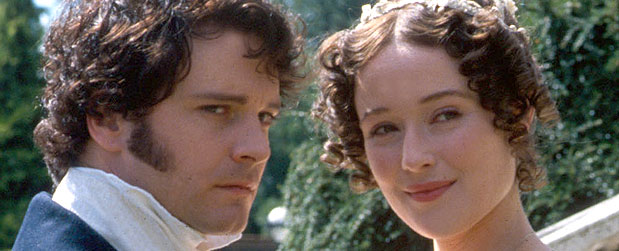
The best Jane Austen movies are aware of her strategy and come up with their own indirect articulations. My favorite is the 1995 Persuasion, where we see neither proposal nor response. Instead, we see Anne and Wentworth leave center stage and go down a side street, where the business is done. Rather than follow them, the camera stays in place and watches a street carnival passing through. The carnival music swells and then subsides, at which point the couple returns to view, leaving us to believe that the music has captured first their own intense joy and then quiet contentment.
The runner-up award goes to Ang Lee’s Sense and Sensibility: there we see young sister Margaret in her treehouse spying on Elinor and Edward and reporting on proposal and acceptance to Marianne and Mrs. Dashwood.
What to take away from all of this? Well, if you’re having trouble expressing your Valentine’s Day love to your sweetheart, knoq that one of Britain’s greatest prose writers sometimes avoided direct expression herself.
Note: If you wish to receive, via e-mail, (1) my weekly newsletter or (2) daily copies of these posts, write to me at rrbates1951@gmail.com. Comments may also be sent to this address. I promise not to share your e-mail with anyone. To unsubscribe, write here as well.
Thursday
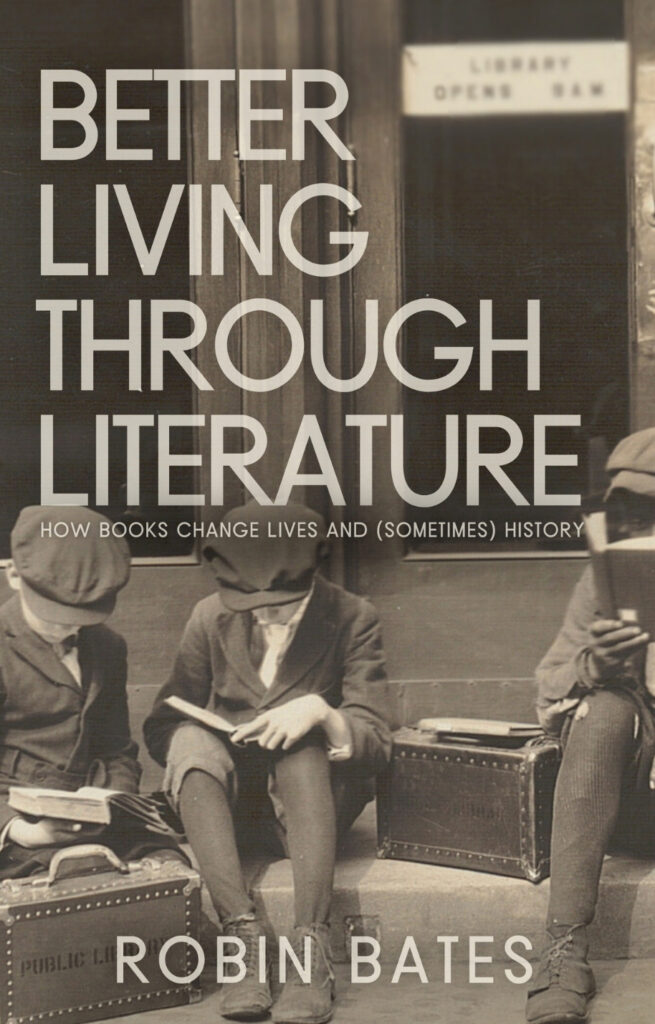
Julia and I have been on the road for the past two days, and because I wrote today’s essay in a hotel without internet access, it’s off the top of my head and short. During the trip I (1) gave a reading from Better Living through Literature at my old college; (2) taught a Chaucer class while there; (3) gave a film talk about Goodbye, Lenin to my college roommate’s church in Greenbelt, MD; and (4) saw many friends and my eldest son’s family It’s these friend visits that I want to talk about today.
I felt like I was in a Jane Austen novel as we moved from friend to friend. If you’ve read her novels, you know that her characters spend a lot of time visiting. I’m thinking especially of Elinor and Marianne in Sensibility, the Bennet sisters in Pride and Prejudice, and Emma in Emma. These are the three novels set in small towns, in contrast to a country estate (Mansfield Park) or Bath (Northanger Abbey and Persuasion). Although even in Persuasion, some of Anne Elliot’s best moments are spent visiting her friend Harriet Smith.
There are two kinds of visits in these novels. The town visits are relatively short and are basically used to exchange news/gossip and to knit together the social fabric. Some of the other visits, because they require long journey, can last weeks or even months, as in Catherine visiting Northanger Abbey, the Dashwoods visiting Mrs, Jennings in London, Elizabeth visiting Charlotte Lucas Collins, the Crawfords visiting Mrs. Grantly, and Anne visiting the Musgroves.
Our visits were a combination of these—which is to say, short visits requiring long journeys. In those short visits, however, there was so much richness that we wished they could have been extended. I saw students who I hadn’t seen for years (including one, featured in my book, who came down especially from Baltimore to hear my talk); colleagues who I hadn’t seen since before Covid, even though our collective efforts helped sustain the college; an Ethiopian refugee who lived with us for four years in order to attend St. Mary’s who now works in the patents office (and who, because Julia and I attended Carleton College, now has a daughter there); the widower of a former colleague who talked of how they used poetry to cope with her final weeks; my 13-year-old grandson, who is now only an inch shorter than I am and who is a superlative violinist; and on and on.
Reflecting on how they had impacted our lives and we theirs, Julia and I agreed that such relationships are essential to psychic health. I know several lives worth living,” Mary Oliver writes of people who have witnessed humpback whales in action, and we came away feeling that we had lived such lives by having deep and abiding friendships. Although these relationships are not based on growing up in a common locality or belonging to large family networks, as they are in Austen novels, they are nonetheless foundational to living a meaningful life.
Note: If you wish to receive, via e-mail, (1) my weekly newsletter or (2) daily copies of these posts, write to me at rrbates1951@gmail.com. Comments may also be sent to this address. I promise not to share your e-mail with anyone. To unsubscribe, write here as well.
Wednesday
A close childhood friend, artist Tony Winters, gifted me a Wall Street Journal article that speaks to a number of my interests. Although I’m not convinced by Emily Finley’s claim that we should blame Jean Jacques Rousseau and Romanticism for a mental health crisis among today’s youth, I certainly subscribe to her belief that reading the classics can do some good. Here’s her argument:
She begins by citing Greg Lukianoff and Jonath Haidt’s Coddling of the American Mind, which contends that a culture of “safetyism” has made young people “less resilient and more anxiety-prone.” Haidt then argues, in The Anxious Generation, that “the widespread use of technology and social media is ‘rewriting’ childhood.”
Finley counters that parental coddling and technology addiction are symptoms, not causes, and that the real culprit is “the romantic corruption of imagination.” While she is as enthusiastic about the imagination as Rousseau and the Romantic poets–she regards it as “far more powerful than logic or reason” and a force that “colors our entire view of life and life’s possibilities”–she appears to hold Romanticism responsible for giving us a skewed vision of the world:
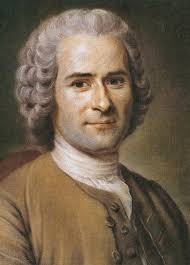
A malformed imagination is romantic. It is unbalanced and lacks proportion. It is oriented by an unrealistic, even utopian, vision of progress and a world altogether changed through human effort. This dreamy vision of a New Earth is made possible by the belief that “man is a naturally good being,” as the archromantic Jean-Jacques Rousseau declared in the 18th century. We must clear away the traditional religious and social norms hindering prosperity and instead heed the “cry of nature,” Rousseau argued.
The worldview Rousseau helped create, Finley says, “has played no small part in today’s mental-health crisis.” She bolsters her argument with a couple of ad hominem attacks, noting that the French philosophe placed five of his illegitimate children in orphanages—a particularly egregious move for a man who wrote one of the foundational texts on educating children—and that he was himself almost insane.
Instead of Rousseau-type imagination, Finley says, we need “a well-formed imagination” that is “properly adjusted to reality” and that “can adapt to life’s vicissitudes and see life steady and see it whole.”
So how does a malformed imagination contribute to the current crisis amongst young people. Finley says that it gives young people unrealistic expectations that are then dashed, leading to “melancholic despair”:
Having been told romantic tales from birth about their natural perfection and endless potential, young people can hardly be blamed for their unrealistic expectations. The modern childhood education is one great building up of the idea that, without any special effort, every child is going to be something extraordinary, and with their help, the world will be a better place. This is the romantic imagination’s manic side.
As these young people discover that they are, in fact, nothing very special, and that the world doesn’t appear to be improving despite their political crusading, they enter a period of melancholic despair. This is the romantic imagination’s depressive side.
So what should be guiding their imaginations? Finley cites religious beliefs, traditions, and standards, which would connect them with permanent things. And then—this is where we get to stories and poems—they need “good literature or history that would furnish their imaginations with examples of heroism, or even ordinary men and women overcoming the ordinary challenges of life.”
If modernity is not to be an Eliotian wasteland, Finley contends, what is required is
an immediate and total detox of the imagination. Instead of romantic lies and technological distractions, children must be nourished on works of imagination that provide concrete standards of what is worthy.
Finley is engaging here in the old classicism-romanticism debate—a version of the conservatism-liberalism debate—and coming down firmly on the side of the former. In actuality, however, there always needs to be a balance. Classicism without romanticism can be stultifying whereas romanticism without classicism can be (as she observes) ungrounded. It’s why every country needs conservative and liberal parties.
What it doesn’t need is a radically reactionary party in place of the conservatives, which is what we have currently.
With regard to literature, Finley recommends “old literature—written before about 1940,” implying that it is automatically superior. These old books, she says,
tell the extraordinary tale, to paraphrase G.K. Chesterton, of ordinary men and ordinary women and their ordinary children. Stories of family life, hardships, joys, challenges and the quotidian are the stuff that best orients young minds.
Far be in from me to critique the books that she mentions since they include some of my favorites. I don’t know Farmer’s Boy, but the others—I’m assuming she has in mind A Child’s Garden of Verses for Stevenson’s poetry—all sustained me as a child. I agree that this “feast of the imagination” teaches children “to have a realistic sense of what truly is possible in this life and wherein lie life’s boundaries” and that is helps us see “goodness and beauty, evil and ugliness for what they are”:
Laura Ingalls Wilder’s “Farmer Boy” shows children that in this life, reward comes after long, hard work. Frances Hodgson Burnett’s “The Secret Garden” illustrates what resilience looks like. C.S. Lewis’s “The Lion, the Witch and the Wardrobe” portrays the good and evil that lurk within each one of us. Greek myths teach children proportion. Robert Louis Stevenson introduces children to beauty in lyrical form.
At this point, however, Finley slips in a fast one, however. Apparently something—books written after 1940? the lingering effects of Rousseau and Romanticism?—is prompting young people to forsake “the ordinary duties of marriage and parenthood.” Instead, the focus is supposedly all about finding oneself and living as “an expressive individual.” She holds up Anna Karenina and Madame Bovary as examples of individual brought to misery by such romantic escapism.
To blame Rousseau for Anna Karenina’s behavior is a fairly one-dimensional view of her character. It’s not as though passionate, marriage-busting love is a Romantic invention. Are we to hold the French philosophe to account for Guinevere and Lancelot’s affair in the Malory’s Morte D’Arthur (1485). Or for Antony and Cleopatra’s ruinous engagement in Shakespeare’s 1606 play.
As for Emma Bovary, yes she is led astray by sentimental dreck: Bernardin de Saint-Pierre’s Paul and Virginia is essentially an 18th century Harlequin romance. Here’s Flaubert’s description of its impact:
Before marriage she thought herself in love; but the happiness that should have followed this love not having come, she must, she thought, have been mistaken. And Emma tried to find out what one meant exactly in life by the words felicity, passion, rapture, that had seemed to her so beautiful in books.
To give you a sense of what she’s reading, Flaubert mentions Emma dreaming of “the little bamboo-house, the Black slave Domingo, the dog Fidele, but above all of the sweet friendship of some dear little brother, who seeks red fruit for you on trees taller than steeples, or who runs barefoot over the sand, bringing you a bird’s nest.”
But the great Romantics, including some holding a utopian vision of progress, were highly critical of such shallow sentimentality. I’m particularly thinking of Percy Shelley who, revolutionary though he was, critiques Rousseau in The Triumph of Life for being trapped in his emotions and goes after shallow idealism in The Revolt of Idealism.
And as far as characterizing children’s book written after 1940 as all about finding and expressing oneself, has she read any of these books? Sure, there’s bad stuff, but that’s always been the case. It so happens, however, that we are living in a golden age of young adult literature featuring works that do indeed grapple with “family life, hardships, joys, challenges and the quotidian.” In fact, often they look more closely at married life than either Secret Garden or Narnia.
To say, categorically, that contemporary children’s literature fails to “separate the fruitless romantic dream from reality” is to reveal that one hasn’t read much contemporary children’s literature. With regard to parental upbringing, meanwhile, one could argue that children today are as likely to be ruined by hidebound traditionalists as by permissive progressives.