Tuesday
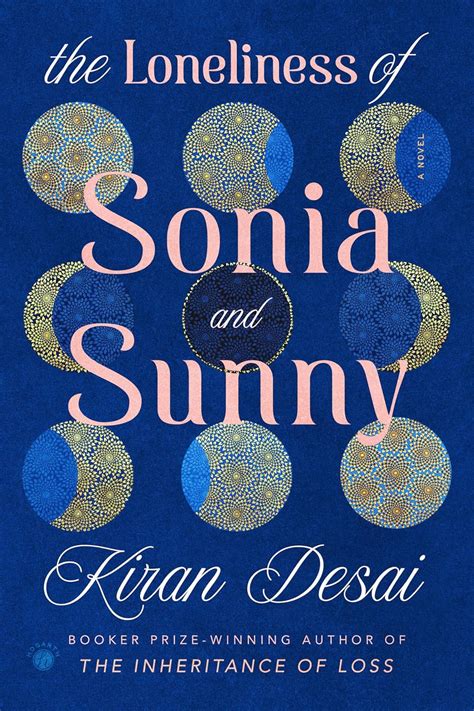
In October I’ll be teaching “Post-Colonial Literature” at the University of Ljubljana, and it was in preparing for it that I stumbled across Kiran Desai’s magnificent novel The Loneliness of Sonia and Sunny, shortlisted last year for the Man Booker Prize. I haven’t finished it yet but already am seeing how my students will benefit from watching the two protagonists negotiate the identity confusion caused by living between India and the United States.
I’ll have more to say about Loneliness in future posts, but I focus today on how it clarifies one issue that interests me. Liberals have long assumed that, as the United States moves towards becoming a majority-minority nation—which is to say, one where no race or ethnicity constitutes over 50% of the population—Democrats will benefit. After all, we are the party that openly embraces the idea of a multicultural democracy. To be sure, we should have anticipated that conservative whites would not accept this quietly, that there would be an uptick in racism. What has come as a shock, however, is how certain members of minority communities are determined to identify as white. Many of these signaled this desire in the 2024 election by voting for Trump.
Isabel Wilkerson lays out the significance of whiteness is her brilliant book Caste: The Origins of Our Discontents (2020). Since slavery, she contends, America has had a caste system, and although we tried to undo it—first with the Civil War and then with Civil Rights legislation–it remains engrained in the psyches of many Americans. Since our founding, immigrants have recognized this caste system and many have attempted to buy into it.
In their efforts to pass themselves off as white, they became at least as prejudiced as those whose ranks they hoped to join. Noel Ignatiev’s How the Irish Became White is one study of the phenomenon, but it is not limited to people who are white. Immigrants from Central America, South America, Asia (south, southeast and east), and various Caribbean and African nations have convinced themselves that they can be accepted as “white” rather than as “people of color.”
We see Sunny’s Indian mother thinking this way when she visits him in New York. Having brought up her son to aspire to study in America and even to marry a white woman and to become American, she is distressed when she finds him living in the minority community of Jackson Heights. First, however, she visits the apartment of an Indian friend who married her Columbia thesis advisor and is startled by how the Black doorman regards her:
Meanwhile she was shaken by the hostile manner of the doorman. Babita thought she was upper class and he was lower class. She thought black people were lower than brown people. She remembered that Sunny had informed her upon her last visit that if she dared make racist remarks in the United States, he would never, ever concede to meet her here again. This was after she had been jostled in a sweaty street fair celebrating Cinco de Mayo and exclaimed, “Can you imagine what will happen when this bunch takes over?” The comment revealed that she also thought Hispanic brown people were lower than Indian brown people.
Bigoted though she may be, however, it’s not like the society she is viewing is any better. Sometimes it takes an outsider to reveal to us who we are. While white conservatives may contend that they “don’t see color,” in Sunny’s eyes, America is obsessed with race:
And when was it that Sunny had learned the United States was about only one thing? In the morning when he turned on public radio it began: race, race, race. When he unfolded the newspaper: race, race, race. The economy, the environment, the journalism, the art, the sport, the war, the water, the wealth gap, the class divide, the summer camp, the prison, the school, the homeless person, the adoption, the birding, the diabetes, the real estate, the mortality rate, the election, the Starbucks restroom, the seat on the plane, the police, the murder, the judge—the conversation came down in a hammer blow: Race!
This presents Sunny with his own identity dilemma:
When exactly had Sunny switched from believing that calling himself “a person of color” would mean allowing himself to be boxed in by a term he could not abide and had begun to believe that not calling himself “a person of color” was letting white people swallow him whole?
Reading this, I think of my mixed-race grandchildren, with their very white father and their Trinidadian mother. How they see themselves will be influenced to some degree by how strangers see them, and if these strangers are obsessed with race, race, race—if skin color is a marker for perceived superiority or inferiority—then my grandchildren can’t pretend that American caste distinctions don’t exist.
Reading novels like Sharon Draper’s Blended—as my 14-year-old and 10-year-old already have—and (when they are older) The Loneliness of Sonia and Sunny will prepare them for the treacherous waters they are entering.