MAGA’s Heretical Take on Jesus

Note: If you wish to receive, via e-mail, (1) my weekly newsletter or (2) daily copies of these posts, write to me at rrbates1951@gmail.com. Comments may also be sent to this address. I promise not to share your e-mail with anyone. To unsubscribe, write here as well.

Sunday

I have no idea how rightwing Christians like Speaker of the House Mike Johnson reconcile their faith with today’s Biblical readings, which all emphasize the dangers of wealth. On the other hand, for those like Nicaraguan poet-priest Ernesto Cardenal who have embraced liberation theology, these passages are foundational. In “Unrighteous Mammon” Cardenal even alludes to Luke 6:19.

The connecting thread between the readings is crystal clear. The first is from the prophet Amos (6:1a, 4-7):

Alas for those who are at ease in Zion,
and for those who feel secure on Mount Samaria.

Alas for those who lie on beds of ivory,
and lounge on their couches,

and eat lambs from the flock,
and calves from the stall;

who sing idle songs to the sound of the harp,
and like David improvise on instruments of music;

who drink wine from bowls,
and anoint themselves with the finest oils,
but are not grieved over the ruin of Joseph!

Therefore they shall now be the first to go into exile,
and the revelry of the loungers shall pass away.

Paul picks up on the theme in his first letter to Timothy (6:6-10):

There is great gain in godliness combined with contentment; for we brought nothing into the world, so that we can take nothing out of it; but if we have food and clothing, we will be content with these. But those who want to be rich fall into temptation and are trapped by many senseless and harmful desires that plunge people into ruin and destruction. For the love of money is a root of all kinds of evil, and in their eagerness to be rich some have wandered away from the faith and pierced themselves with many pains.

Finally there’s Jesus’s story about the rich man and the poor man (Luke 6:19-31):

Jesus said, “There was a rich man who was dressed in purple and fine linen and who feasted sumptuously every day. And at his gate lay a poor man named Lazarus, covered with sores, who longed to satisfy his hunger with what fell from the rich man’s table; even the dogs would come and lick his sores. The poor man died and was carried away by the angels to be with Abraham. The rich man also died and was buried. In Hades, where he was being tormented, he looked up and saw Abraham far away with Lazarus by his side. He called out, `Father Abraham, have mercy on me, and send Lazarus to dip the tip of his finger in water and cool my tongue; for I am in agony in these flames.’ But Abraham said, `Child, remember that during your lifetime you received your good things, and Lazarus in like manner evil things; but now he is comforted here, and you are in agony. Besides all this, between you and us a great chasm has been fixed, so that those who might want to pass from here to you cannot do so, and no one can cross from there to us.’ He said, `Then, father, I beg you to send him to my father’s house– for I have five brothers– that he may warn them, so that they will not also come into this place of torment.’ Abraham replied, `They have Moses and the prophets; they should listen to them.’ He said, `No, father Abraham; but if someone goes to them from the dead, they will repent.’ He said to him, `If they do not listen to Moses and the prophets, neither will they be convinced even if someone rises from the dead.'”

Cardenal specifically alludes to this last passage in “Unrighteous Mammon”:

Unrighteous Mammon (Luke 16:9)
By Ernesto Cardenal
Trans. by Robert Pring-Mill

In respect of riches, then, just or unjust,
of goods be they ill-gotten or well-gotten:
                                      All riches are unjust.
All goods,
                     ill-gotten.
If not by you, by others.
Your title deeds may be in order. But
did you buy your land from its true owner?
And he from its true owner? And the latter…?
Though your title go back to the grant of a king
                                            was
the land ever the king’s?
Has no one ever deprived of it?
And the money you receive legitimately now
from client or Bank or National Funds
                           or from the U.S. Treasury,
was it ill-gotten at no point? Yet
do not think that in the Perfect Communist State
Christ’s parables will have lost relevance
Or Luke 16:9 have lost validity
                                and riches be no longer UNJUST
or that you will no longer have a duty to distribute riches.

Cardenal embraced the Sandinista revolution against dictator Anastasio Somoza and served for a while as minister of culture for the new regime (for which Pope John Paul II suspended him). While in office, he campaigned for “revolution without vengeance” and would eventually break with the government when it turned authoritarian. In 2019, a year before his death, he was rehabilitated by Pope Francis.

Whatever compromises Cardenal made with worldly authority, they don’t come anywhere near those of the MAGA Christians who supported Trump’s “Big Beautiful Bill,” apparently no longer seeing it as their duty to distribute riches. They are not certainly not listening to Moses and the prophets, nor to Paul and Jesus. While I don’t expect them to embrace Cardenal’s Christian Marxism, they appear to be going out of their way to conform to lifestyles that these figures railed against.

Rev. Samuel Barbour, the North Carolina social activist, has accused MAGA Christianity of heresy. It appears that, for them, Christ’s parables have lost all relevance and all validity.

Posted in Uncategorized | Tagged , , , | Comments closed

My Life in Lit – Segregation

Note: If you wish to receive, via e-mail, (1) my weekly newsletter or (2) daily copies of these posts, write to me at rrbates1951@gmail.com. Comments may also be sent to this address. I promise not to share your e-mail with anyone. To unsubscribe, write here as well.

Friday

Today’s weekly installment of My Life in Lit focuses on growing up in the segregated south and how my views of race came into being. As a result, I cover some of the same years that I touched on in last week’s essay.

My earliest memory of racism actually involves myself. I was chanting a rhyme I had undoubtedly picked up in school—“Teacher, teacher don’t hit me, hit that [N-word] behind that tree”—and John Mayfield, the son of the seminarian who lived upstairs, vociferously objected. (Although John was three years younger than I was, he had been well schooled.) Seeing that I had gotten a rise out of him, I kept at it and he kept getting angrier until we settled on a compromise. We agreed that I would substitute the word “tiger.” (Better to scapegoat tigers than people of color.)

I remember being amazed that a word could have such power but also feeling good at how compromise had brought us into agreement. Perhaps “tiger” reminded me also of the book Little Black Sambo, which I had loved when I was younger. In any case, I didn’t associate the N-word with actual people.

That didn’t last. I heard the N-word a lot growing up, although not from my parents and their friends. (Nor would those racists in the administration and on the faculty, of whom there a number, have publicly used it—upper class racism differs from lower class racism in the language used, although it has its own toxicity.) As a result, the word almost felt natural when my father read me Huckleberry Finn at ten or eleven. By that time, however, I knew that racism was bad and felt aligned with the progressives in our community.

I have a vivid memory, at age ten, of visiting the two-room Black schoolhouse (four grades in each room) to drop off some books. The local NAACP, which my parents belonged to, had purchased biographies of George Washington Carver and Harriet Tubman, both of which I read before we handed them over. It was summer so no one was in the building, but I remember seeing worn copies of Dick, Jane, and Sally. They had undoubtedly been passed on after Sewanee Public School was through with them, and I was aware of the contrast between the world they depicted and the shabby classroom I was standing in. I could see why it would be more important for the kids to read about Carver and Tubman. In other words, thanks to my parents, I was beginning to step into another perspective.

It helped that my father had read us Harper Lee’s To Kill a Mockingbird and I had seen the movie as well. Because of a civil rights lawsuit that we were involved in—more on that in a moment–I remember particularly well the discussion Atticus has with Scout about the appellation “N-word lover.” I was called that at least once in my childhood so Atticus’s calm discussion of it was meaningful. The novel helped me formulate a self apart from the community I was part of.  

So did Huckleberry Finn. To appreciate its importance, some background is necessary.

In 1962 four Black Sewanee families and four white brought a suit against our county school board for depriving their children of the right to attend integrated schools, as decreed by the 1954 Brown v. Board of Education Supreme Court decision. I was one of the plaintiffs in the case. It was one of the few instances in the south of a multiracial lawsuit, and it happened in Sewanee because of the proximity of Highlander Folk School, an integrated conference center nearby where civil rights activists came together to hold workshops. Rosa Parks had attended one of these workshops shortly before she set off the Montgomery bus boycott and Martin Luther King had also been there. Septima Clark, an amazing African American woman and Highlander’s director of education, had helped set up a local NAACP, and the lawsuit grew out of that organization.

Although the KKK was active in the valley, Sewanee is unusual in that the college owns all the land that everyone lives on (some 10,000 acres in all). This meant that the Black families, most of whom worked for the college, were somewhat protected. The top of the plateau was not entirely Klan-free, however, and I went to school with a number of poor, rural whites who resembled the Cunninghams and Ewells in Mockingbird. Indeed, I remember that we, as kids, saw ourselves as fitting into one of three categories: town kids (associated with the college and professional people, most of whom walked or bicycled to school), theolog kids (children of seminarians, who were there for three years), and “bus kids,” who were bused in from neighboring hamlets. Some in this last category lived in tar paper shacks and some relied on the school lunch for their only meal of the day. (I remember witnessing real hunger for the first time in my life.) The bus kids were the most openly racist although I witnessed some racism in the town and theolog kids as well.

Even though Sewanee cushioned the Black families against the Klan, however, they were still courageous for signing on to the suit, as was our African American lawyer, Avon Williams, who was never sure if he would make it safely back to Nashville at the end of a day in court. The NAACP financed the case and was proud, as were we all, when we won. Ronnie Staten was the only Black child in my 7th grade class as integration included only a sprinkling of African American students the first year before full integration in 1964-65.

I remember reaching out to Ronnie during recess on that first day in school. And while I did so because of the lawsuit, I also had in mind the scene where Huck determines to rescue Jim from captivity, even though white society is against it. It’s the most memorable scene in the novel—Huck follows his heart and honors his friendship, even though he believes he’ll go to hell for it—and it bolstered my own values. Although Ronnie would ultimately choose to play basketball with the other boys rather than play outside with me (which was good), it was an important moment for me and hopefully for him.

May Justus, an Appalachian writer who had developed a friendship with Highlander and had become a good friend of our family, would write a book about that encounter, called New Boy in School (Hastings House, 1963). It was groundbreaking in its day and is dedicated to me and my brothers.

I missed full integration the following year because my father had a sabbatical in Paris. Then, when we returned to Sewanee, it was as though segregation still reigned because I attended all-white Sewanee Military Academy. (Kids who wanted to attend a good college generally went to one of the three prep schools on the mountain because the local public high school was so bad.) While I loathed the military, I got a superb education (more on that in a future post). Still, it was sad how I continued to be cut off from Sewanee’s Black children. Although we all lived together in the same small town, it’s as though we were in separate worlds.

Because of the ugliness of southern racism, I wanted to get as far away from the south as I could. I applied to Swarthmore in Pennsylvania, Colby College in Maine, and Carleton College in Minnesota. I ended up at Carleton.

As a child, I assumed that segregation would always be the way things were. As a result, whenever I walk into a classroom and see white and Black students sitting together as though it is the most natural thing in the world, to this day I experience a momentary thrill. They take for granted what once seemed impossible.

It gives me hope.

One other work: Speaking of fiction that gave me some outside perspective, there were also Herman and Verman, the Black brothers in Booth Tarkington’s Tom Sawyer-like Penrod books. At one point, seeing the tangles and follow-up punishments that Penrod and his friends get into, Herman shakes his head and says, “Man, man! Glad I ain’ no white boy!” (from “Georgie Becomes a Member” in Penrod and Sam).

Posted in Uncategorized | Tagged , , , , , , , , | Comments closed

Read for Fun, Not for the Test

Note: If you wish to receive, via e-mail, (1) my weekly newsletter or (2) daily copies of these posts, write to me at rrbates1951@gmail.com. Comments may also be sent to this address. I promise not to share your e-mail with anyone. To unsubscribe, write here as well.

Thursday

It probably can’t be said enough that the first job of language arts teachers should be to “instill the joy of reading.” So say professors Jonna Perrillo and Andrew Newman in a recent 74 Newsletter article, arguing that testing “gets in the way” and that “the top-down pressure to measure up on test scores saps the time and energy needed to promote reading for pleasure.”

Although an alarming national study recently revealed that reading for pleasure has declined precipitously over the past 25 years, Perillo and Newman acknowledge it may not entirely be due to testing. After all, teaching to the test has been the case ever since English became a secondary school subject. Teachers have also been complaining for that long since “too many have experienced a radical disconnect between how they are asked or required to teach and the pleasure that reading brings them.”

To be sure, there are teachers who buy into the program. I think of Charles Dickens’s M’Choakumchild, the humorless school master in Hard Times (1854) who bleeds the life out of his charges. If you’ll forgive an aside, mention of the Scottish taskmaster gives me an excuse to share a Bluesky tweet from my English professor son, which had me laughing earlier today. While it’s proper to take literature seriously, we need also to remind ourselves that it can be a lot of fun:

Henry James: The advantage, the luxury, as well as the torment and responsibility of the novelist, is that there is no limit to what he may attempt—no limit to his possible experiments, efforts, discoveries.
Dickens: this guy is named “M’Choakumchild”
James:
Dickens: he be chokin them childs!

Most English teachers I know are not M’Choakumchild’s but humanists who became teachers because reading is essential to their lives. They fit the description that Perrillo and Newman set forth:

Throughout [history], many teachers felt that preparing students for college was too limited a goal; their mission was to prepare students for life. They believed that studying literature was an invaluable source of social and emotional development, preparing adolescents for adulthood and for citizenship. It provided them with “vicarious experience”: Through reading, young people saw other points of view, worked through challenging problems, and grappled with complex issues. 

Testing gets in the way of such lofty goals. I vaguely recall some literary character from an 18th or 19th century novel associating a Roman author (Ovid?) with constant beatings, since apparently this was seen as the best way to teach Latin. While we no longer apply a switch for memorization errors, in certain ways the situation has gotten worse. Testing has become a constant and never-ending drumbeat.

Perrillo and Newman note that high school English first became a test-driven subject in the late 19th or early 20th century. Even though relatively few Americans attended college, English classes were nevertheless “oriented around building students’ mastery of now-obscure literary works that they would encounter on the College Entrance Exam.”

These early efforts were followed up by the Scholastic Aptitude Test in 1926 and by No Child Left Behind testing in the 21st century. The vast industry of testing that has arisen has only “solidified what was always true: As much as we think of reading as a social, cultural, even ‘spiritual’ experience, English class has been shaped by credential culture.”

Things have gotten so bad, the authors report, that ever growing numbers of students are getting online curriculum packages

that mimic the examinations themselves, composed largely of excerpts from literary and “informational” texts instead of the whole books that were more the norm in previous generations. “Vicarious experience” has less purchase in contemporary academic standards than ever. 

Vicarious experience, or what I call immersion, is key. English teachers know full well, as many politicians and educational bureaucrats do not, that enjoyment of reading—“not just a toleration of it”–“produces better writers, more creative thinkers, and students less likely to need AI to express their ideas effectively.”

The irony is that students would probably do better on tests if less emphasis were put on testing. As Perrillo and Newman note that “the best tool for improved academic performance is engagement” since students learn more “when they become engrossed in stories.”

Sadly, because teachers can’t focus on instilling joy, students are being robbed of a precious tool. By the time they graduate from high school, the authors lament, they have lost the window “for learning to enjoy reading.”

The solution?

Instead of the self-defeating cycle of test-preparation and testing, we should take courage, loosen the grip on standardization, and let teachers recreate the sort of experiences with literature that once made us, and them, into readers.

Put another way, read for fun and the aims of testing will be achieved.

Posted in Uncategorized | Tagged , , | Comments closed

A Poem Condemning Isolationism

Edna St. Vincent Millay

Note: If you wish to receive, via e-mail, (1) my weekly newsletter or (2) daily copies of these posts, write to me at rrbates1951@gmail.com. Comments may also be sent to this address. I promise not to share your e-mail with anyone. To unsubscribe, write here as well.

Wednesday

Once again I offer thanks to blogger Greg Olear for alerting me to a great poem of which I was unaware. The 1940s America that Edna St. Vincent Millay was addressing in “There Are No Islands Anymore” is disturbingly similar to our own.

Olear puts the poem in context:

A staunch pacifist during the Great War, [Millay] changed her tune after the rise of Hitler, who she correctly pegged—as all the good poets and artists did—as a despotic, genocidal madman. By the time the Nazis rolled into Poland, she was all-in on the fight for democracy, advocating for the United States to enter the war to help Britain and France. Hitler was a menace. He had to be stopped. This was not a war we could afford to sit out.

Then he notes its relevance:

What Millay felt, helplessly watching all this horror, is akin to what we feel now, a Putin’s Russia continues to bomb and drone our democratic allies in Ukraine, day after day after day, while our Hitlerian president makes Ukraine’s president beg like a dog for help we don’t provide enough of. It is infuriating. It is sad. And it is ultimately self-defeating.

Olear is irritated that such poems were dismissed as “propaganda verse” by the modernist poets of her day, not to mention whoever wrote the Millay profile piece for Poetry Foundation. Just because a poem has a political message doesn’t automatically make it bad poetry, even though it can make certain scholars of poetry uncomfortable.  As Olear observes,

Aren’t all poems propaganda? Isn’t all art? If the purpose of art is not to sway, in some form or another, then what is it for? What are we even doing here?

Reading the poem in 2025, it’s hard not to think of increasingly strong hurricanes and rising sea levels brought about by climate change. And although Millay gets the story of King Canute backwards—in bidding the ocean not to rise, Canute was making the point to his subjects that he was not all powerful—it does bring to mind Trump thinking he could dictate a hurricane’s path with a sharpie. In any event, is making a powerful plea to hang together as a community.

With its memorable images and punchy lines, “No Islands” brings to mind John Donne’s “Meditation 17,” in which he declares that no man is an island. Ignore that and we are left to fight alone.

There Are No Islands Anymore
By Edna St. Vincent Millay
Lines written in passion and in deep concern for England, France and my own country. 

Dear Isolationist, you are
So very, very insular!
Surely you do not take offense?—
The word’s well used in such a sense.
‘Tis you, not I, sir, who insist
You are an Isolationist.

And oh, how sweet a thing to be
Safe on an island, not at sea!
(Though someone said, some months ago—
I heard him, and he seemed to know;
Was it the German Chancellor?—
“There are no islands anymore.”)

Dear Islander, I envy you:
I’m very fond of islands, too;
And few the pleasures I have known
Which equaled being left alone.
Yet matters from without intrude
At times upon my solitude:
A forest fire, a dog run mad,
A neighbor stripped of all he had
By swindlers, or the shrieking plea
For help, of stabbed Democracy.

Startled, I rise, run from the room,
Join the brigade of spade and broom;
Help to surround the sickened beast;
Hear the account of farmers fleeced
By dapper men, condole, and give
Something to help them hope and live;
Or, if democracy’s at stake,
Give more, give more than I can make;
And notice, with a rueful grin,
What was without is now within.

(The tidal wave devours the shore:
There are no islands anymore.)

With sobbing breath, with blistered hands,
Men fight the forest fire in bands;
With kitchen broom, with branch of pine,
Beat at the blackened, treacherous line;
Before the veering wind fall back,
With eyebrows burnt and faces black;
While breasts in blackened streams perspire.
Watch how the wind runs with the fire
Like a broad banner up the hill—
And can no more. . . yet more must still.

New life! —To hear across the field
Voices of neighbors, forms concealed
By smoke, but loud the nearing shout:
“Hold on! We’re coming! Here, it’s out!”

(The tidal wave devours the shore:
There are no islands anymore.)

This little life from here to there—
Who lives it safely anywhere?
Not you, my insulated friend:
What calm composure will defend
Your rock, when tides you’ve never seen
Assault the sands of What-has-been,
And from your island’s tallest tree,
You watch advance What-is-to-be?

(The tidal wave devours the shore:
There are no islands anymore.)

Sweet, sweet, to see the tide approach,
Assured that it cannot encroach
Upon the beach-peas, often wet
With spray, never uprooted yet.
The moon said—did she not speak true?—
“The waves will not awaken you.
At my command the waves retire.
Sleep, weary mind; dream, heart’s desire.”

And yet, there was a Danish king
So sure he governed everything
He bade the ocean not to rise.
It did. And great was his surprise.

No man, no nation, is made free
By stating it intends to be.
Jostled and elbowed is the clown
Who thinks to walk alone in town.

We live upon a shrinking sphere—
Like it or not, our home is here;
Brave heart, uncomprehending brain
Could make it seem like home again.

There are no islands anymore.
The tide that mounts our drowsy shore
Is boats and men—there is no place
For waves in such a crowded space.

Oh, let us give, before too late,
To those who hold our country’s fate
Along with theirs—be sure of this—
In grimy hands—that will not miss
The target, if we stand beside
Loading the guns—resentment, pride,
Debts torn across with insolent word—
All this forgotten, or deferred
At least until there’s time for strife
Concerning things less dear than Life;
Than let, if must be, in the brain
Resentment rankle once again,
Quibbling and Squabbling take the floor,
Cool Judgment go to sleep once more.

On English soil, on French terrain,
Democracy’s at grips again
With forces forged to stamp it out
This time no quarter!—since no doubt.

Not France, not England’s what’s involved,
Not we, —there’s something to be solved
Of grave concern to free men all:
Can Freedom stand? —Must Freedom fall?

(Meantime, the tide devours the shore:
There are no islands anymore.)

Oh, build, assemble, transport, give,
That England, France and we may live,
Before tonight, before too late,
To those who build our country’s fate
In desperate fingers, reaching out
For weapons we confer about,
All that we can, and more, and now!
Oh, God, let not the lovely brow
Of Freedom in the trampled mud
Grow cold! Have we no brains, no blood,
No enterprise—no anything
Of which we proudly talk and sing,
Which we like men can bring to bear
For Freedom, and against Despair?

Lest French and British fighters, deep
In battle, needing guns and sleep,
For lack of aid be overthrown—
And we be left to fight alone.

Posted in Uncategorized | Tagged , , , | Comments closed

La Rochefoucauld & GOP Hypocrisy

French moralist François de la Rochefoucauld

Note: If you wish to receive, via e-mail, (1) my weekly newsletter or (2) daily copies of these posts, write to me at rrbates1951@gmail.com. Comments may also be sent to this address. I promise not to share your e-mail with anyone. To unsubscribe, write here as well.

Tuesday

I am an admirer of François de La Rochefoucauld, the brilliant 17th century moralist. So was Jonathan Swift, who in “Verses on the Death of Dr. Swift” wrote,

As Rochefoucauld his maxims drew
From Nature, I believe ’em true:
They argue no corrupted mind
In him; the fault is in mankind.

If some saw La Rochefoucauld as possessing a corrupted mind, it’s because he punctured sentimental accounts of human nature, revealing unsettling truths. Swift’s favorite maxim, which he used when imagining how people would respond to his death, was, “Dans l’adversité de nos meilleurs amis nous trouvons quelque chose, qui ne nous déplaît pas.” Or as Swift translates it, “In the hard times of our best friends we find something that doesn’t displease us.”

I turn to another maxim, #218, to examine Charlie Kirk and MAGA’s response to his assassination since it deals with people who say one thing and act another. “Hypocrisy,” the French thinker writes, “is a tribute that vice pays to virtue.” (“L’hypocrisie est un hommage que le vice rend à la vertu.”)

Kirk paid constant homage to the First Amendment, even as he set up watch lists to hound professors. He was so successful at this double game that, for a while, MAGA was as fervent about free speech as anyone on the Left.

The hypocrisy has become apparent since Kirk’s death.  Political commentator Paul Waldman describes himself as shocked, shocked as he observes that the Trump administration and the American right “may not be quite as committed to freedom of speech as they led us to believe.” Even as they celebrate Kirk as a free speech warrior, they are bent on repressing the free speech of anyone who doesn’t agree with them:

Conservatives are collecting names of ordinary people who said the wrong thing about Kirk to target them for harassment. The attorney general is threatening prosecutions for various Kirk-related speech sins. Her number two at the Justice Department says people who say mean things about the president could face racketeering charges.

Reporters love to call out hypocrisy, confronting hypocrites with past statements and asking how they reconcile them with current behavior. The assumption is that people at least gesture towards virtue and will be ashamed when they are caught out. Or if they themselves are not ashamed, then at least society will insist on virtue and hold them to account.

What happens, however, if hypocrites flaunt their hypocrisy as a badge of honor? They are essentially saying that it’s okay if they suppress speech but not if the Left does. It’s the same kind of impunity we saw in former Fox host Megyn Kelly who, in response to border czar Thomas Holman accepting $50,000 in bribe money, brazenly declared, “We do not care!”

I’m wondering if La Rochefoucauld could have anticipated such impunity. As he writes in Maxim #489, “However wicked men may be, they do not dare openly to appear the enemies of virtue.” Then again, he does anticipate how Trump and his sycophants have gone after Barack Obama and Joe Biden, two of our most virtuous presidents. As the moralist concludes his maxim, “and when they desire to persecute her [virtue] they either pretend to believe her false or attribute crimes to her.”

Another maxim that could be applied to Kirk is #187: “The name of virtue is as useful to our interest as that of vice.” Kirk was able to achieve certain ends by appearing virtuous—which in this context meant appearing reasonable. This appearing took in liberal pundit Ezra Klein, who observed that Kirk “practiced politics the right way.” It’s a dubious assertion, as Ta-Nehisi Coates has pointed out:

Kirk reveled in open bigotry. Indeed, claims of Kirk’s “civility” are tough to square with his penchant for demeaning members of the LGBTQ+ community as “freaks” and referring to trans people with the slur “tranny.”… he defined “the American way of life” as marriage, home ownership, and child-rearing free of “the lesbian, gay, transgender garbage in their school,” adding that he did not want kids to “have to hear the Muslim call to prayer five times a day.” … Kirk habitually railed against “Black crime,” claiming that “prowling Blacks go around for fun to go target white people.” He repeated the rape accusations against Yusef Salaam, a member of the exonerated Central Park Five who is now a New York City councilman, calling him a “disgusting pig” who had gotten away with “gang rape.” Whatever distaste Kirk held for Blacks was multiplied when he turned to those from Haiti. Haiti was, by Kirk’s lights, a country “infested with demonic voodoo,” whose migrants were “raping your women and hunting you down at night.” 

So what are we to make of Kirk’s success? La Rochefocauld’s Maxim #273 explains it:

There are persons of whom the world approves who have no merit beyond the vices they use in the affairs of life.

As to whether Kirk, with all his energy, charisma, and charm, could ever have developed into a better human being, our moralist gives us every reason to doubt it. “Lucky people,” he writes in Maxim #227, “are bad hands at correcting their faults; they always believe that they are right when fortune backs up their vice or folly.”

Come to think of it, the same could be said of Donald Trump.

Posted in Uncategorized | Tagged , , , , | Comments closed

Comics Play Cheshire Cat to DJT’s Queen

Tenniel, illus. from Alice in Wonderland

Note: If you wish to receive, via e-mail, (1) my weekly newsletter or (2) daily copies of these posts, write to me at rrbates1951@gmail.com. Comments may also be sent to this address. I promise not to share your e-mail with anyone. To unsubscribe, write here as well.

Monday

Credit to political blogger Tom Sullivan of Hullabaloo for observing that “Trump was always going to go Red Queen. His Truth Social post from Saturday makes clear we have arrived at the ‘off with their heads’ phase.” Sullivan was responding to Trump’s recent Truth Social post to the Attorney General:

Pam: I have reviewed over 30 statements and posts saying that, essentially, “same old story as last time, all talk, no action. Nothing is being done. What about Comey, Adam “Shifty” Schiff, Leticia??? They’re all gilty as hell, but nothing is going to be done….We can’t delay any longer, it’s killing our reputation and credibility. They impeached me twice, and indicted me (5 times!), OVER NOTHING. JUSTICE MUST BE SERVED, NOW!!! President DJT

Is it necessary to remind readers that the Attorney General and the Justice Department are supposed to be independent of the presidency? Neither Bondi nor Kash Patel of the FBI should be Trump’s personal enforcers, although that is what they have become.

Several times during Alice in Wonderland we see the Queen of Heart engaging in Trumpian-like temper tantrums. One instance is during the chaotic croquet games when the balls, played by hedgehogs, keep running off:

The players all played at once without waiting for turns, quarrelling all the while, and fighting for the hedgehogs; and in a very short time the Queen was in a furious passion, and went stamping about, and shouting “Off with his head!” or “Off with her head!” about once in a minute.

Alice began to feel very uneasy: to be sure, she had not as yet had any dispute with the Queen, but she knew that it might happen any minute, “and then,” thought she, “what would become of me? They’re dreadfully fond of beheading people here; the great wonder is, that there’s any one left alive!”

That dispute will actually happen during the trial at the end of the book when Alice speaks truth to power. The royal court is prepared to execute the Jack of Hearts for having stolen a platter of tarts before his trial. “Sentence first—verdict afterwards,” declares the Queen, which is a version of Stalin’s “Show me the man and I’ll find the crime.” Increasingly Trump is behaving this way, demanding that federal prosecutors find people like New York attorney Leticia James and Federal Reserve governor Lisa Cook guilty of mortgage fraud (of which both are innocent) and then firing the prosecutors when they fail to deliver.

Meanwhile, those prosecutors who are in fact following Trump’s orders—say, attempting to indict a Department of Justice employee of felonious assault for throwing a Subway sandwich at national guardsmen—are increasingly finding themselves thwarted by grand juries. A DC federal grand jury also has refused, three times, to indict a woman accused of assaulting an FBI agent.

Needless to say, these people would not escape punishment if Stalin were in charge so we can be thankful for that at least. To this point, everyone, from ordinary citizens to federal prosecutors to law firms, universities, media companies, and others, should be responding as Alice does:

“Stuff and nonsense!” said Alice loudly. “The idea of having the sentence first!”
“Hold your tongue!” said the Queen, turning purple.
“I won’t!” said Alice.
“Off with her head!” the Queen shouted at the top of her voice. Nobody moved.
“Who cares for you?” said Alice, (she had grown to her full size by this time). “You’re nothing but a pack of cards!”

Granted, as a child I used to find terrifying by what happens next—as much by Tenniel’s illustration as the action:

At this the whole pack rose up into the air, and came flying down upon her: she gave a little scream, half of fright and half of anger, and tried to beat them off, and found herself lying on the bank, with her head in the lap of her sister, who was gently brushing away some dead leaves that had fluttered down from the trees upon her face.

Unfortunately, the Trump administration can mete out more harm than a pack of cards. We can’t say, as the Griffin says of the Queen, “It’s all her fancy, that: they never executes nobody.” Those who have been dragged off the streets and sent to prisons in Louisiana and concentration camps abroad can attest that Trump’s axes have some bite. So can comedians Stephen Colbert and Jimmy Kimmel. 

Still, Trump isn’t able to silence these comedians altogether. In a way, think of them as the Cheshire Cat, whose head mysteriously appears at the croquet game and frustrates royalty no end. Upon hearing that the king wants the cat removed, we are told that the Queen “had only one way of settling all difficulties, great or small. ‘Off with his head!’ she said, without even looking round.”

There’s a problem, however, as the executioner points out:

The executioner’s argument was, that you couldn’t cut off a head unless there was a body to cut it off from: that he had never had to do such a thing before, and he wasn’t going to begin at his time of life. 

Just because Colbert and Kimmel are no longer connected to their pusillanimous media companies doesn’t mean that they will shut up. Like the Cheshire Cat, they will keep grinning.

Further thought: The Queen of Hearts and the Red Queen in Through the Looking-Glass were inspired by Queen Victoria, and it may be—as power shifted from the monarchy to Parliament—that the emptiness of the Queen’s threats capture this shift. One may become more strident as one loses power. To her credit, Victoria herself was a huge fan of the Alice books, and if she recognized herself at all in Carroll’s queens, it meant that she had a sense of humor about the matter. Trump, by contrast, is frustrated by the fact that he doesn’t have the power he believes he should have—he dearly would like to be a dictator—so that his bluster smacks of desperation. It’s why some people still don’t take his threats seriously. 

Posted in Uncategorized | Tagged , , , , , , , , , | Comments closed

Rosh Hashanah and the American Dream

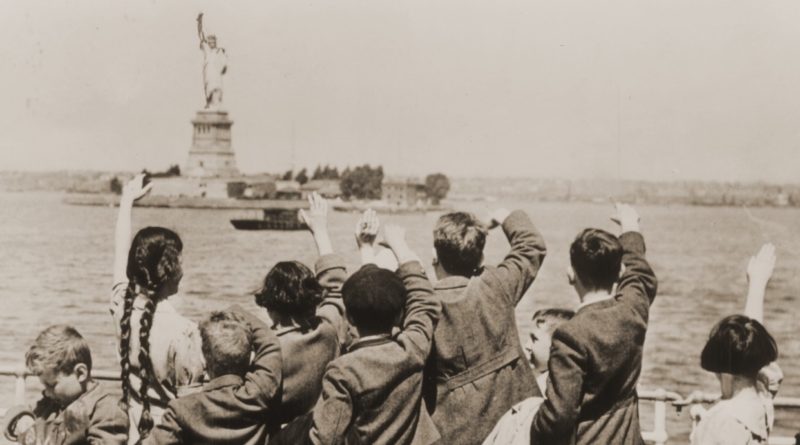
Jewish children as refugees in 1939

Note: If you wish to receive, via e-mail, (1) my weekly newsletter or (2) daily copies of these posts, write to me at rrbates1951@gmail.com. Comments may also be sent to this address. I promise not to share your e-mail with anyone. To unsubscribe, write here as well.

Sunday

Rosh Hashanah, when Jews celebrate their new year and reflect upon their lives, begins tomorrow evening. Emma Lazarus’s “New Year” notes the difference between celebrating the occasion during the harvest season and in the bleak midwinter. Why not turn over a new leaf “when orchards burn their lamps of fiery gold” and when the grape “glows like a jewel”? Lazarus calls this time of year “the mother of months.”

In this context, the horn of plenty makes sense, and the poet links it with the shofar, the ram’s horn or “sacred cornet” that is sounded in the synagogue to mark the High Holy Days. Whatever anguish has been “wrought by priest and mob”—Lazarus is thinking here of the murderous pogroms in Russia that were occurring in the 1880s—is giving way to new hope (“undreamed of morn”).

The promise of America is part of this vision. Lazarus, of course, is best-known for “The New Colossus,” inscribed on the Statue of Liberty. People especially know the final lines:

Give me your tired, your poor, 
Your huddled masses yearning to breathe free, 
The wretched refuse of your teeming shore, 
Send these, the homeless, tempest-tost to me, 
I lift my lamp beside the golden door!

Lazarus recycles one of the images in today’s poem: “Through fire and blood and tempest-tossing wave.” The journey she describes was first set in motion by the Roman destruction of the Temple in 70 AD, which set off a Jewish diaspora. In the 19th century, when Lazarus wrote the poem, Jews were moving from the steppes of Russia to as far west as the “snow-capped Sierras.” Their goal: the freedom “to proclaim and worship Him” in a country that promised freedom of religion for all. 

Lazarus draws on Isaiah (52:2-4) to provide a prophetic framework for the journey:

Enlarge the place of your tent,
    stretch your tent curtains wide,
    do not hold back;
lengthen your cords,
    strengthen your stakes.
For you will spread out to the right and to the left;
    your descendants will dispossess nations
    and settle in their desolate cities.

Isaiah is drawing here on God’s promise to Abraham in Genesis 15:5: “Look now toward heaven, and tell the stars, if thou be able to number them: and he said unto him, So shall thy seed be.”

Lazarus acknowledges both those Jews who are traveling westward into an America of hope and promise and those who are journeying back to Palestine. “In two divided streams the exiles part,” she writes, 

One rolling homeward to its ancient source, 
One rushing sunward with fresh will, new heart.

In both instances, however, 

                  the truth is spread, the law unfurled, 
Each separate soul contains the nation’s force,
And both embrace the world.

The reference to “the silver candle’s seven rays” in the last stanza is to the seven branched menorah, which an internet search informs me represents the original Temple menorah and functions as (1) a symbol of human wisdom and enlightenment and (2) a symbol of God’s creation of the world (six days of creating and the central seventh branch for Shabbat). The “garnered spoil of bees,” meanwhile, refers to the practice of dipping apples in honey during the Rosh Hashanah ceremonies in the hope of a sweet and fruitful new year. Through the prayer and praise of the occasion, Lazarus writes,

                             once more we prove 
How strength of supreme suffering still is ours
For Truth and Law and Love.

The New Year
By Emma Lazarus
Rosh-Hashanah, 5643 [1883]

Not while the snow-shroud round dead earth is rolled,
And naked branches point to frozen skies.—
When orchards burn their lamps of fiery gold,
The grape glows like a jewel, and the corn 
A sea of beauty and abundance lies,
Then the new year is born.

Look where the mother of the months uplifts 
In the green clearness of the unsunned West,
Her ivory horn of plenty, dropping gifts,
Cool, harvest-feeding dews, fine-winnowed light; 
Tired labor with fruition, joy and rest
Profusely to requite.

Blow, Israel, the sacred cornet! Call
Back to thy courts whatever faint heart throb
With thine ancestral blood, thy need craves all. 
The red, dark year is dead, the year just born
Leads on from anguish wrought by priest and mob,
To what undreamed-of morn?

For never yet, since on the holy height,
The Temple’s marble walls of white and green 
Carved like the sea-waves, fell, and the world’s light
Went out in darkness,—never was the year 
Greater with portent and with promise seen,
Than this eve now and here.

Even as the Prophet promised, so your tent
Hath been enlarged unto earth’s farthest rim.
To snow-capped Sierras from vast steppes ye went, 
Through fire and blood and tempest-tossing wave,
For freedom to proclaim and worship Him,
Mighty to slay and save.

High above flood and fire ye held the scroll,
Out of the depths ye published still the Word. 
No bodily pang had power to swerve your soul:
Ye, in a cynic age of crumbling faiths,
Lived to bear witness to the living Lord,
Or died a thousand deaths.

In two divided streams the exiles part,
One rolling homeward to its ancient source, 
One rushing sunward with fresh will, new heart.
By each the truth is spread, the law unfurled, 
Each separate soul contains the nation’s force,
And both embrace the world.

Kindle the silver candle’s seven rays,
Offer the first fruits of the clustered bowers,
The garnered spoil of bees. With prayer and praise
Rejoice that once more tried, once more we prove 
How strength of supreme suffering still is ours
For Truth and Law and Love.

Integral to Rosh Hashanah, and to Judaism generally, is the command to welcome the stranger. We all of us need such reminders in these days of ICE raids and immigrant crackdowns. Lazarus conveyed this vision in “New Colossus” and she saw its renewed necessity in the 1880s.

America at its best has functioned as a promised land for the world’s dispossessed. Keep this in mind as you gather with friends and loved ones.

Happy New Year! Shana Tovah!

Past Posts about the High Holy Days
–Lucille Clifton – Running into a New Year
–Alicia Ostriker – Poems for Judaism’s High Holy Days 
–Marge Piercy – The Light You Seek Hides in Your Belly 
–Grace Schulman May God’s Love Be Taught at Last in Jerusalem 
Rachel Barenblat–Rosh Hashanah: How to Keep It New
Enid Shomer–How Rosh Hashanah Is Like Swimming
Marge Piercy–Let My Words Turn into Sparks
Yehuda Amichai–Theoretically, a Season for Everything
Emma Lazarus–High above the Flood and Fire Ye Held the Scroll
Kadya Molodowsky–Blowing for Hope in the Face of Darkness
Alicia Ostriker–Entering the Days of Awe
Muriel Ruykeyser and Denise Levertov: Rosh Hashanah – A Stirring of Wonder
Marge Piercy: Rosh Hashanah – Weave Real Connections
Lucille Clifton: On 9-11 Firemen Ascended Jacob’s Ladder
Rashani: Blowing for Hope in the Face of Darkness
A Ninth Century Prayer for Yom Kippur
Adrienne Rich’s Yom Kippur Thoughts about Conflict 
Jane Kenyon: Thirsting of Disordered Souls
Rashani: Out of Darkness, Sanctified into Being 
–Stanley Kunitz: Live in the Layers, Not on the Litter 
Philip Schultz: Believe in the Utter Sweetness of Your Life

Posted in Uncategorized | Tagged , , , | Comments closed

Childhood Confusion: Reading to the Rescue

Version 1.0.0

Note: If you wish to receive, via e-mail, (1) my weekly newsletter or (2) daily copies of these posts, write to me at rrbates1951@gmail.com. Comments may also be sent to this address. I promise not to share your e-mail with anyone. To unsubscribe, write here as well.

Friday

Today’s post covers my interactions with literature from third through seventh grade since there are some particularly revealing moments. I look especially at those works where I can remember the exact time and place of our encounter. 

For instance, I was standing in a large commons area in the old wooden apartment (Van Ness Hall) when I first heard about Narnia. The year was 1959 and I was eight at the time. Chris Mayfield, my best friend and the eldest daughter of the seminarian family that lived upstairs, was describing The Silver Chair. I remember her wanting us, like Jill and Eustace, to hold out our arms and invoke Aslan so that we would be whisked off to that magical land.

I also remember, that same year, sitting on our family couch, probably with my brother Jonathan, as my father read to us about the dwarfs piling into Bilbo’s house. 

Partly because of that first encounter with C.S. Lewis, Silver Chair has always been my favorite Narnia book. Drawing on the Arthurian quest narrative, Lewis appealed to my childhood longing to live a meaningful life. It wasn’t only the adventures, the strange creatures, and the talking animals that pulled me in, however, but also Eustace and Jill. They weren’t sentimental fabrications but vividly and sometimes uncomfortably real, what with their quarreling and their missteps. Although they sometimes fail certain ethical tests, however, in the end they step up and do the right thing. Perhaps I saw Chris and me in them. 

As one who was always concerned about doing the right thing, I didn’t like it when children came up short—Edmund betraying in siblings in Wardrobe, Digory overriding Polly and ringing the bell in Magician’s Nephew, Eustace being a jerk in Dawn Treader, Jill forgetting the signs in Silver Chair, Shasta and Aravis arguing in Horse and His Boy—but such unpleasant moments added dimensionality to my engagement. They prompted me to develop as a human being.

Thinking about it now, I was prepared for children wrestling with moral dilemmas from having been immersed in E. Nesbit’s Bastable books. I identified with Oswald, the eldest, who has a strong sense of morality, even though he and his four siblings, in their group projects, sometimes mess up in the performance (thus their self designation as “the Wouldbegoods”). There’s no magic in the Bastable books so they didn’t enthrall me the way Narnia did, but I can see their influence. 

For instance, I enrolled my siblings and the neighborhood kids (all younger) in large group activities. We would play such games as freeze tag, capture the flag, red rover, wiffle ball, and something called ka-seep (spelling unclear), in which everyone ran from one line to the other, with anyone tagged joining the one in the middle until all are caught. Everyone got to pick a game and, to insure everyone participated in all the games, I had them step in something we called “the sacred circle.” This was a circle drawn in chalk on one of the paving stones leading up to the house. (We were no longer living in Van Ness Hall but now had a university-owned stone house a couple of blocks away.) By stepping into the circle, you signaled your commitment.

We also played a game I invented called “Romans and Barbarians” in which I now detect a masochistic streak. We would divide into two groups and, whenever the Romans captured a barbarian, they would tie him/her to our jungle gym and apply various tortures until he or she agreed to be a Roman. The challenge lay in how long you could hold out as we beat each other with plastic swords or hung each other up by the armpits. I always insisted on being a barbarian and, since I was the eldest, I was usually the last one caught. It was fairly mild, all things considered, but a fascination with B&D has always been with me. I hasten to add that I don’t act on my B&D fantasies. Doing so would be a disappointment as nothing in actuality can ever live up to the pictures in my head.

I note that, while I thought of us all participating equally in our games, my brother Jonathan, three years younger, notes that I always got my own way. This contributed significantly to our sibling rivalry, and he would go on to be far more in tune with the broader world than I was, whether it took the form of rock music, sex, drugs, or peer engagement. If, as I’ve noted earlier, I was trying to remain a child to please my father, Jonathan went storming into the world of traditional adolescence and so in some ways seemed older than I was.

Back to Lewis and Tolkien. If Lewis shook my world, Tolkien hit with the force of a tsunami. I sometimes say that Tolkien’s world-building fiction saved my childhood, and it was certainly the work (to borrow from Yeats) that had all my thought and love. I didn’t do what other boys did—play Little League baseball and football or engage in fights or hang around in guy groups—but Tolkien’s world was so immense and all-encompassing that, by entering it, I could imagine doing all the things a boy/man was supposed to do.

My favorite character was the dwarf Gimli, perhaps because he was short (as was I), perhaps because—in my low self-esteem—I saw myself as hunkered down and plodding (this in contrast to my more athletic peers). When those of whom not much is expected rise to the occasion—as Gimli does in his competition with Legolas at the Battle of Helm’s Deep and of course as Frodo does in destroying the ring—I could imagine myself triumphing against the odds.

After my father read us The Hobbit and The Fellowship of the Ring, we had to wait two months for Two Towers and Return of the King to be sent to us from Blackwell’s Bookstore in London since Tolkien didn’t yet have an American publisher. I also wrote a fan letter to Tolkien (this in 1961) and several months later received a reply. I have the letter, along with the famous signature, framed and hanging in my office. 

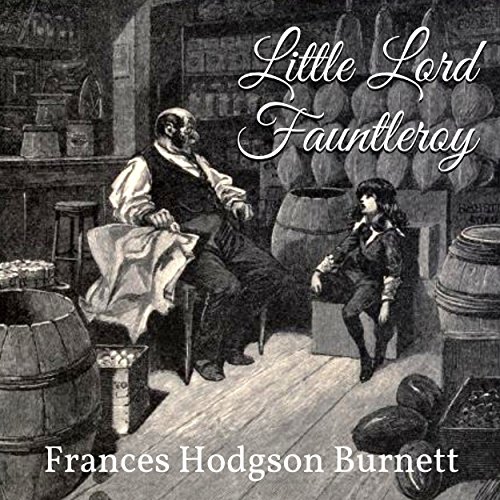
I’ll mention one other beloved set of works that help me see the boy I was then. I identified intensively with stories of boys who are girl-like or who even become girls. These included L. Frank Baum’s The Land of Oz, Francis Hodgson Burnett’s Little Lord Fauntleroy, Superman comic in which a young Clark Kent is temporarily turned into a girl, and Shakespeare’s Twelfth Night (although in that one a woman passes herself off as a man).

My explanation for my fascination is that, in trying to figure out why I was so different from the other boys around me, I at times wondered whether some cosmic mistake had been made. (I remember thinking this as early as eight or nine.) Sometimes, when riding my bike down steep Curlicue Lane on my way to a piano lesson, I imagined having hair that streamed out behind me, even though this was 1960 and all the boys had buzz cuts back then. (I would have long hair when I was in college in 1969-73.) In Land of Oz, the boy Tip turns out to be Ozma under enchantment, and while Fauntleroy is very much a boy—he’s a fast runner, as was I—he wears velvet suits with lace collars while sporting long flowing locks.

As an aside, my grandmother would dress up my father as Fauntleroy in the late 1920s (he was born in 1923). While some boys kicked against it—”Mighty glad I ain’t a girl–ruther be a boy,/ Without them sashes, curls, an’ things that ‘s worn by Fauntleroy!” declares the defiant speaker in Eugene Field’s “Jest ’Fore Christmas”—my father reportedly loved it. I know that, as an adult, he always wanted a daughter (in which case my name would have been Ann), so maybe that’s partly where my longing came from, another way I wanted to please him. In any event, he read me the book as a child and I identified with Fauntleroy, even though I now see that the novel is overly thick with sentimentality. It’s nothing like Burnett’s far superior Secret Garden, which my father also read to us.

Of all these gender crossing works, Twelfth Night is the one that most stands out. In seventh grade I was home sick with a long bout of mono—probably brought on by stress over the civil rights turmoil (more on that next week)—and my father brought home Shakespeare records from Sewanee’s English Department. Twelfth Night was my favorite, with Taming of the Shrew second and Midsummer Night’s Dream third.

Shakespeare’s subtitle for Twelfth Night is As You Will, and much of the magic in the play lies in how one can enter it from multiple points. Whether you are gay or lesbian or a male who has inner female longings (me) or a female who has inner male longings (my wife Julia), you can find characters acting out your drama. I identified with Viola and was particularly struck by the scene where Sir Toby, taken in by her male guise, goads the cowardly Sir Andrew into challenging her to a duel. There she is, appearing to be a male while having a female interior.

I also found satisfying the later scene where Sebastian, Viola’s twin who has been separated from her, shows up and—upending Toby’s assumption that the person who looks like this is a wimp—thrashes both him and Sir Andrew. Perhaps it wasn’t so much that I wanted to be a girl as someone whose whole self was acknowledged and honored. 

Incidentally, Julia as a girl had a different favorite scene. Viola has a relationship with Orsino where gender doesn’t get in the way (because he thinks she’s Cesario). “Men and women can’t be friends,” declares Billy Crystal in the movie When Harry Met Sally, but Orsino and Viola/Cesario are friends in this relationship. Gender doesn’t get in the way.

Gender confusion certainly made life hard for me. My sixth grade teacher once called me a sissy, and, in football-mad Tennessee, I can see how it was hard to categorize a boy like me. As I now interpret the lightning strike that destroys Viola and Sebastian’s ship, it is Shakespeare telling us that, very early, society divides us into two gender stereotypes. The division seems to come out of nowhere, it can be violent (society polices it in a variety of ways), and it appears irrevocable. Like Plato’s divided beings, we spend the rest of our lives longing for the missing twin. 

Or so, I suspect, was the case with Shakespeare. It has certainly been the case with me.

Posted in Uncategorized | Tagged , , , , , , , , , , | Comments closed

A Poem by Our Latest Poet Laureate

Arthur Sze, 2025-27 National Poet Laureate

Note: If you wish to receive, via e-mail, (1) my weekly newsletter or (2) daily copies of these posts, write to me at rrbates1951@gmail.com. Comments may also be sent to this address. I promise not to share your e-mail with anyone. To unsubscribe, write here as well.

Thursday

I’m reposting this essay from 2021 as Chinese-American Arthur Sze has just been named our national poet laureate, a post that over the years has been occupied by such luminaries as Robert Frost, William Carlos Williams, Gwendolyn Brooks, Stanley Kunitz, Howard Nemerov, Robert Penn Warren, Rita Dove, Billy Collins, W.S. Merwin…the list goes on and on.

Sze’s family immigrated to America in the 1930s, fleeing the Japanese. Thus his memories of the Yangtze River are family memories, not his own. The poem in some ways works as a riddle only the riddle is the mystery of life, which means an answer can never be pinned down.

But we know that, if we do not pluck the apple from the tree, it will die on the branch. We must go searching, even if we never find this mysterious “it.” Sze doesn’t call it “God” because that word is too heavy and seems too definite (even though God is never definite). What the poet knows is that it’s in the capillaries of our lungs, “in a corpse burning on the Ganges,/ in rain splashing on banana leaves.”

The ever-flowing river, like ever-flowing life, captures this spirit of this “it.” So does the ever-spinning top, describing a cone as it gathers together past, present, future. Look for it “in the smell of an avocado blossom, and in the true passion of a kiss.” Plato may inform us that the apple we know is only a shadow of the ideal form, but given that we can only know that apple that we see, taste, smell, and hold in our hand, that’s where we must go to find mystery.

The Unnamable River
By Arthur Sze

1
Is it in the anthracite face of a coal miner,
crystallized in the veins and lungs of a steel          
worker, pulverized in the grimy hands of a railroad engineer?
Is it in a child naming a star, coconuts washing
ashore, dormant in a volcano along the Rio Grande?

You can travel the four thousand miles of the Nile
to its source and never find it.
You can climb the five highest peaks of the Himalayas
and never recognize it.
You can gaze though the largest telescope
and never see it.

But it’s in the capillaries of your lungs.
It’s in the space as you slice open a lemon.
It’s in a corpse burning on the Ganges,
in rain splashing on banana leaves.

Perhaps you have to know you are about to die
to hunger for it. Perhaps you have to go
alone in the jungle armed with a spear
to truly see it. Perhaps you have to
have pneumonia to sense its crush.

But it’s also in the scissor hands of a clock.
It’s in the precessing motion of a top
when a torque makes the axis of rotation describe a cone:
and the cone spinning on a point gathers
past, present, future.

2
In a crude theory of perception, the apple you
see is supposed to be a copy of the actual apple,
but who can step out of his body to compare the two?
Who can step out of his life and feel
the Milky Way flow out of his hands? 

An unpicked apple dies on a branch:
that is all we know of it.
It turns black and hard, a corpse on the Ganges.
Then go ahead and map out three thousand mile of the Yantze;
walk each inch, feel its surge and
flow as you feel the surge and flow in your own body.

And the spinning cone of a precessing top
is a form of existence that gathers and spins death and life into one.
It is in the duration of words, but beyond words—
river river river, river river.
The coal miner may not know he has it.
The steel worker may not know he has it.
The railroad engineer may not know he has it.
But it is there. It is in the smell
of an avocado blossom, and in the true passion of a kiss.

Posted in Uncategorized | Tagged , , , | Comments closed

  • Sign up for my weekly newsletter