Steinbeck on Destroying Needed Food

Note: If you wish to receive, via e-mail, (1) my weekly newsletter or (2) daily copies of these posts, write to me at rrbates1951@gmail.com. Comments may also be sent to this address. I promise not to share your e-mail with anyone. To unsubscribe, write here as well.

Thursday

Evil is when you go out of your way to deprive the destitute of basic life necessities. This is a regular theme of the Hebrew prophets and of Jesus, as well as of world religions generally. In Isaiah’s famous passage about how there is no rest for the wicked (57, 58), God sets forth our responsibility. Is it not, the Lord rhetorically asks,

to share your food with the hungry
    and to provide the poor wanderer with shelter—
when you see the naked, to clothe them,
    and not to turn away from your own flesh and blood?

One therefore reads with horror about the Trump administration destroying 500 tons of USAID emergency food rather than distributing it to hungry children. As the Atlantic recently reported, 

Five months into its unprecedented dismantling of foreign-aid programs, the Trump administration has given the order to incinerate food instead of sending it to people abroad who need it. Nearly 500 metric tons of emergency food–enough to feed about 1.5 million children for a week–are set to expire tomorrow, according to current and former government employees with direct knowledge of the rations. Within weeks, two of those sources told me, the food, meant for children in Afghanistan and Pakistan, will be ash.

Those of you who have read John Steinbeck’s Grapes of Wrath can predict the episode I reference today. Concerned with the issue of food pricing, it contains the passages that most stuck in my mind when I read the novel in high school. To a child, seeing perfectly good food destroyed when people are starving appears an abomination: 

The works of the roots of the vines, of the trees, must be destroyed to keep up the price, and this is the saddest, bitterest thing of all. Carloads of oranges dumped on the ground. The people came for miles to take the fruit, but this could not be. How would they buy oranges at twenty cents a dozen if they could drive out and pick them up? And men with hoses squirt kerosene on the oranges, and they are angry at the crime, angry at the people who have come to take the fruit. A million people hungry, needing the fruit–and kerosene sprayed over the golden mountains. 

“The smell of rot fills the country,” Steinbeck writes before continuing on:

Burn coffee for fuel in the ships. Burn corn to keep warm, it makes a hot fire. Dump potatoes in the rivers and place guards along the banks to keep the hungry people from fishing them out. Slaughter the pigs and bury them, and let the putrescence drip down into the earth. 

At this point Steinbeck channels Isaiah, Jeremiah and other Biblical prophets:

There is a crime here that goes beyond denunciation. There is a sorrow here that weeping cannot symbolize. There is a failure here that topples all our success. The fertile earth, the straight tree rows, the sturdy trunks, and the ripe fruit. And children dying of pellagra must die because a profit cannot be taken from an orange. And coroners must fill in the certificates— died of malnutrition— because the food must rot, must be forced to rot. 

Then comes the grand finale, which contains the line that provides the novel with its title:

The people come with nets to fish for potatoes in the river, and the guards hold them back; they come in rattling cars to get the dumped oranges, but the kerosene is sprayed. And they stand still and watch the potatoes float by, listen to the screaming pigs being killed in a ditch and covered with quicklime, watch the mountains of oranges slop down to a putrefying ooze; and in the eyes of the people there is the failure; and in the eyes of the hungry there is a growing wrath. In the souls of the people the grapes of wrath are filling and growing heavy, growing heavy for the vintage.

Steinbeck borrows the apocalyptic “grapes of wrath” image from both John of Patmos’s Book of Revelation and Julia Ward Howe’s “The Battle Hymn of the Republic.” Here’s the Biblical reference:

And another angel came out from the altar, who had power over fire, and he cried with a loud cry to him who had the sharp sickle, saying, “Thrust in your sharp sickle and gather the clusters of the vine of the earth, for her grapes are fully ripe.” So the angel thrust his sickle into the earth and gathered the vine of the earth, and threw it into the great winepress of the wrath of God. And the winepress was trampled outside the city, and blood came out of the winepress, up to the horses’ bridles, for one thousand six hundred furlongs.

There are other current day applications for Steinbeck’s novel. He mentions how the little farmers are getting squeezed out by the corporate farms, which have their own canneries and use their monopoly power to force bankruptcies (after which they buy out the small holdings). In our case, American farmers are being impacted both by tariff threats and by the vindictive cutbacks to foreign and domestic food aid programs. 

The novel as a whole, meanwhile, is about farm laborers picking crops, which in the 21st century is mostly done by undocumented immigrants. With the Trump administration more interested in xenophobic posturing than in solving immigration issues, crops are going unpicked and are rotting in the fields. Here’s the comparable situation in Steinbeck’s novel:

And first the cherries ripen. Cent and a half a pound. Hell, we can’t pick ’em for that. Black cherries and red cherries, full and sweet, and the birds eat half of each cherry and the yellow jackets buzz into the holes the birds made. And on the ground the seeds drop and dry with black shreds hanging from them…. 

And the pears grow yellow and soft. Five dollars a ton. Five dollars for forty fifty-pound boxes; trees pruned and sprayed, orchards cultivated-pick the fruit, put it in boxes, load the trucks, deliver the fruit to the cannery–forty boxes for five dollars. We can’t do it. And the yellow fruit falls heavily to the ground and splashes on the ground. The yellow jackets dig into the soft meat, and there is a smell of ferment and rot. 

Trump and the GOP have been relying on rural voters, but it’s an open question whether these will remain loyal in the face of severe economic downturn. Perhaps, like Steinbeck’s grapes of wrath, they are filling with anger and are “heavy for the vintage.”

The novel dramatically ends with Rose of Sharon playing the Good Samaritan by breastfeeding a starving stranger after having lost her baby. It is an action that the sociopathic Donald Trump and Elon Musk could never conceive, but Steinbeck believed that, in the end, care for the stranger would win out over self-absorption and greed. I end with Tom Joad’s stirring declaration, which envisions a future that communal action can bring about: 

I’ll be all around in the dark – I’ll be everywhere. Wherever you can look – wherever there’s a fight, so hungry people can eat, I’ll be there. Wherever there’s a cop beatin’ up a guy, I’ll be there. I’ll be in the way guys yell when they’re mad. I’ll be in the way kids laugh when they’re hungry and they know supper’s ready, and when the people are eatin’ the stuff they raise and livin’ in the houses they build – I’ll be there, too.

We’ve been through bleak times before and survived. No reason to stop fighting now.

Posted in Uncategorized | Tagged , , , , , | Comments closed

Hammett on Boomeranging Power Plays

Note: If you wish to receive, via e-mail, (1) my weekly newsletter or (2) daily copies of these posts, write to me at rrbates1951@gmail.com. Comments may also be sent to this address. I promise not to share your e-mail with anyone. To unsubscribe, write here as well.

Wednesday

What happens when the grubby tactics you use to come to power take on a life on their own and start calling the shots? Trump, who pedaled the Obama birther lie and who was propelled to the White House (in part) by QAnon believers accusing Democrats of running pedophile rings, is suddenly getting hammered for not sharing what the FBI and Department of Justice have learned about the notorious pedophile Jeffrey Epstein. Political science blogger Lindsay Bayerstein explains why Epstein is so important to these people:

The base expects the Epstein files to fulfill prophecies broadcast on rightwing radio in the 1990s and elaborated through Pizzagate and QAnon. It was foretold that Bill and Hillary Clinton and all the Satanic Democrats would one day be exposed for their crimes against God and man. 

Because of this deep faith, the base feels betrayed when Trump and Attorney General Pam Bondi, with all the resources of the FBI at their disposal, claim that (to borrow from Gertrude Stein) there is no there there:

The Epstein case is a particularly effective wedge because Trump’s conspiracist base feels humiliated. They were played for suckers and they know it. As historian Richard Hofstadter observed in his famous essay, “The Paranoid Style in American Politics,” status anxiety is an accelerant for conspiratorial thinking. People gravitate towards conspiracy theories when they feel insecure. It’s a special affront, then, to be treated with contempt by the very people who were supposed to salve their egos. 

Thanks to a recent article in Crime Reads, I’ve been rereading Dashiell Hammett’s Red Harvest, which captures such a situation in the early pages. The Trump figure in the novel is Elihu Willsson, who for forty years

had owned Personville, heart, soul, skin and guts. He was president and majority stockholder of the Personville Mining Corporation, ditto of the First National Bank, owner of the Morning Herald, and Evening Herald, the city’s only newspapers, and at least part owner of nearly every other enterprise of any importance. Along with these pieces of property he owned a United States senator, a couple of representatives, the governor, the mayor, and most of the state legislature. Elihu Willsson was Personville, and he was almost the whole state. 

Willsson does not control the International Workers of the World, however, who have organized his miners. When there’s a downturn in the economy, however, he sees his opportunity to break the union: 

In 1921 it came. Business was rotten. Old Elihu didn’t care whether he shut down for a while or not. He tore up the agreements he had made with his men and began kicking them back into their pre-war circumstances. 

Elihu resorts to gunmen, strike-breakers, national guardsmen and even parts of the regular army to put down the subsequent strike. But although he is successful, we are told that he has unleashed forces that—like Trump with his crazy supporters—he can no longer control:

He won the strike, but he lost his hold on the city and the state. To beat the miners he had to let his hired thugs run wild. When the fight was over he couldn’t get rid of them. He had given his city to them and he wasn’t strong enough to take it away from them. Personville looked good to them and they took it over. They had won his strike for him and they took the city for their spoils. He couldn’t openly break with them. They had too much on him. He was responsible for all they had done during the strike. 

I’ve been wondering if something similar will happen with the masked ICE agents that Trump is sending into Latino communities. Now that, thanks to the GOP’s Big Beautiful Bill,  ICE will be supercharged with billions of dollars, will we start seeing ICE become a paramilitary organization operating independently?

Once I finish Red Harvest, I’ll report back on any further insights it offers into our situation. I’ll just note today that I’m not surprised that a writer who pioneered the noir crime novel, with its aura of existential dread, would suddenly seem particularly relevant. 

Posted in Uncategorized | Tagged , , , , , , | Comments closed

Some Good News, Thanks to the Sun

Vincent Van Gogh, The Sower

Note: If you wish to receive, via e-mail, (1) my weekly newsletter or (2) daily copies of these posts, write to me at rrbates1951@gmail.com. Comments may also be sent to this address. I promise not to share your e-mail with anyone. To unsubscribe, write here as well.

Tuesday

The news has been so bad recently that I figured readers would appreciate Bill McKibben’s positive report about the world’s conversion to solar energy. To add to the uplift, I also include a Philip Larkin poem about the glories of the sun.

In a recent New Yorker article the noted climate activist says that, over the past two years and with surprisingly little notice, renewable energy “has suddenly become the obvious, mainstream, cost-efficient choice around the world.” He notes that despite the efforts of the GOP’s Big Beautiful Bill to kneecap solar and wind energy, the U.S. and other countries continue to surpass even our most ambitious goals. “Globally, roughly a third more power is being generated from the sun this spring than last,” McKibben writes.

One reason we in America may not be noticing this is because some of the biggest strides are happening elsewhere. China, which in 2020 set a goal of producing twelve hundred gigawatts of clean power by 2030, hit that target early last year. Africa and South Asia, meanwhile, are importing China’s mass-produced solar panels, which are changing the fortunes of farmers and business owners. According to McKibben, the International Energy Agency is currently predicting that, by 2026, 

solar will generate more electricity than all the world’s nuclear plants combined. By 2029, it will generate more than all the hydro dams. By 2031, it will have outstripped gas and, by 2032, coal. According to the I.E.A., solar is likely to become the world’s primary source of all energy, not just electricity, by 2035. 

We’re by no means out of the woods yet, unfortunately. McKibben says that, if we are to achieve the 2015 Paris agreement’s goals of a net-zero carbon world by 2050, we must increase the pace at which we’re installing renewables by about twenty per cent. Donald Trump and the fossil fuel companies are doing all they can to stop that from happening.

Interestingly, however, this is spurring a backlash from other countries, which are looking for ways to break free of their dependance on American natural gas and oil and as a result are accelerating their own renewable efforts. Even in America, solar power remains the most popular source of electricity in America, with almost 90% of the public favoring the clean energy tax credits passed during the Biden administration. As Bob Dylan would say, “Please get out of the new [road] if you can’t lend a hand/ For the times they are a changin’.”

I can report that Julia and I have made our own small contribution, installing solar panels on our Maryland home in 2016. (We’re currently living in Appalachian Tennessee and so can’t do the same here.) Someday, when they wear out, they will provide minerals for future solar panels, which are becoming increasingly efficient. McKibben quotes an Oxford researcher reporting that “the silver used in one solar panel built in 2010 would be enough for around five panels today.” McKibben says that, by 2035, that number will increase to ten new panels. 

After our 20-year-old Prius died, Julia and I also purchased an all-electric Hyundai Ioniq 6, which we plug into our house every night and love more than any other car we’ve ever owned. As McKibben notes, “it takes two to three times more energy to run a standard car than to run an E.V., which is why even an E.V. charged with power from a coal-fired plant is still far more efficient than a vehicle run on an internal-combustion engine.”  He’s even more enthusiastic about e-bikes.

So with gratitude toward the sun, here’s Larkin’s “Solar,” which praises the heavenly body for pouring its bounty down upon us “unrecompensed.” The sun is both a “suspended lion face” in the “unfurnished sky” and a “single stalkless flower,” sending out heat that is “the echo of [its] gold.”

For good measure, Larkin throws in a reference to Jacob’s ladder. In a dream Jacob saw angels ascending and descending a stairway to heaven, and so go our own prayers to the sun. It awaits with open hands as “our needs hourly climb and return like angels.”

“You give forever,” the poet concludes gratefully.

Solar
By Philip Larkin

Suspended lion face
Spilling at the center
Of an unfurnished sky
How still you stand,
And how unaided
Single stalkless flower
You pour unrecompensed.

The eye sees you
Simplified by distance
Into an origin,
Your petalled head of flames
Continuously exploding.
Heat is the echo of your
Gold.

Coined there among
Lonely horizontals
You exist openly.
Our needs hourly
Climb and return like angels.
Unclosing like a hand,
You give forever.

When I think of how Trump hates solar power—and before Trump, Ronald Reagan, who removed the solar panels that Jimmy Carter installed on the White House—I think of Satan in Milton’s Paradise Lost. “O Sun, [I] tell thee how I hate thy beams/ That bring to my remembrance from what state/ I fell.”

Better to say to praise the sun as Milton’s Adam does in his morning hymn. The sun here is the eye and soul of our world, belonging not only to the dawn but functioning as the “sure pledge of day”: 

Fairest of stars, last in the train of night,
If better thou belong not to the dawn,
Sure pledge of day, that crownst the smiling morn
With thy bright circlet, praise him in thy sphere
While day arises, that sweet hour of prime.
Thou sun, of this great world both eye and soul,
Acknowledge him thy greater, sound his praise
In thy eternal course, both when thou climb’st,
And when high noon has gained, and when thou fall’st.

Further thought: A song about the sun that I learned as a child is a far cry from Larkin and Milton, but I have a special fondness for it and can still sing it. Looking back at it now, I realize it gave us a chance to express gratitude at an early age:

The sun is a mass of incandescent gas
A gigantic nuclear furnace
Where hydrogen is turned into helium
At a temperature of millions of degrees

Yo-ho, it’s hot, the sun is not
A place where we could live 
But here on Earth, there’d be no life
Without the light it gives

We need its light, we need its heat
We need its energy
Without the sun, without a doubt
There’d be no you and me

Posted in Uncategorized | Tagged , , , , | Comments closed

Ibsen on Why MAGA Hates Experts

Note: If you wish to receive, via e-mail, (1) my weekly newsletter or (2) daily copies of these posts, write to me at rrbates1951@gmail.com. Comments may also be sent to this address. I promise not to share your e-mail with anyone. To unsubscribe, write here as well.

Monday

Henrik Ibsen’s Enemy of the People—the subject of a fine essay by blogger Greg Olear following Trump’s electoral victory last November—has become more relevant than ever following the passage of Trump’s “Big Beautiful Bill.” While Democrats are hoping that tax breaks for billionaires and slashed programs for everyone else will finally bring Trump’s working-class supporters to their senses, the play provides us with a caution: many have such a deep and irrational hatred for experts that they will sometimes punish, not reward, people who are trying to make their lives better. In order to “own the libs,” they will vote against their own best interests.

I witnessed such hatred in a personal way when a conservative cousin tore into Dr. Anthony Fauci, who received the Presidential Medal of Honor from President George W. Bush for his work against AIDS and who valiantly steered us through the Covid crisis. Although Fauci worked tirelessly to save lives, my cousin blamed him for (as far as I could figure out) being the messenger. 

As we saw during the pandemic, she was far from the only one. There were even people who chose to die rather than trust life-saving vaccines. Since then, this suspicion of expertise seems to have gotten worse. In all likelihood, we’ll see no one in MAGA blame Trump or Texas administrators for the recent 200+ flood deaths, even while they ignored weather and disaster experts. Trump denies climate change and has gutted the National Weather Service; FEMA, under the control of Homeland Security head Kristi Noem, was missing in action for 72 hours after being informed of the crisis and couldn’t handle cries for help because it had fired so many of its personnel; Texas officials, despite prior warnings and offers of aid, turned down funds that would have installed a flood warning system, and yet all may escape accountability.

We’ve reached the point where responsible governance, which relies on expertise, has given way to performance governance, which relies on vibes. While the first can be dull, the second costs lives.

I am reminded of a Simpsons episode from many years back in which Homer runs for waste disposal manager, an elected position. When there is a public debate, the politically glib Homer, relying on soundbytes, runs circles around the boring but competent agency head. Eventually, the man throws up his hands in disgust and quits. Knowing nothing about waste disposal, Homer then makes a complete hash of his job, with garbage in Springfield spiraling out of control. In the end, the whole town has to move.

In Ibsen’s play, local doctor Thomas Stockmann tries to warn the public that the town’s famous health spa has been polluted by its tannery. The mayor, the factory owner, and the townspeople pressure him to quash his results, but he insists on the truth. After all, he knows people will sicken and perhaps even die if they silence him. “The strongest man in the world is he who stands most alone,” he declares at play’s end.

When it is pointed out that the majority disagrees with him, he lashes out at this majority:

The majority never has the right on its side. Never! That’s one of those societal lies that intelligent, free-thinking men must reject. I ask you: Who is it that forms the majority of the population in a country? The smart people, or the stupid people? I think we can agree that stupid people are in the overwhelming majority all over the world. But, damn it all, surely it can never, ever be right that the smart should bow down to the stupid!

(The people try and shout him down.)

DR STOCKMANN: Sure, sure—you can shout me down, I know. You can cut off my mic. But you cannot prove me wrong. The majority has might on its side—unfortunately; but right it has not. am in the right—me and a few other scattered individuals. The minority is always in the right.

I am reminded of an Emily Dickinson poem at this moment in the play:

Much Madness is divinest Sense –
To a discerning Eye –
Much Sense – the starkest Madness –
’Tis the Majority
In this, as all, prevail –
Assent – and you are sane –
Demur – you’re straightway dangerous –
And handled with a Chain –

Unlike Stockmann, Fauci learned to be diplomatic through his years of public service. Although he sparred with idiots he encountered in Senate hearings—especially Kentucky Sen. Rand Paul—he didn’t wander into the sweeping judgments that Stockmann indulges in.

But that doesn’t matter to MAGA. Experts, just by knowing stuff, are suspect. I think of Walter Miller’s dystopian novel Canticle for Leibowitz, where the angry mob seeks out leaders and experts to blame for the nuclear apocalypse that has devastated the world:

So it was that, after the Deluge, the Fallout, the plagues, the madness, the confusion of tongues, the rage, there began the bloodletting of the Simplification, when remnants of mankind had torn other remnants limb from limb, killing rulers, scientists, leaders, technicians, teachers, and whatever persons the leaders of the maddened mobs said deserved death for having helped to make the Earth what it had become. Nothing had been so hateful in the sight of these mobs as the man of learning, at first because they had served the princes, but then later because they refused to join in the bloodletting and tried to oppose the mobs, calling the crowds “bloodthirsty simpletons.

Were we wrong to laugh at Trump for suggesting that we could cure Covid by injecting bleach? In any event, Trump got the last laugh by attacking the elites who laughed, just as the mobs prevail in Leibowitz:

Joyfully the mobs accepted the name, took up the cry: Simpletons! Yes, yes! I’m a simpleton! Are you a simpleton? We’ll build a town and we’ll name it Simple Town, because by then all the smart bastards that caused all this, they’ll be dead! Simpletons! Let’s go! This ought to show ’em! Anybody here not a simpleton? Get the bastard, if there is!

We saw something like this happen with China’s cultural revolution under Mao, which in turn inspired the Khmer Rouge’s anti-expertise massacres in 1970’s Cambodia. There are similar currents at work in MAGA in the attacks on science, libraries, news organizations, universities, classrooms, medical research labs, and the like. We see it also in GOP tolerance for the incompetent individuals that Trump named to run the federal agencies.

In Ibsen’s play, Dr. Stockmann pays a price for telling the truth: his house is vandalized, his teacher daughter is fired, and he himself is the target of a town boycott. We never hear what happens to those townspeople who drink the poisoned water or the out-of-town visitors who patronize the spa, but we can imagine rising cancer rates and other sickness outbreaks.

And what of investigative reporting that should back up Stockmann’s claims? Well, the town newspaper bends the knee to the authorities much as CNN, CBS, ABC, the Washington Post, the Los Angeles Times, the New York Times, and other mainstream outlets have done with their both-siderism reporting. The following statement by the newspaper editor could have come from those media outlets that passively report (as opposed to aggressively fact check) the lies spouted by the Trump administration. I love how Ibsen captures the sanctimonious self-righteousness of the complicit press:

Hovstad: And, in the matter before us, it is now an undoubted fact that Dr. Stockmann has public opinion against him. Now, what is an editor’s first and most obvious duty, gentlemen? Is it not to work in harmony with his readers? Has he not received a sort of tacit mandate to work persistently and assiduously for the welfare of those whose opinions he represents? Or is it possible I am mistaken in that?

Martin Luther King famously told us that the truth will make us free. Ibsen makes it clear that we may also pay a price for truth telling. Along with the discipline and hard work it takes to become an expert, there is the challenge of holding fast when people hate what your expertise reveals. 

Posted in Uncategorized | Tagged , , , , | Comments closed

He Saw a Stranger Left by Thieves

Pelegrí Clavé, The Good Samaritan

Note: If you wish to receive, via e-mail, (1) my weekly newsletter or (2) daily copies of these posts, write to me at rrbates1951@gmail.com. Comments may also be sent to this address. I promise not to share your e-mail with anyone. To unsubscribe, write here as well.

Sunday

Today’s Gospel reading is the story of the good Samaritan, which gives me the opportunity to share “The Good Samaritan” by the working-class Australian poet Henry Lawson. Lawson’s compassionate soul is no saint but a “lank and lean” man who may be in debt, who may have spent time in jail, and who may be separated from his wife (Lawson’s own wife left him, charging physical abuse). The poet, in other words, has recast a member of the mixed-race Jews who were despised by “proper” Israelites as a marginalized proletariat.

Jesus tells the parable after the lawyer who is his interlocutor has a follow-up question. He knows the second great commandment—“to love your neighbor as yourself”—but he wants to know “who is my neighbor?” Jesus comes up with “Samaritan” as the hardest to love and then tells of a passing priest and a passing Levite failing the test. 

The hard-drinking Lawson (1867-1922) relates to the fact that the Samaritan would have been well-known at the local tavern. He imagines him engaging in sympathetic banter with fellow drinkers. “I’ve had my troubles too” are the heaven-sent words that he uses to comfort.

I find one discordant note in the poem. In the last stanza, Lawson may be referencing the great replacement theory as he imagines a future in which “color rules and whites are slaves/ And savages again.” He would not have been the only British subject at the turn of the century to foresee the end of the empire. The real test may be whether this good Samaritan would stop to help a victim of color. 

We can ask the question of MAGA Christians today. Can you love those immigrants who are being assaulted by ICE agents and sent to concentration camps? Will you do what you can to come to their aid?

The Good Samaritan
By Henry Lawson 

He comes from out the ages dim—
    The good Samaritan;
I somehow never pictured him
    A fat and jolly man;
But one who’d little joy to glean,
    And little coin to give—
A sad-faced man, and lank and lean,
    Who found it hard to live. 

His eyes were haggard in the drought,
    His hair was iron-grey—
His dusty gown was patched, no doubt,
    Where we patch pants to-day.
His faded turban, too, was torn—
    But darned and folded neat,
And leagues of desert sand had worn
    The sandals on his feet. 

He’s been a fool, perhaps, and would
    Have prospered had he tried,
But he was one who never could
    Pass by the other side.
An honest man whom men called soft,
    While laughing in their sleeves—
No doubt in business ways he oft
    Had fallen amongst thieves. 

And, I suppose, by track and tent,
    And other ancient ways,
He drank, and fought, and loved, and went
    The pace in his young days.
And he had known the bitter year
    When love and friendship fail—
I wouldn’t be surprised to hear
    That he had been in jail. 

A silent man, whose passions slept,
    Who had no friends or foes—
A quiet man, who always kept
    His hopes and sorrows close.
A man who very seldom smiled,
    And one who could not weep
Be it for death of wife or child
    Or sorrow still more deep. 

But sometimes when a man would rave
    Of wrong, as sinners do,
He’d say to cheer and make him brave
    ‘I’ve had my troubles too.’
(They might be twittered by the birds,
    And breathed high Heaven through,
There’s beauty in those world-old words:
    ‘I’ve had my sorrows too.’) 

And if he was a married man,
    As many are that roam,
I guess that good Samaritan
    Was rather glum at home,
Impatient when a child would fret,
    And strict at times and grim—
A man whose kinsmen never yet
    Appreciated him. 

Howbeit—in a study brown—
    He had for all we know,
His own thoughts as he journeyed down
    The road to Jericho,
And pondered, as we puzzle yet,
    On tragedies of life—
And maybe he was deep in debt
    And parted from his wife. 

(And so ‘by chance there came that way,’
    It reads not like romance—
The truest friends on earth to-day,
    They mostly come by chance.)
He saw a stranger left by thieves
    Sore hurt and like to die—
He also saw (my heart believes)
    The others pass him by. 

(Perhaps that good Samaritan
    Knew Levite well, and priest)
He lifted up the wounded man
    And sat him on his beast,
And took him on towards the inn—
    All Christ-like unawares—
Still pondering, perhaps, on sin
    And virtue—and his cares. 

He bore him in and fixed him right
    (Helped by the local drunk),
And wined and oiled him well all night,
    And thought beside his bunk.
And on the morrow ere he went
    He left a quid and spoke
Unto the host in terms which meant—
    ‘Look after that poor bloke.’ 

He must have known them at the inn,
    They must have known him too—
Perhaps on that same track he’d seen
    Some other sick mate through;
For ‘Whatsoe’er thou spendest more’
    (The parable is plain)
‘I will repay,’ he told the host,
    ‘When I return again.’ 

He seemed to be a good sort, too,
    The boss of that old pub—
(As even now there are a few
    At shanties in the scrub).
The good Samaritan jogged on
    Through Canaan’s dust and heat,
And pondered over various schemes
    And ways to make ends meet. 

He was no Christian, understand,
    For Christ had not been born—
He journeyed later through the land
    To hold the priests to scorn;
And tell the world of ‘certain men’
    Like that Samaritan,
And preach the simple creed again—
    Man’s duty! Man to man! 

‘Once on a time there lived a man,’
    But he has lived alway,
And that gaunt, good Samaritan
    Is with us here to-day;
He passes through the city streets
    Unnoticed and unknown,
He helps the sinner that he meets—
    His sorrows are his own.

He shares his tucker on the track
    When things are at their worst
(And often shouts in bars outback
    For souls that are athirst).
To-day I see him staggering down
    The blazing water-course,
And making for the distant town
    With a sick man on his horse. 

He’ll live while nations find their graves
    And mortals suffer pain—
When color rules and whites are slaves
    And savages again.
And, after all is past and done,
    He’ll rise up, the Last Man,
From tending to the last but one—
    The good Samaritan.

Posted in Uncategorized | Tagged , , | Comments closed

Atwood Predicted ICE

Bledel as Ofglen in Handmaid’s Tale

Note: If you wish to receive, via e-mail, (1) my weekly newsletter or (2) daily copies of these posts, write to me at rrbates1951@gmail.com. Comments may also be sent to this address. I promise not to share your e-mail with anyone. To unsubscribe, write here as well.

Friday

Julia and I listened to Margaret Atwood’s The Testaments on our trip to Myrtle Beach, and when we came to the part where Aunt Lydia describes how she was arrested by the Gilead militia in the early days of the coup, I couldn’t help but think of those immigrants that ICE is grabbing off the streets and sending to concentration camps, some abroad, some here at home. Most of those arrested are guiltless of any crime, some are spouses, parents, and grandparents of American citizens that have been living productive lives in this country for years, and many have documents that were supposed to protect them. ICE and its MAGA cheerleaders don’t care.

I’ve noted in that past that Atwood’s two handmaid novels now read more like social realism than dystopian sci-fi (what Atwood calls speculative fiction). Keep in mind, as you read the following, that versions of this are now occurring daily in our country. Aunt Lydia, formerly a judge, has just been warned by a colleague that her inalienable rights are no longer operative:

I felt stunned. “This is completely unconstitutional!”

“Forget the Constitution,” said Anita. “they’ve just abolished it…”

At that moment the main door was kicked in. Five men entered, two by two and then one on his own, submachine guns at the ready….

A couple of them were young—twenties, perhaps—but the other three were middle-aged. The younger ones were fit, the others had beer bellies. They were wearing camouflage gear direct from central casting, and if it hadn’t been for the guns I might have laughed, not yet realizing that female laughter would soon be in short supply.

“What’s this about?” I said. “You could have knocked! The door was open.”

The men ignored me. One of them—the leader, I suppose—said to his companion, “Got the list?”…

Anita and I were taken down the stairs, five flights. Was the elevator running? I don’t know. Then we were cuffed with our hands in front of us and inserted into a black van, with a solid panel between us and the driver and mesh inside the darkened glass windows.

The two of us had been mute all this time, because what was there to say? It was clear that cries for help would go unanswered. There was no point in shouting or flinging ourselves against the walls of the van: it would simply have been a futile expense of energy. And so we waited….

“What will they do?” Anita whispered. We couldn’t see out the windows. Nor could we see each other, except as dim shapes.

“I don’t know,” I said.

The van paused—at a checkpoint, I supposed—then moved, then halted. “Final stop,” said a voice. “Out!”

The back doors of the van were opened. Anita clambered out first. “Move it,” said a different voice. It was hard to get down from the van with my hands cuffed; someone took my arm and pulled, and I lurched onto the ground.

As the van pulled away, I stood unsteadily and gazed around. I was in an open space in which there were many groups of other people—other women, I should say—and a large number of men with guns.

I was in a stadium. But it was no longer that. Now it was a prison.

I think of the prisons in El Salvador and in the Louisiana and Florida swamps as Lydia’s story continues. As I noted in yesterday’s post, some of the actual conditions are as horrific as those described in the novel:

Some women had nightmares, as you’d assume. They would groan and thrash about during them, or sit bolt upright with modified shoults. I’m not criticizing: I had nightmares myself…

In the mornings, wakeup was perpetrated by a siren….Bread and water for breakfast. How superlatively good that bread tasted!…Then line-up for the foul toilets, and good luck to you if yours was clogged, since no one would come to unclog it. My theory? The guards went around at night stuffing various materials down the toilets as a further aggravation. Some of the more tidy-minded tried to clean up the washrooms, but once they saw how hopeless it was they gave up. Giving up was the new normal, and I have to say it was catching.

After sharing more gruesome details, including operating without toilet paper and having access to only a dribble of water from the sinks, Lydia continues,

I am sorry to dwell so much on the facilities, but you would be amazed at how important such things become—basics that you’ve taken for granted, that you’ve barely thought about until they’re removed from you. During my daydreams—and we all daydreamed, as enforced stasis with no events produces daydreams and the brain must busy itself with something—I frequently pictured a beautiful , clean, white toilet. Oh, and a sink to go with it, with an ample flow of pure clear water.

Naturally we began to stink. In addition to the ordeal by toilet, we’d been sleeping in our business attire, with no change of underwear. Some of us were past menopause, but others were not, so the smell of clotting blood was added to the sweat and tears and shit and puke. To breathe was to be nauseated.

They were reducing us to animals—to penned-up animals—to our animal nature. They were rubbing our noses in that nature. We were to consider ourselves subhuman.

And if you want insight into the ICE officers who are making the arrests, consider the following observation:

I’ve had cause to notice over the course of what you might call my Gilead career that underlings given sudden power frequently become the worst abusers of it.

As you consider whether to join marches or write letters or find other ways to stay engaged, think of scenes like this. Don’t let giving up become the new normal.

Further note: As if in confirmation of Atwood’s vision, here’s a recent quote by Border Patrol Chief Gregory Bovino about Mayor Karen Bass objecting to ICE’s show of military force in MacArthur Park. As in Testaments, intimidation was the major goal since virtually no arrests were made. The show involved military units on foot and horseback and in armored vehicles. Notice the relish Bovino takes in showing a powerful woman who is boss:

I don’t work for Mayor Karen Bass. Better get used to it now, cause this is going to be normal very soon. We will go anywhere, anytime we want in Los Angeles.

Posted in Uncategorized | Tagged , , , , | Comments closed

America’s Concentration Camps

Trump, Noem and DeSantis tour Florida concentration camp

Note: If you wish to receive, via e-mail, (1) my weekly newsletter or (2) daily copies of these posts, write to me at rrbates1951@gmail.com. Comments may also be sent to this address. I promise not to share your e-mail with anyone. To unsubscribe, write here as well.

Thursday

The Trump administration is not only building concentration camps but celebrating them with associated merchandise. By calling its newly constructed Florida prison “Alligator Alcatraz,” it seeks to make a joke out of human misery. Meanwhile, the stories that are emerging from those incarcerated are horrific.

As CBS-Miami’s Anna McAllister’s reported, and as Ana Ceballos , Alex Harris and Claire Healy of the Miami Herald confirmed in separate reporting, there are toilets that don’t flush, temperatures that fluctuate from freezing to sweltering, giant mosquitoes, little or no access to bathing facilities, and no confidential calls with attorneys. Inmates have reported maggots in the food and lights that are never turned off. Some of the prisoners have residency documents and don’t know why they are there. 

To be clear, the concentration camps are not death camps. Then again, the German concentration camps were not death camps at first. They just evolved into the Final Solution as the population became accustomed to their government’s brutality. At times I sense that the Trump administration, starting with his Jewish advisor Stephen Miller, has taken lessons from the Nazis in how to acculturate a population to cruelty.

While I do not apply Elie Wiesel’s famous poem about the Holocaust directly to Alligator Alcatraz, I share it as a warning of what depths a civilized people can descend to. The current inmates of the Trump concentration camps will certainly “never forget that night, the first night in camp, that turned my life into one long night seven times sealed”:

Never shall I forget that night, the first night in camp, that turned my life into one long night seven times sealed.

Never shall I forget that smoke.

Never shall I forget the small faces of the children whose bodies I saw transformed into smoke under a silent sky.

Never shall I forget those flames that consumed my faith forever.

Never shall I forget that nocturnal silence that deprived me for all eternity of the desire to live.

Never shall I forget those moments that murdered my God and my soul and turned my dreams to ashes.

Never shall I forget those things, even were I condemned to live as long as God Himself.

Never.

Evil is being committed in our name.

Posted in Uncategorized | Tagged , , , , , | Comments closed

Emily Dickinson’s Walk on the Beach

Emily Dickinson

Note: If you wish to receive, via e-mail, (1) my weekly newsletter or (2) daily copies of these posts, write to me at rrbates1951@gmail.com. Comments may also be sent to this address. I promise not to share your e-mail with anyone. To unsubscribe, write here as well.

Wednesday

I’m at Myrtle Beach with grandchildren at the moment so here’s an eye-catching beach poem. This is one of those Emily Dickinson lyrics that starts off prosaically and then takes off in startling ways. “I started Early – Took my Dog – / And visited the Sea,” the poet begins, only to encounter mermaids and frigates and to go wading into the water all the way “past my bodice.” 

Dr. Oliver Tearle of Loughborough University, whose website I visit regularly in search of poems that share a common theme, informs us of the poem’s subtext: it’s about a sexual awakening. The sea, which in Dickinson’s poem “Wild nights! – Wild nights!” stands in for sexual passion, is working its magic again here, only more quietly. She may seem a mousy little woman “aground upon the Sands,” but next thing we know, she’s overflowing “with Pearl”:

And made as He would eat me up –
As wholly as a Dew
Upon a Dandelion’s Sleeve –
And then – I started – too –

And He – He followed – close behind –
I felt His Silver Heel
Upon my Ankle – Then My Shoes
Would overflow with Pearl –

After being eaten up, however, the poet then returns to the Solid Town—nothing to see here, folks!—her life-changing awakening witnessed by no one but herself. Tearle explains:

The end of the poem, where the ‘Solid Town’ forces the sea to back off, invites us to consider the clash, so pronounced in nineteenth-century conservative New England, between the social expectations and mores for young women (embodied by the town as a symbol for civilization and society) and the boundless freedom and energy of the individual (encoded in the sea). It’s as if the speaker, having come to terms with her own sexuality, has retreated to the safety of society with its norms and rules.

Unlike Dickinson and J. Alfred Prufrock, I haven’t seen any mermaids as I’ve walked the South Carolina beach at night. But I have seen the moon cast a silver highway on the sea, which is magical in its own right, a ribbon of moonlight (to borrow from Alfred E. Noyes’s “The Highway Man”). And unlike the moon in Lewis Carroll’s “The Walrus and the Carpenter,” she was not shining sulkily at all.

Here’s Dickinson’s poem:

I started Early – Took my Dog –
And visited the Sea –
The Mermaids in the Basement
Came out to look at me –

And Frigates – in the Upper Floor
Extended Hempen Hands –
Presuming Me to be a Mouse –
Aground – upon the Sands –

But no Man moved Me – till the Tide
Went past my simple Shoe –
And past my Apron – and my Belt
And past my Bodice – too –

And made as He would eat me up –
As wholly as a Dew
Upon a Dandelion’s Sleeve –
And then – I started – too –

And He – He followed – close behind –
I felt His Silver Heel
Upon my Ankle – Then My Shoes
Would overflow with Pearl –

Until We met the Solid Town –
No One He seemed to know –
And bowing – with a Mighty look –
At me – The Sea withdrew –

I love the secret understanding that she and the Sea have between them. Something momentous has occurred and the Sea respects how she has been open to the experience. There’s no prudery here, just mutual understanding.

Acknowledged with a bow.

Posted in Uncategorized | Tagged , , , | Comments closed

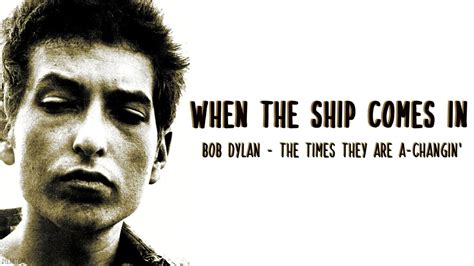
Texas Flooding: The Ship Came In

Note: If you wish to receive, via e-mail, (1) my weekly newsletter or (2) daily copies of these posts, write to me at rrbates1951@gmail.com. Comments may also be sent to this address. I promise not to share your e-mail with anyone. To unsubscribe, write here as well.

Tuesday

It’s too early to say for sure how many of the 100+ deaths from the horrific flooding in Texas could have been prevented with a fully functional National Weather Service (NWS) and National Oceanic and Atmospheric Administration (NOAA). With Trump having gutted both, however, the event dramatically captures the recklessness of his nihilistic sloganeering. First there is the way he has been denying climate change, which includes him actually accelerating the carbon build-up in the atmosphere that is leading to increasingly frequent extreme weather events. Then there is his open contempt for governmental monitoring agencies and governmental aid agencies. We are getting a clear view of what a reconfigured America could look like, and it’s not pretty.

Bob Dylan’s “When the Ship Comes In” comes to mind at such a moment. “For the chains of the sea will have busted in the night,” Dylan predicts. More chains are busting with every passing year.

Dylan’s lyrics may owe something to Bertolt Brecht’s “Pirate Jenny” from Three Penny Opera,  a revenge fantasy by a chambermaid about a pirate ship that arrives one night to kill her employers and everyone else. First there’s the frustration:

You gentlemen can watch while I’m scrubbin’ the floors
And I’m scrubbin’ the floors while you’re gawkin’
And maybe once you tip me and it makes you feel swell
On a ratty waterfront in a ratty old hotel
And you never guess to who you’re talkin’
You never guess to who you are talkin’…

Then comes the bloody fantasy as her ship comes in:

By noontime the dock is all swarmin’ with men
Comin’ off of that ghostly freighter
They’re movin’ in the shadows where no one can see
And they’re chainin’ up people and bringin’ them to me
Askin’ me, “Kill them now or later?”
Noon by the clock and so still on the dock
You can hear a foghorn miles away
In that quiet of death, I’ll say
“Right now”
And they pile up the bodies and I’ll say
“That’ll learn you”
Then the ship, the black freighter
Disappears out to sea
And on it is me

While Jenny’s resentment is class driven, Dylan’s apocalyptic scenario is vaguer and thus has a wider application. The song was written during the 1960s and various political groups certainly imagined themselves shouting out, “Your days are numbered” from the victor ship. When the song is applied to the current climate change upheavals, however, the images of seas splitting and fish swimming out of their path no longer sound metaphorical. 

There’s a general sense throughout the song that various chickens are coming home to roost. That’s how it was seen in the 1960s and how it can be seen now. Here are the lyrics.

Oh the time will come up
When the winds will stop
And the breeze will cease to be breathin’.
Like the stillness in the wind
‘Fore the hurricane begins,
The hour when the ship comes in.

Oh the seas will split
And the ship will hit
And the sands on the shoreline will be shaking.
Then the tide will sound
And the wind will pound
And the morning will be breaking.

Oh the fishes will laugh
As they swim out of the path
And the seagulls they’ll be smiling.
And the rocks on the sand
Will proudly stand,
The hour that the ship comes in.

And the words that are used
For to get the ship confused
Will not be understood as they’re spoken.
For the chains of the sea
Will have busted in the night
And will be buried at the bottom of the ocean.

A song will lift
As the mainsail shifts
And the boat drifts on to the shoreline.
And the sun will respect
Every face on the deck,
The hour that the ship comes in.

Then the sands will roll
Out a carpet of gold
For your weary toes to be a-touchin’.
And the ship’s wise men
Will remind you once again
That the whole wide world is watchin’.

Oh the foes will rise
With the sleep still in their eyes
And they’ll jerk from their beds and think they’re dreamin’.
But they’ll pinch themselves and squeal
And know that it’s for real,
The hour when the ship comes in.

Then they’ll raise their hands,
Sayin’ we’ll meet all your demands,
But we’ll shout from the bow your days are numbered.
And like Pharaoh’s tribe,
They’ll be drownded in the tide,
And like Goliath, they’ll be conquered.

Will reality finally penetrate the bubble that Trump and his MAGA supporters have created for themselves? Will they pinch themselves and squeal and know that climate change is for real? I can’t imagine them ever saying, “We’ll meet all your demands.” Better to be drownded in the tide than admit you were wrong.

Unfortunately, since we’re all being drownded together, there will be no triumphal shouting from the bows of the ship. Just some, “We told you so.” Which doesn’t take one very far. 

Posted in Uncategorized | Tagged | Comments closed

  • Sign up for my weekly newsletter