Channel Your Inner Gandalf

Gandalf (McKellen) before the gates of Mordor

Note: If you wish to receive, via e-mail, (1) my weekly newsletter or (2) daily copies of these posts, write to me at rrbates1951@gmail.com. Comments may also be sent to this address. I promise not to share your e-mail with anyone. To unsubscribe, write here as well.

Monday

Tom Sullivan on the blog site Hullabaloo recently made dramatic use of a Lord of the Rings passage. It was a way of accentuating the seriousness of the danger that threatens us while galvanizing us into action.

Looking at the $170 billion that the GOP has just voted to channel into the Trump administration’s Gestapo project, Sullivan quotes a David Lurie observation in Public Notice:

While many are currently rightly concerned about the impact Trump’s brutal “immigration crackdown” will have on undocumented persons, the danger of his creation of a massive, non-law-abiding federal police force could extend far beyond the immigration. Congress has just handed the coup leader in the White House new, dangerous tools that he and his cohorts could use in their next attempt to overturn the nation’s democracy once and for all.

No wonder Tolkien’s vision of Sauron’s massive forces comes to mind:

Drums rolled and fires leaped up. The great doors of the Black Gate swung back wide. Out of it streamed a great host as swiftly as swirling waters when a sluice is lifted. 

The Captains mounted again and rode back, and from the host of Mordor there went up a jeering yell. Dust rose smothering the air, as from nearby there marched up an army of Easterlings that had waited for the signal in the shadows of Ered Lithui beyond the further Tower. Down from the hills on either side of the Morannon poured Orcs innumerable. The men of the West were trapped, and soon, all about the grey mounds where they stood, forces ten times and more than ten times their match would ring them in a sea of enemies. Sauron had taken the proffered bait in jaws of steel.

At moments like this, we need to channel our inner Gandalf, who lifts up his arms and announces in a clear voice, “Stand, Men of the West! Stand and wait! This is the hour of doom.”

When all seems lost is sometimes when the tide of battle begins to turn. In Tolkien’s novel, it is at this moment that the selfless courage of a pair of hobbits wins out over all the might of the dark lord. Cracks appear in what appears has heretofore appeared an irresistible force:

[A]t that moment all the hosts of Mordor trembled, doubt clutched their hearts, their laughter failed, their hands shook and their limbs were loosed. The Power that drove them on and filled them with hate and fury was wavering, its will was removed from them; and now looking in the eyes of their enemies they saw a deadly light and were afraid.  

And then:

[E]ven as he spoke the earth rocked beneath their feet. Then rising swiftly up, far above the Towers of the Black Gate, high above the mountains, a vast soaring darkness sprang into the sky, flickering with fire. The earth groaned and quaked. The Towers of the Teeth swayed, tottered, and fell down; the mighty rampart crumbled; the Black Gate was hurled in ruin; and from far away, now dim, now growing, now mounting to the clouds, there came a drumming rumble, a roar, a long echoing roll of ruinous noise.

Principled resistance can be catching. Increasingly we are seeing everyday Americans standing up for what is right and decent as they protest the mercenary thugs who are dragging their friends and neighbors off the streets. More people join them every day.

In short, stand tall and don’t back down.

Posted in Uncategorized | Tagged , , , | Comments closed

Gentle Exemplar, Help Us in Our Trials

George Herbert

Note: If you wish to receive, via e-mail, (1) my weekly newsletter or (2) daily copies of these posts, write to me at rrbates1951@gmail.com. Comments may also be sent to this address. I promise not to share your e-mail with anyone. To unsubscribe, write here as well.

Sunday

Here are two of my favorite religious poets in a single poem—which is to say, contemporary Anglican poet Malcolm Guite writing a sonnet about the 17th century metaphysical poet George Herbert. Guite admires the courage with which his predecessor grapples with his doubts and fears, which he openly acknowledges as he strives to work through them. 

Guite may be particularly referring to Herbert’s “Denial” in “A Sonnet for George Herbert,” what with the reference to a broken heart and an untuned lute. In that earlier poem Herbert writes,

When my devotions could not pierce
Thy silent ears;
Then was my heart broken, as was my verse:
My breast was full of fears
And disorder…

And further on:

Therefore my soul lay out of sight,
Untuned, unstrung…

In the end, however, Herbert finds rhythm and rhyme again. Here’s the final stanza of “Denial”:

O cheer and tune my heartless breast,
Defer no time;
That so thy favors granting my request,
They and my mind may chime,
And mend my rhyme.

Guite’s sonnets wrestle with some of the same doubts and fears. His poem expresses gratitude to Herbert for showing him a way through them. 

A Sonnet for George Herbert
By Malcolm Guite

Gentle exemplar, help us in our trials,
With all that passed between you and your Lord,
That intimate exchange of frowns and smiles
Which chronicled your love-match with the Word.
Your manuscript, entrusted to a friend,
Has been entrusted now to every soul,
We make a new beginning in your end
And find your broken heart has made us whole.
Time has transplanted you, and you take root,
Past changing in the paradise of Love,
Help me to trace your temple, tune your lute,
And listen for an echo from above,
Open the window, let me hear you sing,
And see the Word with you in everything.

Posted in Uncategorized | Tagged , , , | Comments closed

Hammett’s Autocratic Fantasy

Note: If you wish to receive, via e-mail, (1) my weekly newsletter or (2) daily copies of these posts, write to me at rrbates1951@gmail.com. Comments may also be sent to this address. I promise not to share your e-mail with anyone. To unsubscribe, write here as well.

Friday

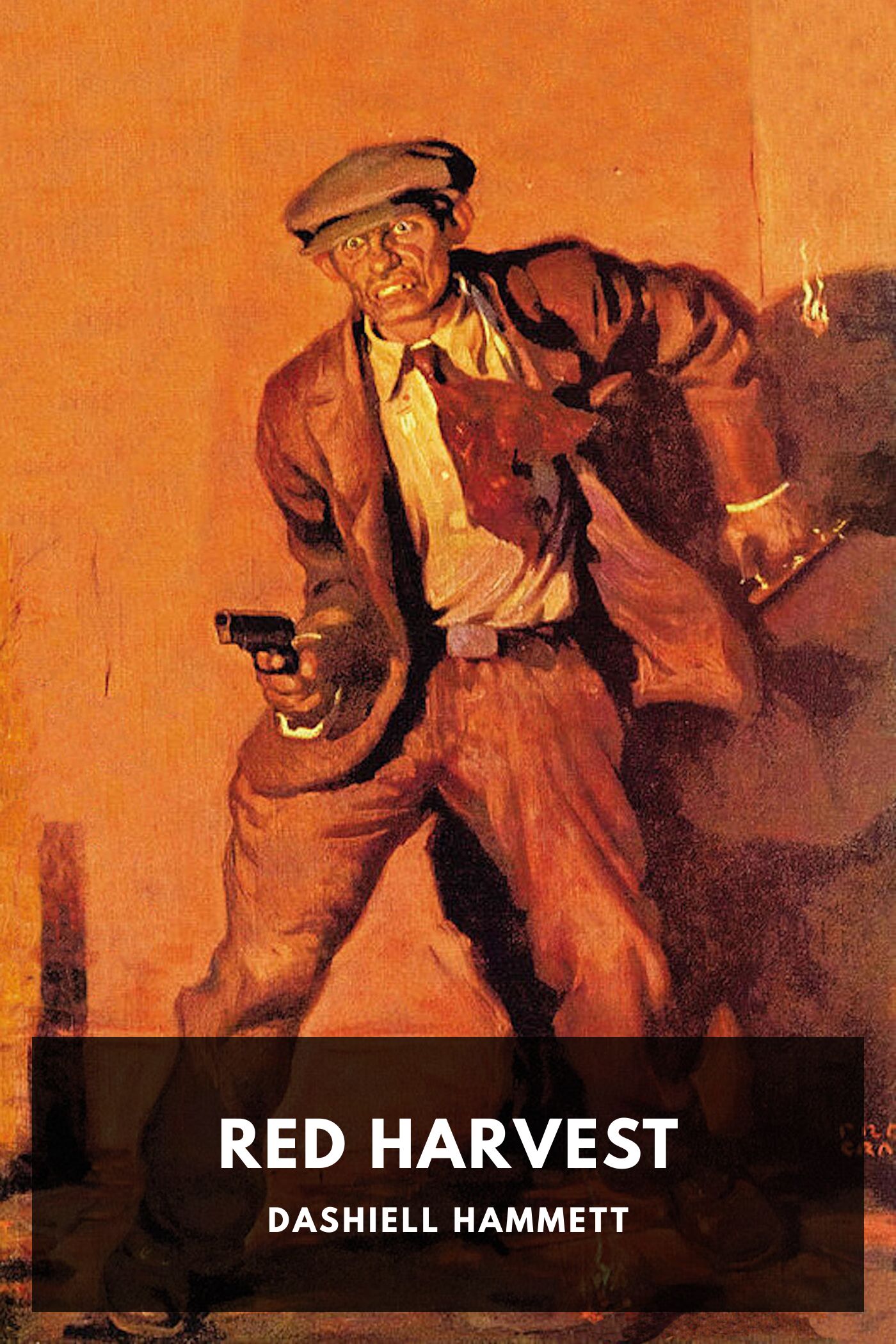
Last week I promised a follow-up post on Dashiell Hammett’ s Red Harvest once I finished it. At the time, I applied it to Donald Trump unleashing forces he could not contain, whether in the form of ICE storm troopers or promises to release Epstein’s client list. Now, however, I see the novel as the kind of fantasy that a number of Trump fans indulge in. If even respectable citizens who see Trump as an incompetent jerk continue to support him, it’s because they believe his blundering is destroying a bad system—and that, by doing so, he gives them the opportunity to pick up the pieces and create something new and better.

This is the fantasy of Red Harvest. In the novel, Elihu Willsson has brought in a number of thugs to solve his labor problems, only to see them take over his city. He hires a “continental op” to clean up the mess, then tries to fire him, then wants to hire him again, then tries to fire him again. In other words, he behaves like our TACO president (Trump Always Chickens Out) when it comes to tariffs or Ukraine or Iran or any other hard decision. As the narrator tells him,

You’re the damnedest client I ever had. What do you do? You hire me to clean town, change your mind, run out on me, work against me until I begin to look like a winner, then sit on the fence, and now when you think I’m licked again, you don’t even want to let me’ in the house.

The op, however, has outfoxed “old Elihu.” Figuring that the best way to clean up the city is to set the various thugs against each other, he circulates a number of rumors than ensure that they will kill each other off. Which they do.

The novel in this way reminds me of Akira Kurosawa’s Yojimbo [The Bodyguard], where an unemployed samurai walks into a corrupt city and does a version of the same. While he kills a few, most of the damage is done by the rival families. The film has a darkly comic last line. Surveying the smoking ruins of the town in which all the buildings have been leveled and only a couple of survivors remain, Yojimbo remarks, “Now there will be some peace in this town.”

Here’s the narrator reporting to Willson on what he’s done for him:

You came crying to me that some naughty men had taken your little city. away from you. Pete the Finn, Lew Yard, Whisper Thaler, and Noonan. Where are they now? Yard died Tuesday morning, Noonan the same night, Whisper Wednesday morning, and the Finn a little while ago. I’m giving your city back to you whether you want it or not.

Then comes the autocratic fantasy, which imagines having someone in charge who will step in and save the day:

O. K. Now Here’s what you’re going to do. You’re going to get hold of your mayor, I suppose the lousy village has got one, and you and he are going to phone the governor — Keep still until I get through. 

You’re going to tell the governor that your city police have got out of hand, what with bootleggers sworn in as officers, and so on. You’re going to ask him for help — the national guard would be best. I don’t know how various ruckuses around town have come out, but I do know the big boys — the ones you were afraid of — are dead. The ones that had too much on you for you to stand up to them. There are plenty of busy young men working like hell right now, trying to get into the dead men’s shoes. The more, the better. They’ll make it easier for the white-collar soldiers to take hold while everything is disorganized. And none of the substitutes are likely to have enough on you to do much damage.

You’re going to have the mayor, or the governor, whichever it comes under, suspend the whole Personville police department, and let the mail-order troops handle things till you can organize another. I’m told that the mayor and the governor are both pieces of your property. They’ll do what you tell them. And that’s what you’re going to tell them. It can be done, and it’s got to be done.

Then you’ll have your city back, all nice and clean and ready to go to the dogs again.

If old Elihu Willson doesn’t do all this, then the narrator says he will publish compromising love letters that he has found. In other words, he blackmails him into responsible behavior, and Willson folds.

The dream of fascists is that they can restore order, which often they themselves have disrupted. Hitler may have used the Brown Shirts to create chaos, but he employed the SS and “the Night of the Long Knives” to massacre their leaders and consolidate his power.

Unfortunately, from our point of view, Hammett’s assumption is that some entities—the mayor, the governor—actually care about good governance and that they will be willing to use the national guard to ensure that this happens. There’s little evidence that the current GOP is interested in governing.

Also, Hammett assumes that a man can be shamed/ blackmailed into behaving for the good of the greater community. But what happens when those in power are impervious to shame? Cynical though he may have been, Hammett didn’t consider that possibility.

In other words, our current situation may be even bleaker than Hammett’s worst nightmare.

Further thought: Hammett can be credited with creating the “hard-boiled detective,” in contrast to the more cerebral creations of Edgar Allan Poe, Arthur Conan Doyle, and Agatha Christie. I believe it is literary scholar Frederic Jameson who observed that Hammett’s protagonists, rather than retreating to a quiet room to connect all the dots, throw a spanner into the machinery, observe what kicks out, and then deal with whatever happens next. As a result, the continental op, Sam Spade, and the others are constantly getting beat up and shot at.

Trump certainly believes in throwing spanners in the works. It’s a way of grabbing headlines. The difference is that he’s not interested in fixing the problem. And he demonstrates none of the stoicism of the hard-boiled detective, casting himself as a perpetual victim as he whines about the consequences.

Posted in Uncategorized | Tagged , , , , , | Comments closed

Ibsen Advice for Resisting Trump

Note: If you wish to receive, via e-mail, (1) my weekly newsletter or (2) daily copies of these posts, write to me at rrbates1951@gmail.com. Comments may also be sent to this address. I promise not to share your e-mail with anyone. To unsubscribe, write here as well.

Thursday

As we’re currently traveling to Ricker Hill Orchards in Maine for a family reunion—my great grandmother Sarah Ricker built a cottage there—you can expect shorter posts than usual this coming week. In searching for ways to resist the GOP’s creeping fascism—or should I say galloping by now?—I return to something that doctor Thomas Stockmann says in Ibsen’s 1882 play Enemy of the People. (Two weeks ago I wrote about the play here.)

Having detected that dangerous bacteria has infected his town’s famous spa and that the pollution originates from the town’s tannery, Stockmann finds himself battling with the factory owner, the mayor, the local newspaper, and even the townspeople. His cry should inspire the Democratic party and all who are concerned about assaults on democracy. “You should never wear your best trousers when you go out to fight for freedom and truth,” he declares.

In other ways, expect the other side to play dirty—because they will–and be prepared. One could argue that Attorney General Merrick Garland and perhaps Joe Biden were so interested in keeping their trousers clean—in principled behavior—that they underestimated the enemy.

Stockmann’s quote then continues on in a way that blunts its effectiveness, however.  “It is not that I care so much about the trousers, you know; you can always sew them up again for me,” he tells his wife. “But that the common herd should dare to make this attack on me, as if they were my equals—that is what I cannot, for the life of me, swallow!”

Democrats are sometimes accused of being self-righteous and elitist, and while I think the charges are overblown, it’s also true that they must be more strategic than Stockmann if they want to win the battle for freedom and truth. One is more likely to build Jerusalem in America’s green and pleasant land if one listens to and finds ways to talk to the opposition.

“Be wise as serpents and gentle as doves,” Jesus counseled his followers. Stockmann is serpent-wise but stumbles on the gentle part. Heaping contempt on possible allies, tempting though it may be, will only get their backs up.

Posted in Uncategorized | Tagged , , , , | Comments closed

Senior Centers Should Read Tolstoy

Note: If you wish to receive, via e-mail, (1) my weekly newsletter or (2) daily copies of these posts, write to me at rrbates1951@gmail.com. Comments may also be sent to this address. I promise not to share your e-mail with anyone. To unsubscribe, write here as well.

Wednesday

I’m currently appreciating Atul Gawande’s Being Mortal: Medicine and What Matters in the End. Gawande, who is a surgeon, professor at Harvard’s school of health, and advisor to presidents, has special insight into how doctors get things wrong. Too often, he says, they focus only on fixing the medical problem rather than looking at what the patient most needs, especially when it comes to quality of life.

Speaking for myself, if I am going to have a prolonged end, I would like that end to be like the one that Teiresias forecasts for Odysseus:

Then a seaborne death
soft as this hand of mist will come upon you
when you are wearied out with rich old age,
your country folk in blessed peace around you . . .

My mother came close to this: she died at home just short of her 97th birthday, with Julia and me at her side. This was only possible, however, because we had moved in with her and because I chose to retire at 67 rather than 70, my original target date. Our two sons have informed us that they will not do the same for us. 

Julia and I are trying to be deliberate in how we ourselves move forward. We remain active (tennis for me, yoga/tai chi for her), and we are working with a consultant about “aging well.” This involves a daily exercise regime designed to work on balance, muscle strength, and flexibility. We also pay special attention to our diet and we have formulated a Plan B, looking at retirement centers near one of our sons.

Regardless of what we do, however, our bodies and minds will begin breaking down, either steadily or all in a rush. Gawande’s book opens with a quotation from Philip Larkin’s poem “Ambulances”: “They come to rest at any kerb:/ All streets in time are visited.” More ominously, he also borrows a passage from Philip Roth’s novel Everyman: “Old age is not a battle. Old age is a massacre.” 

His concern is that the health field is underfunding gerontologists, focusing instead on disease specialists—and that, as a result, the wrong issues are getting addressed. Old age should be regarded more as an existential challenge than a medical one, he essentially says. 

I particularly like how he turns to Tolstoy’s novella The Death of Ivan Ilych to address the issue.  Ivan Ilych is a respected magistrate whose life “revolves mostly around petty concerns of social status.” Then a seemingly minor accident—he falls while installing a curtain—leads to a painful medical condition that no one can cure. None of the expensive doctors brought in “can agree on a diagnosis, and the remedies they give him accomplish nothing. For Ilyich, it is all torture, and he simmers and rages at his situation.” Or as Tolstoy puts it,

What tormented Ivan Ilyich most was the deception, the lie, which for some reason they all accepted, that he was not dying but was simply ill, and he only need keep quiet and undergo a treatment and then something very good would result.

Ivan Ilyich is furious that his doctors and friends can’t see his mounting anguish and fear of death. Tolstoy writes,

No one pitied him as he wished to be pitied. At certain moments after prolonged suffering he wished most of all (although he would have been ashamed to confess it) for someone to pity him as a sick child is pitied. He longed to be petted and comforted. He knew he was an important functionary, that he had a beard turning grey, and that therefore what he longed for was impossible, but still he longed for it.

Gawande says that modern medicine’s response to Ivan Ilyich would be the same as that of his doctors: it tries to fix and then hen, when all else fails, it walks away. It doesn’t grapple with (I’m quoting Tolstoy here) the “chasm of perspective between those who have to contend with life’s fragility and those who don’t” or who fail to grasp “the particular anguish of having to bear such knowledge alone.” They don’t realize that that what Ilyich most desires is comfort and companionship.

Fortunately, he’s not as alone as he thinks. His servant Gerasim understands what he feels, and in his subsequent care, we are given a vision that retirement centers and nursing homes—and really, all of us—should aspire to. As Gawande points out,

Gerasim sees that Ivan Ilych is a suffering, frightened, and lonely man and takes pity on him, aware that someday he himself would share his master’s fate. While others avoid Ivan Ilyich, Gerasim talks to him. When Ivan Ilyich finds that the only position that relieves his pain is with his emaciated legs resting on Gerasim’s shoulders, Gerasim sits there the entire night to provide comfort. He doesn’t mind his role, not even when he has to lift Ilyich to and from the commode and clean up after him. He provides care without calculation or deception; and he doesn’t impose any goals beyond what Ivan Ilych desires.

In Tolstoy’s words, Gerasim “did it all easily, willingly, simply, and with a good nature that touched Ivan Ilyich.”

Gawande says that this “simple but profound service—to grasp a fading man’s need for everyday comforts, for companionship, for help achieving his modest aims—is the thing that is still so devastatingly lacking more than a century later.”

Tolstoy’s brilliance lies in part in how he enters the minds of his characters, and it is such empathy that is called for in dealing with our elderly infirm.  Gawande’s book, in addition to laying out the stark facts, also shares inspiring stories of people who have re-envisioned senior centers, transforming them into something other than holding pens for the dying. We need the kind of imagining that literature encourages and fosters. 

A semi-humorous story: When my mother was experiencing heart issues in her late 80’s, her cardiologist recommended a new heart valve. In response, she declared that she’d rather die than have open heart surgery, where the breastbone is sawed open. Thinking this was the only option, Julia started talking about what a wonderful life she had had—to which the cardiologist tartly interjected, “We are no longer in the practice of putting our elderly on ice floes.”

It so happened that there was an alternative—modern medicine can reach the heart through the thigh—and my mother got a new valve, which made her final years much more comfortable. So the cardiologist was right, and I find myself laughing at this now. 

But apparently there was a moment in the operation when it wasn’t clear that the thigh approach would work and they contemplated sawing open the breastbone. I think of how utterly pissed my mother would have been had they had done so. She would have opted for that ice floe.

Posted in Uncategorized | Tagged , , , , , , , , | Comments closed

Twain: Autocrats Fear Being Laughed At

Note: If you wish to receive, via e-mail, (1) my weekly newsletter or (2) daily copies of these posts, write to me at rrbates1951@gmail.com. Comments may also be sent to this address. I promise not to share your e-mail with anyone. To unsubscribe, write here as well.

Tuesday

“Donald Trump will lose his war on laughter,” writer Andy Borowitz recently declared after CBS fired Late Show’s Stephen Colbert to curry favor with the president. Like pretty much every dictator in the world, Borowitz points out, Trump is terrified of laughter because comedy “is the kryptonite of autocrats”:

They rule by intimidation, and when we laugh at them, their power to scare us evaporates. As Mark Twain wrote in The Mysterious Stranger, “Against the assault of laughter nothing can stand.”

Borowitz’s mention of Twain’s bleak work got me to reread it for the first time since high school, when it freaked me out. An optimist at my core, I was shaken by Twain’s dark view of the human race, which is conveyed to us from the vantage point of Satan. This “mysterious stranger” reveals that the history of humankind is an unbroken string of mass killings, grisly executions, and mob violence, much of it propelled by religious fanaticism. “He showed us slaughters more terrible in their destruction of life, more devastating in their engines of war, than any we had seen,” the narrator reports.

Before looking at how laughter can be an antidote, check out the following passage, which captures only too well the behavior of Trump cultists, especially those who condone—or at least fail to oppose—the immigrant concentration camps:

I know your race. It is made up of sheep. It is governed by minorities, seldom or never by majorities. It suppresses its feelings and its beliefs and follows the handful that makes the most noise. Sometimes the noisy handful is right, sometimes wrong; but no matter, the crowd follows it. The vast majority of the race, whether savage or civilized, are secretly kind-hearted and shrink from inflicting pain, but in the presence of the aggressive and pitiless minority they don’t dare to assert themselves. Think of it! One kind-hearted creature spies upon another, and sees to it that he loyally helps in iniquities which revolt both of them. 

I think of those people who report their Spanish speaking neighbors to ICE. Twain’s own example is witch denunciations:

Speaking as an expert, I know that ninety-nine out of a hundred of your race were strongly against the killing of witches when that foolishness was first agitated by a handful of pious lunatics in the long ago. And I know that even to-day, after ages of transmitted prejudice and silly teaching, only one person in twenty puts any real heart into the harrying of a witch. And yet apparently everybody hates witches and wants them killed. 

Satan explains that we tolerate such evil because we fear what our neighbors will say if we object:

“Monarchies, aristocracies, and religions are all based upon that large defect in your race—the individual’s distrust of his neighbor, and his desire, for safety’s or comfort’s sake, to stand well in his neighbor’s eye. These institutions will always remain, and always flourish, and always oppress you, affront you, and degrade you, because you will always be and remain slaves of minorities. There was never a country where the majority of the people were in their secret hearts loyal to any of these institutions.”

Integral to this process of mindless conformity is self-deception, a process that social media appears to be accelerating. Satan says that the human race has 

duped itself from cradle to grave with shams and delusions which it mistook for realities, and this made its entire life a sham. Of the score of fine qualities which it imagined it had and was vain of, it really possessed hardly one. It regarded itself as gold, and was only brass. 

Laughter, however, could be our savior, although in saying this Satan must distinguish between two kinds of laughter. Laughing at “low-grade commonalities,” which is to say grotesqueries and absurdities, is only mongrel laughter. I think of how Thomas Hobbes in Leviathan talks of people using laughter to assert their superiority over others, perhaps by laughing at their deformities.  An example would be the 2015 rally where Trump imitated and mocked New York Times reporter Serge Kovaleski, who suffers from arthrogryposis. 

On the other hand, that laughter which pokes fun at “high-grade comicalities” can save us. Satan challenges humanity to “detect the funniness” of our inane behavior and laugh at it. If we do, we will be using one of our most effective weapons. At this point, Satan delivers the line quoted by Borowitz:

Power, money, persuasion, supplication, persecution—these can lift at a colossal humbug—push it a little—weaken it a little, century by century; but only laughter can blow it to rags and atoms at a blast. Against the assault of laughter nothing can stand.

Then, in a further satiric twist, Satan says that, of course, we never think to use this weapon:

Do you ever use that one? No; you leave it lying rusting. As a race, do you ever use it at all? No; you lack sense and the courage.

So here’s to all those courageous comedians who speak truth to power. At the moment they’ve got a colossal humbug on their hands and need to keep us laughing at it.

Posted in Uncategorized | Tagged , , , , , , | Comments closed

Latino Immigrants: Tough, Wild, Joyous

Note: If you wish to receive, via e-mail, (1) my weekly newsletter or (2) daily copies of these posts, write to me at rrbates1951@gmail.com. Comments may also be sent to this address. I promise not to share your e-mail with anyone. To unsubscribe, write here as well.

Monday

My wife recently alerted me to a wonderful poem shared by Robert Reich, former Labor Secretary and Berkeley public policy professor. Reich notes that over 70 percent of those now being detained have no criminal records and that the number of detainees—over 60,000—is almost 45 percent above the capacity provided for by Congress. As a result, “detainees in at least seven states are complaining of overcrowding, food shortages, and hunger.”

Reich adds that many of camps are run by private contractors, who have a history of putting profit over the well-being of their prisoners.

The power of the Alison Luterman poem that Reich posts lies partly in the fact that it doesn’t mention any of this, other than a passing mention of ICE agents “looking for gardeners and maids escaping over the back fences.” Instead, the poet focuses on the vibrancy of the immigrant communities and the gifts they offer to the rest of us.

Monday

My wife recently alerted me to a wonderful poem, shared by Robert Reich, former Labor Secretary and Berkeley public policy professor on his substack blog. Reich notes that over 70 percent of those now being detained have no criminal records and that the number of detainees—over 60,000—is almost 45 percent above the capacity provided for by Congress. As a result, “detainees in at least seven states are complaining of overcrowding, food shortages, and hunger.”

Reich adds that many of camps are run by private contractors, who have a history of putting profit over the well-being of their prisoners.

The power of the Alison Luterman poem that Reich posts lies partly in the fact that it doesn’t mention any of this, other than a passing mention of ICE agents “looking for gardeners and maids escaping over the back fences.” Instead, the poet focuses on the vibrancy of the immigrant communities and the gifts they offer to the rest of us.

And vulnerable though they may seem in the face of Trump’s crackdowns, Luterman observes that they are tough and resilient. What the authorities don’t realize is 

                        the mycelian nature
of kinship, how love is a weed
that travels across borders in a bird’s belly
and pops up waving its arms, no matter the law.

Here’s the poem. “Mycellian” means branching and connecting while “los vecinos” means “the neighbors.”

Los Vecinos
By Alison Luterman

Teresa, our Mexican neighbor,
climbs our porch steps on arthritic legs,
carrying a plate of fresh tamales,
still warm, wrapped in cloth,
because they’re having a cook-out in their yard
with all the tias and grandbabies,
and we’re included in the golden circle
of familia, through no virtue
of our own, yet here she is again at our door
with a plate of something delicious, or a big plastic bag
filled with nopales from the edible pads
of the giant cactus in their yard
which she has skinned and cubed and boiled
in salted water. They’re slippery as okra
and tart as lemons and she swears they will cure
a long list of ailments, including
but not limited to cancer, high blood pressure,
diabetes…standing on our porch, leaning
against the railing, she enumerates
the benefits while I smile and nod, “
Si, si, gracias…”
My friend who lives in a rich neighborhood
says she’s seen ICE patrolling, looking for gardeners
and maids escaping over the back fences of Marin.
They’re tearing apart families like clumps
of seedlings, uprooting whole delicate
ecosystems, but what they don’t
understand is the mycelian nature
of kinship, how love is a weed
that travels across borders in a bird’s belly
and pops up waving its arms, no matter the law.
Our block resounds with spangled mariachi tunes
all summer long, and I’d be lying if I said
I wasn’t jealous some evenings,
lying awake while parties go on all around us,
because this land is their land, and this devotion
is tough and wild and joyous and Teresa can’t read
the red card that says Know Your Rights
in English and Spanish that I give her, nor understand
how I make a living, but she knows
what to do with the leaves of the guava tree
growing along our driveway, whose leaves
are medicinal in dozens of ways–whose leaves,
like the Bible says, are given for the healing of the nations.

The image of a weed traveling across borders reminds me of the turtle in the third chapter of The Grapes of Wrath. Steinbeck notes various ways that seeds are carried:

The concrete highway was edged with a mat of I tangled, broken, dry grass, and the grass- heads were heavy with oat beards to catch on a dog’s coat, and foxtails to tangle in a horse’s fetlocks, and clover burrs to fasten in sheep’s wool; sleeping life waiting to be spread and dispersed, every seed armed with an appliance of dispersal twisting darts and parachutes for the wind, little spears and balls of tiny thorns, and all waiting for animals and for the wind, for a man’s trouser cuff or the hem of a woman’s skirt, all passive but armed with appliances of activity, still, but each possessed of the anlage of movement.

In this chapter, the carrier is a turtle, which functions as a symbol of the migrant Joad family who will soon begin their journey to California. This turtle has several grasses caught in its shell, but there is no guarantee that it will cross the road safely. One car swerves to miss it and one car swerves to hit it, but in the end, the turtle keeps plodding on. When it reaches the other side, Steinbeck reports,

The wild oat head fell out and three of the spearhead seeds stuck in the ground. And as the turtle crawled on down the embankment, its shell dragged dirt over the seeds.

We focus on how our immigrant communities are being hammered by Trump’s deportation policies, but Luterman’s poem reminds us that these people are “tough and wild and joyous.” And that, in spite of it all, they refuse to be defeated.

Vulnerable though they may seem in the face of Trump’s crackdowns, Luterman observes that they are tough and resilient. What the authorities don’t realize is 

                        the mycelian nature
of kinship, how love is a weed
that travels across borders in a bird’s belly
and pops up waving its arms, no matter the law.

Here’s the poem. “Mycellian” means branching and connecting while “los vecinos” means “the neighbors.”

Los Vecinos
By Alison Luterman

Teresa, our Mexican neighbor,
climbs our porch steps on arthritic legs,
carrying a plate of fresh tamales,
still warm, wrapped in cloth,
because they’re having a cook-out in their yard
with all the tias and grandbabies,
and we’re included in the golden circle
of familia, through no virtue
of our own, yet here she is again at our door
with a plate of something delicious, or a big plastic bag
filled with nopales from the edible pads
of the giant cactus in their yard
which she has skinned and cubed and boiled
in salted water. They’re slippery as okra
and tart as lemons and she swears they will cure
a long list of ailments, including
but not limited to cancer, high blood pressure,
diabetes…standing on our porch, leaning
against the railing, she enumerates
the benefits while I smile and nod, “Si, si, gracias…”
My friend who lives in a rich neighborhood
says she’s seen ICE patrolling, looking for gardeners
and maids escaping over the back fences of Marin.
They’re tearing apart families like clumps
of seedlings, uprooting whole delicate
ecosystems, but what they don’t
understand is the mycelian nature
of kinship, how love is a weed
that travels across borders in a bird’s belly
and pops up waving its arms, no matter the law.
Our block resounds with spangled mariachi tunes
all summer long, and I’d be lying if I said
I wasn’t jealous some evenings,
lying awake while parties go on all around us,
because this land is their land, and this devotion
is tough and wild and joyous and Teresa can’t read
the red card that says Know Your Rights
in English and Spanish that I give her, nor understand
how I make a living, but she knows
what to do with the leaves of the guava tree
growing along our driveway, whose leaves
are medicinal in dozens of ways–whose leaves,
like the Bible says, are given for the healing of the nations.

The image of a weed traveling across borders reminds me of the turtle in the third chapter of The Grapes of Wrath. Steinbeck notes various ways that seeds are carried:

The concrete highway was edged with a mat of I tangled, broken, dry grass, and the grass- heads were heavy with oat beards to catch on a dog’s coat, and foxtails to tangle in a horse’s fetlocks, and clover burrs to fasten in sheep’s wool; sleeping life waiting to be spread and dispersed, every seed armed with an appliance of dispersal twisting darts and parachutes for the wind, little spears and balls of tiny thorns, and all waiting for animals and for the wind, for a man’s trouser cuff or the hem of a woman’s skirt, all passive but armed with appliances of activity, still, but each possessed of the anlage of movement.

In this chapter, the carrier is a turtle, which functions as a symbol of the migrant Joad family who will soon begin their journey to California. This turtle has several grasses caught in its shell, but there is no guarantee that it will cross the road safely. One car swerves to miss it and one car swerves to hit it, but in the end, the turtle keeps plodding on. When it reaches the other side, Steinbeck reports,

The wild oat head fell out and three of the spearhead seeds stuck in the ground. And as the turtle crawled on down the embankment, its shell dragged dirt over the seeds.

We focus on how our immigrant communities are being hammered by Trump’s deportation policies, but Luterman’s poem reminds us that these people are “tough and wild and joyous.” And that, in spite of it all, they refuse to be defeated.
Posted in Uncategorized | Tagged , , , | Comments closed

Mary and Martha: The Better Part?

Jan Vermeer, Jesus at the Home of Mary and Martha

Note: If you wish to receive, via e-mail, (1) my weekly newsletter or (2) daily copies of these posts, write to me at rrbates1951@gmail.com. Comments may also be sent to this address. I promise not to share your e-mail with anyone. To unsubscribe, write here as well.

Sunday

Today’s Gospel reading is the intimate story of a sibling rivalry, the one where Martha tries to enlist Jesus in prompting Mary to move to the kitchen. When Mary chooses instead to sit at the Lord’s feet and listen to what he is saying, Martha, “distracted by her many tasks,” asks Jesus, “Lord, do you not care that my sister has left me to do all the work by myself? Tell her then to help me.” 

Most of the sermons I have encountered about the story endorse Mary, explaining that Jesus’s gentle reproof is a reminder to Martha not to get weighed down by busyness. After all, there are more important issues at stake. “Martha, Martha, you are worried and distracted by many things;” he tells her, “there is need of only one thing. Mary has chosen the better part, which will not be taken away from her.” As Daniel Clendenin of Journey to Jesus puts it, Jesus is counseling us to choose Mary’s centered interior life over Martha’s distracted exterior life.

There are occasional commentators who come, at least partly, to Martha’s defense. In “Martha, Martha,” Wendell Berry writes,

She has chosen a good part
and it shall not be taken away from her.
It is not the best part.
It is not the part
that will be remembered
in the morning.

So a good part. Just not the best part. Which, as far as sibling rivalry goes, stings.

The most thorough defense of Martha—or at least one that gives fullest expression to her resentment—may be Rudyard Kipling’s “Sons of Martha.” It is in line with many of those Kipling poems, often about common foot soldiers, that complain that their social contributions are unappreciated. “For it’s Tommy this, an’ Tommy that, an’ ‘Chuck him out, the brute!’/ But it’s ‘Savior of ‘is country’ when the guns begin to shoot,” he writes in “Tommy.”  There’s also the much-abused Gunga Din, who gets the speaker’s full respect in the poem by that name: “Though I’ve belted you and flayed you,/ By the livin’ Gawd that made you,/ You’re a better man than I am, Gunga Din!”

In “The Sons of Martha,” Kipling extends the same recognition to engineers, whom he complains “must wait upon Mary’s Sons, world without end, reprieve, or rest.”

I imagine it took a fair amount of work to host Jesus and his twelve disciples, and none of the men in attendance would have stepped up to help out. Thoughts like this come to mind after reading Kipling’s poem, which goes into depth about the work required to sustain society.

If you want life’s necessities to be duly transported, tallied and delivered, the speaker points out, you’ve got to rely on the sons of Martha. Channeling her resentment, he gets sarcastic when talking of “the good part.” Martha’s sons “do not preach that [God’s] Pity allows them to drop their job when they damn-well choose,” he vents. “Simple service simply given” is the creed by which they live.

Here’s the poem:

The Sons of Martha
By Rudyard Kipling

The Sons of Mary seldom bother, for they have inherited that good part;
But the Sons of Martha favor their Mother of the careful soul and the troubled heart.
And because she lost her temper once, and because she was rude to the Lord her Guest,
Her Sons must wait upon Mary’s Sons, world without end, reprieve, or rest.

It is their care in all the ages to take the buffet and cushion the shock.
It is their care that the gear engages; it is their care that the switches lock.
It is their care that the wheels run truly; it is their care to embark and entrain,
Tally, transport, and deliver duly the Sons of Mary by land and main.

They say to mountains “Be ye removèd.” They say to the lesser floods “Be dry.”
Under their rods are the rocks reprovèd—-they are not afraid of that which is high.
Then do the hill-tops shake to the summit—-then is the bed of the deep laid bare,
That the Sons of Mary may overcome it, pleasantly sleeping and unaware.

They finger Death at their gloves’ end where they piece and repiece the living wires.
He rears against the gates they tend: they feed him hungry behind their fires.
Early at dawn, ere men see clear, they stumble into his terrible stall,
And hale him forth like a haltered steer, and goad and turn him till evenfall.

To these from birth is Belief forbidden; from these till death is Relief afar.
They are concerned with matters hidden—-under the earthline their altars are—-
The secret fountains to follow up, waters withdrawn to restore to the mouth,
And gather the floods as in a cup, and pour them again at a city’s drouth.

They do not preach that their God will rouse them a little before the nuts work loose.
They do not preach that His Pity allows them to drop their job when they damn-well choose.
As in the thronged and the lighted ways, so in the dark and the desert they stand,
Wary and watchful all their days that their brethren’s ways may be long in the land.

Raise ye the stone or cleave the wood to make a path more fair or flat;
Lo, it is black already with the blood some Son of Martha spilled for that!
Not as a ladder from earth to Heaven, not as a witness to any creed,
But simple service simply given to his own kind in their common need.

And the Sons of Mary smile and are blessèd—-they know the Angels are on their side.
They know in them is the Grace confessèd, and for them are the Mercies multiplied.
They sit at the feet—-they hear the Word—-they see how truly the Promise runs.
They have cast their burden upon the Lord, and—-the Lord He lays it on Martha’s Sons!

For all the speaker’s bitterness, however, I’m confident that Jesus wouldn’t take it amiss. Rather he would see through the resentment to the longing to be loved and appreciated. Undoubtedly, he saw this in Martha as well. “Come unto me, all ye that labor and are heavy laden,” he would say, “and I will give you rest.”

Sometimes we need to vent but, in the end, the better part is the peace that passeth all understanding. This is the drama that ends George Herbert’s poem “The Collar,” which I can imagine ending Kipling’s drama as well:

But as I raved and grew more fierce and wild 
          At every word, 
Methought I heard one calling, Child!
          And I replied My Lord.

Jesus knows us better than we know ourselves.

Posted in Uncategorized | Tagged , , , , , , , , | Comments closed

Superman and Kavalier and Clay

Note: If you wish to receive, via e-mail, (1) my weekly newsletter or (2) daily copies of these posts, write to me at rrbates1951@gmail.com. Comments may also be sent to this address. I promise not to share your e-mail with anyone. To unsubscribe, write here as well.

Friday

Julia and I attended the new Superman movie yesterday and, while I’m not a fan of the superhero genre, I enjoyed the movie’s politics. Actually, the movie is political only if it’s political to prefer kindness to cruelty, multiculturalism to racial cleansing, authoritarians to democrats, and good guy computer geeks to billionaire technocrats that want to rule the world. A few years ago people would have been calling these preferences not “woke” but “American.”

In the course of the film we see Superman battling a Silicon Valley Lex Luthor, who seems a blend of Peter Thiel and Elon Musk; and a foreign strongman who could be Vladimir Putin or Benjamin Netanyahu. Superman, who works quietly and selflessly to make the world a better place—think of the ethos promoted by Joe Biden—is outflanked by Luthor’s publicity machine, which convinces the nation that Superman is an immigrant intent on domination. 

The movie would be a bit more charged if Superman didn’t look quite so much like Trump’s “right kind of immigrant”—he’s even been raised in what looks like rural white Trump country—and I imagine that the rightwing accusations of “woke” would have been far louder had he been cast as a person of color. (Think of the storm of protest over the casting of Halle Bailey as the little mermaid.)  Nevertheless, the film suggests both that people can become anti-immigrant very quickly if their fears are triggered and that they can turn back to their decent selves when they recognize that the real enemies of American democracy are the Thiels, Musks, and Trumps. The public in the movie takes Superman’s protective shield for granted until he’s captured, at which point it’s “Oh shit!” time. We see their buyer’s remorse for having rejected someone genuinely interested in their well-being.

That an anti-fascist message can be read into Superman means that the movie is being true to its roots, the character having been created by two young Jewish men in the late 1930s. I didn’t realize this until I read Michael Chabon’s Pulitzer-Prize winning novel The Amazing Adventures of Kavalier and Clay, in which a Brooklyn Jew and his Prague cousin–who has barely escaped Hitler’s takeover–create “the Escapist.” Designed as a Superman spinoff, the Escapist battles with Nazis and pulls off miraculous Houdini-like escapes. Chabon acknowledges Joe Schuster and Jerome Siegel as the inspiration for Kavalier and Clay by giving us a quick history lesson: 

Then, in June 1938, Superman appeared. He had been mailed to the offices of National Periodical Publications from Cleveland, by a couple of Jewish boys who had imbued him with the power of a hundred men, of a distant world, and of the full measure of their bespectacled adolescent hopefulness and desperation. 

Chabon points out that it was the daring artistry as well as the character that made the series:

[Artist Joe Shuster] seemed to understand from the first that the big rectangular page of the comic book offered possibilities for pacing and composition that were mostly unavailable in the newspapers; he joined three panels vertically into one to display the full parabolic zest of one of Superman’s patented skyscraper-hops (the Man of Steel could not, at this point in his career, properly fly), and he chose his angles and arranged his figures with a certain cinematic flair. The writer, Jerome Siegel, had forged, through the smelting intensity of his fanatical love and compendious knowledge of the pulps and their antecedents, a magical alloy of several previous characters and archetypes from Samson to Doc Savage, one of his own unique properties of tensility, hardness, and luster. Though he had been conceived originally as a newspaper hero, Superman was born in the pages of a comic book, where he thrived, and after this miraculous parturition, the form finally began to emerge from its transitional funk, and to articulate a purpose for itself in the marketplace of ten-cent dreams: to express the lust for power and the gaudy sartorial taste of a race of powerless people with no leave to dress themselves. Comic books were Kid Stuff, pure and true, and they arrived at precisely the moment when the kids of America began, after ten years of terrible hardship, to find their pockets burdened with the occasional superfluous dime.

Elsewhere in the novel Chabon also finds an antecedent for Superman in the Golem of Prague, a mythic Jewish legend of a superhero of clay that will rise up when the Jewish people need him most. (See my post on that here.

At first Kavalier and Clay have difficulty selling “The Escapist” because its potential financial backers worry that it’s too anti-German. (America has not yet entered the war at this point.) Joe Kavalier, however, insists on his vision, finding a visceral satisfaction in having the Escapist punch Hitler in the face: 

Nothing that Joe had painted had ever satisfied him more. The composition was natural and simple and modern; the two figures, the circular dais, the blue and white badge of the sky. The figures had weight and mass; the foreshortening of Hitler’s outflying body was daring and a little off, but in a way that was somehow convincing. The draping of the clothes was right; the Escapist’s uniform looked like a uniform, like jersey cloth bunched in places but tight-fitting, and not merely blue-colored flesh. But most of all, the pleasure that Joe derived from administering this brutal beating was intense and durable and strangely redemptive. At odd moments over the past few years, he had consoled himself with the thought that somehow a copy of this comic book might eventually make its way to Berlin and cross the desk of Hitler himself, that he would look at the painting into which Joe had channeled all his pent-up rage and rub his jaw, and check with his tongue for a missing tooth.

From that point on, Kavalier and Clay unleash their hero on Nazi Germany:

Over the course of the last week, in the guise of the Escapist, Master of Elusion, Joe had flown to Europe (in a midnight-blue autogyro), stormed the towered Schloss of the nefarious Steel Gauntlet, freed Plum Blossom from its deep dungeon, defeated the Gauntlet in protracted two-fisted combat, been captured by the Gauntlet’s henchmen and dragged off to Berlin, where he was strapped to a bizarre multiple guillotine that would have sliced him like a hard-boiled egg while the Führer himself smugly looked on. Naturally, patiently, indomitably, he had worked his way loose of his riveted steel bonds and hurled himself at the throat of the dictator. At this point—with twenty pages to go until the Charles Atlas ad on the inside back cover—an entire Wehrmacht division had come between the Escapist’s fingers and that gravely desired larynx. Over the course of the next eighteen pages, in panels that crowded, jostled, piled one on top of the other, and threatened to burst the margins of the page, the Wehrmacht, the Luftwaffe, and the Escapist had duked it out. With the Steel Gauntlet out of the picture, it was a fair fight. On the very last page, in a transcendent moment in the history of wishful figments, the Escapist had captured Adolf Hitler and dragged him before a world tribunal. Head finally bowed in defeat and shame, Hitler was sentenced to die for his crimes against humanity. The war was over; a universal era of peace was declared, the imprisoned and persecuted peoples of Europe—among them, implicitly and passionately, the Kavalier family of Prague—were free.

Kavalier has one moment of doubt, however, that is worth paying particular attention to. When he discovers that the strip has fans amongst American Nazis, who have a love-hate relationship with the Escapist, he realizes that there can be fascist elements in anti-fascism. 

Then, abruptly, it was his turn to feel ashamed…for having produced work that appealed to such a man. Joe Kavalier was not the only early creator of comic books to perceive the mirror-image fascism inherent in his anti-fascist superman — Will Eisner, another Jew cartoonist, quite deliberately dressed his Allied-hero Blackhawks in uniforms modeled on the elegant death’s-head garb of the Waffen SS. But Joe was perhaps the first to feel the shame of glorifying, in the name of democracy and freedom, the vengeful brutality of a very strong man. For months he had been assuring himself, and listening to Sammy’s assurances, that they were hastening, by their make-believe hammering at Haxoff or Hynkel or Hassler or Hitler, the intervention of the United States into the war in Europe. Now it occurred to Joe to wonder if all they had been doing, all along, was indulging their own worst impulses and assuring the creation of another generation of men who revered only strength and dominance.

This should come as no surprise to us as we watch the Jewish Stephen Miller borrow from Hitler as he attempts to turn ICE into Trump’s Gestapo. 

It’s worth noting that the latest Superman movie goes out of its way to present us with a sensitive and caring protagonist, one who is the very opposite of vengeful brutality. I think there’s only one death on his watch in the movie and that’s an act of pure self-defense. For the most part, he’s saving women, babies, and, at one point, a squirrel.

Sadistic fascists will be disappointed.

Posted in Uncategorized | Tagged , , , | Comments closed

  • Sign up for my weekly newsletter