Shaw’s Don Juan in MAGA America

Note: If you wish to receive, via e-mail, (1) my weekly newsletter or (2) daily copies of these posts, write to me at rrbates1951@gmail.com. Comments may also be sent to this address. I promise not to share your e-mail with anyone. To unsubscribe, write here as well.

Thursday

On Tuesday Julia and I visited the du Ponts’ Hagley house and former factory near Wilmington, Delaware with former colleagues Lois Stover and David Finkelman. While there I discovered an indirect connection with this blog: “Better Living through Beowulf” plays off “Better Living through Chemistry,” which used to be the Dupont marketing slogan.

I suppose most people today would not catch the allusion, but for me it is a playful way of expressing my view that literature changes lives. When I was searching for a title, I reached back to my childhood, seeking a way to be serious and light all at once, and the slogan came to mind.

During our visit we discovered that there’s a museum at the site that enthuses about American inventiveness. That’s because the du Ponts were inventers extraordinaire. Unfortunately, the invention that made their fortune was explosives, for which they found ready buyers during the War of 1812 and the Civil War. This brought to mind George Bernard Shaw’s Don Juan in Hell, the mini play that appears within Man and Superman.

In it we see Don Juan, now dead, engaging in a vigorous debate with the Devil about humankind. The Devil sounds very much like the Devil in Mark Twain’s Mysterious Stranger, which I wrote about last week, and at first I thought it was a direct response to Twain. Then I discovered that Twain’s novel appeared after Shaw’s play.

In any event, the Devil could be talking about the du Ponts when he makes the following argument about human evil:

In the old chronicles you read of earthquakes and pestilences, and are told that these showed the power and majesty of God and the littleness of Man. Nowadays the chronicles describe battles. In a battle two bodies of men shoot at one another with bullets and explosive shells until one body runs away, when the others chase the fugitives on horseback and cut them to pieces as they fly. And this, the chronicle concludes, shows the greatness and majesty of empires, and the littleness of the vanquished. Over such battles the people run about the streets yelling with delight, and egg their Governments on to spend hundreds of millions of money in the slaughter, whilst the strongest Ministers dare not spend an extra penny in the pound against the poverty and pestilence through which they themselves daily walk. I could give you a thousand instances; but they all come to the same thing: the power that governs the earth is not the power of Life but of Death; and the inner need that has nerved Life to the effort of organizing itself into the human being is not the need for higher life but for a more efficient engine of destruction. The plague, the famine, the earthquake, the tempest were too spasmodic in their action; the tiger and crocodile were too easily satiated and not cruel enough: something more constantly, more ruthlessly, more ingeniously destructive was needed; and that something was Man, the inventor of the rack, the stake, the gallows, and the electrocutor; of the sword and gun; above all, of justice, duty, patriotism and all the other isms by which even those who are clever enough to be humanely disposed are persuaded to become the most destructive of all the destroyers.

The du Ponts themselves eventually chose to leave the destruction business, focusing instead on polyester and nylon. I can report from personal experience, however, that their evil did not end with the shift. The story requires a roundabout explanation.

 When my family moved to Sewanee TN in 1954, we lived in a three-story apartment building. Shortly after we moved out seven years later, it was torn down and replaced with the Jesse Ball du Pont library, built with money donated by the third wife of A. I. dupont. I spent many happy hours in that library.

So far so good. The money, however, came with the stipulation that Sewanee remain segregated. Mrs. Ball du Pont was an ardent racist and for a long while Sewanee catered to her wishes. The college did not want to suffer Virginia Theological Seminar’s fate, as reported in Ball du Pont’s bio in Wikipedia:

Ball duPont was…a major donor to Virginia Theological Seminary in Alexandria, Virginia. However on 23 November 1951, she wrote to Dean Stanley Brown-Serman, ‘I have been told that one or more negroes are members of the student body… I do not contribute to schools in the south that take negroes as students.’ A subsequent letter stated, ‘As long as the Virginia Theological Seminary is open to negroes, I have made my last contribution to it…’ 

Given this history, I was startled to see one quirk when we visited the Hagley house. The dining room is wallpapered with a mural painted by a European artist who had never visited America. Much of the topography he gets wrong and so, in a Hudson River scene, he includes both an Arizona cactus and Florida Spanish moss.

Most striking, however, are groups of well-dressed African Americans and Latinos. Apparently the artist, having read “The Declaration of Independence,” assumed that all Americans were treated equally and so painted them as such. One wonders what Ball du Pont made of the scene.

Returning to Sewanee, my professor father spent his early years opposing Mrs. Dupont and the administrators currying favor with her. Only years later did he get an apology for the way they behaved toward him. Bishop Juhan, who had been the primary contact person, told my father towards the end of his life, “I was wrong,” which my father found immensely gratifying.

In these dark times, it’s important to remember that people can change. For all the evil that men and women do, there’s a counteracting force that ultimately prevails. Segregation, which as a child I thought would last forever, crumbled so that now I have five grandchildren of color. White supremacists may have the upper hand in this country at the moment, but their reactionary movement is not our future. For that, I turn again to Don Juan, who contends that the “Life Force” gets the last word:

I tell you that as long as I can conceive something better than myself I cannot be easy unless I am striving to bring it into existence or clearing the way for it. That is the law of my life. That is the working within me of Life’s incessant aspiration to higher organization, wider, deeper, intenser self-consciousness, and clearer self-understanding.

With Shaw as with Dante, we make our own heavens and hells—they are self-chosen—and despite the Devil’s attempts at persuasion, Don Juan leaves Hell because it is dull and narrow. Hate and fear are so tiresome.

Far more exciting is the human potential that is unleashed when we embrace multicultural diversity.

Posted in Uncategorized | Tagged , , , , , , , , | Comments closed

Like Midas, Trump Kills What He Touches

King Midas

Note: If you wish to receive, via e-mail, (1) my weekly newsletter or (2) daily copies of these posts, write to me at rrbates1951@gmail.com. Comments may also be sent to this address. I promise not to share your e-mail with anyone. To unsubscribe, write here as well.

Wednesday

Here’s a tiny item that caught my eye, largely because it’s an instance of a Trump enthusiast using a well-known story to praise his idol, only to expose a darker truth. Apparently Cardone Capital founder Grant Cardone informed Laura Ingraham of Fox News that Trump is proving all the experts wrong with his tariffs. The president, he insisted, does indeed have “the Midas touch” and is turning everything he touches into gold.

I doubt whether Trump’s constantly shifting tariff goals will actually bring manufacturing back to the United States, as Cardone insists, but let’s take a look at the Midas story. The “Midas touch,” as we learn from the Roman poet Ovid in Metamorphoses, is not a good thing.

Not that Trump would acknowledge this. Apparently in 2011 he “co-authored” a book (which means that his co-author did all the writing) entitled Midas Touch: Why Some Entrepreneurs Get Rich — And Why Most Don’t. 

Most of Trump’s critics, of course, counterclaim that everything Trump touches turn to s**t, not gold. And then there’s the memorable summation by former-GOP consultant and founder of the anti-Trump Lincoln Project that “everything Trump touches dies” (ETTD for short). This in fact is what happens in the story.

As Ovid tells it, when King Midas is granted a special wish by the Bacchanalian god Silenus, he unfortunately gets what he asks for:

Give me, says he (nor thought he ask’d too much),
That with my body whatsoe’er I touch,
Changed from the nature which it held of old,
May be converted into yellow gold.
He had his wish; but yet the God repined,
To think the fool no better wish could find.

At first, Midas is like Trump in the White House, who appears to add gold gilding to every cornice piece he can find:

Down from a lowly branch a twig he drew,
The twig strait glitter’d with a golden hue:
He takes a stone, the stone was turn’d to gold;
A clod he touches, and the crumbling mold
Acknowledg’d soon the great transforming pow’r,
In weight and substance like a mass of ore.
His hand he careless on a pillar lays.
With shining gold the fluted pillars blaze

The Ovid version of the Greek myth surprised me in that it does not include the episode where Midas’s daughter runs to embrace him, only to be turned into a statue upon contact. We find it in Nathaniel Hawthorne’s “The Golden Touch,” however:

Alas, what had he done? How fatal was the gift which the stranger bestowed! The moment the lips of Midas touched Marygold’s forehead, a change had taken place. Her sweet, rosy face, so full of affection as it had been, assumed a glittering yellow color, with yellow teardrops congealing on her cheeks. Her beautiful brown ringlets took the same tint. Her soft and tender little form grew hard and inflexible within her father’s encircling arms. Oh, terrible misfortune! The victim of his insatiable desire for wealth, little Marygold was a human child no longer, but a golden statue!  

Perhaps the only difference between Midas and Trump is that, whereas Trump sees nothing wrong with draining the life out of everything he touches, Ovid’s Midas at least has regrets:

O father Bacchus, I have sinned, he cried,
And foolishly thy gracious gift applied;
Thy pity now, repenting, I implore;
Oh! may I feel the golden plague no more.

There’s a further twist to the Midas story that also applies to Trump. Midas is chosen as one of the judges in a musical contest between Apollo with his lute and Pan with his reed pipes. The other judges have high musical tastes and so realize that Pan’s music does no more than please “the low taste of all the vulgar throng” whereas Apollo is a true master:

High on the left his iv’ry lute he rais’d,
The lute, embossed with glitt’ring jewels, blazed
In his right hand he nicely held the quill,
His easy posture spoke a master’s skill.
The strings he touched with more than human art,
Which pleased the judge’s ear, and sooth’d his heart;
Who soon judiciously the palm decreed,
And to the lute postponed the squeaking reed.

Because Midas esteems Pan’s “squeaking reed” over Apollo’s “more than human art,” the latter god punishes him by endowing him with ass ears. Or as Ovid puts it, “fixed on his noddle an unseemly pair,/ Flagging, and large, and full of whitish hair.”

Apollo would no doubt do the same for Trump after the president, deciding that Washington’s esteemed Kennedy Center needed someone like him to run it, fired the board and changed the program. In his opinion, the concert hall should be performing musical hits from the 1980s, like Cats and Les Mis. Meanwhile, Rep. Bog Ordan (R-MO) has introduced a bill that would rename the Kennedy Center after Trump.

In other words, everything that our Midas touches dies.

Posted in Uncategorized | Tagged , , , , , | Comments closed

Let Us Sleep Now

Gustave Doré, illus. from Rime of the Ancient Mariner

Note: If you wish to receive, via e-mail, (1) my weekly newsletter or (2) daily copies of these posts, write to me at rrbates1951@gmail.com. Comments may also be sent to this address. I promise not to share your e-mail with anyone. To unsubscribe, write here as well.

Tuesday

I’m not good for much today, having battled Connecticut’s Merritt Parkway and the New Jersey Turnpike as we journeyed south from Maine to visit dear friends in West Chester, Pennsylvania. As I collapse onto their hide-a-bed, the only passage that comes to mind is one from Samuel Taylor Coleridge’s Rime of the Ancient Mariner:

There passed a weary time. Each throat
Was parched and glazed each eye
A weary time, a weary time,
How glazed each weary eye…

Come to think of it, there’s also a passage from Charles Algernon Swinburne’s “Garden of Proserpine” that fits:

I am weary of days and hours, 
Blown buds of barren flowers, 
Desires and dreams and powers 
         And everything but sleep. 

And then there’s the ending of Wilfred Owen’s “Strange Meeting”:

I am the enemy you killed, my friend. 
I knew you in this dark: for so you frowned 
Yesterday through me as you jabbed and killed. 
I parried; but my hands were loath and cold. 
Let us sleep now. . . .

I’ll strive to bring more energy to the table tomorrow. In the meantime—yes, let us sleep now.

Posted in Uncategorized | Tagged , , , , | Comments closed

Channel Your Inner Gandalf

Gandalf (McKellen) before the gates of Mordor

Note: If you wish to receive, via e-mail, (1) my weekly newsletter or (2) daily copies of these posts, write to me at rrbates1951@gmail.com. Comments may also be sent to this address. I promise not to share your e-mail with anyone. To unsubscribe, write here as well.

Monday

Tom Sullivan on the blog site Hullabaloo recently made dramatic use of a Lord of the Rings passage. It was a way of accentuating the seriousness of the danger that threatens us while galvanizing us into action.

Looking at the $170 billion that the GOP has just voted to channel into the Trump administration’s Gestapo project, Sullivan quotes a David Lurie observation in Public Notice:

While many are currently rightly concerned about the impact Trump’s brutal “immigration crackdown” will have on undocumented persons, the danger of his creation of a massive, non-law-abiding federal police force could extend far beyond the immigration. Congress has just handed the coup leader in the White House new, dangerous tools that he and his cohorts could use in their next attempt to overturn the nation’s democracy once and for all.

No wonder Tolkien’s vision of Sauron’s massive forces comes to mind:

Drums rolled and fires leaped up. The great doors of the Black Gate swung back wide. Out of it streamed a great host as swiftly as swirling waters when a sluice is lifted. 

The Captains mounted again and rode back, and from the host of Mordor there went up a jeering yell. Dust rose smothering the air, as from nearby there marched up an army of Easterlings that had waited for the signal in the shadows of Ered Lithui beyond the further Tower. Down from the hills on either side of the Morannon poured Orcs innumerable. The men of the West were trapped, and soon, all about the grey mounds where they stood, forces ten times and more than ten times their match would ring them in a sea of enemies. Sauron had taken the proffered bait in jaws of steel.

At moments like this, we need to channel our inner Gandalf, who lifts up his arms and announces in a clear voice, “Stand, Men of the West! Stand and wait! This is the hour of doom.”

When all seems lost is sometimes when the tide of battle begins to turn. In Tolkien’s novel, it is at this moment that the selfless courage of a pair of hobbits wins out over all the might of the dark lord. Cracks appear in what appears has heretofore appeared an irresistible force:

[A]t that moment all the hosts of Mordor trembled, doubt clutched their hearts, their laughter failed, their hands shook and their limbs were loosed. The Power that drove them on and filled them with hate and fury was wavering, its will was removed from them; and now looking in the eyes of their enemies they saw a deadly light and were afraid.  

And then:

[E]ven as he spoke the earth rocked beneath their feet. Then rising swiftly up, far above the Towers of the Black Gate, high above the mountains, a vast soaring darkness sprang into the sky, flickering with fire. The earth groaned and quaked. The Towers of the Teeth swayed, tottered, and fell down; the mighty rampart crumbled; the Black Gate was hurled in ruin; and from far away, now dim, now growing, now mounting to the clouds, there came a drumming rumble, a roar, a long echoing roll of ruinous noise.

Principled resistance can be catching. Increasingly we are seeing everyday Americans standing up for what is right and decent as they protest the mercenary thugs who are dragging their friends and neighbors off the streets. More people join them every day.

In short, stand tall and don’t back down.

Posted in Uncategorized | Tagged , , , | Comments closed

Gentle Exemplar, Help Us in Our Trials

George Herbert

Note: If you wish to receive, via e-mail, (1) my weekly newsletter or (2) daily copies of these posts, write to me at rrbates1951@gmail.com. Comments may also be sent to this address. I promise not to share your e-mail with anyone. To unsubscribe, write here as well.

Sunday

Here are two of my favorite religious poets in a single poem—which is to say, contemporary Anglican poet Malcolm Guite writing a sonnet about the 17th century metaphysical poet George Herbert. Guite admires the courage with which his predecessor grapples with his doubts and fears, which he openly acknowledges as he strives to work through them. 

Guite may be particularly referring to Herbert’s “Denial” in “A Sonnet for George Herbert,” what with the reference to a broken heart and an untuned lute. In that earlier poem Herbert writes,

When my devotions could not pierce
Thy silent ears;
Then was my heart broken, as was my verse:
My breast was full of fears
And disorder…

And further on:

Therefore my soul lay out of sight,
Untuned, unstrung…

In the end, however, Herbert finds rhythm and rhyme again. Here’s the final stanza of “Denial”:

O cheer and tune my heartless breast,
Defer no time;
That so thy favors granting my request,
They and my mind may chime,
And mend my rhyme.

Guite’s sonnets wrestle with some of the same doubts and fears. His poem expresses gratitude to Herbert for showing him a way through them. 

A Sonnet for George Herbert
By Malcolm Guite

Gentle exemplar, help us in our trials,
With all that passed between you and your Lord,
That intimate exchange of frowns and smiles
Which chronicled your love-match with the Word.
Your manuscript, entrusted to a friend,
Has been entrusted now to every soul,
We make a new beginning in your end
And find your broken heart has made us whole.
Time has transplanted you, and you take root,
Past changing in the paradise of Love,
Help me to trace your temple, tune your lute,
And listen for an echo from above,
Open the window, let me hear you sing,
And see the Word with you in everything.

Posted in Uncategorized | Tagged , , , | Comments closed

Hammett’s Autocratic Fantasy

Note: If you wish to receive, via e-mail, (1) my weekly newsletter or (2) daily copies of these posts, write to me at rrbates1951@gmail.com. Comments may also be sent to this address. I promise not to share your e-mail with anyone. To unsubscribe, write here as well.

Friday

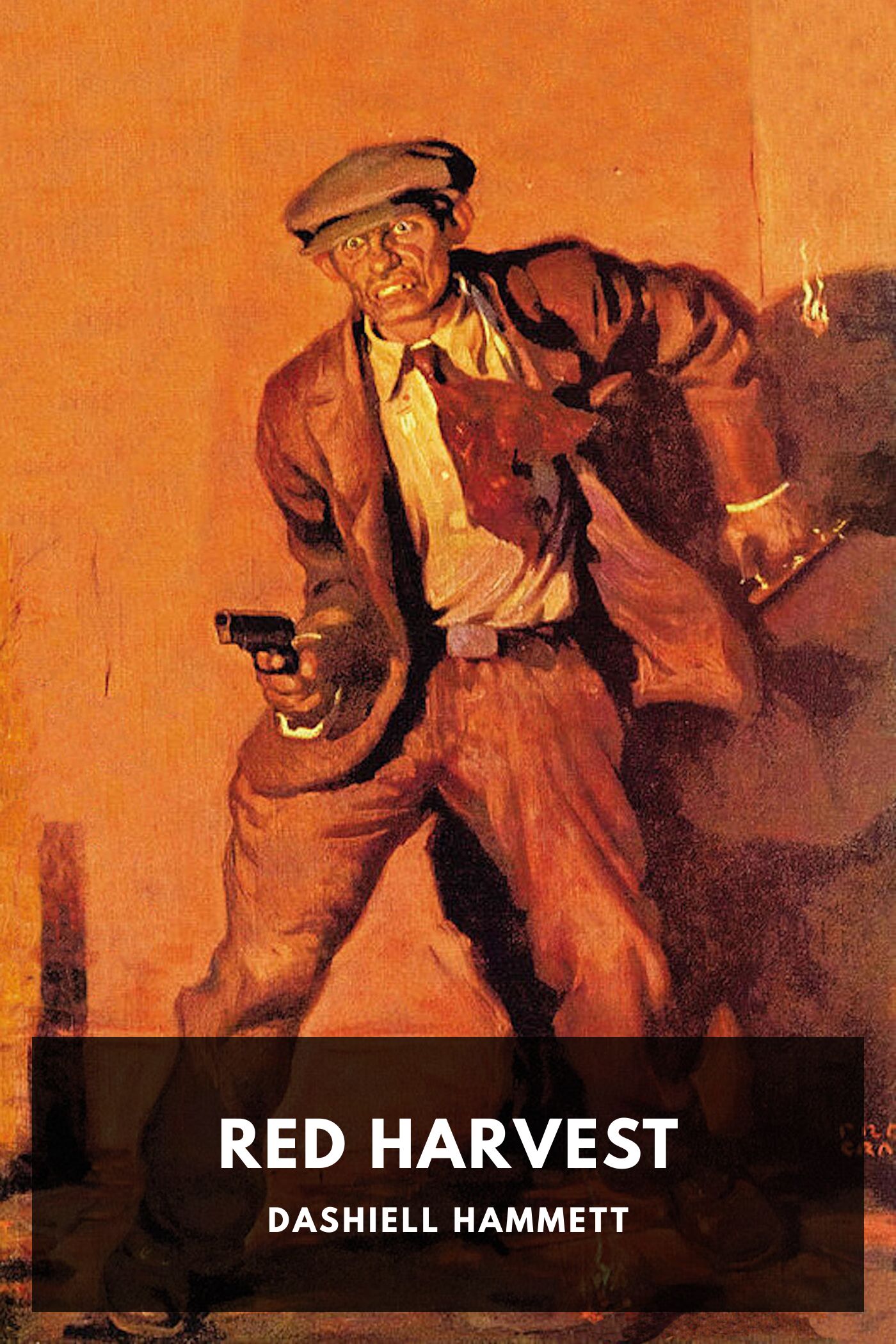
Last week I promised a follow-up post on Dashiell Hammett’ s Red Harvest once I finished it. At the time, I applied it to Donald Trump unleashing forces he could not contain, whether in the form of ICE storm troopers or promises to release Epstein’s client list. Now, however, I see the novel as the kind of fantasy that a number of Trump fans indulge in. If even respectable citizens who see Trump as an incompetent jerk continue to support him, it’s because they believe his blundering is destroying a bad system—and that, by doing so, he gives them the opportunity to pick up the pieces and create something new and better.

This is the fantasy of Red Harvest. In the novel, Elihu Willsson has brought in a number of thugs to solve his labor problems, only to see them take over his city. He hires a “continental op” to clean up the mess, then tries to fire him, then wants to hire him again, then tries to fire him again. In other words, he behaves like our TACO president (Trump Always Chickens Out) when it comes to tariffs or Ukraine or Iran or any other hard decision. As the narrator tells him,

You’re the damnedest client I ever had. What do you do? You hire me to clean town, change your mind, run out on me, work against me until I begin to look like a winner, then sit on the fence, and now when you think I’m licked again, you don’t even want to let me’ in the house.

The op, however, has outfoxed “old Elihu.” Figuring that the best way to clean up the city is to set the various thugs against each other, he circulates a number of rumors than ensure that they will kill each other off. Which they do.

The novel in this way reminds me of Akira Kurosawa’s Yojimbo [The Bodyguard], where an unemployed samurai walks into a corrupt city and does a version of the same. While he kills a few, most of the damage is done by the rival families. The film has a darkly comic last line. Surveying the smoking ruins of the town in which all the buildings have been leveled and only a couple of survivors remain, Yojimbo remarks, “Now there will be some peace in this town.”

Here’s the narrator reporting to Willson on what he’s done for him:

You came crying to me that some naughty men had taken your little city. away from you. Pete the Finn, Lew Yard, Whisper Thaler, and Noonan. Where are they now? Yard died Tuesday morning, Noonan the same night, Whisper Wednesday morning, and the Finn a little while ago. I’m giving your city back to you whether you want it or not.

Then comes the autocratic fantasy, which imagines having someone in charge who will step in and save the day:

O. K. Now Here’s what you’re going to do. You’re going to get hold of your mayor, I suppose the lousy village has got one, and you and he are going to phone the governor — Keep still until I get through. 

You’re going to tell the governor that your city police have got out of hand, what with bootleggers sworn in as officers, and so on. You’re going to ask him for help — the national guard would be best. I don’t know how various ruckuses around town have come out, but I do know the big boys — the ones you were afraid of — are dead. The ones that had too much on you for you to stand up to them. There are plenty of busy young men working like hell right now, trying to get into the dead men’s shoes. The more, the better. They’ll make it easier for the white-collar soldiers to take hold while everything is disorganized. And none of the substitutes are likely to have enough on you to do much damage.

You’re going to have the mayor, or the governor, whichever it comes under, suspend the whole Personville police department, and let the mail-order troops handle things till you can organize another. I’m told that the mayor and the governor are both pieces of your property. They’ll do what you tell them. And that’s what you’re going to tell them. It can be done, and it’s got to be done.

Then you’ll have your city back, all nice and clean and ready to go to the dogs again.

If old Elihu Willson doesn’t do all this, then the narrator says he will publish compromising love letters that he has found. In other words, he blackmails him into responsible behavior, and Willson folds.

The dream of fascists is that they can restore order, which often they themselves have disrupted. Hitler may have used the Brown Shirts to create chaos, but he employed the SS and “the Night of the Long Knives” to massacre their leaders and consolidate his power.

Unfortunately, from our point of view, Hammett’s assumption is that some entities—the mayor, the governor—actually care about good governance and that they will be willing to use the national guard to ensure that this happens. There’s little evidence that the current GOP is interested in governing.

Also, Hammett assumes that a man can be shamed/ blackmailed into behaving for the good of the greater community. But what happens when those in power are impervious to shame? Cynical though he may have been, Hammett didn’t consider that possibility.

In other words, our current situation may be even bleaker than Hammett’s worst nightmare.

Further thought: Hammett can be credited with creating the “hard-boiled detective,” in contrast to the more cerebral creations of Edgar Allan Poe, Arthur Conan Doyle, and Agatha Christie. I believe it is literary scholar Frederic Jameson who observed that Hammett’s protagonists, rather than retreating to a quiet room to connect all the dots, throw a spanner into the machinery, observe what kicks out, and then deal with whatever happens next. As a result, the continental op, Sam Spade, and the others are constantly getting beat up and shot at.

Trump certainly believes in throwing spanners in the works. It’s a way of grabbing headlines. The difference is that he’s not interested in fixing the problem. And he demonstrates none of the stoicism of the hard-boiled detective, casting himself as a perpetual victim as he whines about the consequences.

Posted in Uncategorized | Tagged , , , , , | Comments closed

Ibsen Advice for Resisting Trump

Note: If you wish to receive, via e-mail, (1) my weekly newsletter or (2) daily copies of these posts, write to me at rrbates1951@gmail.com. Comments may also be sent to this address. I promise not to share your e-mail with anyone. To unsubscribe, write here as well.

Thursday

As we’re currently traveling to Ricker Hill Orchards in Maine for a family reunion—my great grandmother Sarah Ricker built a cottage there—you can expect shorter posts than usual this coming week. In searching for ways to resist the GOP’s creeping fascism—or should I say galloping by now?—I return to something that doctor Thomas Stockmann says in Ibsen’s 1882 play Enemy of the People. (Two weeks ago I wrote about the play here.)

Having detected that dangerous bacteria has infected his town’s famous spa and that the pollution originates from the town’s tannery, Stockmann finds himself battling with the factory owner, the mayor, the local newspaper, and even the townspeople. His cry should inspire the Democratic party and all who are concerned about assaults on democracy. “You should never wear your best trousers when you go out to fight for freedom and truth,” he declares.

In other ways, expect the other side to play dirty—because they will–and be prepared. One could argue that Attorney General Merrick Garland and perhaps Joe Biden were so interested in keeping their trousers clean—in principled behavior—that they underestimated the enemy.

Stockmann’s quote then continues on in a way that blunts its effectiveness, however.  “It is not that I care so much about the trousers, you know; you can always sew them up again for me,” he tells his wife. “But that the common herd should dare to make this attack on me, as if they were my equals—that is what I cannot, for the life of me, swallow!”

Democrats are sometimes accused of being self-righteous and elitist, and while I think the charges are overblown, it’s also true that they must be more strategic than Stockmann if they want to win the battle for freedom and truth. One is more likely to build Jerusalem in America’s green and pleasant land if one listens to and finds ways to talk to the opposition.

“Be wise as serpents and gentle as doves,” Jesus counseled his followers. Stockmann is serpent-wise but stumbles on the gentle part. Heaping contempt on possible allies, tempting though it may be, will only get their backs up.

Posted in Uncategorized | Tagged , , , , | Comments closed

Senior Centers Should Read Tolstoy

Note: If you wish to receive, via e-mail, (1) my weekly newsletter or (2) daily copies of these posts, write to me at rrbates1951@gmail.com. Comments may also be sent to this address. I promise not to share your e-mail with anyone. To unsubscribe, write here as well.

Wednesday

I’m currently appreciating Atul Gawande’s Being Mortal: Medicine and What Matters in the End. Gawande, who is a surgeon, professor at Harvard’s school of health, and advisor to presidents, has special insight into how doctors get things wrong. Too often, he says, they focus only on fixing the medical problem rather than looking at what the patient most needs, especially when it comes to quality of life.

Speaking for myself, if I am going to have a prolonged end, I would like that end to be like the one that Teiresias forecasts for Odysseus:

Then a seaborne death
soft as this hand of mist will come upon you
when you are wearied out with rich old age,
your country folk in blessed peace around you . . .

My mother came close to this: she died at home just short of her 97th birthday, with Julia and me at her side. This was only possible, however, because we had moved in with her and because I chose to retire at 67 rather than 70, my original target date. Our two sons have informed us that they will not do the same for us. 

Julia and I are trying to be deliberate in how we ourselves move forward. We remain active (tennis for me, yoga/tai chi for her), and we are working with a consultant about “aging well.” This involves a daily exercise regime designed to work on balance, muscle strength, and flexibility. We also pay special attention to our diet and we have formulated a Plan B, looking at retirement centers near one of our sons.

Regardless of what we do, however, our bodies and minds will begin breaking down, either steadily or all in a rush. Gawande’s book opens with a quotation from Philip Larkin’s poem “Ambulances”: “They come to rest at any kerb:/ All streets in time are visited.” More ominously, he also borrows a passage from Philip Roth’s novel Everyman: “Old age is not a battle. Old age is a massacre.” 

His concern is that the health field is underfunding gerontologists, focusing instead on disease specialists—and that, as a result, the wrong issues are getting addressed. Old age should be regarded more as an existential challenge than a medical one, he essentially says. 

I particularly like how he turns to Tolstoy’s novella The Death of Ivan Ilych to address the issue.  Ivan Ilych is a respected magistrate whose life “revolves mostly around petty concerns of social status.” Then a seemingly minor accident—he falls while installing a curtain—leads to a painful medical condition that no one can cure. None of the expensive doctors brought in “can agree on a diagnosis, and the remedies they give him accomplish nothing. For Ilyich, it is all torture, and he simmers and rages at his situation.” Or as Tolstoy puts it,

What tormented Ivan Ilyich most was the deception, the lie, which for some reason they all accepted, that he was not dying but was simply ill, and he only need keep quiet and undergo a treatment and then something very good would result.

Ivan Ilyich is furious that his doctors and friends can’t see his mounting anguish and fear of death. Tolstoy writes,

No one pitied him as he wished to be pitied. At certain moments after prolonged suffering he wished most of all (although he would have been ashamed to confess it) for someone to pity him as a sick child is pitied. He longed to be petted and comforted. He knew he was an important functionary, that he had a beard turning grey, and that therefore what he longed for was impossible, but still he longed for it.

Gawande says that modern medicine’s response to Ivan Ilyich would be the same as that of his doctors: it tries to fix and then hen, when all else fails, it walks away. It doesn’t grapple with (I’m quoting Tolstoy here) the “chasm of perspective between those who have to contend with life’s fragility and those who don’t” or who fail to grasp “the particular anguish of having to bear such knowledge alone.” They don’t realize that that what Ilyich most desires is comfort and companionship.

Fortunately, he’s not as alone as he thinks. His servant Gerasim understands what he feels, and in his subsequent care, we are given a vision that retirement centers and nursing homes—and really, all of us—should aspire to. As Gawande points out,

Gerasim sees that Ivan Ilych is a suffering, frightened, and lonely man and takes pity on him, aware that someday he himself would share his master’s fate. While others avoid Ivan Ilyich, Gerasim talks to him. When Ivan Ilyich finds that the only position that relieves his pain is with his emaciated legs resting on Gerasim’s shoulders, Gerasim sits there the entire night to provide comfort. He doesn’t mind his role, not even when he has to lift Ilyich to and from the commode and clean up after him. He provides care without calculation or deception; and he doesn’t impose any goals beyond what Ivan Ilych desires.

In Tolstoy’s words, Gerasim “did it all easily, willingly, simply, and with a good nature that touched Ivan Ilyich.”

Gawande says that this “simple but profound service—to grasp a fading man’s need for everyday comforts, for companionship, for help achieving his modest aims—is the thing that is still so devastatingly lacking more than a century later.”

Tolstoy’s brilliance lies in part in how he enters the minds of his characters, and it is such empathy that is called for in dealing with our elderly infirm.  Gawande’s book, in addition to laying out the stark facts, also shares inspiring stories of people who have re-envisioned senior centers, transforming them into something other than holding pens for the dying. We need the kind of imagining that literature encourages and fosters. 

A semi-humorous story: When my mother was experiencing heart issues in her late 80’s, her cardiologist recommended a new heart valve. In response, she declared that she’d rather die than have open heart surgery, where the breastbone is sawed open. Thinking this was the only option, Julia started talking about what a wonderful life she had had—to which the cardiologist tartly interjected, “We are no longer in the practice of putting our elderly on ice floes.”

It so happened that there was an alternative—modern medicine can reach the heart through the thigh—and my mother got a new valve, which made her final years much more comfortable. So the cardiologist was right, and I find myself laughing at this now. 

But apparently there was a moment in the operation when it wasn’t clear that the thigh approach would work and they contemplated sawing open the breastbone. I think of how utterly pissed my mother would have been had they had done so. She would have opted for that ice floe.

Posted in Uncategorized | Tagged , , , , , , , , | Comments closed

Twain: Autocrats Fear Being Laughed At

Note: If you wish to receive, via e-mail, (1) my weekly newsletter or (2) daily copies of these posts, write to me at rrbates1951@gmail.com. Comments may also be sent to this address. I promise not to share your e-mail with anyone. To unsubscribe, write here as well.

Tuesday

“Donald Trump will lose his war on laughter,” writer Andy Borowitz recently declared after CBS fired Late Show’s Stephen Colbert to curry favor with the president. Like pretty much every dictator in the world, Borowitz points out, Trump is terrified of laughter because comedy “is the kryptonite of autocrats”:

They rule by intimidation, and when we laugh at them, their power to scare us evaporates. As Mark Twain wrote in The Mysterious Stranger, “Against the assault of laughter nothing can stand.”

Borowitz’s mention of Twain’s bleak work got me to reread it for the first time since high school, when it freaked me out. An optimist at my core, I was shaken by Twain’s dark view of the human race, which is conveyed to us from the vantage point of Satan. This “mysterious stranger” reveals that the history of humankind is an unbroken string of mass killings, grisly executions, and mob violence, much of it propelled by religious fanaticism. “He showed us slaughters more terrible in their destruction of life, more devastating in their engines of war, than any we had seen,” the narrator reports.

Before looking at how laughter can be an antidote, check out the following passage, which captures only too well the behavior of Trump cultists, especially those who condone—or at least fail to oppose—the immigrant concentration camps:

I know your race. It is made up of sheep. It is governed by minorities, seldom or never by majorities. It suppresses its feelings and its beliefs and follows the handful that makes the most noise. Sometimes the noisy handful is right, sometimes wrong; but no matter, the crowd follows it. The vast majority of the race, whether savage or civilized, are secretly kind-hearted and shrink from inflicting pain, but in the presence of the aggressive and pitiless minority they don’t dare to assert themselves. Think of it! One kind-hearted creature spies upon another, and sees to it that he loyally helps in iniquities which revolt both of them. 

I think of those people who report their Spanish speaking neighbors to ICE. Twain’s own example is witch denunciations:

Speaking as an expert, I know that ninety-nine out of a hundred of your race were strongly against the killing of witches when that foolishness was first agitated by a handful of pious lunatics in the long ago. And I know that even to-day, after ages of transmitted prejudice and silly teaching, only one person in twenty puts any real heart into the harrying of a witch. And yet apparently everybody hates witches and wants them killed. 

Satan explains that we tolerate such evil because we fear what our neighbors will say if we object:

“Monarchies, aristocracies, and religions are all based upon that large defect in your race—the individual’s distrust of his neighbor, and his desire, for safety’s or comfort’s sake, to stand well in his neighbor’s eye. These institutions will always remain, and always flourish, and always oppress you, affront you, and degrade you, because you will always be and remain slaves of minorities. There was never a country where the majority of the people were in their secret hearts loyal to any of these institutions.”

Integral to this process of mindless conformity is self-deception, a process that social media appears to be accelerating. Satan says that the human race has 

duped itself from cradle to grave with shams and delusions which it mistook for realities, and this made its entire life a sham. Of the score of fine qualities which it imagined it had and was vain of, it really possessed hardly one. It regarded itself as gold, and was only brass. 

Laughter, however, could be our savior, although in saying this Satan must distinguish between two kinds of laughter. Laughing at “low-grade commonalities,” which is to say grotesqueries and absurdities, is only mongrel laughter. I think of how Thomas Hobbes in Leviathan talks of people using laughter to assert their superiority over others, perhaps by laughing at their deformities.  An example would be the 2015 rally where Trump imitated and mocked New York Times reporter Serge Kovaleski, who suffers from arthrogryposis. 

On the other hand, that laughter which pokes fun at “high-grade comicalities” can save us. Satan challenges humanity to “detect the funniness” of our inane behavior and laugh at it. If we do, we will be using one of our most effective weapons. At this point, Satan delivers the line quoted by Borowitz:

Power, money, persuasion, supplication, persecution—these can lift at a colossal humbug—push it a little—weaken it a little, century by century; but only laughter can blow it to rags and atoms at a blast. Against the assault of laughter nothing can stand.

Then, in a further satiric twist, Satan says that, of course, we never think to use this weapon:

Do you ever use that one? No; you leave it lying rusting. As a race, do you ever use it at all? No; you lack sense and the courage.

So here’s to all those courageous comedians who speak truth to power. At the moment they’ve got a colossal humbug on their hands and need to keep us laughing at it.

Posted in Uncategorized | Tagged , , , , , , | Comments closed

  • Sign up for my weekly newsletter