My Granddaughter and a Banned Book


Note: If you wish to receive, via e-mail, (1) my weekly newsletter or (2) daily copies of these posts, write to me at rrbates1951@gmail.com. Comments may also be sent to this address. I promise not to share your e-mail with anyone. To unsubscribe, write here as well.

Monday

Okay, schools banning books has just become personal for me. Not on account of a book that has been banned but on a book that could have been banned had my nine-year-old granddaughter Eve (not her real name) resided in a different school district. Here’s the story.

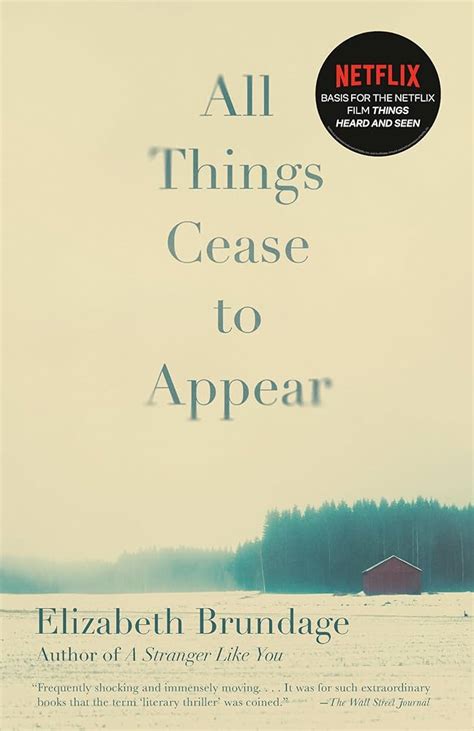
My four grandchildren are biracial, with a Trinidadian American mother. They live in Buford, Georgia, and while Gwinnett County was once Newt Gingrich’s congressional district, it is now wonderfully multicultural and regularly votes blue. Therefore it’s no surprise that the school library would carry Sharon Draper’s Blended, about a mixed-race 11-year-old dealing with various family and social issues.

My own biracial granddaughter is a precocious fourth grader who loves reading, math, tennis, and piano playing. I’m not surprised that she would be drawn to Blended when she saw it in the library because the girl on the cover sports an Afro puff, which Eve often does as well. When we video chat with our grandchildren on Sundays, we always ask them what they’re reading, which is how we learned about Eve’s excitement about Draper’s novel.

Goodreads describes Blended as follows:

“You’re so exotic!” “You look so unusual.” “But what are you really?”

Eleven-year-old Isabella is used to these kinds of comments – her father is black, her mother is white – but that doesn’t mean she likes them. And now that her parents are divorced (and getting along WORSE than ever), Isabella feels more like a push-me-pull-me toy. One week she’s Isabella with her dad, his girlfriend Anastasia, and her son Darren living in a fancy house where they are one of the only black families in the neighborhood. The next week she’s Izzy with her mom and her boyfriend John-Mark in a small, not-so-fancy house that she loves.

The description notes that the novel grapples with identity issues. “If you’re only seen as half of this and half of that,” it asks, “how can you ever feel whole?”

Eve was stimulated by Blended because she felt seen. I don’t know if she’s ever been asked, “But what are you really?”, although I know one of her older sisters was once informed (this by an African American kid who lives next door) that she wasn’t really Black. In any event, Eve, like her two older sisters, is very thoughtful, and the plot gave her a framework for thinking about her own life. The issues raised by the novel seemed familiar.

This goes also for police violence, which Eve has heard about. (The family marched around the neighborhood declaring “Black Lives Matter!” after the murder of George Floyd.) Protagonist Isabella is winged by a police bullet at one point, which momentarily brings the estranged parents together. Eve was riveted.

Had Eve, however, been attending school in Hamilton County, Tennessee; Indian River County or Clay County, Florida; Goddard County, Kansas; Eanes County or Clear Creek County, Texas; Cumberland County, North Carolina; or  Elkhorn Area School District, Wisconsin, she would not have come across the book. And while her parents are both professors, they wouldn’t necessarily have known about it. Thanks to a school library, she picked it up and read it.

In a library challenge to the book brought by a Wrightsboro, North Carolina parent, we get some sense of objections.  As reported by WHQR,

They wrote that this is “intentionally creating highly controversial topics and embedding them into the life events of a small child,” adding that the content is too mature and that while the book is written for children ages 8-12, “authors write and sell books, our job is to look out for kids.”

To its credit, the Wrightboro Public Library overrode the parental challenge, declaring that Blended has “an engaging storyline for young readers, relatable issues, covers issues our students experience such as the impact of divorce, racism, blended families, and positive role model characters who demonstrate resilience and empathy (something our students can benefit from).”

Given our conversation with nine-year-old Eve, I can testify that the librarians know what they are talking about.

In the recent Friends of the Library event we had at Sewanee on book banning, author Christina Soontornvat and librarian Keri Lambert repeatedly pointed out that libraries are not against parents supervising what their own children read; the parents just shouldn’t be able to deny books to other people’s children. In the question-and-answer period that followed, one young person talked about how John Green’s much banned Looking for Alaska “saved my life.” Another said the same about Green’s The Fault in Our Stars.

In other words, certain parents are against other people’s children having their lives saved.

While Blended hasn’t saved Eve’s life, it has spurred her to question and explore the world around her, along with her own developing self. What more can you hope for from a book?

Posted in Uncategorized | Tagged , , , , , | Comments closed

Now I Wrestle with Myself

Cristofori Roncalli, Jacob Wrestling with the Angel

Note: If you wish to receive, via e-mail, (1) my weekly newsletter or (2) daily copies of these posts, write to me at rrbates1951@gmail.com. Comments may also be sent to this address. I promise not to share your e-mail with anyone. To unsubscribe, write here as well.

Sunday

Today’s Old Testament reading is the wonderfully mysterious account of Jacob wrestling with…well, we never know for sure? An angel? His brother Esau? Someone else? In Michael Dickel’s “Jacob Wrestling,” his adversary is “myself, this messenger, this something of nothingness.” Here’s the Genesis story (32:22-31):

The same night Jacob got up and took his two wives, his two maids, and his eleven children, and crossed the ford of the Jabbok. He took them and sent them across the stream, and likewise everything that he had. Jacob was left alone; and a man wrestled with him until daybreak. When the man saw that he did not prevail against Jacob, he struck him on the hip socket; and Jacob’s hip was put out of joint as he wrestled with him. Then he said, “Let me go, for the day is breaking.” But Jacob said, “I will not let you go, unless you bless me.” So he said to him, “What is your name?” And he said, “Jacob.” Then the man said, “You shall no longer be called Jacob, but Israel, for you have striven with God and with humans, and have prevailed.” Then Jacob asked him, “Please tell me your name.” But he said, “Why is it that you ask my name?” And there he blessed him. So Jacob called the place Peniel, saying, “For I have seen God face to face, and yet my life is preserved.” The sun rose upon him as he passed Penuel, limping because of his hip.

In Dickel’s poem, sending his loved ones ahead as he backtracks, suggests that he must deal with unfinished business or unresolved doubts before he moves on. In the hero’s quest narrative, crossing a river is often the first step in the journey to selfhood.

The step is often taken reluctantly, however. Even though one’s life is tangled in “deception and counter-deception,” in losses, deaths, and uncertainty, it is still familiar, whereas stepping into an existence where “nothing will be the same” requires real courage.

That’s what happens when one grapples with life’s deepest questions. Or putting it another way, when one wrestles with God.

Jacob Wrestling
By Michael Dickel

They’ve all gone ahead, those I loved,
those I cared for but did not love—
arrayed and ranked, walking toward doom

or reunion. This bank, this river I have crossed before—
this creek, this life, this wreck on this shore—
all too familiar, all too fresh, all too unknown, all too new.

Now a shadow over the moon, or
perhaps my own doubt
forms as I ford the stream.

Now I wrestle with myself,
with this messenger,
this something of nothingness.

Now the moon fades—
darkness less dark—
what is my name?

Now I limp away
from this tangled life
of deception and counter-deception—

to losses, deaths, uncertainty,
a favorite son sold to the gypsies—
Who will redeem us?

Soon my brother and I will embrace
but keep our defended distance.
Soon nothing will be the same.

Now, I wrestle with God.

Posted in Uncategorized | Tagged , , | Comments closed

Childhood in Paris

The Luxembourg Gardens

Note: If you wish to receive, via e-mail, (1) my weekly newsletter or (2) daily copies of these posts, write to me at rrbates1951@gmail.com. Comments may also be sent to this address. I promise not to share your e-mail with anyone. To unsubscribe, write here as well.

Friday

This is the latest post in my on-going series on “My Life in Literature,” which appears every Friday. Because an informal autobiography written by my great grandmother Eliza Scott means so much to me—she discusses the novels that were important to her as she grew up in Victorian England—I figured that I should do something similar for family members who come after me. Of course, the subject is also consistent with the mission of this blog, which is to explore the many ways that literature enhances and sometimes changes our lives.

One of the happiest years of my life was the one spent in France at age 13. As I mentioned in last Friday’s post, I was desperately unhappy in seventh grade, so France gave me the opportunity to break from that. While my father was spending all his time in the Bibliothèque Nationale researching the poet Guillaume Apollinaire and my mother was at home taking care of my four-year-old brother Sam, David (8), Jonathan (10) and I attended a small, one-room, private French school named after the poet Alfred de Musset (Cours d’Alfred de Musset).

We lived at 10 Rue de Docteur-Finlay in an apartment building a block from the Seine and near the Bir Hakeim Bridge. This meant that, to get to school, we walked under the Eiffel Tower. In fact, we walked under it four times a day since there was a lunch break of two hours. The school session was 9-12 and 2-5 Monday-Friday (with Thursdays off, as was customary in France) and a half day on Saturday.

We sat in different rows, with each row a different grade level, and spent our time learning French grammar; filling out French maps with the rivers, mountain ranges, and major cities (which we also had to memorize); doing math problems; and memorizing the “resumé” paragraphs that came at the end of the chapters in our science and history textbooks. This wasn’t as onerous as it sounds because, for the first time since I was two, I became fluent in the language. This was fortunate as the teacher knew little English. A moment of pride came when, in a remark that I now recognize as somewhat classist, she told me my French was better than that of many working people.

I fell in love with French history that year—it would become my focus in college—but my favorite part of the day was the final half hour of both the morning and afternoon session. That time—a sixth of the school day—was spent memorizing poetry. To this day I can still recite poems by Apollinaire (“L’Adieu”), Paul Verlaine (“Chanson d’automne,” “Il pleut dan mon coeur”), and Jean de La Fontaine (“Le Corbeau et le Renard,” “La Cigale and la Fourmi”). I also remember solo singing the French version of “O Tannenbaum” and the class looking at me in wonder (perhaps because I was putting myself out there, perhaps because of my American accent).

Through a stroke of fortune, the American Library of Paris, originally near the Champs Elysée, moved to a location directly on our path to school. They had a wonderful children’s collection and we went through everything they had. We read the entire Freddy the Pig series, by Walter Brooks, along with Robert McCloskey’s Homer Price books, Margery Sharp’s Rescuers, and various swashbuckling adventure stories set in Medieval and Renaissance times whose titles I no longer remember. My brother Jonathan, meanwhile, was working his way through all the library’s science fiction collection, so much so that they dropped protocol for him and allowed him to roam the adult stacks. Not infrequently we would check out our books during one lunch hour and return them the following day or sometimes the same day.

Other high points included seeing the Royal Shakespeare Theatre performing Love’s Labours’ Lost and (one of the highlights of the year) a performance of Cyrano de Bergerac in La Comédie Française, France’s most famous playhouse. My father had given me a translation of the play before attending and I fell in love with Cyrano. As I recall, the actor received at least seven curtain calls.

We also went to London for spring vacation, where I remember us attending a performance of Thomas Dekker’s Shoemaker’s Holiday (1599). In short, I was in my element.

Of course, we didn’t only read. Every Saturday my father would give David, Jonathan, and me money to see a film anywhere in the city (we had the Metro system memorized), and thanks to that we saw movies starring the Marx Brothers, Cary Grant (Arsenic and Old Lace), John Wayne (a French favorite), Gary Cooper, Jean Paul Belmondo, Jean Marais, Cary Grant, and others. I remember us once mistakenly walking into the wrong theater (in the Latin Quarter sometimes theaters were squeezed together), and instead of watching the British comedy Tight Little Island, we instead watched Fellini’s 8 ½. Although this autobiographical film is today considered Fellini’s masterpiece, we were American kids watching a film about a film-maker’s midlife crisis (there’s a rocket ship in the film within the film that never takes off—Fellini is never subtle with his symbolism). But even though the film was in Italian with French subtitles, we had paid our way in and so I felt obligated to watch it all the way through. And Jonathan, at least, was excited about the rocket. The carnivalesque film score still haunts my memories.

Of particular pleasure was the newly opened Cinémathèque, which at the time housed the world’s largest international film collection. There we watched old silent films starring Charlie Chaplin, Buster Keaton, Harry Langdon, Harold Lloyd, Ben Turpin, Fatty Arbuckle, and Douglas Fairbanks, as well as movies directed by Jean Cocteau and Jean Vigo. We would sit in the front row, sometimes down on the carpeting, and marvel. I remember once seeing a Buster Keaton film with Czech subtitles since curator Henri Langlois was gathering prints from all over the world.

At home we collected toy warriors from Roman and medieval times; acquired every one of the Tintin books (all in French, of course); purchased magical tricks from a magic store; purchased a foosball table from the large department store Galeries LaFayette (we loved visiting it during the Christmas season); and visited museums, including the Louvre, the Nautical Museum, Notre Dame, the Chateau de Vincennes, the Cluny Museum (with the unicorn tapestries), the Luxembourg Gardens (where we watched children sailing toy sailboats in the garden and where we ourselves played boules). Most of these we visited on our own, without parents.

We also, for the first time in our lives, had a television, which riveted us. We watched British shows, dubbed in French, featuring Ivanhoe, Robin Hood, and Sir Francis Drake (who fights the Spanish, never the French). There were also two French shows we liked: Thierry la Fronde (a French Robin Hood) and Rocambole (an underground adventurer). Oh, and there was also the American series Mr. Ed, which seemed so much better in French than in English since, after all, whoever knew that a horse could speak French?

Every morning for breakfast we would go out and buy hot croissants from the local bakery, along with the Herald Tribune, in which we would read the comics. (I especially remember Dick Tracy and The Phantom.) For lunch I always had camembert and a baguette, along with strawberry yoplait. Oh, and we also drank hard cider, not knowing that it was alcoholic. The French back then (and perhaps still?) were more relaxed about alcohol, and I know that during a later sabbatical trip to France, my brother David’s school celebrated his 15th birthday with champagne.

The only downside we country boys saw to Paris is that it could sometimes feel a bit confined. Only the Bois de Boulogne had open spaces where one could run freely. This drawback felt minor compared to everything the city offered, however.

As I look back, I realize that, even at the time, I sensed my childhood was drawing to a close. I knew, even though I didn’t openly acknowledge it to myself, that when I returned to the States I would be attending the Sewanee Military Academy, the best education the mountain had to offer. In France I felt no pressure to grow up  or to impress peers (there were none), but I knew that couldn’t last. One way I tried to hold on to my childhood was wearing the short pants of the school uniform the entire year, even though we had the option of switching to long pants when it got cold. I’ve talked in past posts how, for my father’s sake, I tried to hold on to childhood innocence, and this was another variant of that. Once again, I was playing to what I sensed was his Peter Pan fantasy.

Ten years later, after I graduated from college, I came across a description of a related longing. In John Knowles’s A Separate Peace, we learn about a magical summer (or so it appears in the narrator’s mind) when time seems to be held in suspension. The school masters know that, when the boys graduate, they could well end up in the World War I trenches, so they loosen the reins. As the narrator describes it,

This was the way the Masters tended to treat us that summer. They seemed to be modifying their usual attitude of floating, chronic disapproval. During the winter most of them regarded anything unexpected in a student with suspicion, seeming to feel that anything we said or did was potentially illegal. Now on these clear June days in New Hampshire they appeared to uncoil…A streak of tolerance was detectable…

The narrator reflects,

I think we reminded them of what peace was like, we boys of sixteen. We were registered with no draft board, we had taken no physical examinations. No one had ever tested us for hernia or color blindness. Trick knees and punctured eardrums were minor complaints and not yet disabilities which would separate a few from the fate of the rest. We were careless and wild, and I suppose we could be thought of as a sign of the life the war was being fought to preserve. Anyway, they were more indulgent toward us than at any other time; they snapped at the heels of the seniors, driving and molding and arming them for the war. They noticed our games tolerantly. We reminded them of what peace was like, of lives which were not bound up with destruction.

In my case, it was not an indulgent faculty that allowed me to remain a child but an indulgent setting. I felt a kind of freedom and peace that I sensed I would lose once I entered my own military experience. I know I was in denial because, when I took the high school placement test, I didn’t put down where I would be attending high school (SMA got hold of it anyway).

Nor was I entirely wrong in my foreboding as the military academy proved to be a painful shock. More on that next week.

Posted in Uncategorized | Tagged , , , | Comments closed

The Most Dangerous Game: Wild Pigs

Note: If you wish to receive, via e-mail, (1) my weekly newsletter or (2) daily copies of these posts, write to me at rrbates1951@gmail.com. Comments may also be sent to this address. I promise not to share your e-mail with anyone. To unsubscribe, write here as well.

Thursday

Somehow I stumbled across an Outdoor Life article, posted by the author on Bluesky, that brought to mind the 15th century Arthurian romance Sir Gawain and the Green Knight. I use it to take a break from the dispiriting political news that pounds us day after day.

The headline that caught my eye was, “I’ve Been Charged by Bears and Moose. Wild Hogs Are Much, Much Worse.” The subtitle reads, “Over the years I’ve had my fair share of run-ins with big game. The only critters that seem to have no sense of fear are feral pigs.”

Hunter and photographer Charles Elliott elaborates:

Over the years, my contacts with big game have led me to believe that the only tribe that has no sense of fear is the one to which pigs belong. This includes the European wild boar, introduced into our Eastern mountains and Southern coastal islands in the early part of the century, and feral hogs that have escaped civilization and made it on their own in the swamps and mountains. They have noses and ears as sensitive as deer. Most of the time, when a lone hunter ap­proaches, they are wise enough to vanish into the brush or to run before a dog pack. But, cornered or in sudden confrontation, they are most likely to charge or put on a hair-raising demonstration of their ferocity.

The author goes on to report stories of otherwise fearless hunters shimmying up trees to escape the wild boar charges.

Among the many reasons why Green Knight is among my top five favorite works of literature is how, in Part III, the poet crosscuts between men hunting game in the forest and a woman “hunting” Gawain in the castle. The use of this technique, which D. W. Griffith rediscovered in Birth of a Nation 550 years later, serves to heighten both the suspense and the intensity of both chases. Here’s the hunt:

Then they [the hounds] rile the creature with their rowdy ruckus
and suddenly he breaks the barrier of beaters,
–the biggest of wild boards has bolted from his cover–
ancient in years and estranged from the herd,
savage and strong, a most massive swine,
truly grim when he grunted. And the group were aggrieved,
for three were thrown down by the first of his thrusts;
then he fled away fast without further damage.
The Other huntsmen bawled “hi” and “hay, hay,”
blasted on their bugles, blew to regroup,
so the dogs and the men made a merry din,
tracking him noisily, testing him time and time
                         and
         The board would stand at bay
         and aim to maul and maim
         the thronging dogs, and they
         would yelp and yowl in pain.

The next stanza is more of the same, only note the dramatic but also comic shift at the end, where the Lady of the Castle advances on a sleeping Sir Gawain:

Then the archers advanced with their bows and took aim,
shooting arrows at him which were often on target,
but their points could not pierce his impenetrable shoulders
and bounced away from his bristly brow.
The smooth, slender shafts splintered into pieces,
and the heads glanced away from wherever they hit.
Battered and baited by such bombardment,
in frenzied fury he flies at the men,
hurts them horribly as he hurtles past
so that many grew timid and retreated a tad.
But the master of the manor gave chase on his mount,
the boldest of beast hunters, his bugle blaring,
grumpeting the tally-ho and tearing through thickets
till the setting sun slipped from the western sky.
So the day was spent in pursuits of this style,
while our lovable young lord had not left his bed,
and, cosseted in costly quilted covers, there he
                    remained
         The lady, at first light,
         did not neglect Gawain,
         but went to wake the knight
         and meant to change his mind.

We watch the lady relentlessly tempting and teasing Gawain, who is simultaneously working to remain chaste without striving to remain chivalrous and accommodating. (A Groucho Marx line from Duck Soup comes to mind:“We’re fighting for this lady’s honor, which is more than she ever did.”) Then it’s back to the boar.

Then [Gawain] loitered with the ladies the length of the day
while the lord of the land ranged left and right
in pursuit of that pig which stampeded through the uplands,
breaking his best hounds with its back-snapping bit
when it stood embattled…then bowmen would strike
goading it to gallop into open ground
where the air was alive with the huntsman’s arrows.
That boar made the best men flinch and bolt,
till at last his legs were like lead beneath him,
and he hobbled away to hunker in a hole
by a stony rise at the side of a stream.
With the bank at his back he scrapes and burrows,
frothing and foaming foully at the mouth,
whetting his white tusks. The hunters waited,
irked by the effort of aiming from afar
but daunted by the danger of daring to venture
                         too near.
         So many men before
         had fallen prey. They feared
         that fierce and frenzied boar
         whose tusks could slash and tear.

Following much commotion, the hunt finally comes to an end:

Till his lordship hacks up, urging on his horse,
spots the swine at standstill encircled by men,
then handsomely dismounts and unhands his horse,
brandishes a bright sword and goes bounding onwards,
wades through the water to where the beast waits.
Aware that the man was wafting a weapon
the hog’s hairs stood on end, and its howling grunt
made the fellows there fear for their master’s fate.
Then the boar burst forward, bounded at the lord,
so that beast and hunter both went bundling
into white water, and the swine came off worst,
because the moment they clashed the man found his mark
knifing the boar’s neck, nailing his prey,
hammering it to the hilt, bursting the hog’s heart.
Screaming, it was swept downstream, almost slipping
                         beneath.
         At least a hundred hounds
         latch on with tearing teeth.
         Then, dragged to drier ground,
         the dogs complete its death.

As I interpret the poem, it is about humans learning to appreciate and love life in the decades following the great plague, which wiped out half of Europe’s population. Gawain looks with contempt at life, perhaps as a psychological coping mechanism in an age of death (he sees self-denial as a Christian and knightly virtue), and so has to be taught to value it as the gift that it is. This is the lesson the Green Knight has for him. In the hunt we see the creatures fighting for life while in the castle hunt we see the sweetness of sexuality. The Lord of Death and the Lady of Life divide creation between them.

In the end, Gawain is forced to concede that he cares for his life after all. This admission comes reluctantly and with a fair amount of shame attached but it does come. We, meanwhile, can see in the lord’s quarry—the deer, the boar, and the fox—the three ways we respond to death: we deny it (like the deer, who are caught unawares), we fight it (like the boar), or we seek to escape it (like the fox). And just as the Lord of Death always gets its prey, so does the Lady of Life, who persuades Gawain to accept from her a life-saving belt.

But back to boar hunting. Thanks to rifles, hunters now have an unfair advantage. Still, boars themselves haven’t changed.

They still refuse to go gently into that good night.

Posted in Uncategorized | Tagged , , , , | Comments closed

On Clifton, Columbus, and Indians

Miniconjou Lakota Chief Big Foot, killed at Wounded Knee

Note: If you wish to receive, via e-mail, (1) my weekly newsletter or (2) daily copies of these posts, write to me at rrbates1951@gmail.com. Comments may also be sent to this address. I promise not to share your e-mail with anyone. To unsubscribe, write here as well.

Wednesday

On Monday Sewanee observed Indigenous People’s Day with a walk along that section of the Trail of Tears—the Bell Route—that goes through our area. In 1838 John Bell led a detachment of 650-700 Cherokees on the 1000 mile trek to present day Oklahoma. They arrived in January, 1839, suffering from hunger, sickness, and cold along the way. The Sewanee walk honoring their memory was interspersed with readings of recorded accounts of those who were relocated and their descendants.

While this was going on, the Trump White House was issuing a proclamation praising Christopher Columbus. As Heather Cox Richardson reports

The proclamation says that the day is one on which “our Nation honors the legendary Christopher Columbus—the original American hero, a giant of Western civilization, and one of the most gallant and visionary men to ever walk the face of the earth. This Columbus Day, we honor his life with reverence and gratitude, and we pledge to reclaim his extraordinary legacy of faith, courage, perseverance, and virtue from the left-wing arsonists who have sought to destroy his name and dishonor his memory.”

The proclamation goes on to announce that, upon Columbus’s arrival, “he planted a majestic cross in a mighty act of devotion, dedicating the land to God and setting in motion America’s proud birthright of faith.” And that, “guided by steadfast prayer and unwavering fortitude and resolve, Columbus’s journey carried thousands of years of wisdom, philosophy, reason, and culture across the Atlantic into the Americas—paving the way for the ultimate triumph of Western civilization less than three centuries later on July 4, 1776.”

In response, and at the risk of sounding like a left-wing arsonist, I share this Lucille Clifton poem, written after she watched a neighbor bulldoze down all the trees in his yard so he wouldn’t have to worry about raking leaves. Watching the trees go down, Clifton thought of the famous Wounded Knee photo of Chief Big Foot. “Pahuska” means long hair and is the Lakota name for General Custer:

the killing of the trees
By Lucille Clifton

the third went down
with a sound almost like flaking,
a soft swish as the left leaves
fluttered themselves and died.
three of them, four, then five
stiffening in the snow
as if this hill were Wounded Knee
as if the slim feathered branches
were bonnets of war
as if the pale man seated
high in the bulldozer nest
his blonde mustache ice-matted
was Pahushka come again but stronger now,
his long hair wild and unrelenting.

remember the photograph
the old warrior, his stiffened arm
raised as if in blessing,
his frozen eyes open,
his bark skin brown and not so much
wrinkled as circled with age,
and the snow everywhere still falling,
covering his one good leg.
remember his name was Spotted Tail
or Hump or Red Cloud or Geronimo
or none of these or all of these.
he was a chief. he was a tree
falling the way a chief falls,
straight, eyes open, arms reaching
for his mother ground.

so i have come to live
among the men who kill the trees
a subdivision, new,
in southern Maryland.
I have brought my witness eye with me
and my two wild hands,
the left one sister to the fists
pushing the bulldozer against the old oak,
the angry right, brown and hard and spotted
as bark. we come in peace,
but this morning
ponies circle what is left of life
and whales and continents and children and ozone
and trees huddle in a camp weeping
outside my window and i can see it all
with that one good eye.

“There is no document of civilization which is not at the same time a document of barbarism,” the German thinker Walter Benjamin once wrote, and Heather Cox Richardson follows this up by observing, “Rejecting an honest account of the past makes it impossible to see accurate patterns.” She adds, “What is arson, though, is the attempt to skew history to serve a modern-day political narrative.” Trump’s whitewashing to Columbus is matched by his whitewashing of Andrew Jackson, one of his favorite presidents and the individual most responsible for the Trail of Tears.

Trump, of course, is not only going after history. Since he came to power, the cavalry has only stepped up its assault on “what is left of life,” whether it’s clear water, clean air, clean energy, the national forests, children, civil rights, or American democracy generally.

Clifton doesn’t altogether absolve herself. After all, she has moved into a subdivision that required the felling of trees. One of her hands, she says, is “sister to the fists” that pushes the bulldozer against the oak. Her angry right hand, however, is as “brown and hard and spotted” as a felled tree or a felled warrior.

Her eyes are similarly split. While her left eye prefers not to see things, her witness eye insists on testifying.

Which, by Trump standards, makes her a left-wing arsonist.

Posted in Uncategorized | Tagged , , , , , | Comments closed

A Browning Poem and MAGA America

Andrea del Sarto


Note: If you wish to receive, via e-mail, (1) my weekly newsletter or (2) daily copies of these posts, write to me at rrbates1951@gmail.com. Comments may also be sent to this address. I promise not to share your e-mail with anyone. To unsubscribe, write here as well.

Thursday

I was pleasantly surprised recently to see Mary Trump, Donald Trump’s niece and vocal critic, using a Robert Browning poem to understand our current turmoil. She also uses it to understand her own father since, like the Italian painter Andrea del Sarto, he never lived up to his potential. In Mary’s case, her dysfunctional family and the current state of the nation are connected: while her father had more substance, the parents preferred their flashier but less talented younger son.

Mary draws a parallel between her father, who died a disappointed alcoholic, and her country, which she sees as failing to live up to the challenges of the present moment. Like del Sarto, both are trapped in a “common greyness” that “silvers everything.”

Using the dramatic monologue form for which he was famous, Browning captures the lament of a painter who is good but not great. While the del Sarto in the poem has perfect technique, he lacks that special something—inspiration, soul—that marks his contemporaries Raphael and Michelangelo. The poem shows him whining to his wife about how (to borrow from Marlon Brando) he could have been a contender. For his failures, del Sarto blames everything from Lucrezia to his own lack of effort to external circumstances to inner limitations. “Important to Browning’s project,” Mary writes,

is del Sarto’s grappling with recognition—and his unwillingness to accept—that the extraordinary talents he possesses are not enough, have never been enough, in and of themselves to elevate his art to the level of the sublime. His dawning awareness that he is ultimately the only one responsible for having squandered his potential, and the reasons for his having squandered, remains beyond his ability to acknowledge.

Mary recognizes Fred Trump II in the monologue, especially the lines

I do what many dream of, all their lives,
—Dream? strive to do, and agonize to do,
And fail in doing.

She writes,

Those lines, and the tone of resignation that runs throughout the poem, reminded me of my father and the fact that his extraordinary accomplishments ended up being for naught. As he floundered, his unaccomplished and unworthy younger brother usurped his position and his fortune.

“One of the diseases that ravaged my family,” she elaborates, “was the delusion that Donald of all people was great, while somebody like my father was a loser. When families operate in service to perpetuating such delusions, you get a thin-skinned, constantly aggrieved bully.”

Of more interest to most of us is how Mary applies the poem to our present moment. Just as Andrea del Sarto is in the twilight of a disappointing career—his sober landscape paintings are pleasant enough—so this 250-year-old democracy is dwindling from great to something merely good:

A common greyness silvers everything,—
All in a twilight, you and I alike
—You, at the point of your first pride in me
(That’s gone you know),—but I, at every point;
My youth, my hope, my art, being all toned down
To yonder sober pleasant Fiesole.

The poem, Mary notes, is in part a meditation on the idea that greatness without effort is unsustainable. “If you believe you possess a greatness that is immanent,” she writes, “there is no need to strive to be good.” This is our situation:

American exceptionalism is based on the belief that this country is de facto superior to other countries, that our way of being—our culture, our beliefs—should never be challenged and changed. This has led to complacency and a failure to challenge the status quo. Worse, it has led to an insupportable arrogance and a steady degradation of the things upon which our ideas of being exceptional are based.

Browning’s poem concludes with Lucrezia leaving del Sarto for her lover. As America withdraws into isolation, the rest of the world is looking elsewhere for leadership, with economist Paul Krugman recently observing that Trump is managing “to make China great again.”

Can this trend be reversed? The most famous passage from “Andrea del Sarto” is “a man’s reach should exceed his grasp or what’s a heaven for?” What’s important is the striving. But as Mary points out, the lines that follow reveal what happens once the striving ends:

All is silver-grey,
Placid and perfect with my art: the worse!

Make America Great Again is a longing for the past, not a striving toward a future. “Placid and perfect” describes the Mayfield of Leave It to Beaver, not a country capable of rising to the challenges of the 21st century.

“We might have risen to Rafael, I and you!” del Sarto says to his wife at one point. We can relate only too well to his sorrow over what could have been.

Posted in Uncategorized | Tagged , , , , , | Comments closed

Oct. 18, No Kings Day: Arise, Now, Arise

Bernard Hill as Théoden

Note: If you wish to receive, via e-mail, (1) my weekly newsletter or (2) daily copies of these posts, write to me at rrbates1951@gmail.com. Comments may also be sent to this address. I promise not to share your e-mail with anyone. To unsubscribe, write here as well.

Monday

Political scientist John Stoehr has suggested a striking literary parallel that is on the mark: think of White House Trump advisor Stephen as Wormtongue to Donald Trump’s Théoden. I add the qualifier that the comparison works only when we are talking about Théoden in his decrepit state, not the Théoden who returns to his former self as heroic king.

As Stoehr sees it, Trump is suffering from early dementia, which gives Miller a golden opportunity to manipulate him:

[Miller has] been on TV a lot lately, because that’s how he pours more poison into the president’s already-poisoned brain. He doesn’t whisper lies into the ear of the old and demented sovereign the way Wormtongue does in Tolkien’s epic. King Théoden didn’t have a TV. His Majesty Donald Trump can’t stop watching his. So Miller delivers the poison that way.

Miller, Stoehr believes, wishes to goad Trump into invoking the Insurrection Act and imposing martial law:

In the days since, Miller has repeated a variation of that “insurrection” theme during numerous TV appearances. Last night, for instance, he told a CNN anchor that ICE protesters are “actually, as we speak, trying to overthrow the core law enforcement function of the federal government. … ICE officers have to street battle against antifa, hand-to-hand combat every night, to come and go from their building.”

I don’t know if we can entirely give Miller credit for Trump demanding the imprisonment of Illinois governor J.B. Pritzker and Chicago mayor Brandon Johnson. Trump, after all, has wanted many of his enemies to be jailed and has set the Justice Department on some of them. Miller, however, has been fanning the flames.

Which is what Wormtongue does, persuading Théoden to lock up his loyal follower Eomer, despite the field general having notched a significant victory over a band of orcs. Wormtongue, it turns out, is actually working for a foreign power—think of him as Tolkien’s version of a Putin whisperer—and it takes outside intervention from Gandalf to expose him.

While Stoehr has Miller’s number, it might be more useful to see both him and Trump as Wormtongue, with Théoden as America. Both are pouring poison into our ears. And if that’s the case, he have an inspiring image once Théoden awakens to the threat. In an uplifting scene, he steps out of darkness and into the sunshine:

Slowly Théoden left his chair. A faint light grew in the hall again. The woman hastened to the king’s side, taking his arm, and with faltering steps the old man came down from the dais and paced softly through the hall. Wormtongue remained lying on the floor. They came to the doors and Gandalf knocked.

“Open!” he cried. “The Lord of the Mark comes forth!”

And further on:

“Now, lord,” said Gandalf, “look out upon your land! Breathe the free air again!”

Perhaps, in writing this scene, Tolkien is thinking of Britain emerging from World War II and the shadow of fascism. Seen in our current context, Rohan is America emerging from the threat of Trumpism. “It is not so dark here,” the king observes, to which Gandalf replies, “No. Nor does age lie so heavily on your shoulders as some would have you think. Cast aside your prop!” Théoden does so:

From the king’s hand the black staff fell clattering on the stones. He drew himself up, slowly, as a man that is stiff from long bending over some dull toil. Now tall and straight he stood, and his eyes were blue as he looked into the opening sky.

Théoden fears for his country as many of us fear for ours:

“Dark have been my dreams of late,” he said, “but I feel as one new awakened. I would now that you had come before, Gandalf. For I fear that already you have come too late, only to see the last days of my house. Not long now shall stand the high hall which Brego son of Eorl built. Fire shall devour the high seat. What is to be done?”

Gandalf can’t offer him easy reassurance. But because doing nothing at all is to invite sure defeat, he urges the king to gather his loyal followers around him and resist the impending threat of Saruman and Sauron. Critical in this effort is the inspiring call to the Rohan’s riders:

‘Will you not take the sword?’ said Gandalf. Slowly Théoden stretched forth his hand. As his fingers took the hilt, it seemed to the watchers that firmness and strength returned to his thin arm. Suddenly he lifted the blade and swung it shimmering and whistling in the air. Then he gave a great cry. His voice rang clear as he chanted in the tongue of Rohan a call to arms.

Arise now, arise, Riders of Théoden!
Dire deeds awake, dark is it eastward.
Let horse be bridled, horn be sounded!
Forth Eorlingas!

This coming Saturday Americans can march in demonstrations that are being held all over the country. Arise now, arise, sons and daughters of American democracy.

Posted in Uncategorized | Tagged , , , , | Comments closed

Jesus Heals a Leper among Lepers

Patrick J. Murphy, Jesus Heals the Ten

Note: If you wish to receive, via e-mail, (1) my weekly newsletter or (2) daily copies of these posts, write to me at rrbates1951@gmail.com. Comments may also be sent to this address. I promise not to share your e-mail with anyone. To unsubscribe, write here as well.

Sunday

Whenever the day’s Gospel reading involves Jesus’s healing ministry, I turn to Lory Widmer Hess’s When Fragments Make a Whole: A Personal Journey through Healing Stories in the Bible. This remarkable book responds to each of those stories with a poem, an interpretation, and a personal application. For today’s story about Jesus and the ten lepers, Hess identifies with the one who has two strikes against him—he’s a leper and a Samaritan—, noting that this “leper amongst lepers” finds a higher level of healing, one that is intertwined with gratitude.

Here’s the story:

Now on his way to Jerusalem, Jesus traveled along the border between Samaria and Galilee. As he was going into a village, ten men who had leprosy met him. They stood at a distance and called out in a loud voice, “Jesus, Master, have pity on us!”

When he saw them, he said, “Go, show yourselves to the priests.” And as they went, they were cleansed.

One of them, when he saw he was healed, came back, praising God in a loud voice. He threw himself at Jesus’ feet and thanked him—and he was a Samaritan.

Jesus asked, “Were not all ten cleansed? Where are the other nine? Has no one returned to give praise to God except this foreigner?” Then he said to him, “Rise and go; your faith has made you well.” (Luke 17:11–19)

The action of turning back brings to Hess’s mind Lot’s wife, who also turned back. That story too involves the number 10, since

For ten good men
God would have saved
a city doomed
to perish in flames.

Connecting the two stories, Hess identifies more with the unrighteous than the righteous, with the one who is doubly cursed and who is

always to be kept
at a distance, apart
from the righteous, uncorrupted ones.

But although, in her dark moments, she has identified with Lot’s wife, looking back at the life she lost and standing “like a pillar pointing nowhere,” she then realizes that there’s another way of turning back. Although she has been trapped in salt, which carries with it associations with tears, she can break out of that static pose and journey back in a different way, which the tenth leper does:

Let the life in me rise
and break through my salt.
Let the pillar be gone.
I will find a new direction.
I will point toward him.

Here’s her poem:

Turned Back
By Lory Hess

For ten good men
God would have saved
a city doomed
to perish in flames.

But ten good men
could not be found.
Corruption reigned.
The city burned.
The righteous fled.

And one, unsaved,
was turned to salt,
to stand forever
looking back.

Even before
my skin turned to salt
I was one of the untouchables.

A Samaritan stands beyond the pale
for the ones who turn
toward Zion’s hill,

always to be kept
at a distance, apart
from the righteous, uncorrupted ones.

And never, never allowed to return
to the heart of their life,
to the God of their truth.

Now here we stand
in the space between:
nine men who might be good enough,
and one apart,
a leper among lepers.

I can stand among them,
but am not one of them.
I can cry out with them,
but their God will not hear me.

I can look back to the life I lost
and stand like a pillar
pointing nowhere.

But here comes life
along the road.
Here he is,
the Living One,
the one who will hear me,
the one who will answer,
the one who despises
nothing that lives.

Let the life in me rise
and break through my salt.
Let the pillar be gone.
I will find a new direction.
I will point toward him.

Let the others go on their righteous way
I will not move without giving thanks
to the one who turns toward our salvation.

He didn’t have to look for us.
He didn’t have to hear our cry.
He could have gone on, but he turned back.
He turned me back to myself.

And now
forever
I turn
to him

As Hess sees it, there are two steps in the healing process. The nine non-Samaritan lepers take only the first whereas the Samaritan experiences “an awakening of the true self”:

As we worship in spirit and in truth, we are healed of divisions arising from inessentials. The men who did not turn back were cleansed, they underwent catharsis, but were they truly healed? We need to add another step to the process, an awakening to the source of our blessings, turning toward it to form a new relationship full of love, mutual acceptance and gratitude. This does not happen unconsciously as we walk dully along our usual paths. It is an awakening of the true self: an activity that can be called “faith,” which leads to resurrection.

Applying the story to the times when she herself has grappled with illness, Hess says that the story reminds her of the importance of gratitude in the healing process. She says she is grateful, not only for the healing she has experienced, but for the illness itself, which has allowed her to know the power of healing. Put another way, she says she is grateful, “not only for the homecoming, but also for the journey into distant, uncomfortable and frightening places,” since that journey has enabled her “to truly know, appreciate, and value home upon my return.”

She concludes,

Gratitude for the gift of life, and for all that enables me to live, can germinate in the place of emptiness, and when it grows and expands, it makes me strong to receive all the further gifts God wants to bestow upon me.

Posted in Uncategorized | Tagged , , , | Comments closed

School Reading vs. Real Reading

Note: If you wish to receive, via e-mail, (1) my weekly newsletter or (2) daily copies of these posts, write to me at rrbates1951@gmail.com. Comments may also be sent to this address. I promise not to share your e-mail with anyone. To unsubscribe, write here as well.

Friday

I seem unable to leave off writing about my childhood so, in this Friday installment of My Life in Literature, I look once again at grades one through seven in Sewanee Public School. (In eighth grade I attended a French school in Paris, which will get its own essay.)

The years were 1957-1964 and the United States was experiencing a baby boom, which meant that our classes were packed. While we never hit 40 kids, we came up short by only two or three.

We had wooden desks joined by iron struts and featuring ink wells, although we were past the era when we used them as such. We were always seated in alphabetical order, and year after year we had the same five boys in the first row: Bruce Baird, Michael Barry Robin Bates, Binky Beaumont, and Tommy Camp (only Tommy, for whom I would later serve as best man, had eyesight and hearing difficulties and so was moved up to the front desk).

For the most part I remember school being a colossal bore. The textbooks we had were uninspired, and at nine or ten I remember arriving at the following theory: there are two kinds of reading, the reading you do in school and real reading. School reading featured dull stories with three or four questions at the end to ensure that we took something important away from the experience. Real reading involved stories and poems that we read on our own (like The Hardy Boys) or that my father read to us (Huckleberry Finn, Connecticut Yankee in King Arthur’s Court, Captains Courageous).

I’ve mentioned in the past how, because we didn’t have a television, I felt out of step with the other children. They would show up in class with the latest fad—hula hoops one year, yoyos another, troll dolls with long hair another, Beatles paraphernalia another—along with the latest fashion in notebooks and pens. I had no idea where these were coming from but everyone seemed to have them. I now realize, however, that the real reading I was doing at home gave me a kind of anchor to my being. I may not have seen the latest installment of The Beverly Hillbillies or Get Smart but I sensed that there was a richness in the world that provided life with meaning.

Seventh grade had one silver lining: we were introduced to Junior Scholastic books, which we could order for absurdly low prices. I remember purchasing Escape from Warsaw, Lost Cities and Ancient Civilizations, and a cartoon book about moments in history. These, however, were outside what was assigned. In English class, we were subjected to grammar exercises, spelling tests, and sentence diagramming, the latter of which even Mrs. Kirby-Smith didn’t totally understand. (Her name, incidentally, signaled that she was married to a descendant of the last Confederate general to surrender and who returned to Sewanee to teach math after the Civil War.)

The boredom problem existed as well with social studies. Up through fifth grade, we studied only geography, learning uninteresting facts from dull textbooks. Things got a little better in sixth grade when we studied world history. I was already prepped for this since I had been reading a lot of history at home, belonging as I did to the Landmark Book Club, which sent me a history book every month. I preferred the books about European history (the Vikings, Marco Polo, Joan of Arc, the Crusades) over those about American history (Daniel Boone, George Washington, the Civil War, the Mormons), but all of them were better than our history textbook.

I remember having one moment of revelation. The Landmark book about the Mormons was probably written by a Mormon, which meant that it was laudatory. I then read Arthur Conan Doyle’s Study in Scarlet, where Mormonism is depicted as a dark cult that will track down members who escape its clutches. For the first time in my life I realized that historical facts can be variously interpreted.

My favorite grade was fourth, partly because of the wonderful Mrs. Burton and partly because my mother came in several days a week to teach us French. I remember her cheerily greeting us with, “Bonjours, mes enfants. Comment allez-vous?” to which we would always respond, “Bonjours, Madame. Très bien, merci. Et vous?” I also remember my best friend Chris Mayfield writing the script for “Blanche Neiges and Les Sept Nains” [“Snow White and the Seven Dwarfs”], for which she got to choose her role. (Having a flair for the dramatic, Chris chose the wicked stepmother.) School was not boring in those moments.

Recess made school a little more bearable. We had two recesses a day, often unsupervised, and I remember my second-grade class once engaging in a spirited mudball fight, featuring red Tennessee clay. (The teacher must have been horrified when we trooped in, mud spattered, so that never happened again.) I also remember a moment in first grade when Jane Arlington whirled around and clocked me for something I said, bloodying my nose. We also played a lot of softball, which I enjoyed, and I particularly liked the annual field day at the end of the year, when we spent all day outside engaging in various competitions. Though small for my age, I was one of the faster runners.

I know I’m getting away from books here so I’ll round out the rest of my non-book life before finishing up. I was in the Cub Scouts and the Boy Scouts and may have been one of the few of my peers who recognized their origin in The Jungle Books. (I made it to the rank of Life but never to Eagle because, even though I had six more merit badges than was required, I wasn’t a strong enough swimmer to pass Life Saving.) I also took piano lessons and choir at the urging of my mother, a fine pianist, but exited as soon as I could. The activity I loved most was tennis, which became one of the great joys of my life and which I have been playing ever since.

I also spent a lot of time clambering around Sewanee’s cliffs and caves, sometimes imagining myself as the Hardy Boys in The House on the Cliff; sometimes as the Bobbsey Twins (one of their books has them caught in a cave and cut off by the incoming tide); sometimes as the Scotch twins in the Lucy Finch Perkins book by that name; sometimes as Tintin in The Black Island (we had all the Tintin books, which had not yet been translated). Sewanee’s child-accessible wilderness—we could bicycle everywhere—meant that I related to books with open vistas, such as Treasure Island, Kidnapped, Swallows and Amazons, Last of the Mohicans, Wind in the Willows (the wild wood chapter), and the Oz books.  

I conclude with one final memory. A high point of those seven years was a case of mononucleosis that I contracted at age 12. The mono was probably caused by the stress of our participation in a civil rights lawsuit (described here), but on the plus side it pulled me out of school for an extended period. Indeed, I think my mother, realizing how unhappy I was, allowed me to extend the home stay. In that period I buried myself in books, including (as I mentioned in a previous installment) Twelfth Night and Taming of the Shrew. I also reread Lord of the Rings, Narnia, and the George MacDonald Princess and Curdie books; listened so many times to a recording of actor Cecil Richards reading Alice in Wonderland that I had all the poems memorized; and listened to our recordings of Gilbert and Sullivan’s operettas. I didn’t miss school one bit.

As for the next “My Life in Literature” installment, allow me to announce it by borrowing from one of Howard R. Garis’s Uncle Wiggly stories, which my father read to us at a young age. Uncle Wiggly is a story-telling rheumatic rabbit whose (admittedly formulaic) adventures appeared in newspaper form for 50 years, beginning in 1910. To announce the upcoming installment, each story ended with something like “if the canary bird doesn’t take my lead pencil and stick it in his seed dish…” or “if the pussy cat doesn’t think the automobile tire is a bologna sausage, and tries to nibble a piece out to make a sandwich for the rag doll’s picnic…” So, in next Friday’s post, “if the onion doesn’t make tears come into the eyes of the potato when they’re playing tag around the spoon in the soup dish,” I’ll tell you about my book-intense year in France.

Posted in Uncategorized | Comments closed

  • Sign up for my weekly newsletter