Friday Installment of A Life Lived in Literature
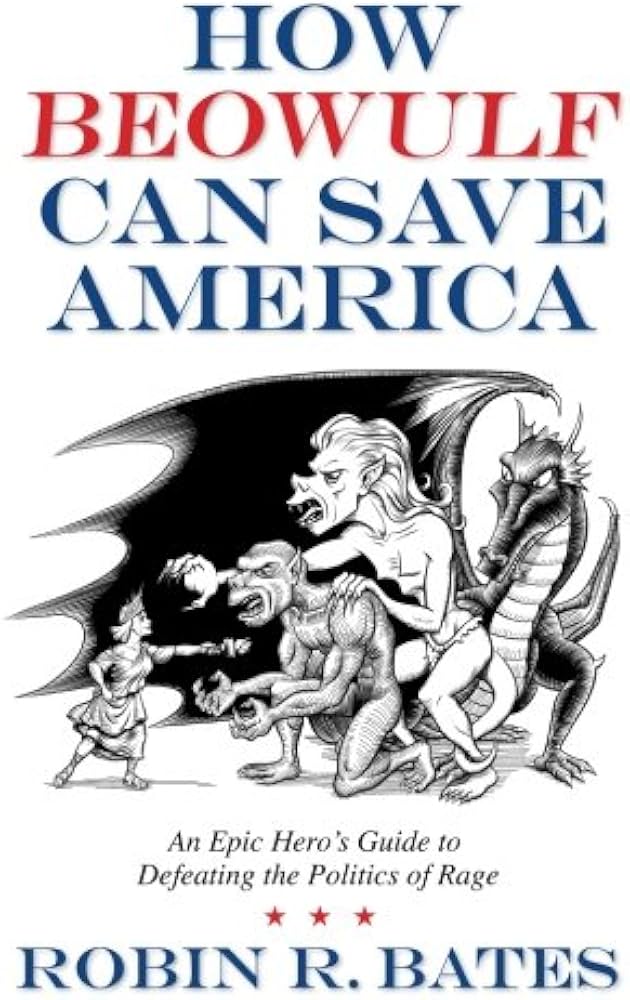
Somewhere in my mid-forties—I think the year was 1998—I had the epiphany that led to Better Living through Beowulf. While I can’t claim that I heard the voice of God, there were similarities with what happened to young Samuel in one of my favorite Biblical stories:
Samuel was lying down in the house of the Lord, where the ark of God was. Then the Lord called Samuel. Samuel answered, “Here I am.” (Samuel 3:3-4)
Two God calls later, Samuel answers, “Speak, for your servant is listening,” at which point he learns that he is to convey an important message.
By invoking the passage, I don’t mean to inflate the importance of this moment (although it was important to me). I use it only to capture how clear and momentous it felt. I awoke in the middle of the night, grabbed my notebook, and wrote steadily for two or three hours, something I never do. My life’s mission, I concluded that night, was to teach the general public (as opposed to other literary scholars) how literature can improve our lives. Starting with Beowulf, I would take major works from the British literary canon—my primary literary interest—and demonstrate how. My teaching, meanwhile, would be oriented similarly.
I’ve written about the only previous time that such a nighttime revelation came to me. While an undergraduate at Carleton and writing a Medieval history essay about Beowulf, at 3 in the morning I suddenly saw how the monsters in the tale represented the very real dangers threatening Anglo-Saxon society. As they listened to the tale, warriors were given powerful images of the troll violence that could well up in their companions (and in them as well) and of the dragon senility that could seize their kings. Literary fantasy, in other words, could provide people with invaluable tools for understanding and negotiating their challenges.
Although my nighttime vision in 1998 seemed clear, it took years for me to figure out what forms it was to take. Since self-help books were big in the 1990s (I suspect they still are), I initially envisioned writing about literary narrative as self-help. The book that emerged over the next ten years featured one big issue that each of my chosen works could address, along with accompanying exercises. This particular problem had a major problem, which I’ll touch on in a moment, but I start with sharing the table of contents and some sample exercises:
Better Living through Beowulf: How the Early British Classics Can Guide You beyond Terrorism Fears, Relationship Anxieties, Consumer Emptiness, Racial Tension, Political Cynicism, and Other Contemporary Challenges
Introduction: Harnessing the Power of Literature
Chapter 1 – ANGER & FEAR: Using Beowulf to Subdue Your Inner Demons and Find a Lasting Peace
Chapter 2 – DEATH: Using Sir Gawain and the Green Knight to Transform Your Fear of Dying into a Deep Joy
Chapter 3 – MARRIAGE: Using Geoffrey Chaucer’s Wife of Bath to Save Your Relationship
Chapter 4 – SOUL: Using Christopher Marlowe’s Doctor Faustus to Escape Your Private Hell
Chapter 5 – GENDER: Using William Shakespeare’s Twelfth Night to Discover Alternate Selves
Chapter 6 – RACE & CLASS: Using Aphra Behn’s Oroonoko to Negotiate Difficult Friendships
Chapter 7 – INJUSTICE: Using Jonathan Swift’s Gulliver’s Travels and “Modest Proposal” to Keep Fighting the Good Fight
Chapter 8 – BEAUTY: Using Alexander Pope’s Rape of the Lock to Reach beyond Star Worship and Touch the Star Within
Chapter 9 – COURTSHIP: Using Jane Austen’s Pride and Prejudice to Find Your Soul Mate
As for exercises, for Sir Gawain and the Green Knight I suggested that each of the hunted animals represents a different way to approach death (and to approach life) and invited readers to think through their own responses. The Wife of Bath’s prologue and tale, I contended, can provide insight into why couples quarrel and how to work through differences. Rape of the Lock provided a workshop on dealing with sexual harassment while I approached Pride and Prejudice as a marriage manual (“Four Bad Reasons to Get Married”) .
To write the book, I had to reprogram my mind and write as I once had for newspapers. I still remember how the first essay I wrote in graduate school, a three-page essay in which I had 17 (!) paragraphs, elicited the professor’s wry comment, “Did you used to be a journalist?” With such prodding, I learned to master compound complex sentences, nuanced and qualified assertion, scholarly jargon, and all the rest, and here I was having to revert to an earlier prose style. It was not easy to do.
I found an agent for the book and for a while had high hopes. After a year with no success, however, the agent dropped me, sending me to small presses. I finally found one and was all set to begin working with them when the world-wide 2008 crash occurred. My book was one of the (very minor) casualties.
In retrospect, I’m not sorry. There was always something not entirely right about using the language of self-help to talk about literature. At times I felt inauthentic in how I was discussing Chaucer, Shakespeare, and Austen. Further, I’m not sure that people actually use self-help books in the way I was imagining. How many go through proffered exercises to change their lives?
To be sure, America’s self-help tradition suggest that we should be able to do so. Think of Benjamin Franklin’s Poor Richard’s Almanack and of the “general resolves” of Jay Gatsby. The tradition may grow out of the Calvinist tradition, and dissenter Daniel Defoe created a character in Robinson Crusoe who is obsessed with self-improvement, with heaven and hell hanging in the balance. But Crusoe fails to achieve many of his general resolves and, like the rest of us, lives a life that takes many unexpected twists and turns. Literature doesn’t change that state of affairs.
Furthermore, literature is not a carpenter’s tool that can be directed to a single project but something more diffuse and wide-ranging. Whereas different people wielding a hammer will use it more or less the same, that’s not true of a novel, poem, or play. Sometimes readers will not even realize that the work has influenced their behavior until years later.
In any event, as I was feeling the disappointment of a 10-year project going up in flames, my son Darien, who was in marketing, informed me that I should establish a “platform.” Publishers would take me more seriously, he pointed out, if I could assure them that a ready audience existed for the book. He suggested that I start a blog and helped me set up a website.
I barely knew what a blog was but, once I began blogging, a new world opened to me. I was exhilarated by the instant contact with readers: no longer must I wait years for an article or a book to reach an audience. Furthermore, in its fragmentary form a blog was truer to the reading experience than my book had been: I wasn’t limited to a single theory about what a particular work means to readers but could just report on a range of responses, starting with my own. I could also share what the works meant to my students (always with their permission, of course), which meant that it became a pedagogical tool: they could see their work from an outside perspective, always useful. Meanwhile, I profited by regularly reflecting on my courses.
Of course, my unpublished book gave me a lot of ready material for the blog, and much of it has found its way into my daily posts. I also should note that, as blogs go, Better Living through Beowulf is neither the most scholarly nor the most casual. There are medieval experts who know far more about Beowulf than I will ever know and use their blogs to share their expertise. (While my own specialty is the British Restoration and 18th Century, I became a generalist by virtue of teaching at a small liberal arts college.) My blog is of limited value to them.
But my intense engagement with a wide variety of works has given me a different kind of expertise, which is useful for (1) general readers interested in literature (including those who may have had bad experiences in college literature classes) and (2) high school language arts teachers who are looking for ways to engage their students with the works. From the first, these were my intended readers, and they in fact make up the bulk of my audience.
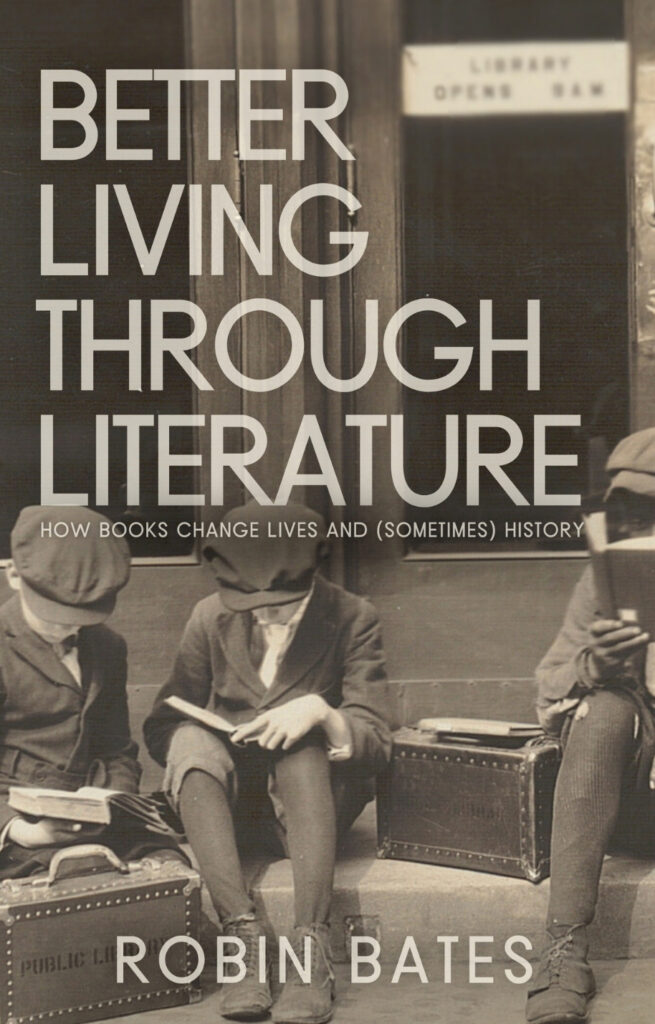
I’ll recount in a later post how I came to write my recent book. I’ll just note that it emerged out of the blog in that, instead of focusing on a single way that literature changes lives, I have looked at what thinkers over the millennia have said about literary impact. They too diverge greatly, starting with Plato, who thought that Homer could lead young men astray, and Aristotle, who believed the great Greek tragedians provided valuable leadership advice. If one really wants to do justice to literature’s transformative potential, it’s best to share as many reading experiences as possible.
Past Installments of A Life Lived in Literature
A Life Lived in Literature: How It All Began (Sept. 5, 2025)
Early Reading Memories (Sept. 12, 2025)
Childhood Confusion: Reading to the Rescue (Sept. 19, 2025)
Confronting Segregation (Sept. 26, 2025)
School Reading vs. Real Reading (Oct. 10, 2025)
Childhood in Paris (Oct. 17, 2025)
My Time at Sewanee Military Academy (Oct. 24, 2025)
Existentialism for High School Seniors (Oct. 31, 2025)
Why I Majored in History, Not English (Nov. 7, 2025)
My College Search for Authenticity (Nov. 14, 2025)
On D. H. Lawrence and a Sexual Awakening (Nov. 21, 2025)
My Life as a Bildungsroman (Nov. 28, 2025)
Grad School: Literary Baptism by Fire (Dec. 5, 2025)
Early Scenes from a Marriage (Dec. 12, 2025)
Bringing Up Baby in Grad School (Dec. 19, 2025)
Grappling with Racism (Jan. 2, 2026)
Journal of a Young Teacher (Jan. 16, 2026)
Teaching and Reading in Yugoslavia (Jan. 23, 2026)
Life at 40: Barely Controlled Chaos (Jan 30, 2026)
From Secular Humanist to Christian Believer (Feb. 6 2025)
Looking Back at a Lifetime Together (Feb. 13, 2026)
To Ljubljana with Love (Feb. 20, 2026)
Forging a Separate Identity from My Father (Feb. 27, 2026)
“Better Living” Emerged from a Midnight Epiphany (March 6, 2026)