Friday
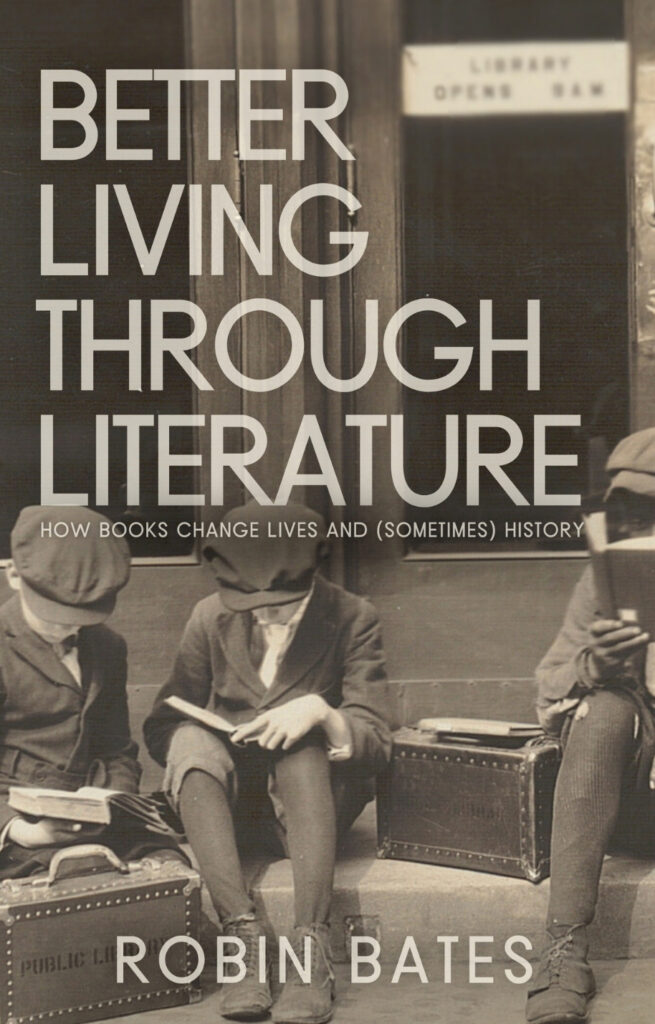
I’ve written so many times about the accidental drowning death of my son Justin—most thoroughly in Better Living through Literature—that I won’t repeat what I’ve said. Instead, I use today’s “a life lived in literature” installment to reflect back on aspects I haven’t touched on before, some of which are unbearably painful but which may provide solace for those who have experienced similar tragedies.
When I was writing my book chapter on the death, I realized I was following in the footsteps of someone who had also turned to literature in his darkest moment. When Dante is “lost in a dark wood”—which is to say, experiencing unbearable depression, brought on both by his exile from his beloved Florence and a deep crisis of faith—he turned to the literary work that would serve as the springboard for The Divine Comedy. In Virgil’s Aeneid, Dante saw the protagonist visiting the underworld to determine his next steps, and that journey became the model for Dante’s own journey through Inferno, Purgatory, and Paradise. After describing the suffering experienced by those who have turned their backs on God, Dante concludes with an ecstatic vision of those who open their hearts to “the Love that moves the sun and all the stars.”
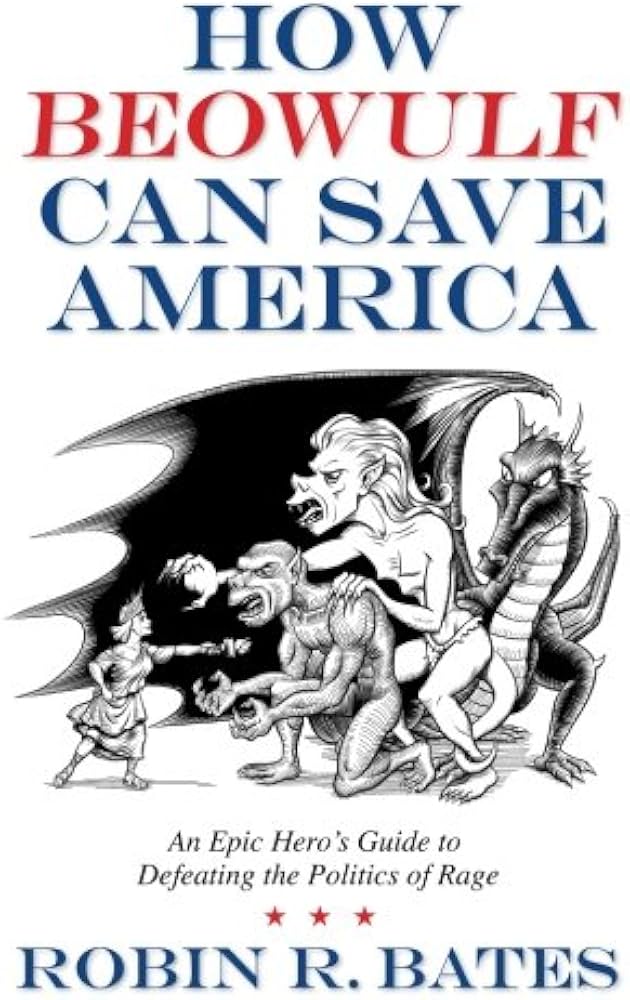
While I didn’t think of Dante at the time of Justin’s death, I was writing a book on how classic works could transform lives. One of these works was Beowulf, and as I reeled from the tragedy, I found myself using the 8th century Anglo-Saxon epic to deal with my own dark wood. I too discovered that an underworld journey gave me something to hold on to, that being Beowulf’s journey to the underwater cave of Grendel’s Mother.
I had already identified that journey as a grappling with grief, and now I had my own grief to deal with. To be specific, the revenge attack by Grendel’s Mother has killed Hrothgar’s best friend Aeschere, and the king, in his grief, is in danger of giving up all hope and withdrawing from the world. (Other kings in the poem follow this path, essentially becoming human dragons.) Beowulf, who represents healthy ways of overcoming threats to society, faces grief fully rather than avoiding it, diving into the monster-infested waters and entering the heart of the emotion.
As I reread the passage, I saw myself on grief’s journey and felt a small degree of comfort in finding that my situation had been articulated. Suddenly I wasn’t just dealing with amorphous confusion. Nietzsche has written that “man would sooner have the void for his purpose than be void of purpose,” and I felt something similar: better to be grappling with something I could imagine having a shape than a shapeless void. If grief is a heroic journey that is thrust on one, then its challenges can be recognized and fought and perhaps even overcome. I resolved to open myself to this journey, allowing it to take me wherever it would. And if, at the heart of the grief, I could find a Beowulfian sword that I could wield—better that than being swallowed utterly– I would wield that sword. The sword, I would come to conclude, was my commitment to my family, my college colleagues and students, and my community, all of which demanded that I stay strong.
Poetry, in short, gave me narratives and images through which to process my inner turmoil. Occasionally it even offered me more, as when I realized that withdrawing into my study/cave and developing a hard exterior threatened to transform me into a bitter human dragon.
There were two moments that were so painful that I haven’t talked about them until now but which, again, literature helped me negotiate. When I was sitting on the bluff overlooking the St. Mary’s River and watching divers search for Justin’s body, some part of my brain said something so abhorrent that I wondered what it said about me. Before I reveal it, some context is necessary.
About a year before he died Justin , who was engaged in intense spiritual search, had started exploring whether the certainty he sought lay in a narrow fundamentalism. He was attending a highly judgmental church that condemned to hell any who did not practice Christianity the way that it did, and Justin for a while was entranced by the power this seemed to give him: he could use it as a means of rebelling against his parents and as a way of irritating our second son. Now, I don’t think that Justin would have stayed with this church for long. He was too generous a soul to remain exclusionary. Indeed, by the end of the year I saw signs that he was starting to modulate his beliefs. But for several months he was (not to mince words) an asshole.
Nevertheless, whenever I saw him around campus, I would give him a hug. Though he had become a prickly tree, I figured I could duck under the branches that poked me and make connection with the core of his being. Still, dealing with him at this phase in his life was not easy.
The thought that crossed my mind as I sat on the bluff was, “If that is Justin’s body in the water, then at least I won’t have to deal with his fundamentalism anymore.”
Why would I focus on that rather than on the pain of loss? A literary instance of a character in a similar situation would eventually help me answer that question. When I was in high school, my father gave me André Malraux’s violent 1933 novel La Condition Humaine (Man’s Fate), which is about Chinese communists fighting against Chiang Kai-shek’s Kuomintang in a doomed 1927 insurrection. One of the sympathizers is a Belgian phonograph seller named Hemmelrich, who doesn’t join in the fighting in part because he is timid, in part because he has a sick child at home. Instead, he offers his shop as a meeting place for the insurrectionists. When the Kuomintang blows it up, killing his family, he has conflicting emotions:
The shop had been “cleaned” with grenades, like a trench. The woman was slumped against the counter, almost crouching, her whole chest the color of a wound. In a corner, a child’s arm; the hand, thus isolated, appeared even smaller. “If only they are dead!” thought Hemmelrich. He was especially afraid of having to stand by and watch a slow death, powerless, only able to suffer, as usual…
A few moments later, standing amidst the carnage, he examines his feelings:
He knew he was suffering, but a halo of indifference surrounded his grief, the indifference which follows upon an illness or a blow in the head. No grief would have surprised him: on the whole, fate this time had dealt him a better blow than usual. Death did not astonish him: it was no worse than life. The thing that appalled him was the thought that behind this door there had been as much suffering as there was blood. This time, however, destiny had played badly: by tearing from him everything he still possessed, it freed him.
It is the appalling idea that death offers a kind of freedom that I recognized in my own case. Malraux continues on:
He entered the shop again, shut the door. In spite of the catastrophe, of the sensation of having the ground give way under his feet, leaving nothing but empty space, he could not banish from his mind the atrocious, weighty, profound joy of liberation….[N]ow he was no longer impotent. Now, he too could kill. It came to him suddenly that life was not the only mode of contact between human beings, that it was not even the best, that he could know them, love them, possess them more completely in vengeance than in life. Again he became aware of his shoe-soles, stuck to the floor, and tottered: muscles were not aided by thought. But an intense exaltation was overwhelming him, the most powerful that he had ever know; he abandoned himself to this frightful intoxication with entire consent.
Obviously, my situation was different: I certainly was never intoxicated and there was no element of revenge. Nevertheless, examining the passage provides insight. Part of Himmelrich’s response, and my own, can be chalked up to shock. The mind scrambles to protect itself against the full horror of the moment, and if something positive can be found, then the mind decides the impact will be less. In Himmelrich’s case, he now has permission to fully engage in the revolution. Death has ripped away all restraints.
It also alerts him to how powerless he had felt in the face of his sick child’s suffering. When the boy was alive, he felt guilty for resenting him and now all that is gone. In fact, he thinks he can express his love without reservation through revenge. Little wonder that he feels liberated and exhilarated. Death, like the grenades, has “cleaned” everything up. It will take time for the shock to lessen and for him to fully feel the loss.
So maybe I thought what I did in a flash of anger at how Justin’s death was tearing me apart: if I could love him less, if I found a way to distance myself from him, then maybe I wouldn’t be in such agony. As it was, I couldn’t handle the full shock all at once.
My thought was only momentary and gave way to others more socially acceptable. Another thought also bound up with powerlessness, however, stayed with me far longer. The year before he died, we had had to withdraw Justin from Grinnell because Julia had lost her job. (St. Mary’s, by contrast, was affordable because he received tuition remission.) For three years I was plagued by guilt for having brought him back to Maryland. If we had figured out a way to send him back to Grinnell, I thought incessantly, he would still be alive.
A Lucille Clifton poem gave me insight and ultimately relief, which seems somewhat appropriate since she had mentored Justin in a class—I remember her coaching him through intense distress that, sensitive soul that he was, he was experiencing about racism–and she also came to my house to offer condolences after he died. Her “poem with a rhyme in it” addresses guilt, specifically Black guilt. It is addressed to “black people”:
black people we live in the land
of ones who have cut off their own
two hands
and cannot pick up the strings
connecting them to their lives
who cannot touch whose things
have turned into planets more dangerous
than mars
but i have listened this long dark night
to the stars
black people and though the ground
be bitter as salt
they say it is not our fault
When first reading the poem, I wondered why African Americans would need reassurance on this matter. Given America’s horrific history of racism, why must she tell them (and tell herself) that their “bitter as salt” lives are not their fault. I came to realize, however, that as painful as guilt is, acknowledging one’s powerlessness is even more painful. With guilt we feel that we could have achieved a different outcome if only we had behaved differently. If we are powerless, however, there’s nothing we could have done.
Clifton’s final line—“[the stars] say it is not our fault”—I found immensely consoling. Even if we had sent Justin back to Grinnell, bad things could still have happened. After all, young people die in Iowa as well as in Maryland. What had tormented me, I came to realize, was my powerlessness in the face of death. I couldn’t bear to think of myself as stripped of all agency.
Literature cannot answer all the existential questions posed by death but it at least gives us a foothold on that treacherous rock face. Without literature, I would have thrashed around even more blindly than I did following Justin’s drowning.
Past Installments of A Life Lived in Literature
A Life Lived in Literature: How It All Began (Sept. 5, 2025)
Early Reading Memories (Sept. 12, 2025)
Childhood Confusion: Reading to the Rescue (Sept. 19, 2025)
Confronting Segregation (Sept. 26, 2025)
School Reading vs. Real Reading (Oct. 10, 2025)
Childhood in Paris (Oct. 17, 2025)
My Time at Sewanee Military Academy (Oct. 24, 2025)
Existentialism for High School Seniors (Oct. 31, 2025)
Why I Majored in History, Not English (Nov. 7, 2025)
My College Search for Authenticity (Nov. 14, 2025)
On D. H. Lawrence and a Sexual Awakening (Nov. 21, 2025)
My Life as a Bildungsroman (Nov. 28, 2025)
Grad School: Literary Baptism by Fire (Dec. 5, 2025)
Early Scenes from a Marriage (Dec. 12, 2025)
Bringing Up Baby in Grad School (Dec. 19, 2025)
Grappling with Racism (Jan. 2, 2026)
Journal of a Young Teacher (Jan. 16, 2026)
Teaching and Reading in Yugoslavia (Jan. 23, 2026)
Life at 40: Barely Controlled Chaos (Jan 30, 2026)
From Secular Humanist to Christian Believer (Feb. 6 2025)
Looking Back at a Lifetime Together (Feb. 13, 2026)
To Ljubljana with Love (Feb. 20, 2026)
Forging a Separate Identity from My Father (Feb. 27, 2026)
“Better Living” Emerged from a Midnight Epiphany (March 6, 2026)
The Golden Years before Tragedy Struck (March 13, 2026)
Using Lit to Grapple with a Death (March 20, 2026)