Friday – A Life Lived in Literature, 39th Installment
This memoir is finally reaching the present so the end is in sight, although I may include a few follow-up posts on particular themes. In today’s installment I go back to my last two years at St. Mary’s, the second of which included a brush with mortality.
In 2016 Julia moved to Sewanee to (1) be with my mother, who was depressed over having lost my father three years earlier and (2) spend half weeks in Georgia with our third granddaughter. Childcare was needed as our daughter-in-law Candice had been hired for a dual position in Film Studies and Asian Studies at the University of North Georgia while our son Tobias was teaching at Georgia Tech.
Living alone was already a challenge, and then in 2017 I contracted a case of myocarditis and pericarditis. If Julia had been in Maryland, she would have insisted that we drive to the emergency room when I started experiencing back pains in the middle of the night, but instead I gritted my teeth and made an appointment with my doctor the following morning.
She thought, as I did, that I had pulled a muscle playing tennis but sent me to the hospital for an EKG to make sure. I barely made the trip there—driving at 15 miles an hour, I was prepared to pull over and call 911—and then had to wait for 90 minutes for the EKG. Once the nurse saw the results, however, everything sped up as the emergency room physicians, fearing I was suffering from a heart attack, bundled me into a helicopter and flew me to a Washington hospital.
It turned out that all I needed was an anti-inflammatory, and I was well enough in the evening to post an essay, a point of pride since I hadn’t missed one since I began the blog three years earlier. (I’d had the presence of mind to bring my laptop with me.) When I recalled the feeling of iron bands squeezing my chest, the image that came to mind was Giles Corey being crushed to death as a suspected witch in The Crucible. As Elizabeth describes the scene,
Great stones they lay upon his chest until he plead aye or nay. (With a tender smile for the old man): They say he give them but two words. “More weight,” he says. And died.
I visited many specialists in the following months, and they ultimately traced my episode to an infection picked up in a Bronx hospital when I was visiting a friend dying of ovarian cancer. I’ll write more about Rachel Kranz in a future post on friendship, but given how traumatized I was, I wondered at one point whether Henry Fielding’s Tom Jones offered a credible diagnosis. There we encounter a character who dies from a broken heart:
The doctor went directly to London, where he died soon after of a broken heart; a distemper which kills many more than is generally imagined, and would have a fair title to a place in the bill of mortality, did it not differ in one instance from all other diseases—viz., that no physician can cure it.
Although I was back again teaching two days later, the anti-inflammatories didn’t catch everything and I would have to another trip to the E.R. At this point I decided that I really should retire—at 67 rather than at 70, as I had planned—and gave notice.
There’s one other literature story connected with emergency room visits. In my final semester, I was teaching, for the first time, an ambitious world literature course on Magic Realism. After having read Gabriel Garcia Marquez’s One Hundred Years of Solitude (Colombia)and Salman Rushdie’s Midnight’s Children (India), my students were sucking wind. I realized this as I lay on the hospital bed at 3 am and decided then and there to drop Gunter Grass’s The Tin Drum (Germany), replacing it with Laura Esquivel’s much shorter and more accessible Like Water for Chocolate (Mexico). The students were grateful.
The other works in the course, incidentally, were Toni Morrison’s Beloved (the U.S.) and Haruki Murakami’s Wind-Up Bird Chronicle (Japan).
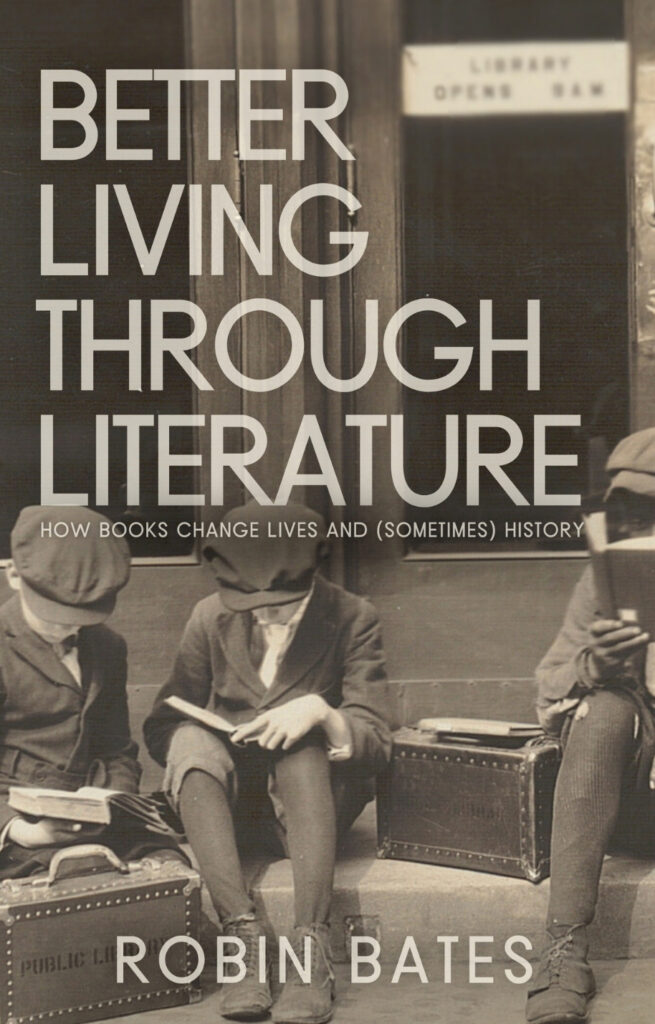
I was teaching my “Theories of the Reader” class that last year, using a rough draft of Better Living through Literature as one of my textbooks (along with the Norton Anthology of Literary Theory). I also taught Tess of the d’Urbervilles: A Pure Woman, so that the students could see an author battling with a censorious readership, and Bertolt Brecht’s The Good Person of Szechwan, so that they could study his strategies of deliberate alienation.
The students’ final essays, meanwhile, opened my eyes to various works that had “caused a ruckus” (as I put it), including a fascinating study of why Tennessee parents had objected to a teacher teaching L. Frank Baum’s The Wizard of Oz. My student learned that the book was far more feminist than she realized, which may explain why the parents objected to the good witches in the book. Baum’s suffragette mother-in-law provided a model for Glinda the Good, and he also saw Dorothy as a tough pioneer woman (which is not how Judy Garland plays her).
When my department asked me what I wanted in a farewell party, I prefaced my wish by telling a joke a German colleague had shared with me. Terrorists have taken over a plane filled with language professors headed for the annual Modern Language Association conference. To show they mean business, they announce they will throw three of them out of the plane—a Brit, a German, and an American—but will first grant each of them a final wish. The Brit asks for a spot of tea, the German asks to a lecture…and the American asks to be thrown from the plane before the German delivers his lecture. Invoking my mother’s German heritage, I said I wanted to deliver a lecture. Which is what I did, speaking for 20 minutes on literature’s life transforming potential.
Although I did some teaching after retirement—intro classes for Sewanee as well as some lifelong learning courses—I spent most of my time working on my book. Once I retired, I was able to work full time on my book, which I completed with the incredible assistance of Rebecca Adams. It is the culmination of my life’s work, and I have given readings at Sewanee, St. Mary’s, and the University of Ljubljana.
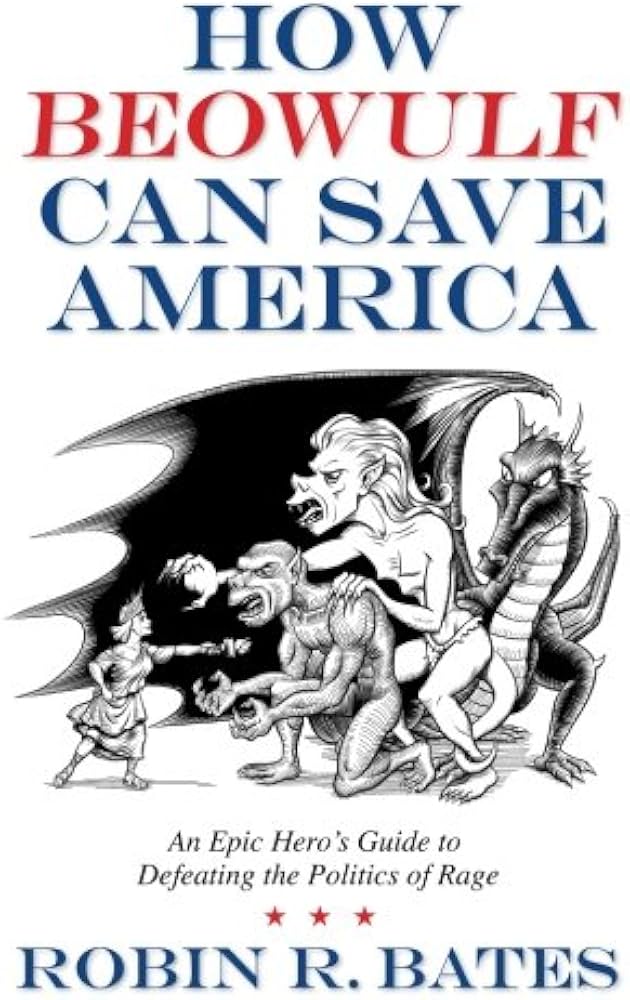
By retiring when I did, I missed having to teach remotely or grapple with AI. And I got to spend the Covid year, plus another three, with my mother. Then, once life returned to normal, I went on to head Sewanee’s Friends of the Library; delivered card-playing lectures on Jane Austen (speculation) and Alexander Pope (ombre); ran our church’s Sunday Forum (to which I also contributed numerous literature lectures); started a weekly faculty reading group to study Divine Comedy and other classics; joined (with Julia) a lectio divina group to discuss Biblical passages; joined (again with Julia) a monthly book group to discuss various works of fiction and non-fiction; visited Slovenia three times to teach Shakespeare and post-colonial literature courses (along with other assorted classes); lectured on Beowulf at our 50th Carleton reunion; and wrote countless political posts while participating in multiple anti-Trump marches. Oh, and I play tennis doubles five or six times a week.
In short, retirement is a lot like my life when I was working, only without the meetings and the grading.
While I don’t miss those last two, I do miss the students.
Past Installments of A Life Lived in Literature
A Life Lived in Literature: How It All Began (Sept. 5, 2025)
Early Reading Memories (Sept. 12, 2025)
Childhood Confusion: Reading to the Rescue (Sept. 19, 2025)
Confronting Segregation (Sept. 26, 2025)
School Reading vs. Real Reading (Oct. 10, 2025)
Childhood in Paris (Oct. 17, 2025)
My Time at Sewanee Military Academy (Oct. 24, 2025)
Existentialism for High School Seniors (Oct. 31, 2025)
Why I Majored in History, Not English (Nov. 7, 2025)
My College Search for Authenticity (Nov. 14, 2025)
On D. H. Lawrence and a Sexual Awakening (Nov. 21, 2025)
My Life as a Bildungsroman (Nov. 28, 2025)
Grad School: Literary Baptism by Fire (Dec. 5, 2025)
Early Scenes from a Marriage (Dec. 12, 2025)
Bringing Up Baby in Grad School (Dec. 19, 2025)
Grappling with Racism (Jan. 2, 2026)
Journal of a Young Teacher (Jan. 16, 2026)
Teaching and Reading in Yugoslavia (Jan. 23, 2026)
Life at 40: Barely Controlled Chaos (Jan 30, 2026)
From Secular Humanist to Christian Believer (Feb. 6 2025)
Looking Back at a Lifetime Together (Feb. 13, 2026)
To Ljubljana with Love (Feb. 20, 2026)
Forging a Separate Identity from My Father (Feb. 27, 2026)
“Better Living” Emerged from a Midnight Epiphany (March 6, 2026)
The Golden Years before Tragedy Struck (March 13, 2026)
Using Lit to Grapple with a Death (March 20, 2026)
Lit in the Year following Justin’s Death (March 27, 2026)
My Eldest Son, Named after a Keats Sonnet (April 3, 2026)
Sterne’s Uncle Toby and My Own Toby (April 10, 2026)
After the 2nd Death, a Book Project (April 17, 2026)
Making Lit Meaningful for Students (April 24, 2026)
Horizons Broadened (May 1, 2026)
Obama’s Election and a Blog Launched (May 8, 2026)
Expanding Outward at 60 (May 15, 2026)
On Losing My Father (May 22, 2026)
Cavorting through Literature’s Wonderland (May 29, 2026)
An Academic Life Sidetracked? (June 5, 2026)
Sports as a Spur to the Imagination (June 12, 2026)
Entering Retirement (June 26, 2026)