Friday – A Life Lived in Literature, 33rd Installment
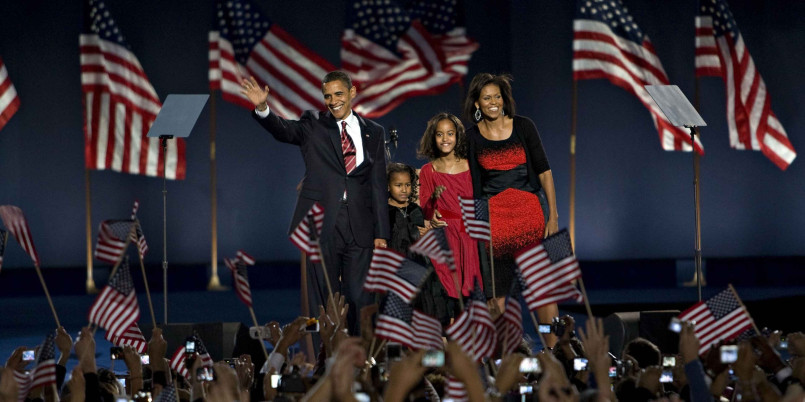
The political high point of my life was Barack Obama’s victory in 2008. Julia and I were spending a sabbatical semester in Madison, Wisconsin with my brother Sam and his wife, and as we watched the Grant Park election night speech, my heart filled. For one who had grown up in segregated Tennessee, the event seemed miraculous. I remember taking note of a tearful Jesse Jackson and sharing his joy.
What I failed to realize is that the very event that was causing my heart to soar was freaking out a significant portion of the American electorate. In the years that followed, like many white liberals I would become aware of what African Americans have always known, that the tentacles of racism reach much deeper than whites realize. Even Republicans who voted for Obama (I was related to several) would pull back when he proved to be too Black, when he complained about Cambridge police arresting Henry Louis Gates or when he said that, if he had had a son, he would have looked like Trayvon Martin.
Suddenly Obama was revealing that he wasn’t a Tom Robinson type of Black, grateful to Atticus Finch for his support, or one of the “faithful souls” in D.W. Griffth’s Birth of a Nation.” Obama’s sin in these instances was reminding us that many African Americans are angry and with cause. To cite from William Dixon’s novel on which Griffith’s film is based (The Clansman), too many Americans still fear the uppity Black captain who has insulted a white doctor and prefer the fantasy of the “faithful man” who puts him in his place:
“Fellow citizens,” [the Captain said], “you are the equal of any white man who walks the ground. The white man’s day is done. Your turn has come.”
As he passed Jake’s cabin, the doctor’s faithful man stepped suddenly in front of him, looking at the Captain out of the corners of his eyes, and asked:
“Is I yo’ equal?”
“Yes.”
“Des lak any white man?”
“Exactly.”
The negro’s fist suddenly shot into Gilbert’s nose with the crack of a sledgehammer, laying him stunned on the pavement.
“Den take dat f’um yo’ equal, d—n you!” he cried, bending over his prostrate figure. “I’ll show you how to treat my ole marster, you low-down slue-footed devil!”
The stirring little drama roused the doctor and he turned to his servant with his old-time courtesy, and said:“Thank you, Jake.”
To get both Black and white votes, Obama had to walk a fine line between uppity Captain and faithful man, and for Black critics like Princeton professor Cornel West, he wasn’t really Black. He was Black enough, however, to unleash a reaction that we are still living with. As I write this installment of my memoir, I have just witnessed the rightwing justices on the U.S. Supreme roll back many of the gains that were paid for in blood in the 1950s and 1960s, and the Tennessee legislature is currently dividing up the city of Memphis so that it can throw out our one Black Congressman. Donald Trump’s utterly illogical birther lie struck a chord with racists because it confirmed for them that Obama didn’t belong in the White House.
In the following year, as the Tea Party backlash picked up in intensity, I remember getting almost physically sick as I taught Birth of a Nation in a “History of American Film” class. The film might have been almost a hundred years old, but the sentiments it expressed were so recognizable that I discovered I couldn’t teach it anymore, despite its technical brilliance.
After having spent an unsuccessful year trying to find a commercial publisher for Better Living through Beowulf: How the Early British Classics Can Guide You beyond Terrorism Fears, Relationship Anxieties, Consumer Emptiness, Racial Tension, Political Cynicism, and Other Contemporary Challenges, my agent dropped me, forcing me to try small publishers. I found one and spent the first semester of my sabbatical putting the book in order. Unfortunately, the 2008 crash caused the publisher to retract his offer, leaving me high and dry. While the seven years I had spent writing it were not entirely wasted as the project had supercharged my teaching, I was nevertheless discouraged.
Fortunately, my son in marketing provided an alternative. If I started blogging, he told me, I would create a platform, which in turn would help me publish my book. He guided me in determining an identity for the blog, found a talented artist to set it up, and taught me how to post my essays and set up a weekly newsletter.
My response once I started blogging: “Who needs to write a book when one can share one’s ideas this way?” I loved the immediacy of the format and how it could reach readers around the world. I had found my medium.
As I’ve explained, daily blogging allowed me to do full justice to my central concern: how does literature change lives? Rather than propose one overarching theory, which I don’t think exists, I could share a steady stream of examples of literature at work.
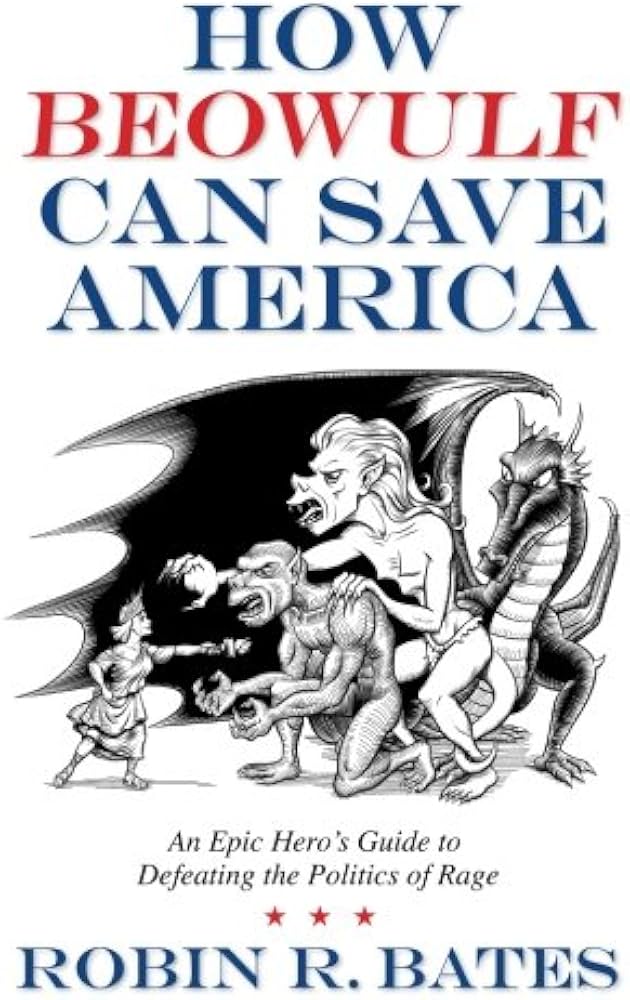
I also realized that I had finally found a public forum for sharing my political views (since I couldn’t do this in class). In the early years, in the spirit of Obama’s attempt to reach across the aisle, I worked on being as politically even-handed as I could, although the Republicans I included have all become NeverTrumpers and, in some cases, Democrats: David Brooks, Michael Gerson David Frum, Tom Nichols, Norman Ornstein, Jennifer Rubin. I once got a positive response from Gerson, a key architect of George Bush’s compassionate conservative platform, about an essay I wrote in 2017 comparing his attack on political evangelicals to William Blake’s critique of the church. I included some of these columnists in my 2012 book How Beowulf Can Save America since I was looking for ways of dealing with and moving past the immense anger and resentment I saw welling up in the country.
I now recognize a certain political naivete on both my part and Obama’s. Applying Othello to the Obama presidency two years into Trump’s first term, I better understood why Obama either didn’t recognize or didn’t acknowledge the depth of the hate being directed against him:
As to why Obama and Othello were/are both credulous, it stands to reason that they would believe in a system that recognizes their qualities and elevates them accordingly. Each is officially accepted within the club, with even Desdemona’s father eventually opening his arms to the Moor. Their faith that merit will rise to the top, even in a racist society, seems borne out.
And:
It is Othello’s earned success, on the other hand, that makes him a believer. “If there is anyone out there who still doubts that America is a place where all things are possible,…tonight is your answer,” Obama said in his 2008 victory speech.
Perhaps because they have achieved the impossible, both Obama and Othello underestimate the extreme lengths to which racial animosity drives their enemies. Although their stratospheric rise is experienced as salt rubbed into wounded white pride, they can’t see it. After all, doesn’t their success benefit all of society?
What drives Iago, I contended, is not economic anxiety but fear of losing status. Regarding the U.S., having once thought that “it’s the economy, stupid,” I now believe that “it’s race, stupid.” Culture and economy are intertwined, of course, but I’ve come to believe that the former preempts all else. As Lyndon Johnson famously said,
If you can convince the lowest white man he’s better than the best colored man, he won’t notice you’re picking his pocket. Hell, give him somebody to look down on, and he’ll empty his pockets for you.
Writing this blog has sharpened my awareness of how accurate this is. Along with Shakespeare, figures like William Faulkner, Flannery O’Connor, Mark Twain, Toni Morrison, Lucille Clifton, James Baldwin, and many others have been my guides. The daily discipline of connecting these truth tellers to the day’s events has been a means of exploring the issues and anchoring my perceptions.
And it all grew out of a failed book.
Past Installments of A Life Lived in Literature
A Life Lived in Literature: How It All Began (Sept. 5, 2025)
Early Reading Memories (Sept. 12, 2025)
Childhood Confusion: Reading to the Rescue (Sept. 19, 2025)
Confronting Segregation (Sept. 26, 2025)
School Reading vs. Real Reading (Oct. 10, 2025)
Childhood in Paris (Oct. 17, 2025)
My Time at Sewanee Military Academy (Oct. 24, 2025)
Existentialism for High School Seniors (Oct. 31, 2025)
Why I Majored in History, Not English (Nov. 7, 2025)
My College Search for Authenticity (Nov. 14, 2025)
On D. H. Lawrence and a Sexual Awakening (Nov. 21, 2025)
My Life as a Bildungsroman (Nov. 28, 2025)
Grad School: Literary Baptism by Fire (Dec. 5, 2025)
Early Scenes from a Marriage (Dec. 12, 2025)
Bringing Up Baby in Grad School (Dec. 19, 2025)
Grappling with Racism (Jan. 2, 2026)
Journal of a Young Teacher (Jan. 16, 2026)
Teaching and Reading in Yugoslavia (Jan. 23, 2026)
Life at 40: Barely Controlled Chaos (Jan 30, 2026)
From Secular Humanist to Christian Believer (Feb. 6 2025)
Looking Back at a Lifetime Together (Feb. 13, 2026)
To Ljubljana with Love (Feb. 20, 2026)
Forging a Separate Identity from My Father (Feb. 27, 2026)
“Better Living” Emerged from a Midnight Epiphany (March 6, 2026)
The Golden Years before Tragedy Struck (March 13, 2026)
Using Lit to Grapple with a Death (March 20, 2026)
Lit in the Year following Justin’s Death (March 27, 2026)
My Eldest Son, Named after a Keats Sonnet (April 3, 2026)
Sterne’s Uncle Toby and My Own Toby (April 10, 2026)
After the 2nd Death, a Book Project (April 17, 2026)
Making Lit Meaningful for Students (April 24, 2026)
Horizons Broadened (May 1, 2026)
Obama’s Election and a Blog Launched (May 8, 2026)