My English professor son, who like many in academe is grappling with AI, has found the right book to capture one pressing issue: Dr. Seuss’s Butter Battle Book.
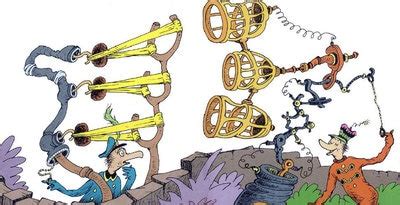
Alongside an illustration from the book, Tobias Wilson-Bates posted on Bluesky,
The solution to AI cheating in the classroom cannot be buying into deeply flawed AI detection tools marketed by the same companies selling the AI being used for cheating in the first place.
The situation reminds me of an even more disturbing one imagined by Margaret Atwood in her dystopia Oryx and Crake. In it giant, unregulated pharmaceutical companies release deadly viruses into the population, which can only be cured by drugs they themselves are selling. Buy the drug or die.
The Seuss illustration provided by Toby is of two weapons of war in an ongoing war between the Yooks and the Zooks. The Yook weapon hurls rocks while the Zook weapon catches them.
The rivalry stems from disagreements over which side of the toast should be buttered. As “Grandpa,” a former member of the Zook-Watching Border Patrol, explains to his grandson,
“But we Yooks, as you know, when we breakfast or sup, spread our bread,” Grandpa said, “with the butter side up. That’s the right, honest way!” Grandpa gritted his teeth. “So you can’t trust a Zook who spreads bread underneath! Every Zook must be watched! He has kinks in his soul!”
Those familiar with Gulliver’s Travels may see an echo here of the Big Endians and Small Endians, who fight endless wars over which is the proper way to break an egg. Swift has in mind the bloody rivalries between Catholics and Protestants. According to Wikipedia, Seuss also drew inspiration from the Pope-related battles in medieval Italy between the Guelphs and Ghibellines, where one side was accustomed to cutting their apples horizontally and the other vertically.
Seuss’s Yook-Zook rivalry is a reference to the decades-long U.S.-Soviet Union arms race, with Reagan’s “Star Wars” defense shield being the latest entry in that contest. I recall a 1960s column by political satirist Art Buchwald about missiles, anti-missiles, anti-anti-missiles, and anti-anti-anti-missiles in which one of these projectiles, becoming confused, shoots itself down.
So the AI that enables students to write papers that are not their own will be countered by AI that detects them doing so. Next we can anticipate programs that will evade detection systems, followed by programs designed to expose the evaders. The developers, meanwhile, make money each step of the way.
My son believes that we can’t look for technological fixes to this technological development and is increasingly having his students do much of their writing in class. For his part, my tennis partner and Sewanee Review editor Adam Ross has his creative writing classes write about work published in the Review, to which AI has been denied access.
Butter Battle imagines a different outcome, with each side developing technology so powerful that it will end all human life, the Bitsy Big-Boy-Boomeroo. As the two escalating forces approach each other, we get this warning in the book’s open conclusion:
“Grandpa! I shouted. “Be careful! Oh, gee! Who’s going to drop it? Will you . . . ? Or will he . . . ? “Be patient,” said Grandpa. “We’ll see. We will see . . . “
Will AI end learning as we know it? Will the massive AI centers swallow up all our personal information, even as they empty our aquifers and dramatically increase carbon pollution, thereby hastening climate change? Will AI change what it means to be human? We’ll see, we will see.
On this day 81 years ago, the United States destroyed Hiroshima and then, three days later, Nagasaki. For years it seemed only a matter of time before other populations would be decimated as the Soviet Union, the United Kingdom, France, China, India, Pakistan, North Korea and (unofficially) Israel acquired the weapon.
Despite scares in the early 1960s and then again in the early 1980s, the world has been fortunate to escape a repeat. While we can’t be entirely sure that Trump will back down from his April threat that “a whole civilization will die tonight, never to be brought back again,” even he appears unwilling to go this far. For its part, Iran may figure that it doesn’t need nuclear weaponry now that it knows it can hold the world hostage by closing down the Strait of Hormuz.
To ward off complacency, however, we need artists reminding us of humanity’s ability to usher in the apocalypse by one push of a button. One of my favorite Hirsoshima poems is by Richard Tillinghast, whom I vaguely remember as a child when he was a student at Sewanee. It was written in August of 1962 as the Soviet Union was moving missiles into Cuba. triggering what would become known as the Cuban Missile Crisis. My father included it in his anthology Poems of War Resistance, published during the Vietnam War in 1969.
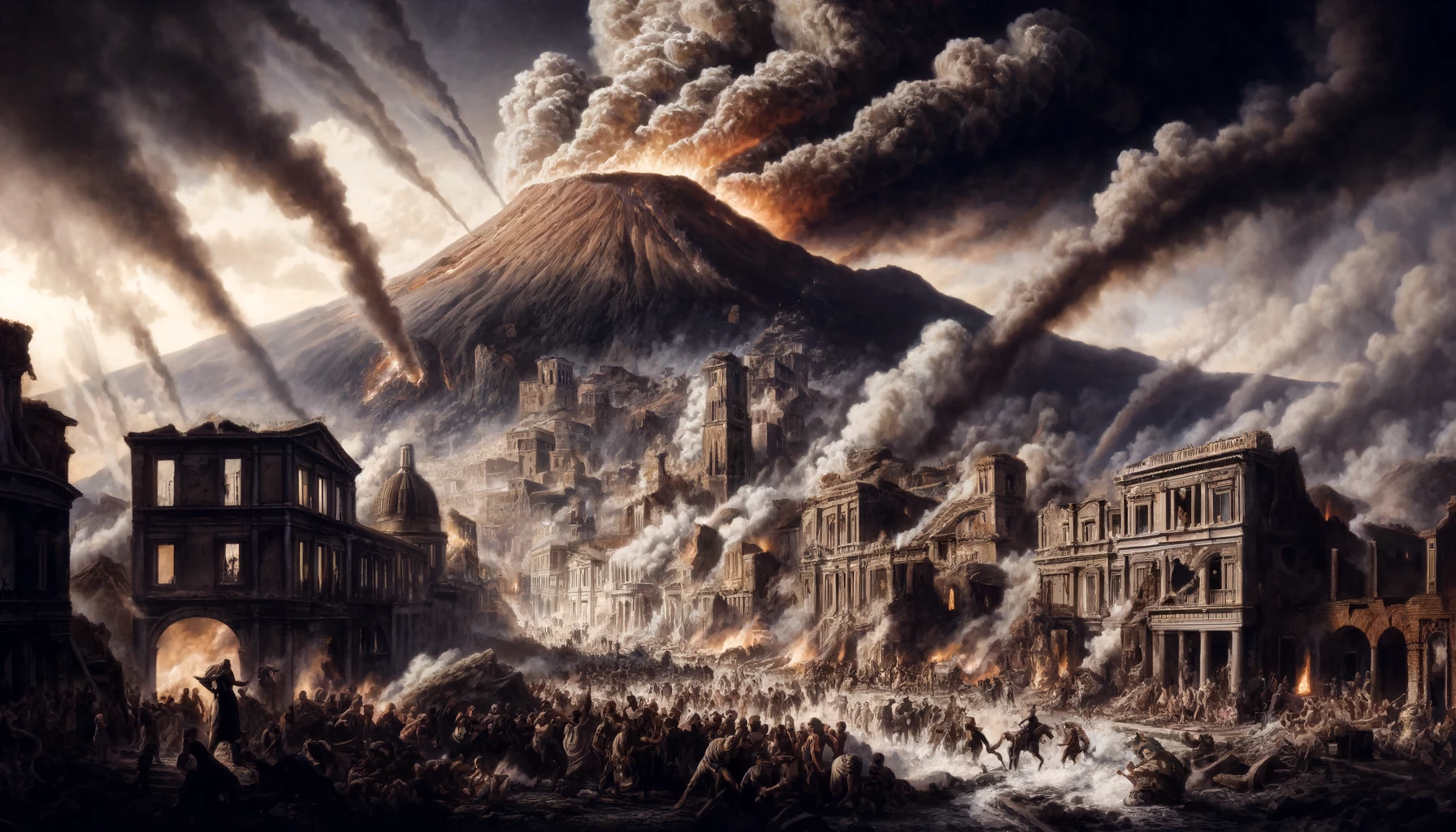
In the poem the poet is visiting Pompeii, which experienced its own apocalyptic annihilation in 79 A.D. Looking out through the ruined portico of the Jupiter temple at blackberry vines as he thinks of Hiroshima, he perceives “a semblance of cycle”:
…in the wreck of the past, In the dead fusion of marble and lava, the seed Of new greenness begins.
The promise of this greenness, however, is mocked by a world that is threatened with nuclear warheads. Hope dies on the vine, as it were, with the poet reporting,
But the berries sour on my mouth. Hot wind and cinder sun have frayed The vines and wizened the sweetness of the berries’ growth…
The poem ends with an ominous allusion to Yeats’s rough beast stalking towards Jerusalem. In “The Second Coming,” we are waked from stony sleep while in Tillinghast’s poem, “all of Europe seems/To drowse here, dazed in the sun towards death.” There also may be an allusion to Robert Oppenheimer quoting the Bhagavad Gita after witnessing the first test explosion: “Now I am become Death, the destroyer of worlds.”
Of as Tillinghast puts it,
A new sun blots Vesuvius— Of earth and sky, the old but the new destroyer.
When Trump recently promised Saudi Arabia nuclear technology in exchange for family favors, he threatened to undo the efforts of both Democratic and Republican administrations to reverse nuclear proliferation. “Ruins of the human mind,” the poet writes, “are tangled with stunted fruit of the future.”
It’s a grim warning but a necessary one.
A Poem on the Nuclear War, from Pompeii By Richard Tillinghast
The August blackberries harden and sour. Their vines rattle at a breath of volcanic dust Through the portico of Jupiter Sator.
Plucked juicy from broken stone, the fruits suggest A semblance of cycle. The principle could not be More apparent; in the wreck of the past,
In the dead fusion of marble and lava, the seed Of new greenness begins. But the berries sour on my mouth. Hot wind and cinder sun have frayed
The vines and wizened the sweetness of the berries’ growth Not only Pompeii, but all of Europe seems To drowse here, dazed in the sun towards death.
It is a time of stopped time, when ruins Of the human mind are tangled with stunted fruit Of the future. A new sun blots Vesuvius— Of earth and sky, the old but the new destroyer.
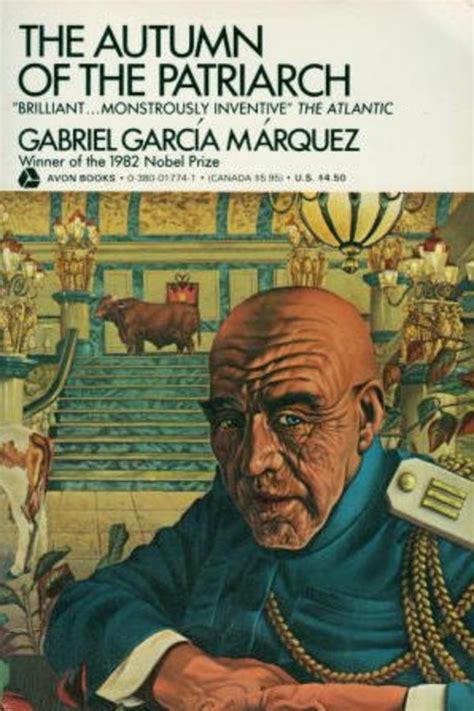
A Gabriel García Márquez passage shared by someone on Bluesky has sent me back to a novel I haven’t read since the 1980s but that suddenly seems disturbingly relevant. The dictator in Autumn of the Patriarch (1975)may be based on a compilation of South and Central American strongmen (Venezuela’s Juan Vincente Gómez, Haiti’s François Duvalier, Colombia’s Gustavo Rojas Pinilla, Nicaragua’s Anastasio Somoza, and the Dominican Republic’s Rafael Trujillo), but it disturbingly brings our own wannabe dictator to mind. Although DJT has not cooked up the body of one of his generals as a meal for those around him—not literally, at any rate— the general’s imprisoning 2000 innocent children lest they expose his fraudulent lottery scheme is closer to our reality than I would have thought possible ten years ago. (He then sinks them in a concrete barge.)
As a practitioner of magical realism, García Márquez can invent scenarios that, despite being fantastical, ring true. The dictator has been in power for 100 years, and with sentences that go on for pages, the novel reads like an unending fever dream—which is how Americans like me are experiencing DJT. In debt to a United States that is propping up his regime, the unnamed dictator at one point must sell the Caribbean Sea, which the United States then imports to Arizona, leaving behind a desert waste. How different is this to Trump selling our national parks and coastlines to oil companies, which in turn are hastening catastrophic climate change. The America in Autumn of the Patriarch, meanwhile, reminds us of how our president salivates over Greenland, Venezuela and Cuba.
As consolation for the loss of the sea, America provides Marquez’s dictator with large fans, which mimic the absent trade winds. As one review of the novel notes, “The ruler can counterfeit weather, but he cannot restore the world his power has emptied. The landscape becomes an inventory of political theft rather than a neutral setting.”
I turn to the novel’s last two pages, which capture the hollowness of absolute power. As with previous posts in which I have compared Trump to literary figures (especially to Lear), I must caution that García Márquez’s general is more complex and reflective than Trump so that he has some insight into the source of his sadness. Nevertheless, like Trump he thrashes around in unhappiness and lashes out in anger.
Also like Trump, the general has never known love, which he tries to compensate for by accumulating power and basking in the adulation of adoring crowds and of sycophants that use him while assuring him he will never die. In the following passage, I think the image of being the victim of his own sect may refer to his dependence on the cult he has fostered, which in its worship denies him his humanity (an “infinite holocaust”). The “little glass ball” may be an allusion to the snow globe of Citizen Kane, another character who never finds love:
…he had learned of his incapacity for love in the enigma of the palm of his mute hands [fortune tellers] and in the invisible code of the [Tarot] cards and he had tried to compensate for that infamous fate with the burning cultivation of the solitary vice of power, he had made himself victim of his own sect to be immolated on the flames of that infinite holocaust, he had fed on fallacy and crime, he had flourished in impiety and dishonor and he had put himself above his feverish avarice and his congenital fear [of death] only to keep up until the end of time the little glass ball in his hand without knowing that it was an endless vice the satiety of which generated its own appetite until the end of all times general sir, he had known since his beginnings that they deceived him in order to please him, that they collected from him by fawning on him, that they recruited by force of arms the dense crowds along his route with shouts of jubilation and venal signs of eternal life to the magnificent one who is more ancient than his age, but he learned to live with those and all the miseries of glory as he discovered in the course of his uncountable years that a lie is more comfortable than doubt, more useful than love, more lasting than truth [my emphasis], he had arrived without surprise at the ignominious fiction of commanding without power, of being exalted without glory and of being obeyed without authority when he became convinced in the trail of yellow leaves of his autumn that he had never been master of all his power, that he was condemned not to know life except in reverse, condemned to decipher the seams and straighten the threads of the woof and the warp of the tapestry of illusions of reality without suspecting even too late that the one livable life was one of show, …
As opposed to a life of show that is his only option, the rest of us live real lives. And even though this life may have aging (yellow leaves), misfortune, and death, there are also “ungraspable instants of happiness” and real love:
…the one [life] we saw from this side which wasn’t his general sir, this poor people’s side with the trail of yellow leaves of our uncountable years of misfortune and our ungraspable instants of happiness, where love was contaminated by the seeds of death but was all love, general sir…
Back to the general, who has been reduced to the tiny glimpses people get of him:
…where you yourself were only an uncertain vision of pitiful eyes through the dusty peepholes of the window of a train, only the tremor of some taciturn lips, the fugitive wave of a velvet glove on the no man’s hand of an old man with no destiny with our never knowing who he was, or what he was like, or even if he was only a figment of the imagination, a comic tyrant who never knew where the reverse side was and where the right of this life which we loved with an insatiable passion that you never dared even to imagine out of the fear of knowing what we knew only too well that it was arduous and ephemeral but there wasn’t any other, general, because we knew who we were while he was left never knowing it forever…
As this man flies through “the dark sound of the last frozen leaves of his autumn toward the homeland of shadows of the truth of oblivion, clinging to his fear of the rotting cloth of death’s hooded cassock,” he is, for one final time, cut off from human joy. In this case, it is joy over his death and jubilation over a return to freedom:
…a dead old man cut off at the roots by the slash of death, flying and alien to the clamor of the frantic crowds who took to the streets singing hymns of joy at the jubilant news of his death and alien forevermore to the music of liberation and the rockets of jubilation and the bells of glory that announced to the world the good news that the uncountable time of eternity had come to an end.
It’s a reminder that our present reality, whether through death or election cycle, will also come to an end. Perhaps accompanied by rockets of jubilation and bells of glory.
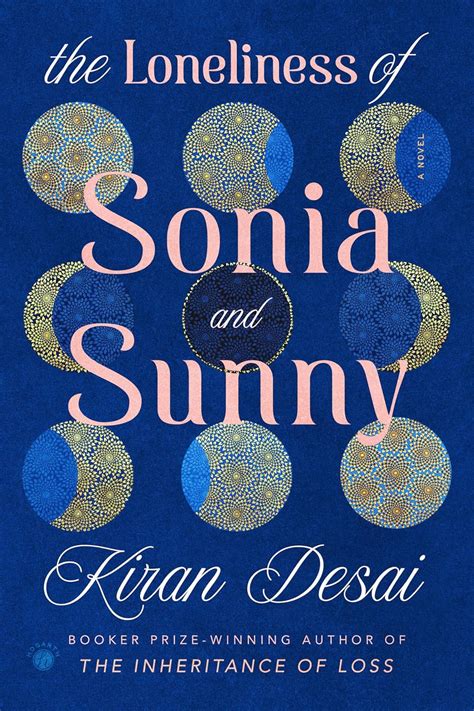
In October I’ll be teaching “Post-Colonial Literature” at the University of Ljubljana, and it was in preparing for it that I stumbled across Kiran Desai’s magnificent novel The Loneliness of Sonia and Sunny, shortlisted last year for the Man Booker Prize. I haven’t finished it yet but already am seeing how my students will benefit from watching the two protagonists negotiate the identity confusion caused by living between India and the United States.
I’ll have more to say about Loneliness in future posts, but I focus today on how it clarifies one issue that interests me. Liberals have long assumed that, as the United States moves towards becoming a majority-minority nation—which is to say, one where no race or ethnicity constitutes over 50% of the population—Democrats will benefit. After all, we are the party that openly embraces the idea of a multicultural democracy. To be sure, we should have anticipated that conservative whites would not accept this quietly, that there would be an uptick in racism. What has come as a shock, however, is how certain members of minority communities are determined to identify as white. Many of these signaled this desire in the 2024 election by voting for Trump.
Isabel Wilkerson lays out the significance of whiteness is her brilliant book Caste: The Origins of Our Discontents (2020). Since slavery, she contends, America has had a caste system, and although we tried to undo it—first with the Civil War and then with Civil Rights legislation–it remains engrained in the psyches of many Americans. Since our founding, immigrants have recognized this caste system and many have attempted to buy into it.
In their efforts to pass themselves off as white, they became at least as prejudiced as those whose ranks they hoped to join. Noel Ignatiev’s How the Irish Became White is one study of the phenomenon, but it is not limited to people who are white. Immigrants from Central America, South America, Asia (south, southeast and east), and various Caribbean and African nations have convinced themselves that they can be accepted as “white” rather than as “people of color.”
We see Sunny’s Indian mother thinking this way when she visits him in New York. Having brought up her son to aspire to study in America and even to marry a white woman and to become American, she is distressed when she finds him living in the minority community of Jackson Heights. First, however, she visits the apartment of an Indian friend who married her Columbia thesis advisor and is startled by how the Black doorman regards her:
Meanwhile she was shaken by the hostile manner of the doorman. Babita thought she was upper class and he was lower class. She thought black people were lower than brown people. She remembered that Sunny had informed her upon her last visit that if she dared make racist remarks in the United States, he would never, ever concede to meet her here again. This was after she had been jostled in a sweaty street fair celebrating Cinco de Mayo and exclaimed, “Can you imagine what will happen when this bunch takes over?” The comment revealed that she also thought Hispanic brown people were lower than Indian brown people.
Bigoted though she may be, however, it’s not like the society she is viewing is any better. Sometimes it takes an outsider to reveal to us who we are. While white conservatives may contend that they “don’t see color,” in Sunny’s eyes, America is obsessed with race:
And when was it that Sunny had learned the United States was about only one thing? In the morning when he turned on public radio it began: race, race, race. When he unfolded the newspaper: race, race, race. The economy, the environment, the journalism, the art, the sport, the war, the water, the wealth gap, the class divide, the summer camp, the prison, the school, the homeless person, the adoption, the birding, the diabetes, the real estate, the mortality rate, the election, the Starbucks restroom, the seat on the plane, the police, the murder, the judge—the conversation came down in a hammer blow: Race!
This presents Sunny with his own identity dilemma:
When exactly had Sunny switched from believing that calling himself “a person of color” would mean allowing himself to be boxed in by a term he could not abide and had begun to believe that not calling himself “a person of color” was letting white people swallow him whole?
Reading this, I think of my mixed-race grandchildren, with their very white father and their Trinidadian mother. How they see themselves will be influenced to some degree by how strangers see them, and if these strangers are obsessed with race, race, race—if skin color is a marker for perceived superiority or inferiority—then my grandchildren can’t pretend that American caste distinctions don’t exist.
Reading novels like Sharon Draper’s Blended—as my 14-year-old and 10-year-old already have—and (when they are older) The Loneliness of Sonia and Sunny will prepare them for the treacherous waters they are entering.
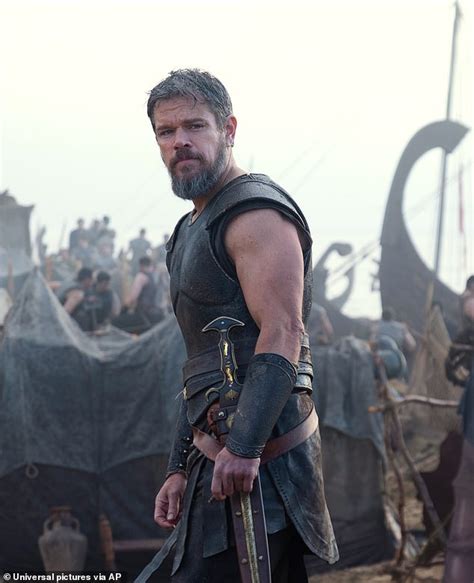
Daniel Mendelsohn, Editor-at-Large of The New York Review of Books and recent Odyssey translator, has a free podcast where he discusses Christopher Nolan’s film. While generally open to artists riffing off Homer—they’ve been doing so for at least as far back as Euripides–he is critical of the way that the director has radically altered the character of the protagonist. Because Nolan focuses on men haunted by how they have unleashed destruction upon the world–think Robert Oppenheimer and the atomic bomb in Nolan’s previous film—the director passes over Odysseus’s wit and his charm. Matt Damon’s Odysseus is a guilt stricken man.
Mendelsohn also notes that Nolan doesn’t handle women well in any of his films, including this one. As a result, we have one-dimensional depictions of Circe, Penelope, and especially Kalypso, who in Homer voices one of early literature’s greatest protests against the gods as she seeks to hold on to Odysseus. To help rectify this imbalance, I share how women writers have rethought Circe and Penelope.
In the past I’ve written posts on feminist treatments of Circe by Margaret Atwood and Madeline Miller (here) and of Penelope by Atwood and one of my former students (here). I share today two Circe poems by Nobel laureate Louise Glück and a Penelope poem by Britain’s former poet laureate Carol Ann Duffy.
In Glück’s “Circe’s Power,” the sorceress makes a point that Nolan’s Circe also makes, that she didn’t turn the men into pigs but just made them “look like pigs.” “Your men weren’t bad men,” she explains. “Undisciplined life did that to them.” Indeed, “under the care of me and my ladies, they sweetened right up.”
As for her tears about Odysseus leaving, she shows greatness of mind in understanding her limitations. Having seen the essence of Odysseus’s men, she adds that “nobody sees essence who can’t/ Face limitation.” The limitation is that she can’t hold Odysseus if he wants to leave. She could “hold you prisoner” but chooses not to:
Circe’s Power By Louise Glück
I never turned anyone into a pig. Some people are pigs; I make them Look like pigs.
I’m sick of your world That lets the outside disguise the inside. Your men weren’t bad men; Undisciplined life Did that to them. As pigs,
Under the care of Me and my ladies, they Sweetened right up.
Then I reversed the spell, showing you my goodness As well as my power. I saw
We could be happy here, As men and women are When their needs are simple. In the same breath,
I foresaw your departure, Your men with my help braving The crying and pounding sea. You think
A few tears upset me? My friend, Every sorceress is A pragmatist at heart; nobody sees essence who can’t Face limitation. If I wanted only to hold you
I could hold you prisoner.
“Circe’s Grief,” meanwhile, is a warning to men who cheat on their wives (and probably vice versa). Even if the husband (or wife) has left the lover and returned home pretending nothing has happened, the spouse knows. It is as though the abandoned lover has goddess-like powers. “If I am in her head forever,” Circe says ominously, “I am in your life forever.”
Circe’s Grief By Louise Glück
In the end, I made myself Known to your wife as A god would, in her own house, in Ithaca, a voice Without a body: she Paused in her weaving, her head turning First to the right, then left Though it was hopeless of course To trace that sound to any Objective source: I doubt She will return to her loom With what she knows now. When You see her again, tell her This is how a god says goodbye: If I am in her head forever I am in your life forever.
Duffy has a different take. Penelope may have taken up weaving to occupy her time while waiting for Odysseus to return, but in the end the weaving has become her main interest. Upon her loom she depicts “the smile of a woman at the center/ of this world, self-contained, absorbed, content.” When her needle’s “leaping fish” creates a river, it is a river that doesn’t need to reach the sea.
Penelope By Carol Ann Duffy
At first, I looked along the road hoping to see him saunter home among the olive trees, a whistle for the dog who mourned him with his warm head on my knees. Six months of this and then i noticed that whole days had passed without my noticing. I sorted cloth and scissors, needle, thread,
thinking to amuse myself, but found a lifetime’s industry instead. I sewed a girl under a single star—cross-stitch, silver silk— running after childhood’s bouncing ball. I chose between three greens for the grass; a smoky pink, a shadow’s grey to show a snapdragon gargling a bee I threaded walnut brown for a tree,
my thimble like an acorn pushing up through umber soil. Beneath the shade I wrapped a maiden in a deep embrace with heroism’s boy and lost myself completely in a wild embroidery of love, lust, lessons learnt; then watched him sail away into the loose gold stitching of the sun.
And when the others came to take his place, disturb my peace, I played for time. I wore a widow’s face, kept my head down, did my work by day, at night unpicked it. I knew which hour of the dark the moon would start to fray, I stitched it. Grey threads and brown
pursued my needle’s leaping fish to form a river that would never reach the sea. I tried it. I was picking out the smile of a woman at the center of this world, self-contained, absorbed, content, most certainly not waiting, when I heard a far-too-late familiar tread outside the door. I licked my scarlet thread and aimed it surely at the middle of the needle’s eye once more.
When Odysseus walks through the door, she doesn’t miss a beat.
The poem reminds me of one of Atwood’s Circe poems that I discuss in the essay linked to above. Odysseus is so obsessed with movement—Atwood could have Tennyson’s Ulysses in mind here as well—he doesn’t appreciate the here and now. As Circe’s Atwood puts it:
There must be more for you to do than permit yourself to be shoved by the wind from coast to coast to coast, boot on the boat prow to hold the wooden body under, soul in control
And further:
Don’t you get tired of saying Onward?
Then she gives her own version of the peace that Duffy’s Penelope finds:
Ask at my temples where the moon snakes, tongues of the dark speak like bones unlocking, leaves falling of a future you won’t believe in
Ask who keeps the wind Ask what is sacred
Miller’s Circe discovers something similar:
I stepped into the woods and my life began.
I learned to braid my hair back, so it would not catch on every twig, and how to tie my skirt at the knee to keep the burrs off. I learned to recognize the different blooming vines and gaudy roses, to spot the shining dragonflies and coiling snakes. I climbed the peaks where the cypresses speared black into the sky, then clambered down to the orchards and vineyards where purple grapes grew thick as coral. I walked the hills, the buzzing meadows of thyme and lilac, and set my footprints across the yellow beaches. I searched out every cove and grotto, found the gentle bays, the harbor safe for ships. I heard the wolves howl, and the frogs cry from their mud. I stroked the glossy brown scorpions who braved me with their tails. Their poison was barely a pinch. I was drunk, as the wine and nectar in my father’s halls had never made me. No wonder I have been so slow, I thought. All this while I have been a weaver without wool, a ship without the sea. Yet now look where I sail.
…And when I did get lonely, … then there was always the forest. The lizards darted along the branches, the birds flashed their wings. The flowers, when they saw me, seemed to press forward like eager puppies, leaping and clamoring for my touch.
In his podcast, Mendelsohn thinks that Nolan could have spared himself the criticism of classicists like himself if he had titled his film An Odyssey rather than The Odyssey.AnOdyssey would have signaled that he was going to create an Odysseus markedly different from Homer’s.
It’s clear what Atwood, Miller, Glück, and Duffy are up to. Faced with a seminal work in western civilization that has helped shape how men see women, they rewrite it to open up new possibilities.
None of this detracts from Homer’s original work. The Greeks were elastic with their gods, Mendelsohn writes, and works as great as The Odyssey stimulate artists for centuries afterwards.
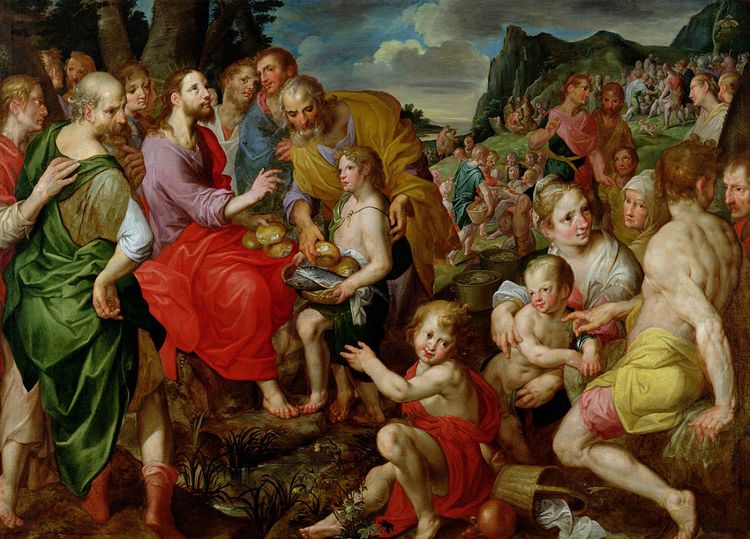
Attributed to Ambrosius Francken the Elder, The Feeding of the 5,000
Sunday
This week my monthly book group will be discussing Chaucer’s Wife of Bath, who does a wonderfully comic—and possibly blasphemous—take on today’s Gospel reading. Alisoun invokes the loaves and fishes story in a defense of her lusty nature.
After Chaucer I turn to Mary Oliver, whose take is more serious and yet, curiously, not altogether different.
Let’s start with the story as it appears in Matthew (14:13-21):
Jesus withdrew in a boat to a deserted place by himself. But when the crowds heard it, they followed him on foot from the towns. When he went ashore, he saw a great crowd; and he had compassion for them and cured their sick. When it was evening, the disciples came to him and said, “This is a deserted place, and the hour is now late; send the crowds away so that they may go into the villages and buy food for themselves.” Jesus said to them, “They need not go away; you give them something to eat.” They replied, “We have nothing here but five loaves and two fish.” And he said, “Bring them here to me.” Then he ordered the crowds to sit down on the grass. Taking the five loaves and the two fish, he looked up to heaven, and blessed and broke the loaves, and gave them to the disciples, and the disciples gave them to the crowds. And all ate and were filled; and they took up what was left over of the broken pieces, twelve baskets full. And those who ate were about five thousand men, besides women and children.
Alisoun, who has had five husbands and is probably looking for a sixth on this pilgrimage to Canterbury, has spent her entire life being judged by men. Given a captive audience, she takes the opportunity to defend her sexual nature. While acknowledging that men prefer the purity of the Virgin Mary to lusty widows, she asks how anyone would be born if all women were virgins. “Are you telling me,” she asks her stunned audience, “that our ‘instruments’ were only made for urinating?”
Then she changes tack, acknowledging that Christ was a virgin (not a normal way of describing him), as were many saints. She points out, however, that the world needs all kinds, both white bread virgins and barley bread wives like herself. This leads to the Biblical reference:
Christ was a maid, and yet shaped like a man, And many a saint, since this old world began, Yet has lived ever in perfect chastity. I bear no malice to virginity; Let such be bread of purest white wheat-seed, And let us wives be called but barley bread; And yet with barley bread (if Mark you scan) Jesus Our Lord refreshed full many a man. In such condition as God places us I’ll persevere, I’m not fastidious. In wifehood I will use my instrument As freely as my Maker has it sent. If I be niggardly, God give me sorrow!
In other words, she is like Christ, refreshing multitudes with her barley bread. Some of the pilgrims are scandalized while others are titillated and fully entertained. I put Chaucer in the latter category as I find Alisoun to be one of the most vibrant characters in all of literature, up there with Falstaff and Tom Jones.
Now to Mary Oliver, who has a compelling explanation for Jesus’s miracle. When we reflect upon the story, we should not worry “about what is reality, or what is plain, or what is mysterious.” If we had been part of that crowd, she says, “the felt ferocity” and “the felt necessity” of Jesus’s love for us would make anything seem possible:
Logos By Mary Oliver
Why worry about the loaves and fishes? If you say the right words, the wine expands. If you say them with love and the felt ferocity of that love and the felt necessity of that love, the fish explode into many. Imagine him, speaking, and don’t worry about what is reality, or what is plain, or what is mysterious. If you were there, it was all those things. If you can imagine it, it is all those things. Eat, drink, be happy. Accept the miracle. Accept, too, each spoken word spoken with love.
Although the extroverted Wife of Bath and the introverted Oliver could not be further apart, each has the same passionate intensity for life. For Oliver, the feeding of the multitude becomes a kind of eucharist, where she experiences Jesus’s love as something sensuous: the eating and drinking are part of accepting Jesus’s vision of love.
This merging between eating and ecstatic communion is more clearly captured in Oliver’s death-and-resurrection poem about a fish she has caught (“The Fish”). After watching it die and then eating it, she writes,
Now the sea is in me: I am the fish, the fish glitters in me; we are risen, tangled together, certain to fall back to the sea. Out of pain, and pain, and more pain we feed this feverish plot, we are nourished by the mystery.
While I know Chaucer is (at least here) a comic satirist while Oliver is more of a mystic, Alisoun’s vision of herself as sacramental barley bread now seems less outlandish. We will learn, from her tale, that she too is looking for love—for a man who will listen to her, respect her, and love her for who she is. She is the Samaritan woman at the well, and if men misinterpret her passionate search—well, that’s on them.
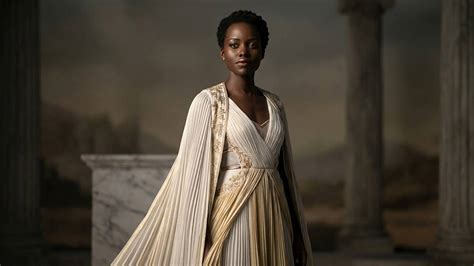
The Atlantic’s Adam Serwer, responding to rightwing attacks on Christopher Nolan for casting Lupita Nyong’o as Helen of Troy, has written an excellent article on “The Fear of Black Greeks” (gifted). The African American journalist asserts that “white people don’t own the accomplishments of ancient Greece” and accuses them of “stolen valor” when they lay claim to them.
While not mentioning how the German Nazis too claimed to be descended from the ancient Greeks, whom they mimicked in their architecture, Serwer finds modern examples of fascist thinking. For instance:
“Our lineage and our legacy hails back to Athens, to Rome, to Philadelphia, to Monticello,” Stephen Miller declared in a speech at the funeral for the assassinated conservative activist Charlie Kirk. “Our ancestors built the cities. They produced the art and architecture. They built the industry.”
And:
[T]he right-wing podcaster Megyn Kelly bellowed for the refugees to “go back to fucking Haiti” and said, “We know our country’s better than yours. That’s because we filled it with our work ethic and our culture and our values. You being here only dilutes it for us, those who built it and live it.”
Observing that Miller was actually descended from “poor persecuted Jews from Eastern Europe, not ancient Roman senators,” Serwer writes,
But of course neither Kelly nor Miller “built this country,” and they have as much to do with, say, the writing of TheOdyssey or the painting of the Sistine Chapel as I do—the fact that Kelly and Miller are white does not make these accomplishments theirs. People who espouse these views do not value the classics for what they can teach us about the ancient world or our own, but as bleached marble monuments to their own superiority.
Serwer’s article exposes the racial agenda that has always lain behind rightwing celebrations of western culture. When (as I reported yesterday) cultural conservatives in the early 1990s declared, “Jane Austen, not Alice Walker,” Walker, as a successful Black woman writer, had special resonance for them. Miller associating with the western heritage to establish his whiteness—and to whitewash his Jewishness—is a classic example of caste at work, as described in Isabel Wilkerson’s Caste: The Origins of Our Discontents. Although claiming a lineage and legacy back to Athens wouldn’t have saved Miller from the death camps in Nazi Germany—nor even convince certain American neo-Nazis today—he thinks he can join the privileged American white caste by demonizing people of color.
Similarly, there are Trump-supporting Latinos, Muslims, southeast Asians, and even some Black Africans—I was told, when dining with Ethiopian-American friends last spring, of a MAGA Ethiopian complaining about shiftless African Americans—who think that bashing other minorities is the way to acceptance and inclusion. Of course, Martin Niemöller’s “First they came” poem comes immediately to mind.
Setting aside America’s caste system, Serwer points out that the ancient Greeks were not in fact white in the way rightwing Americans believe . Greece, he notes,
is not as far from Africa as the North American continent is, and the modern construct of race, a pseudoscientific product of the Atlantic slave trade, would not be invented until thousands of years after Homer. Black people are depicted in Greek art. Egypt, Libya, and “Aethiopia” are frequently referenced in ancient writings. As the Black classics scholar Frank Snowden Jr. wrote in the 1970s, at least one of the characters in TheOdyssey, Eurybates, is specifically described as “black-skinned and woolly-haired.” As the Stanford classics professor Sarah Derbew notes in her book Untangling Blackness in Greek Antiquity, Black people are referenced in plays by Euripides, Sophocles, and Aeschylus. They also appear in the writings of Hesiod and Herodotus. One of the lost epic poems is The Aethiopis, in which Memnon, the Aethiopian king and an ally to Troy, plays a major role.
I particularly like how Serwer himself embraces 5th century Athens. He mentions attending Duke Ellington, the arts high school in Washington, D.C., which caught my attention as my 14-year-old grandson will be attending the school this coming fall. (Alban is a superb violin player and is thrilled he was accepted.) Serwer recalls encountering classic Greek plays
as part of both my theater-history class and my English class. This being a public school in D.C., these classes were almost entirely Black, as were my teachers. My theater-history class was taught by Donal Leace, an actor and folk singer who made a tremendous impression on me. He taught us about the importance of these texts and how they shaped human storytelling, and I owe to him my lifelong appreciation for them. I have seen conservatives accuse liberals of dismissing the classics as the province of “dead white men,” but that was not what I was taught in the 1990s by Black teachers, in a Black school, in what was then a mostly Black city.
Serwer adds:
Shortly after graduating, I went to see Avery Brooks in The Oedipus Plays. I do not remember at the time interpreting his casting as an overt political statement, let alone thinking that anyone would consider these stories as the collective racial property of people born white thousands of years later, rather than as a form of sorcery allowing anyone in the present to speak to the past.
This is how literature, including the literature of the western canon, is supposed to work. People who use the classics to exclude others dishonor the very works they claim to uphold.
My cousin Faith alerted me recently to an article in The Chronicle of Higher Education critiquing a recent study, sponsored by Vanderbilt and Washington University, claiming that humanities instruction has become too political. The critique led me to the study itself, Report on the State of Scholarship in the Humanities and the Humanistic Social Sciences, as well as the specific section dealing with literature departments. As someone who constantly applies literature to politics, I figure this is a good opportunity to elaborate where I stand on the matter.
The literature section, written byKwame Anthony Appiah, essentially argues that literary studies has become too enmeshed in cultural politics and is neglecting aesthetic concerns. Professors, he believes, have become too “instrumentalist” in their approach, seeking to use literature to achieve political ends. At one point he writes,
The “political” part of the story here is that they think that the objectors are not just wrong but wicked: transphobic, say, or racist. Because it is so tempting, especially in an age of extreme political polarization, to think ill of people who disagree with you about matters that are important to you, it is essential to consider objections seriously, even if you disapprove morally of the objectors, and even if you doubt their sincerity.
In his Chronicle critique, Gabriel Hankins points out the irony of Appiah having written a book on W.E.B. Du Bois, who “lived by the dictum “all Art is propaganda and ever must be,” and how he himself has written dozens of books and articles and delivered hundreds of talks on the intersections of culture, race, and identity. It took politics for universities, and then the public more generally, to take African American literature serious, and there are rightwing culture warriors who would dismiss Appiah’s lifework as so much DEI.
Does he think that, by focusing only on aesthetics, he can wall himself off from political attacks. Or perhaps he feels so wounded by young ideologues attacking him from the left that he assumes they constitute English Studies as a whole rather than a small minority.
If so, Hankins says, he hasn’t done his homework and has no idea of the various currents in literature departments. “His report misses,” he writes, “the method wars that roiled literary studies a decade ago and the contestation of the canon as cultural capital 20 years before that; it appears to be unaware of current attempts to reclaim close reading, literary truth, aesthetic autonomy, and humanistic reason.” By focusing on judgmental ideologues—and yes, there are some—Appiah misses the fact (this voiced as a complaint by an activist scholar) that “much work in the humanities is reflexively anti-instrumentalist.” In other words, Hankins writes, “the position that Appiah wants to defend is…simply the status quo in the fields he claims to judge.”
So does literature have political agendas and are English professors out to indoctrinate their students? I take up the first question time and again in my book, including where I examine Du Bois’s declaration that art is propaganda. What I discovered is that even intensely political thinkers want literature to be non-instrumental. Sir Philip Sidney, Percy Shelley, Marx and Engels, contemporary Marxists Fredric Jameson and Terry Eagleton, and, yes, even Du Bois himself (contradicting his propaganda claim) all believed that the artist’s first obligation is to tell the truth, not to advance a political cause. Engels said he learned more about the nature of capitalism from the monarchist Balzac than from social scientists and economists, and Jameson and Engels labeled as “vulgar Marxists” those who applied political labels to works of art. For his part Du Bois wrote,
Thus it is the bounden duty of black America to begin this great work of the creation of Beauty, of the preservation of Beauty, of the realization of Beauty, and we must use in this work all the methods that men have used before. And what have been the tools of the artist in times gone by? First of all, he has used the Truth — not for the sake of truth, not as a scientist seeking truth, but as one upon whom Truth eternally thrusts itself as the highest handmaid of imagination, as the one great vehicle of universal understanding. Again artists have used Goodness — goodness in all its aspects of justice, honor and right — not for sake of an ethical sanction but as the one true method of gaining sympathy and human interest.
Activists and political commentators (as a blog writer, I include myself in the second category) can use literature to better understand the world and so direct their actions. But the literature itself, like a science theorem, must be true if it to be useful. To cite one example, I may disagree violently with the politics of David Mamet but I find his play Glengarry Glen Ross to be brilliant, providing powerful insights into male insecurities and the workings of capitalism. His play is more interested in capturing the reality of the cutthroat real estate business than in advancing an agenda.
Now to professors. In my experience, most of us are indeed anti-instrumentalist and strive to keep our politics out of our teaching. Instead, we hope that our students will come to love literature as much as we do, and we seek to foster the ability to think independently about what they read. This does not, however, mean cordoning off their aesthetics from the historical moment or the author’s life, as scholars chose to do during the days of the New Criticism, leading students like me to conclude that literature had nothing to do with the world. (That’s why I majored in history, switching to English in graduate school.) But if the discipline swung away from a disembodied formalism in the late 1980 with New Historicism, Hankins points out that some scholars have swung back in recent years. Just because corrections and overcorrections occur in disciplinary studies doesn’t mean that professors are creating revolutionary cadres.
And then there are readers, who were dismissed out of hand in the 1950s and 1960s but began to be taken seriously in the 1970s and 1980s. As professors, I believe we must honor our students’ responses to the works, even though they can be all over the map. I have discovered that, by listening closely to a response and then working with the student to articulate it into a full-blown interpretation, more interesting insights arise than anything I could have imposed on them. I teach not to turn out a mini-me but to foster someone to meet the challenges of a far different world than the one I had to negotiate.
To engage our students, we choose works that will open their imaginations, and most of us conclude that no one does this as well as Shakespeare, who appears in more literature syllabi than any other author. We also discover, however, that students respond well to authors who speak directly to their experience. When I was teaching at Morehouse College in Atlanta, no work in my two-semester humanities class elicted a more powerful response than Ralph Ellison’s Invisible Man, whose protagonist himself attends an all-Black college early in the novel. My students understood at a deep level what it is to be invisible.
At St. Mary’s, meanwhile, my first- and second-generation students recognized their experiences in novels like Amy Tan’s Joy Luck Club and Julia Alvarez’s How the Garcia Girls Lost Their Accents (taught in my Minority Lit class) while white students thrilled to the new worlds that they were introduced to. Rightwing attacks on English Departments are sometimes triggered by the fact that, once one encounters minority voices, one grants personhood to members of that demographic. This the right deem to be political since they would prefer people to believe that only white men (and an occasional white woman) are capable of writing great literature. (“Jane Austen, not Alice Walker,” as cultural conservatives used to say in the early 1990s.)
Great authors have been expanding the idea of whom to take seriously for centuries, however. As I write in my book in a discussion that begins with William Wordsworth’s celebration of leech gatherers, farm workers, and vagrants,
Through literature authors have entered the lives of the marginalized (Walt Whitman), the urban poor (Charles Dickens), American slaves (Harriet Beecher Stowe), Dorset dairy maids (Thomas Hardy), French coalminers (Emile Zola), Nebraska pioneers (Willa Cather), Harlem residents (Langston Hughes), African American sharecroppers (Jean Toomer), African American homosexuals (James Baldwin), bankrupted Oklahoma farmers (John Steinbeck), Laguna Pueblo war veterans (Leslie Marmon Silko), transplanted Pakistanis (Hanif Kureishi), West Indian immigrants (Zadie Smith), American lesbians (Alison Bechdel), and on and on. While we can see fiction introducing readers to the poor and the outcast as early as 1554 with a rollicking Spanish novel about a street urchin (Lazarillo de Tormes), and while Daniel Defoe’s early 18th century novels featured shipwrecked sailors, prostitutes, and thieves, the Romantic Imagination elevated lower-class figures to new levels of importance. In the process, it inspired generations of social and political idealists and changed conversations about public policy.
So is it political to teach Dickens or Steinbeck or Baldwin or Silko? One might just as well ask whether it is political to believe in a multicultural democracy. But whatever the implicit political message that comes with the works we professors choose, the idea that we can indoctrinate our students shows a lack of respect for these students. Like the Wife of Bath with her fifth husband, students rebel when they feel that a message is being shoved down their throats. To borrow again from my book, this husband, to transform his rebellious wife into a docile and submissive women,
every evening reads to her Stories of Wicked Wives. After a few nights of this, she leaps to her feet, tears three pages out of the book, and pushes him into the fire. And while, in response, he shifts from soft power to hard power, delivering a blow that renders her deaf in one ear, in the end she reasserts control and tells her own story.
Our students make up their own minds about what they believe. And if Appiah and the other authors of Report on the State of Scholarship in the Humanities and the Humanistic Social Sciences want to know the real reason why humanities enrollments are dropping, I suggest they look at tuition costs, student debt loads, and a tight job market rather than at political professors. One idea we have definitely failed to foist upon our students—and goodness knows, in this instance we have tried—is that a liberal arts degree will help them find gainful employment.
Julia and I watched The Odyssey Monday and I had the most predictable reaction imaginable: “It’s not as good as the book.”
Someone, perhaps novelist and scriptwriter Gore Vidal, once said that you can make a great movie out of a mediocre book but not a great movie out of a great book. It was certainly hard for me to appreciate a film based on a poem I have taught at least twenty times because I made constant comparisons. When I last taught it (in Sewanee’s “Representative Masterpieces” class), I used the Emily Wilson translation that Christopher Nolan reportedly consulted.
Wilson caused a stir with her use of “complicated” in Homer’s opening invocation of Calliope, the muse of epic poetry:
Tell me about a complicated man. Muse, tell me how he wandered and was lost when he had wrecked the holy town of Troy, and where he went, and who he met, the pain he suffered on the sea, and how he worked to save his life and bring his men back home…. Now goddess, child of Zeus, tell the old story for our modern times.
Matt Damon’s Odysseus is certainly complicated, but not in the way that Homer’s is. The original Odysseus does not appear to have qualms about sacking Troy, nor does he feel guilt over what happened to his men. In fact, he experiences a bloodlust when it comes to slaying his enemies: he kills every single suitor and is prepared to kill all those who show up to avenge them. He is stopped only by the intervention of Athena in the guise of Mentor (who, incidentally, is not poisoned, as he is in the movie). Here’s the passage in the Robert Fitzgerald translation:
Odysseus and his son now furiously closed, laying on with broadswords, hand to hand, and pikes: they would have cut the enemy down to the last man, leaving not one survivor, had not Athena raised a shout that stopped all fighters in the tracks.
“Now hold!” she cried, “Break off this bitter skirmish, Ithakans, and make peace.”
The poem then ends happily ever after:
[Odysseus] yielded to her, and his heart was glad. Both parties later swore to terms of peace set by their arbiter, Athena, daughter of Zeus who bears the stormcloud as a shield— though still she kept the form and voice of Mentor
When I taught the poem, I would tell my students that, more than one-eyed cyclopes and immortal island goddesses who turn men into swine, this is Homer’s most fantastical scene. All of us who have seen The Godfather (or read Beowulf or Huckleberry Finn) know how intractable family blood feuds are, how they can continue for generations.
I appreciate how Nolan acknowledges this. In his version, Odysseus must kill the suitors by himself so that Telemachus carries none of the blood guilt. Unlike the poem, where Telemachus fights side by side with his father, his only battle in the film is with Melanthius, the goatherd who is funneling weapons to the suitors.
[Side note: I found it improbable that Odysseus’s son, trained in weaponry, would have such difficulty dispatching someone untrained. In the poem, not-blind swineherd Eumaeus and the cowherd Philoetius have no difficulty subduing Melanthius, tying him up with “cutting cord” so that “his bones ground in their sockets,” and hoisting him “in agony up a pillar to the beams.” Later they will hack off his nose, ears hands, feet and genitals.]
By accepting exile for killing the suitors, Odysseus can end the feud and Telemachus can ascend to the throne with a clean slate. In ending his film this way, Nolan merges Homer’s Odysseus with Tennyson’s Ulysses in his famous poem by that name. Skipping Ulysses’s complaint about having an aging wife and a bureaucratic, non-adventurous son, Nolan turns to the following lines:
Yet all experience is an arch wherethro’ Gleams that untravell’d world whose margin fades For ever and forever when I move. … Little remains: but every hour is saved From that eternal silence, something more, A bringer of new things; and vile it were For some three suns to store and hoard myself, And this gray spirit yearning in desire To follow knowledge like a sinking star, Beyond the utmost bound of human thought.
Nolan’s Odysseus doesn’t go into exile alone, however, but is accompanied by Penelope in what feels like a second honeymoon. Together they will sail “beyond the sunset, and the baths/ Of all the western stars, until [we] die.” Perhaps they’ll “touch the Happy Isles and see the great Achilles.”
But back to Homer’s Odysseus being a complicated man. His psychological states are conveyed through his interactions with the gods, as though forces greater than his own individual mind are driving him. The poem begins with a conclave on Mount Olympus in which Athena complains about Odysseus being stuck on Kalypso’s island and Zeus agreeing that Poseidon must allow Odysseus to return home. Put in terms of a dialogue inside Odysseus’s head, the call of duty is finally (after seven years!) triumphing over his fear of setting out on another sea voyage. It’s not an easy decision given that he must, in so doing, abandon the comfort of living with an immortal island goddess.
In the film, Nolan strips away this internal struggle. Combining an earlier adventure–Odysseus’s encounter with the Lotus Eaters–with the Kalypso episode, he has her using the drug’s memory-erasing qualities to treat his PTSD over having lost his crew. (Rather cleverly, Nolan has Odysseus gradually recall what has happened to him, thereby providing us with his backstory. There’s no reason now to include his journey to the Phaeacians, the islanders in Homer’s version to whom Odysseus tells his story.)
It’s not the first time in Homer’s poem that Odysseus has grappled with the decision whether to stay or whether to go. He remains with Circe and her “flawless bed of love” for a full year. (Only a day in Nolan’s version.) Indeed, I read the entire Hades visit, which occurs during his time with Circe, as Odysseus questioning whether he really wants to confront the rigors of the sea again. In addition to the men eaten by the cyclops, he has lost his other ships, along with their crews.
In Hades he encounters some compelling reasons to stay, beginning with Agamemnon telling him about his own fate upon returning home. “Indulge a woman never,” the king tells him, “and never tell her all you know.” Could Penelope be plotting something similar? Meanwhile, through Achilles Odysseus questions the concept of glory itself. When he observes that the warrior has been ranked with the immortals, Achilles responds,
Better, I say, to break sod as a farm hand for some poor country man, on iron rations, than lord it over all the exhausted dead.
Perhaps, then, the best option is to stay forever in obscurity on Circe’s island rather than die while seeking fame.
Achilles changes his tune when Odysseus tells him about his son, however. After hearing of Neoptólemos’s deeds in battle, Achilles goes off “striding the field of Asphodel, . . . glorying in what I told him of his son.” Maybe this is what convinces Odysseus to set off for home. He too has a son, so perhaps he realizes there is a kind of immortality in family and generation.
In other words, what gives life meaning is not only living. “As tho’ to breathe were life,” as Tennyson’s Ulysses puts it after having described the Ithakans as a savage race “that hoard, and sleep, and feed, and know not me.” This is another version of Circe turning men into swine, a point that Nolan’s Circe explicitly mentions, and one can see why Zeus/sense of duty would object.
All of which is to say that the gods function as a meaning system, with Odysseus’s interactions with them revealing his complicated nature. He’s just a different kind of complicated than Nolan’s Odysseus.
It’s not that I object to Nolan’s point. Although the movie was completed before Trump invaded Iran, America has a lot to be ashamed of when it comes to forever wars. Nolan’s Odysseus tells Penelope ahead of time that this will be an endless—or at least a very long—war, and he goes reluctantly. Then, in scenes which Nolan might have borrowed from Virgil’s Aeneid, he feels complicit in the atrocities visited upon the Trojans. Seeing the horrors of war through their eyes, it is as though he is seeing Gaza as experienced by the Palestinians or Iraq as experienced by the Iraqis.
When the Greek invaders kill a Trojan priestess in a temple dedicated to Athena, Nolan’s Odysseus internalizes the young woman. She becomes his Athena within, his conscience, and as such becomes his moral center. It’s a bit confusing, however, because it’s not clear that he lacked such a center before. At any rate, it’s Nolan’s way of acknowledging that divinity is part of our internal make-up.
This Athena is a far cry from Homer’s Athena, however. It’s true, as I’ve noted, that the ancient Greek goddess brings about peace at story’s end, just as she placates the vengeful furies at the end of Aeschylus’s Agamemnon trilogy. But when Odysseus is killing the suitors, she’s in the thick of it:
At this moment that unmanning thunder cloud, the aegis, Athena’s shield, took form aloft in the great hall. And the suitors mad with fear at her great sign stampeded like stung cattle by a river when the dread shimmering gadfly strikes in summer, in the flowering season, in the long-drawn days. After them the attackers wheeled, as terrible as falcons from eyries in the mountains veering over and diving down with talons wide unsheathed on flights of birds, who cower down the sky in chutes and bursts along the valley— but the pouncing falcons grip their prey, no frantic wing avails…
Don’t show this passage to Defense Secretary Pete Hegseth, since it captures his fever dream.
Homer, however, doesn’t let his bloodthirsty hero off the hook. Simone Weil, the French philosopher and mystic, interprets The Iliad as an anti-war book because it exposes how force turns victimizer no less than victimized into a thing, and the same could be said of The Odyssey. Even more horrifying than the treatment of Melanthius could be Telemachus hanging the serving women who have slept with the suitors (and not necessarily because they wanted to, as Margaret Atwood points out in The Penelopiad). The horror lies in the tiny details:
“I would not give the clean death of a beast to trulls who made a mockery of my mother and of me too—you sluts, who lay with suitors.”
He tied one end of a hawser to a pillar and passed the other about the roundhouse top, taking the slack up, so that no one’s toes could touch the ground. They would be hung like doves or larks in springès triggered in a thicket, where the birds think to rest—a cruel nesting. So now in turn each woman thrust her head into a noose and swung, yanked high in air, to perish there more piteously. Their feet danced for a little, but not long.
I’ve heard some of my elderly friends complaining about Nolan’s violence—the cyclops cannibalism scene echoes Goya’s horrific painting of Saturn eating his son—but imagine if the director had put bloodthirsty Odysseus and Telemachus into his film. When I say I prefer the book to the movie, it’s not that I like these passages but that they show me how complicated humans can be. Damon’s Odysseus and Tom Holland’s Telemachus, by contrast, seem shallow and sentimental.