Friday – A Life Lived in Literature, 40th Installment
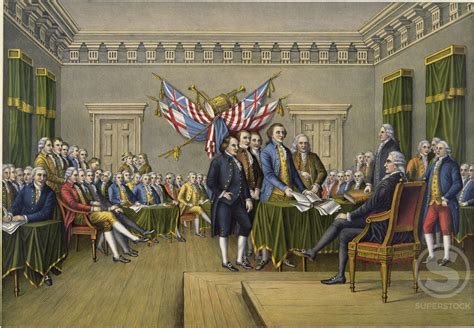
Tomorrow we celebrate the 250th anniversary of an Enlightenment manifesto that galvanized the world when it came out, including many people that the signers didn’t want to be galvanized (i.e., women, slaves, the wretched refuse of various teeming shores). “The Declaration of Independence” is testimony to the power of rhetoric to shape history, and while it took almost a century and the bloodiest war of the 19th century to include slaves in the ranks of “all men”; another century for them to be guaranteed voting rights in the south; and a century and a half before women could vote, the document spoke to the world’s dreamers. Dreaming has always been one of America’s defining characteristics.
Who knew that this anniversary would feel more like a “celebration of a life” such as one encounters at memorial services? Because the multicultural democratic ideal is not altogether dead, however, perhaps we should see the occasion rather as a renewal of marriage vows. Now that see clearly the threats to the American experiment, we can recommit to defending it with renewed energy.
That’s what another American called for us to do 163 years ago. Then, too, people were wondering whether a nation “dedicated to the the proposition that all men are created equal” could “long endure.” This July 4th we can resolve that “this nation, under God, shall have a new birth of freedom—and that government of the people, by the people, for the people, shall not perish from the earth.” Not if we have any say in the matter.
In today’s memoir installment, I look at the role that literature played in shaping my identity as an American. As I think back on it, many of the novels and poems I read provided me with an on-going civics lesson.
Some of those works, interestingly enough, deified Abraham Lincoln. This may seem curious in the segregated south, but thanks to Thomas Dixon’s The Clansman (1905) and the 1915 movie based on it (Birth of a Nation), the former Confederate states reappropriated Lincoln for their own purposes. For them, Lincoln was someone who wanted to keep the nation together, not someone who wanted all men to be treated equally. Ignoring the “Emancipation Proclamation,” they contended that if he had not been assassinated, he would have prevented radical Republicans would imposing tyrannical laws on the South, thereby rendering unnecessary the rise of the freedom-loving KKK.
I remember being given a choice, in seventh grade, of memorizing either Walt Whitman’s “Oh, Captain, My Captain” or Rosemary Benét’s poem about Lincoln’s mother. The latter uses a technique common in hagiography where the audience has access to special knowledge unavailable to the speaker. The poem also helped enshrine the populist myth of “log cabin to White House” :
Nancy Hanks
by Rosemary Benét
If Nancy Hanks
Came back as a ghost,
Seeking news
Of what she loved most,
She’d ask first
“Where’s my son?
What’s happened to Abe?
What’s he done?”
“Poor little Abe,
Left all alone
Except for Tom,
Who’s a rolling stone;
He was only nine
The year I died.
I remember still
How hard he cried.”
“Scraping along
In a little shack,
With hardly a shirt
To cover his back,
And a prairie wind
To blow him down,
Or pinching times
If he went to town.”
“You wouldn’t know
About my son?
Did he grow tall?
Did he have fun?
Did he learn to read?
Did he get to town?
Do you know his name?
Did he get on?”
As school children, we were also familiar with Longfellow’s “Paul Revere’s Ride” and Ralph Waldo Emerson’s “The Concord Hymn.” For me there was also Lucy Fitch Perkins’s The American Twins of the Revolution—one of her popular twins series—in which we could see children our age acting heroically. Sally and Roger Priestly must keep secret the fact that their father is conveying money to George Washington and then help their mother smuggle the gold out of their house. The book has such passages as the following:
There was every reason for the fears which shook Mrs. Priestly and the children. They had a large sum of money concealed on their persons, money upon which the whole success of their country’s cause might depend. It was suspected by the enemy that the gold was in her possession, concealed in the bag of buckwheat. Already the house had been visited by a spy, who had seen the bag of buckwheat deposited in the storeroom. She had been quick-witted enough to thwart the attempt to enter the house and steal it in the night, and she had cleverly convinced the guard, with Sailor’s help, that she was leaving the house “taking nothing with her.” Yet she had in fact defied the British Commander-in-Chief and disobeyed his orders. If, upon searching the house, they should discover that the money was gone, and that she had eluded them, they would probably pursue her, and if overtaken she could expect no mercy for herself or her children.
Perkins doesn’t see any disconnect between the family’s revolutionary sympathies and the fact that they own slaves, so I can see how the novel was also socializing us into accepting racial hierarchies. (Going through my bookshelves, I see that Perkins also wrote “The Pickaninny Twins,” although I remember nothing about that one.) In other words, I can now see how our patriotism was racially inflected.
Along with the novels and poems, there were also the history books, which helped inculcate in us the American frontier myth. I belonged to the Landmark Book Club, which every month sent me a hardback history book, often about American “heroes” such as George Washington, Daniel Boone, Davy Crockett, and (believe it or not) George Custer. Heroic pioneers were also celebrated in the Laura Ingalls Wilder Little House books.
And then there were the songs we sang, including “America the Beautiful,” “God Bless America,” “My Country, ’Tis of Thee,” and “The Star Spangled Banner.” A civil religion such as that advocated by Jean Jacques Rousseau and promoted by the French Revolution was a fact of life when I was growing up, only it was intertwined with Christianity. To be a good American citizen and to be a Christian were seen as one and the same thing.
The turmoil of the Sixties can in some ways be seen as originating in a sense of betrayal. Racist violence and the Vietnam War were at odds with the idealized image of America we had been raised on. Like many teens and twenty-year-olds, I had a tough time with hypocrisy. I remembered enjoying a scribble I encountered on a bathroom wall:
I’m glad I am an American
Because that means I’m free—
Free to wish I were a dog
And Nixon were a tree.
My sense of betrayal led me to engage in protest marches, get arrested while blockading the Minneapolis induction center, explore Marxism, and a few years later travel to Yugoslavia to see whether “market socialism” was a viable alternative to American capitalism. The idealism of John F. Kennedy—“Ask now what your country can do for you, ask what you can do for your country”—appeared to have been forever sullied.
While there were many things I admired in Yugoslavia, especially the respect accorded to the working class, I could also see the flaws. That year actually caused me to fall in love with America again. I realized that all countries that their dark and the light sides. To the conservatives who preached “My country, right or wrong,” the anti-war protesters had countered, “and when wrong, make it right,” and that I came to see as my continuing responsibility as an American.
We live in a country in which our foundational document, based on Enlightenment ideals, was chiefly penned by a slaveholder. Our rebellion against authoritarian rule was conducted in part by people prepared to exterminate native populations. American history, like most national histories, is riddled with contradictions.
This notion was unbearable to me when I was young. With age one learns that nations, like people, are complicated.
Past Installments of A Life Lived in Literature
A Life Lived in Literature: How It All Began (Sept. 5, 2025)
Early Reading Memories (Sept. 12, 2025)
Childhood Confusion: Reading to the Rescue (Sept. 19, 2025)
Confronting Segregation (Sept. 26, 2025)
School Reading vs. Real Reading (Oct. 10, 2025)
Childhood in Paris (Oct. 17, 2025)
My Time at Sewanee Military Academy (Oct. 24, 2025)
Existentialism for High School Seniors (Oct. 31, 2025)
Why I Majored in History, Not English (Nov. 7, 2025)
My College Search for Authenticity (Nov. 14, 2025)
On D. H. Lawrence and a Sexual Awakening (Nov. 21, 2025)
My Life as a Bildungsroman (Nov. 28, 2025)
Grad School: Literary Baptism by Fire (Dec. 5, 2025)
Early Scenes from a Marriage (Dec. 12, 2025)
Bringing Up Baby in Grad School (Dec. 19, 2025)
Grappling with Racism (Jan. 2, 2026)
Journal of a Young Teacher (Jan. 16, 2026)
Teaching and Reading in Yugoslavia (Jan. 23, 2026)
Life at 40: Barely Controlled Chaos (Jan 30, 2026)
From Secular Humanist to Christian Believer (Feb. 6 2025)
Looking Back at a Lifetime Together (Feb. 13, 2026)
To Ljubljana with Love (Feb. 20, 2026)
Forging a Separate Identity from My Father (Feb. 27, 2026)
“Better Living” Emerged from a Midnight Epiphany (March 6, 2026)
The Golden Years before Tragedy Struck (March 13, 2026)
Using Lit to Grapple with a Death (March 20, 2026)
Lit in the Year following Justin’s Death (March 27, 2026)
My Eldest Son, Named after a Keats Sonnet (April 3, 2026)
Sterne’s Uncle Toby and My Own Toby (April 10, 2026)
After the 2nd Death, a Book Project (April 17, 2026)
Making Lit Meaningful for Students (April 24, 2026)
Horizons Broadened (May 1, 2026)
Obama’s Election and a Blog Launched (May 8, 2026)
Expanding Outward at 60 (May 15, 2026)
On Losing My Father (May 22, 2026)
Cavorting through Literature’s Wonderland (May 29, 2026)
An Academic Life Sidetracked? (June 5, 2026)
Sports as a Spur to the Imagination (June 12, 2026)
Entering Retirement (June 26, 2026)
My Early Literary Civics Lessons (July 3, 2026)