Friday – A Life Lived in Literature, 41st Installment
Today I look back at the friendships in my life that have revolved around reading. While most of you will not know the specific individuals I name, you undoubtedly have versions of them in your own lives.
As Jane Austen illustrates in Northanger Abbey, sometimes reading provides powerful ways to bond, and that has been true throughout my life. In third grade my best friend Chris Mayfield introduced me to The Silver Chair, and I recall standing with our arms outstretched and asking Aslan to whisk us off to Narnia, as Eustace and Jill do in the book. A little bit later, the Hardy Boys connected me with Tommy Camp, who had over 30 of them, bought with money from selling vegetables from his family’s garden. Although formulaic and badly written, they allowed us to imagine having adventures as friends (or, to use the author’s word, “chums”). The House on the Cliff was my favorite.
Despite the role that books played in my friendships, however, reading also pulled me away from people, ushering me into what my dissertation advisor Paul Hunter termed, “the loneliness of the long distance reader.” I read while others played Little League, went swimming and caving, and engaged in various group enterprises. What bonding occurred was with my father, who read to us every night. Reading also gave me and my two brothers (later three) a collective identity that set us apart. Being a “Bates boy” meant, above all else, immersion in books.
My best friend in high school was Victor Roggli, just retired from the Duke Medical Faculty, who beat me out for valedictorian and with whom I teamed up for senior literature projects. Teacher Will Solie wanted us to find novel ways to explore the books he assigned, so for Fyodor Dostoevsky’s Crime and Punishment I set up as a Freudian analyst while Victor, as Raskolnikov, processed the reasons why he murdered the old pawnbroker. (I recall explaining the workings of the id and superego to him as he lay on a couch moaning about his bloody sock.) For Herman Hesse’s Siddhartha, Victor played the Buddha while I was a pilgrim searching for the path to enlightenment. Solie also had us compile our own reading lists, and Victor inspired me by reading Tolstoy’s War and Peace over spring break.
I majored in history rather than English at Carleton College and so didn’t engage in the English students’ intense group study sessions as they prepared for comprehensives. Although I did meet Julia through her poetry group, it wasn’t until graduate school that literature became again for me a collective endeavor.
Emory’s graduate teaching assistants had a lounge in which we shared teaching ideas and studied together for the Master’s exam. We had a white board on which we played such literary games as “which author and which character in literature would you most like to have as a partner.” (I believe I chose Aphra Behn and Dorothea Brooke.) Once we compiled a list of “graduate student qualifiers,” which was a rhetorical move that we likened to a wolf rolling over and defusing the aggression of a rival by showing the white of its belly. Fearing that we would trigger aggression in our graduate school professors if we too definitively asserted a claim, our qualifiers included “one could argue” or “it is not beyond the realm of possibility to speculate.”
My closest friend in those years was Norman Finkelstein (the poet, not the pro-Palestinian activist), who was the star of the department. We were both interested in how literature could change the world and read together various Marxist thinkers, especially members of the Frankfurt School, to arrive at theories as to how this could happen. The dense prose of authors such as Herbert Marcuse, Antonio Gramsci, Ernst Bloch, Walter Benjamin, Georg Lukacs, and Lyndon LaRouche proved challenging, but because we saw ourselves on a mission, we plunged in, working through the ideas. Although our intellectual interests would later diverge—I went in a more utilitarian direction while Norm became interested in Jewish mystical traditions–our years together created a permanent bond.
For a while, St. Mary’s College of Maryland felt like a continuation of graduate school. I was part of an unusually large group of new faculty, and we were excited by the idea of teaching at a public liberal arts college, with its vision of making a liberal arts education accessible to first generation college students. My best friend in those early years was Hans Lofgren, our literary theory and 19th American Literature specialist, and together we plunged into the work of Frederic Jameson and Terry Eagleton, two of the leading literary Marxists theorists of the day. We set up weekly study sessions—no mean feat as our teaching duties were heavy—and Hans helped me bring rigor to my thinking. Hans was invaluable in helping me write my first major academic article.
My heart was broken when Hans was denied tenure—he wasn’t yet the well-published scholar he would later become at the University of Gothenberg in his native Sweden—and I never fully recovered my initial idealism about St. Mary’s.
Alan and Jackie Paskow were also hugely influential colleagues, Alan in philosophy and Jackie in German and French. Alan was interested in the phenomenology of art, which is to say, the impact that art (in his case, literature and painting) has on how we perceive and interact with the world. How is it, he asks in his book The Paradoxes of Art, that fictional characters such as Hamlet and Anna Karenina matter to us and emotionally affect us. I too was exploring these questions, albeit from the perspective of reading outcomes.
We talked of these matters when Alan was dying of cancer at 70. I remember watching sunsets with him on his dock and sharing with him Sir Gawain and the Green Knight. If the poem has particularly vivid images of nature’s cycle of life and death, it is because the protagonist knows he only has a year to live, and Alan talked about the experience of seeing each season for the last time.
At Alan’s request, about 15 or so of his fellow faculty gathered for monthly salons (as we called them) to talk about art, the meaning of life, and other existential matters. Alan was reading Proust’s In Search of Lost Time as his final reading project, and he shared his thoughts. We were aware at the time how extraordinary these gatherings were. Like Socrates, Alan turned his death into a teaching opportunity.
Alan’s wife Jackie, meanwhile, was one of several female colleagues—Andrea Hammer was another–who introduced me to feminist literary theory, and we read Judith Fetterley’s The Resisting Reader and Sandra Gilbert and Susan Gubar’s Madwoman in the Attic. From Jackie and Andrea I learned that works that I thought I knew can appear different to women readers.
Andrea also introduced our department to “process writing,” which moved us out of the old rhetorical approaches to writing (where one started with forms, say, a comparison-contrast essay) and instead focuses on the steps, often non-linear, that produce writing. Between new ways of seeing literature and new ways of teaching, these were heady times.
Other faculty friendships opened up later. One was with my favorite tennis partner, Bjorn Krondorfer in the Religious Studies department, who introduced me to Bibliodrama. I learned that participants interacting as different characters or sometimes even objects can open up new Biblical interpretations. Twice Bjorn and I tried out the method on literature, once with Hilda Doolittle’s “There is a spell in every seashell,” once with Andre Dubus’s novella Adultery. We shared the results in an English Education article.
Another close friend was David Finkelman, who taught the “Abnormal Psychology” classes for the psych department. The way that David lived for his students was inspiring, and twice we team-taught a course we called “Madness in Literature.” Every week we featured a work dealing with a different disorder (I Never Promised You a Rose Garden for schizophrenia, Syliva Plath’s Ariel for bipolarity, Lolita for pedophilia, Leslie Marmon Silko’s Ceremony for PTSD), and I was impressed with the succinct way that David summed up the major features of each condition. We learned that, for all its scientific aspirations, psychology benefits from humanistic approaches as well.
David would later marry one of Julia’s and my closest friends, head of the Education Department Lois Stover. As an expert in Young Adult Literature, Lois opened my eyes to the importance of young adult novels in helping teenagers sort through their pressing concerns. And not only teenagers: Lois gave me Katherine Paterson’s Bridge to Terabithia after Justin died, which comforted me.
If these friends had all remained in the St. Mary’s area, we would probably have retired there, but most of us scattered. Lovely though St. Mary’s City is, there is no there there (as Gertrude Stein would say)—just an archaeological dig, the college, two churches, and various housing developments—prompting us to move to Mayberry-like Sewanee, Tennessee. Sewanee is what AARP calls a NORC or Naturally Occurring Retirement Community, and we have been making new friends while here.
One important literary friendship has been with John Gatta, who occupied the office next to mine when I was teaching introductory courses for Sewanee. An expert in early American literature, including the Puritans and environmentally conscious authors such as Henry David Thoreau, John is interested in ecocriticism and ecotheology, and we have supported each other’s books.
We also set up a faculty discussion group that has been meeting weekly. First set in motion by our desire to understand better Dante’s Divine Comedy—we found another retired faculty member who could lead us in our exploration—we had so much fun that we decided to branch out. Other English faculty and retired faculty joined our group, and so far we have discussed (in addition to Dante) The Iliad, The Odyssey, The Aeneid, Hamlet, King Lear, Midsummer Night’s Dream, Twelfth Night, Measure for Measure, The Tempest, Paradise Lost, Absolom and Architophel, Rape of the Lock, various Wordsworth and Coleridge poems, Walden, Jane Eyre, The Scarlet Letter, Moby Dick, Middlemarch, The Glass Menagerie, and other works that I’m blanking on at the moment.
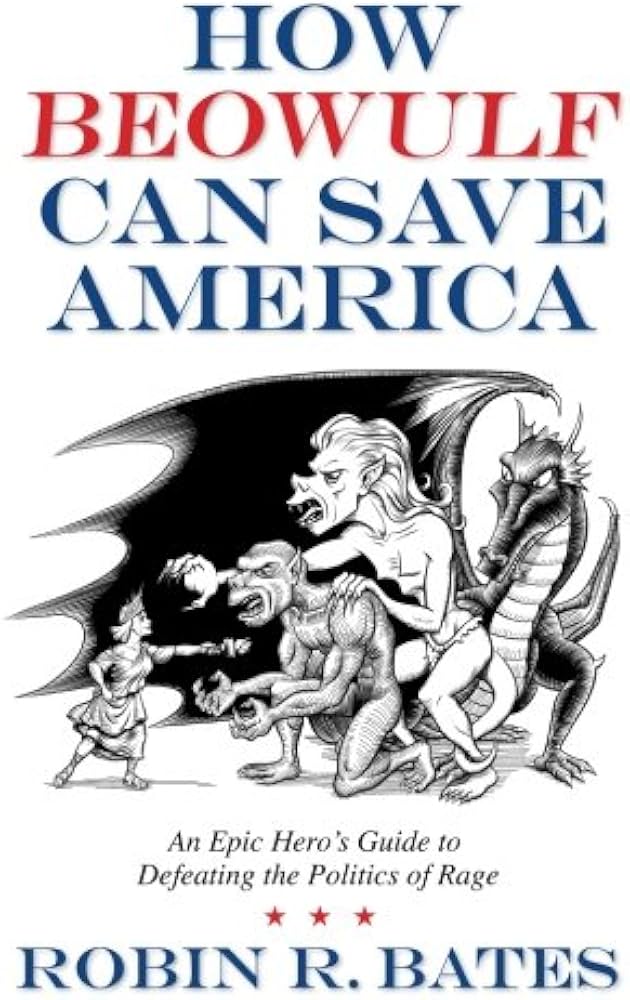
One important friend I haven’t yet mentioned, although Julia and I met her in college, was fellow history major Rachel Kranz. Blessed (and, in her eyes, sometimes cursed) by a genius level IQ, Rachel would go on to work for Minnesota Public Radio, aid in the unionization of Columbia University’s work force, and become a superb ghost writer, while also writing a novel and directing Off-Off Broadway plays, some of them her own. Rachel was my news editor on the Carletonian, and we also studied together the challenging works of Marxist political theory assigned us by Carl Weiner. A brilliant editor, Rachel helped me flesh out key ideas in my dissertation and then to shape my first major film article. Later, Rachel gave me invaluable feedback on my book How Beowulf Can Save America.
Although we became estranged for a short while, I remember traveling to New York to renew our friendship and reading a draft of her novel Leaps of Faith on the subway. I was so enthralled that I almost missed my stop, and I provided reader reactions to both this novel (published by Farrar Straus) and the next (The Long Waves). The latter unfortunately never saw the light of day as Rachel died of ovarian cancer.
Over the years, I spent hours and hours on the phone as Rachel used me to process the things going on in her life. Like me, Rachel saw novels and drama as essential to the health of our society (Bertolt Brecht was her favorite author), and we talked constantly about their social import. We didn’t always agree—for instance, she was more critical of Jane Austen’s use of the marriage plot than I was—but always I knew that she would uncover depths upon depths.
Years ago, when I saw Barbara Streisand in the movie The Way We Were, I thought of Rachel. Their intelligence, political commitment, and passion are similar, and Rachel had the same impact on writers and actors that the Streisand character has on screenwriter played by Robert Redford.
Rachel’s death hit me like a hammer blow. I was with her in a Bronx hospital the week before she died—in fact, I picked up a serious infection in the hospital, which led to pericarditis and myocarditis—and saw her, even at this late stage, trying to generate an idea for a book series. She was such a force that no one could believe it when she finally passed on.
In The Long Waves, which was 90% completed, there’s a psychic (Rachel had some psychic abilities) who carries the weight of America’s past colonial sins on his shoulders. Warren is heir to a wealthy Connecticut family who traces his strange aversion to sugar—it makes him violently ill—to his family’s Jamaican sugar plantations. Like Warren, Rachel felt acutely the weight of the world’s past injustices, and one reason why she had difficulty finishing her novel is because she could never reconcile herself with her inability to do more. Her “big baggy monster” of a novel (as Henry James would describe it) insisted on exploring every crime of humanity it came across.
At her memorial service, I read the final paragraph of the novel, which dazzles me the way the end of Great Gatsby dazzles. Warren is suddenly overwhelmed by a vision of the whole as all the themes of the novel come together:
And it comes so suddenly, it’s like the crack of a whip, that surge of energy that almost knocks me down. The machines that made their dresses, and the men who made the machines. The trees cut down to make the drums, and the axe that swung against each tree. The blood that flows like money, the money that dazzles like light. You’ll never be free of it, he says, and I say, I know. And piece by piece the world comes to life around me—It burns, it burns, this living world—useless, amputated, angry, bereft, joyous, pulsing, here—
All of Rachel’s righteous anger and all of her delight in life are bound up in those words.
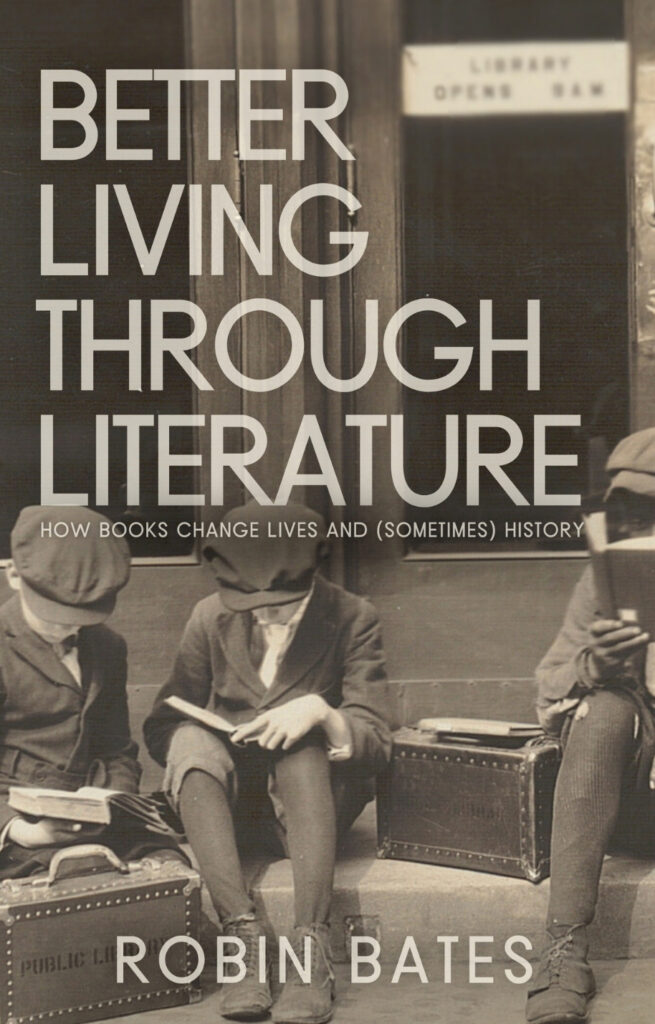
I conclude with a friend who was instrumental in the book I published two years ago, just as Rachel was a key aid in previous publications. I met Rebecca Adams thanks to a friend I met through this blog, and at a time when I lost my way on my book, she saw its promise and offered to help. It’s hard to imagine the book having been completed without her. In addition, Rebecca guides a group of us in a weekly lectio divina session, where we discuss Biblical passages and explore various life issues.
Tennyson’s Ulysses at one point says, “I am part of all that I have met.” The converse is true with me: all that I have met are part of me. Each of these friendships has opened up incomparable richness. Or as Ulysses puts it,
Yet all experience is an arch wherethro’
Gleams that untravell’d world whose margin fades
For ever and forever when I move.Past Installments of A Life Lived in Literature
A Life Lived in Literature: How It All Began (Sept. 5, 2025)
Early Reading Memories (Sept. 12, 2025)
Childhood Confusion: Reading to the Rescue (Sept. 19, 2025)
Confronting Segregation (Sept. 26, 2025)
School Reading vs. Real Reading (Oct. 10, 2025)
Childhood in Paris (Oct. 17, 2025)
My Time at Sewanee Military Academy (Oct. 24, 2025)
Existentialism for High School Seniors (Oct. 31, 2025)
Why I Majored in History, Not English (Nov. 7, 2025)
My College Search for Authenticity (Nov. 14, 2025)
On D. H. Lawrence and a Sexual Awakening (Nov. 21, 2025)
My Life as a Bildungsroman (Nov. 28, 2025)
Grad School: Literary Baptism by Fire (Dec. 5, 2025)
Early Scenes from a Marriage (Dec. 12, 2025)
Bringing Up Baby in Grad School (Dec. 19, 2025)
Grappling with Racism (Jan. 2, 2026)
Journal of a Young Teacher (Jan. 16, 2026)
Teaching and Reading in Yugoslavia (Jan. 23, 2026)
Life at 40: Barely Controlled Chaos (Jan 30, 2026)
From Secular Humanist to Christian Believer (Feb. 6 2025)
Looking Back at a Lifetime Together (Feb. 13, 2026)
To Ljubljana with Love (Feb. 20, 2026)
Forging a Separate Identity from My Father (Feb. 27, 2026)
“Better Living” Emerged from a Midnight Epiphany (March 6, 2026)
The Golden Years before Tragedy Struck (March 13, 2026)
Using Lit to Grapple with a Death (March 20, 2026)
Lit in the Year following Justin’s Death (March 27, 2026)
My Eldest Son, Named after a Keats Sonnet (April 3, 2026)
Sterne’s Uncle Toby and My Own Toby (April 10, 2026)
After the 2nd Death, a Book Project (April 17, 2026)
Making Lit Meaningful for Students (April 24, 2026)
Horizons Broadened (May 1, 2026)
Obama’s Election and a Blog Launched (May 8, 2026)
Expanding Outward at 60 (May 15, 2026)
On Losing My Father (May 22, 2026)
Cavorting through Literature’s Wonderland (May 29, 2026)
An Academic Life Sidetracked? (June 5, 2026)
Sports as a Spur to the Imagination (June 12, 2026)
Entering Retirement (June 26, 2026)
My Early Literary Civics Lessons (July 3, 2026)