Catch-22 and DJT’s Iran “Excursion”

Monday

So let me see if I’ve got this right: Donald Trump, only belatedly realizing that his war of choice against Iran would send oil prices skyrocketing in an election year, has decided to allow Iran to sell oil sitting in tankers to bring prices down. He is also lifting the oil sanctions placed on Russia because of its Ukraine invasion, even as Russia helps Iran locate and fire at American targets. We are, in short, in a Milo Minderbinder moment.

Minderbinder is the amoral capitalist in Catch-22 who will make deals with any side that will pay him money, including Germany. When Yossarian protests, “Can’t you understand that we’re fighting a war? People are dying,” Minderbinder shakes his head “with weary forbearance”:

 “[T]he Germans are not our enemies,” he declared. “Oh I know what you’re going to say. Sure, we’re at war with them. But the Germans are also members in good standing of the syndicate, and it’s my job to protect their rights as shareholders. Maybe they did start the war, and maybe they are killing millions of people, but they pay their bills a lot more promptly than some allies of ours I could name. 

At one point, Minderbinder’s own version of Trump simultaneously attacking Iran while allowing it to sell its oil involves contracting with the Americans to bomb a German bridge and contracting with the Germans to defend the same bridge:

Milo’s planes were a familiar sight. They had freedom of passage everywhere, and one day Milo contracted with the American military authorities to bomb the German-held highway bridge at Orvieto and with the German military authorities to defend the highway bridge at Orvieto with antiaircraft fire against his own attack. His fee for attacking the bridge for America was the total cost of the operation plus six per cent and his fee from Germany for defending the bridge was the same cost-plus-six agreement augmented by a merit bonus of a thousand dollars for every American plane he shot down.  

In this instance, Minderbinder doesn’t have to do anything given that

there seemed to be no point in using the resources of the syndicate to bomb and defend the bridge, inasmuch as both governments had ample men and material right there to do so and were perfectly happy to contribute them, and in the end Milo realized a fantastic profit from both halves of his project for doing nothing more than signing his name twice.

Minderbinder’s profit-making isn’t always so harmless, however, as when the Germans pay him to bomb his American comrades:

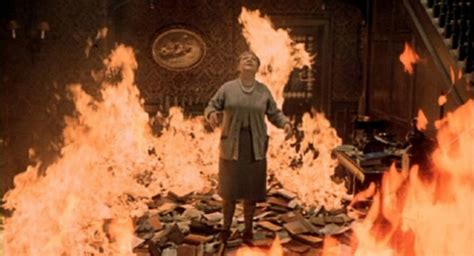
[O]ne night, after a sumptuous evening meal, all Milo’s fighters and bombers took off, joined in formation directly overhead and began dropping bombs on the group. He had landed another contract with the Germans, this time to bomb his own outfit. Milo’s planes separated in a well coordinated attack and bombed the fuel stocks and the ordnance dump, the repair hangars and the B-25 bombers resting on the lollipop-shaped hardstands at the field. His crews spared the landing strip and the mess halls so that they could land safely when their work was done and enjoy a hot snack before retiring. They bombed with their landing lights on, since no one was shooting back. They bombed all four squadrons, the officers’ club and the Group Headquarters building. Men bolted from their tents in sheer terror and did not know in which direction to turn. Wounded soon lay screaming everywhere. A cluster of fragmentation bombs exploded in the yard of the officers’ club and punched jagged holes in the side of the wooden building and in the bellies and backs of a row of lieutenants and captains standing at the bar. They doubled over in agony and dropped. The rest of the officers fled toward the two exits in panic and jammed up the doorways like a dense, howling dam of human flesh as they shrank from going farther.

I don’t know how many of the American casualties (now well over 200) can be chalked up to information passed from the Russians to the Iranians, but I can imagine Minderbinder giving a response similar to the one Trump gave to Fox reporter Peter Doocy when asked about the matter: “I have a lot of respect for you; you’ve always been very nice to me. What a stupid question that is to be asking at this time.”

Of course, even as Trump plunges the world into the worst oil crisis since 1973, he is attacking renewable energy sources such as wind and solar. While this is proving a boon to Big Oil, the beneficiaries are not Americans but the companies since oil prices are determined globally. Oh, and Trump of course gets a cut.

The Trump family is finding other ways to profit from the war as well. Don Jr. and Eric, for instance, have been investing heavily in the drones that the U.S. military may start using in Iran. As Associated Press reports

Among dozens of companies competing for Pentagon contracts to supply attack drones, one stands out. Powerus is flush with cash and ballooning in size as it buys up rivals and has one other advantage: It is partly owned by President Donald Trump’s two oldest sons.

There is also evidence that, on the world betting markets, insider information on when and where Trump will strike has netted bettors large sums. The Independent reports

Now there are suspicions that other insiders used the Iran strikes to get rich. Six accounts on Polymarket reportedly won approximately $1.2 million by predicting the U.S. would launch a strike on Iran on February 28, according to CoinDesk.

Apparently this occurred as well with the kidnapping of Venezuela’s president:

It’s not the first-time gamblers have made major money by betting on Trump’s military actions. When the U.S. captured Venezuelan President Nicolas Maduro in January, an individual with a relatively new account pumped $30,000 into a bet that Maduro would be ousted. Hours later, the Trump administration captured Maduro, earning the gambler more than $436,000.

I won’t even get into the president’s son-in-law’s conflicts of interest as he seeks billions in investment from Arab countries as he works as Trump’s special envoy to the middle east. Let’s just say that Heller understands such corruption well:

Milo had been earning many distinctions for himself. He had flown fearlessly into danger and criticism by selling petroleum and ball bearings to Germany at good prices in order to make a good profit and help maintain a balance of power between the contending forces. His nerve under fire was graceful and infinite. With a devotion to purpose above and beyond the line of duty, he had then raised the price of food in his mess halls so high that all officers and enlisted men had to turn over all their pay to him in order to eat. Their alternative—there was an alternative, of course, since Milo detested coercion and was a vocal champion of freedom of choice—was to starve. When he encountered a wave of enemy resistance to this attack, he stuck to his position without regard for his safety or reputation and gallantly invoked the law of supply and demand. And when someone somewhere said no, Milo gave ground grudgingly, valiantly defending, even in retreat, the historic right of free men to pay as much as they had to for the things they needed in order to survive.

Although it appears, in this instance, that Minderbinder will finally be called to account, he proves as slippery as our president. “Milo had been caught red-handed in the act of plundering his countrymen,” Heller reports, “and, as a result, his stock had never been higher.” Has Trump’s stock risen with his supporters for all the ways he has monetized the presidency, from (unconstitutional) foreign emoluments to crypto schemes to pardons-for-sale to bribes from tech and media companies to various forms of merchandising to God knows what else? Does MAGA just regard him as a successful businessman?

My wife’s stepfather, an Iowa farmer, was with the air force during the World War II Italian campaign, so when I first met him I asked him whether he had read Catch-22. Although some people see the novel as comic over-the-top satire, his reverend response was, “That book is so true!”

It also continues to be unnervingly relevant.

Posted in Uncategorized | Tagged , , , | Comments closed

Clifton: the dead shall rise again

Jacob Lawrence, Genesis Creation Story III: And God Said

Sunday

I share today Lucille Clifton’s response to the story of Jesus raising Lazarus from the dead. For those who find the miracle hard to believe, Clifton tells her own resurrection story. “whoever say dust must be dust,” she writes, “don’t see the trees/ smell rain/ remember Africa.”

The poem appears in the “come jesus” section of good news about the earth. The poems in this 1972 collection tap into the energy of the Black militancy, the anti-war movement, and the environmental awakening, although I think the “come jesus” poems arise out of Clifton’s Baptist upbringing. A poet of celebration, Clifton preaches an uplifting message to the descendants of slaves. When she says, “even the dead shall rise,” she is thinking of the resilience of African Americans, who keep coming in spite of the forces that attempt to keep them down.

the raising of lazarus
By Lucille Clifton

the dead shall rise again
whoever say
dust must be dust
don’t see the trees
smell rain
remember Africa
everything that goes 
can come
stand up
even the dead shall rise

Posted in Uncategorized | Tagged , , | Comments closed

Using Lit to Grapple with a Death

André Malraux, author of La Condition Humaine

Friday

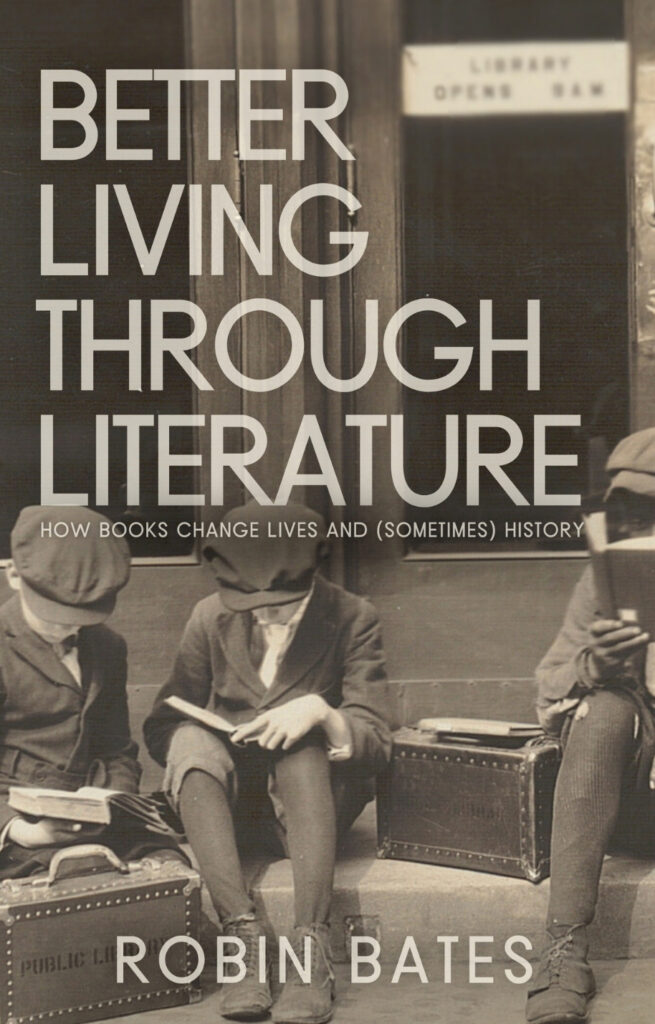
I’ve written so many times about the accidental drowning death of my son Justin—most thoroughly in Better Living through Literature—that I won’t repeat what I’ve said. Instead, I use today’s “a life lived in literature” installment to reflect back on aspects I haven’t touched on before, some of which are unbearably painful but which may provide solace for those who have experienced similar tragedies.

When I was writing my book chapter on the death, I realized I was following in the footsteps of someone who had also turned to literature in his darkest moment. When Dante is “lost in a dark wood”—which is to say, experiencing unbearable depression, brought on both by his exile from his beloved Florence and a deep crisis of faith—he turned to a literary work that would serve as the springboard for The Divine Comedy. In Virgil’s Aeneid, Dante saw the protagonist visiting the underworld to determine his next steps, and that journey became the model for Dante’s own journey through Inferno, Purgatory, and Paradise. After describing the suffering experienced by those who have turned their backs on God, Dante concludes with an ecstatic vision of those who open their hearts to “the Love that moves the sun and all the stars.”

While I didn’t think of Dante at the time at the time of Justin’s death, I was writing a book on how classic works could transform lives. One of these works was Beowulf, and as I reeled from the tragedy, I found myself using the 8th century Anglo-Saxon epic to deal with my own dark wood. I too discovered that an underworld journey gave me something to hold on to, that being Beowulf’s journey to the underwater cave of Grendel’s Mother. 

I had already identified that journey as a grappling with grief, and now I had my own grief to deal with. To be specific, the revenge attack by Grendel’s Mother has killed Hrothgar’s best friend Aeschere, and the king, in his grief, is in danger of giving up all hope and withdrawing from the world. (Other kings in the poem follow this path, essentially becoming human dragons.) Beowulf, who represents healthy ways of overcoming threats to society, faces grief fully rather than avoiding it, diving into the monster-infested waters and entering the heart of the emotion.

As I reread the passage, I saw myself on grief’s journey and felt a small degree of comfort in finding that my situation had been articulated. Suddenly I wasn’t just dealing with amorphous confusion. Nietzsche has written that “man would sooner have the void for his purpose than be void of purpose,” and I felt something similar: better to be grappling with something I could imagine having a shape than a shapeless void. If grief is a heroic journey that is thrust on one, then its challenges can be recognized and fought and perhaps even be overcome. I resolved to open myself to this journey, allowing it to take me wherever it would. And if, at the heart of the grief, I could find a Beowulfian sword that I could wield—better that than being swallowed utterly– I would wield that sword. The sword, I would come to conclude, was my commitment to my family, my college colleagues and students, and my community, all of which demanded that I stay strong.

Poetry, in short, gave me narratives and images through which to process the turmoil I was experiencing. Occasionally it even offered me more, as when I realized I was in danger of becoming a Beowulfian dragon, withdrawing into my study/cave and developing a hard exterior. 

There were two moments that were so painful that I haven’t talked about them until now but which, again, literature helped me negotiate.  When I was sitting on the bluff overlooking the St. Mary’s River and watching divers search for Justin’s body, some part of my brain said something so abhorrent that I wondered what it said about me. Before I reveal it, some context is necessary.

About a year before he died Justin , who was engaged in intense spiritual search, had started exploring whether the certainty he sought lay in a narrow fundamentalism. The church he found was highly judgmental, condemning to hell any who did not practice Christianity the way that it did, and Justin for a while was entranced by the power this seemed to give him: he could use it as a means of rebelling against his parents and as a way of irritating our second son. Now, I don’t think that Justin would have stayed with this church for long. He was too generous a soul to remain exclusionary. Indeed, by the end of the year I saw signs that he was starting to modulate his beliefs. But for several months he was (not to mince words) an asshole.

Nevertheless, whenever I saw him around campus, I would give him a hug. Though he had become a prickly tree, I figured I could duck under the branches that poked me and make connection with the core of his being. Still, dealing with him at this phase in his life was not easy. 

The thought that crossed my mind as I sat on the bluff was, “If that is Justin’s body in the water, then at least I won’t have to deal with his fundamentalism anymore.”

Why would I focus on that rather than on the pain of loss? A literary instance of character in a similar situation would eventually help me answer that question. When I was in high school, my father gave me André Malraux’s violent 1933 novel La Condition Humaine (Man’s Fate), which is about Chinese communists fighting against Chiang Kai-shek’s Kuomintang in a doomed 1927 insurrection. One of the sympathizers is a Belgian phonograph seller named Hemmelrich, who doesn’t join in the fighting in part because he is timid, in part because he has a sick child at home. Instead, he offers his shop as a meeting place for the insurrectionists. When the Kuomintang blows it up, killing his family, he has conflicting emotions:

The shop had been “cleaned” with grenades, like a trench. The woman was slumped against the counter, almost crouching, her whole chest the color of a wound. In a corner, a child’s arm; the hand, thus isolated, appeared even smaller. “If only they are dead!” thought Hemmelrich. He was especially afraid of having to stand by and watch a slow death, powerless, only able to suffer, as usual…

A few moments later, standing amidst the carnage, he examines his feelings:

He knew he was suffering, but a halo of indifference surrounded his grief, the indifference which follows upon an illness or a blow in the head. No grief would have surprised him: on the whole, fate this time had dealt him a better blow than usual. Death did not astonish him: it was no worse than life. The thing that appalled him was the thought that behind this door there had been as much suffering as there was blood. This time, however, destiny had played badly: by tearing from him everything he still possessed, it freed him.

It is the appalling idea that death offers a kind of freedom that I recognized in my own case. Malraux continues on:

He entered the shop again, shut the door. In spite of the catastrophe, of the sensation of having the ground give way under his feet, leaving nothing but empty space, he could not banish from his mind the atrocious, weighty, profound joy of liberation….[N]ow he was no longer impotent. Now, he too could kill. It came to him suddenly that life was not the only mode of contact between human beings, that it was not even the best, that he could know them, love them, possess them more completely in vengeance than in life. Again he became aware of his shoe-soles, stuck to the floor, and tottered: muscles were not aided by thought. But an intense exaltation was overwhelming him, the most powerful that he had ever know; he abandoned himself to this frightful intoxication with entire consent.

Obviously, my situation was different: I certainly was never intoxicated and there was no element of revenge. Nevertheless, examining the passage provides insight. Part of Himmelrich’s response, and my own, can be chalked up to shock. The mind scrambles to protect itself against the full horror of the moment, and if something positive can be found, then the mind decides the impact will be less. In his case, he now has permission to fully engage in the revolution. Death has ripped away all restraints.

It also alerts him to how powerless he had felt in the face of his sick child’s suffering. When the boy was alive, he felt guilty for resenting him and now all that is gone. In fact, he thinks he can express his love without reservation through revenge. Little wonder that he feels liberated and exhilarated. Death, like the grenades, has “cleaned” everything up. It will take time for the shock to lessen and for him to fully feel the loss.

So maybe I thought what I did in a flash of anger at how Justin’s death was tearing me apart: if I could love him less, if I found a way to distance myself from him, then maybe I wouldn’t be in such agony. As it was, I couldn’t handle the full shock all at once.

My thought was only momentary and gave way to others more socially acceptable. Another thought also bound up with powerlessness, however, stayed with me far longer. The year before he died, we had had to withdraw Justin from Grinnell because Julia had lost her job. (St. Mary’s, by contrast, was affordable because he received tuition remission.) For three years I was plagued by guilt for having brought him back to Maryland. If we had figured out a way to send him back to Grinnell, I thought incessantly, he would still be alive.

A Lucille Clifton poem gave me insight and ultimately relief, which seems somewhat appropriate since she had mentored Justin in a class—I remember her coaching him through intense distress that, sensitive soul that he was, he was experiencing about racism–and also came to my house to offer condolences after he died. Her “poem with a rhyme in it” addresses guilt, specifically Black guilt. It is addressed to “black people”:

black people we live in the land
of ones who have cut off their own
two hands
and cannot pick up the strings
connecting them to their lives
who cannot touch     whose things
have turned into planets more dangerous
than mars
but i have listened this long dark night
to the stars
black people and though the ground
be bitter as salt
they say it is not our fault

When first reading the poem, I wondered why African Americans would need reassurance on this matter. Given America’s horrific history of racism, why must she tell them (and tell herself) that their “bitter as salt” lives are not their fault. I came to realize, however, that as painful as guilt is, acknowledging one’s powerlessness is even more painful. With guilt we feel that we could have achieved a different outcome if only we had behaved differently. If we are powerless, however, there’s nothing we could have done.

Clifton’s final line—“[the stars] say it is not our fault”—I found immensely consoling. Even if we had sent Justin back to Grinnell, bad things could still have happened. After all, young people die in Iowa as well as in Maryland. What had tormented me, I came to realize, was my powerlessness in the face of death. I couldn’t bear to think of myself as stripped of all agency.

Literature cannot answer all the existential questions posed by death but it at least gives us a foothold on that treacherous rock face. Without literature, I would have thrashed around even more blindly than I did following Justin’s drowning.

Past Installments of A Life Lived in Literature
A Life Lived in Literature: How It All Began (Sept. 5, 2025)
Early Reading Memories (Sept. 12, 2025)
Childhood Confusion: Reading to the Rescue (Sept. 19, 2025)
Confronting Segregation (Sept. 26, 2025)
School Reading vs. Real Reading (Oct. 10, 2025)
Childhood in Paris (Oct. 17, 2025)
My Time at Sewanee Military Academy (Oct. 24, 2025)
Existentialism for High School Seniors (Oct. 31, 2025)
Why I Majored in History, Not English (Nov. 7, 2025)
My College Search for Authenticity (Nov. 14, 2025)
On D. H. Lawrence and a Sexual Awakening (Nov. 21, 2025)
My Life as a Bildungsroman (Nov. 28, 2025)
Grad School: Literary Baptism by Fire (Dec. 5, 2025)
Early Scenes from a Marriage (Dec. 12, 2025)
Bringing Up Baby in Grad School (Dec. 19, 2025)
Grappling with Racism (Jan. 2, 2026)
Journal of a Young Teacher (Jan. 16, 2026)
Teaching and Reading in Yugoslavia (Jan. 23, 2026)
Life at 40: Barely Controlled Chaos (Jan 30, 2026)
From Secular Humanist to Christian Believer (Feb. 6 2025)
Looking Back at a Lifetime Together (Feb. 13, 2026)
To Ljubljana with Love (Feb. 20, 2026)
Forging a Separate Identity from My Father (Feb. 27, 2026)
“Better Living” Emerged from a Midnight Epiphany (March 6, 2026)
The Golden Years before Tragedy Struck (March 13, 2026)
Using Lit to Grapple with a Death (March 20, 2026)

Posted in Uncategorized | Comments closed

Sad Thoughts in Early Spring

John Constable, The Cornfield (1826)

Thursday

As tomorrow is the official first day of spring, here’s a blog post by my son on William Wordsworth’s “Lines Written in Early Spring.” Tobias Wilson-Bates is an English professor at George Gwinnett College who recently started the practice of “reading poetry each day and finding a few lines to chew on.” (I’ve reported on his blog here.) Toby is an extraordinarily sensitive reader, and I always learn something from these literary excursions. To date he’s written short posts on John Keats, Oscar Wilde, John Milton, Elizabeth Barrett Browning, Christina Rossetti, Lucille Clifton, Percy Shelley, and this one on Wordsworth. You can find his posts here. I’ve included the entire poem at the end of the post.

Toby has fallen off in the last couple of weeks because he’s frantically trying to complete his book on Victorian time machines before his semester-long sabbatical runs out. Here’s what he has to say about Wordsworth’s spring poem.

By Tobias Wilson-Bates at PhD Hurt Brain 

To her fair works did Nature link
The human soul that through me ran;
And much it grieved my heart to think
What man has made of man.

One of the poems and lines that I return to most frequently is Wordsworth’s “Lines Written in Early Spring” (1798). Especially these days as the news and social media is inundated with nearly unthinkable acts of cruelty at seemingly every scale internationally and domestically. I won’t enumerate them here although they quickly multiply in my head because I assume that the feeling is all too familiar to anyone reading this. 

Do we not have reason to lament “what man has made of man”?

However, I think the poem is saying something more and different from simply “what the fuck??” because Wordworth builds to this last statement each time he makes it. 

First, a personified female Nature links the poet’s soul to his body, and, presumably, gives that body the capacity to feel and grieve atrocity/cruelty. Then it sets such acts in motion for the poet to experience them. It is not merely that man has done terrible things to man, but that to be man seems to be made for such cruelty. 

The opening stanza really platforms the odd left turn of the poem’s direction:

I heard a thousand blended notes,
While in a grove I sate reclined,
In that sweet mood when pleasant thoughts
Bring sad thoughts to the mind.

The poetic narrator seems to be in a pretty sweet situation! Listening to a thousand blended notes while reclined in a grove?! (yes, please!), but nonetheless follows a natural progression from “sweet mood” and “pleasant thoughts” to “sad thoughts.”

At that point we are off to the races at considering how shit everything has turned out. I say this in part because I feel this pattern mirrors in some ways the experience of modern social media. Connected to people in a sometimes awe-inspiring international community of thinkers (a thousand blended ones perhaps), we nonetheless often default to communal grief and anger. 

I have no particular judgment on the matter as good or bad. I think it’s important to recognize the suffering of vulnerable people and the cruelty of the powerful, but I also find participating in it at times unbearable because it’s just too hard to live for long in that torrent of sadness. As with so much of Wordsworth, I am left with a kind of ambivalence at the Wordsworthian narrator, who often appears to offer a coherent criticism, only to retreat from view when the poem’s themes become too tangled to offer a full politics (which is, I think, what ultimately soured Percy Shelley on Wordsworth’s Romanticism). 

I will continue chewing on this poem for the rest of my life. Perhaps I will come to some more coherent conclusions.

Lines Written in Early Spring
By William Wordsworth

I heard a thousand blended notes,
While in a grove I sate reclined,
In that sweet mood when pleasant thoughts
Bring sad thoughts to the mind.

To her fair works did Nature link
The human soul that through me ran;
And much it grieved my heart to think
What man has made of man.

Through primrose tufts, in that green bower,
The periwinkle trailed its wreaths;
And ’tis my faith that every flower
Enjoys the air it breathes.

The birds around me hopped and played,
Their thoughts I cannot measure:—
But the least motion which they made
It seemed a thrill of pleasure.

The budding twigs spread out their fan,
To catch the breezy air;
And I must think, do all I can,
That there was pleasure there.

If this belief from heaven be sent,
If such be Nature’s holy plan,
Have I not reason to lament
What man has made of man?

Posted in Uncategorized | Tagged , , , | Comments closed

The Taming of the Electorate

Taylor and Burton in The Taming of the Shrew

Wednesday

If you wish to receive daily emails of these posts, you can either subscribe to my Substack blog at https://betterlivingthroughbeowulf.substack.com or send me an email at rrbates1951 at gmail dot com and I will put you on my mailing list. You can also correspond with me privately at the latter address. Of course, I will maintain full confidentiality.

My friend Glenda Funk, former high school English teacher extraordinaire, recently compared Trump’s reordering of reality to Petruchio’s gaslighting in Taming of the Shrew, and I’m only sorry that I didn’t think of this myself. Glenda recalled Shakespeare’s comedy after seeing Trump confuse his current press secretary (“Kkkaroline Leavitt,” as Glenda calls her) with his former one (Kellyanne Conway). Rather than correct him, Leavitt goes along with it, just as Trump’s cabinet secretaries wear, without open complaint, Trump’s gift of ill-fitting new shoes. 

Petruchio, of course, gaslights the shrewish Kate in order to tame her, and by the end of the play she is so submissive that she chastises other women for not catering to their husbands’ whimsical demands. “Thy husband is thy lord, thy life, thy keeper, thy head, thy sovereign,” she tells them.

Petruchio not only gaslights but also employs starvation, sleep deprivation (“Last night she slept not, nor to-night she shall not”), and humiliation, which is to say tactics used by torturers to break down their prisoners.  Then, in the passage Glenda quotes, he assaults her hold on reality itself:

PETRUCHIO Come on, i’ God’s name; once more toward our father’s.
Good Lord, how bright and goodly shines the moon!
KATHARINA The moon! the sun: it is not moonlight now.
PETRUCHIO I say it is the moon that shines so bright.
KATHARINA I know it is the sun that shines so bright.
PETRUCHIO Now, by my mother’s son, and that’s myself,
It shall be moon, or star, or what I list,
Or ere I journey to your father’s house.
Go on, and fetch our horses back again.
Evermore cross’d and cross’d; nothing but cross’d!

Kate’s surrender comes shortly after:

HORTENSIO Say as he says, or we shall never go.
KATHARINA Forward, I pray, since we have come so far,
And be it moon, or sun, or what you please:
An if you please to call it a rush-candle,
Henceforth I vow it shall be so for me.
PETRUCHIO I say it is the moon.
KATHARINA I know it is the moon.
PETRUCHIO Nay, then you lie: it is the blessed sun.
KATHARINA Then, God be bless’d, it is the blessed sun:
But sun it is not, when you say it is not;
And the moon changes even as your mind.
What you will have it named, even that it is;
And so it shall be so for Katharina.

A couple of other tests follow in which Kate is forced to humiliate herself. Petruchio then wins a dick measuring contest with the other newly married husbands in the play by demonstrating that he has the most control over his wife.

Glenda applies the play to Trump’s cabinet officials, but we are all at risk. In the face of the Trump administration’s incessant lying, there’s a temptation to throw up our hands and say, “Whatever.” Insist enough that the sun is the moon—or that the 2020 election was stolen—and sooner or later a certain portion of the electorate goes along. Or how about this:

–I say it is a war.
–I know it is a war.
–Nay, then you lie: it is a mere excursion.
–Then, God be bless’d it is a blessed excursion.
But war it is not when you say it is not;
And excursion changes even as your mind.
What you will have it named, even that it is;
And so it shall be so for MAGA.

Let me now apply the play in a manner that makes it even more relevant to our time. To set this up, I turn to a brilliant commentary this past weekend by MS NOW’s Ali Velshi. It has to do with how the Heritage Foundation (remember Project 2025?) and the fascist right is going after independent women: 

Do not underestimate the determination of this movement or its hostility toward liberal values and the expansion of democratic rights for groups that they see as outsiders. And they see women as outsiders. Their latest document, Saving America by Saving the Family, a foundation for the next 250 years.

“You got to give it to these people,” he adds sarcastically. “They think big.”

While the purported goal of the fascist right is to reverse the country’s declining birth rate, Velshi says their proposed solutions reveal their real agenda. Since one can’t force women to physically have babies—although banning abortion and restricting birth control can help with that—Velshi says that, instead, 

You cut off opportunities outside the home. You make the public sphere hostile to women’s independence. You create a system where the only viable path left for women is dependence on a man for survival.

He then cites conservative economist Scott Yenner of Heritage, who calls universities “citadels of our gynecocracy” (a society run by women) and believes that women should be pushed out of “male” jobs. The following Yenner quote, from a speech delivered at the 2021 National Conservatism Conference, now has me thinking of Kate:

Such medicated, quarrelsome and meddlesome women gain their meaning through their seeming participation in the global project. They are agents of the new world, but not new life. Such women are now the backbone of every left-wing cosmopolitan party in the western world, from the Greens in Germany to the Democratic Party in America.

And if our ideal woman is a childless media scold or a barren bureaucratic apparatchik, there is no question whether we can have a future. We can’t. There is a question of whether we deserve one.

So the problem is medicated, quarrelsome, meddlesome scolds. Time for some Petruchian discipline.

Taming of the Shrew has long been for me the most troubling Shakespeare play, more so even than Merchant of Venice. A few years back I saw a production of the latter at the Staunton, Virginia Shakespeare Theater and realized it can be staged to capture the ugliness of Jew baiting. I’m not sure, however, that Taming captures the ugliness of sexism. Shakespeare, who otherwise is brilliant at honoring the full humanity of his characters—even Shylock–seems to have a bit too much fun in seeing Kate cut down to size.

I have seen feminist productions suggesting that Kate Petruchio’s accomplice—sometimes they exchange a secret wink as her husbands strips his male companions of their gold—but I’ve never found this convincing. Rather, Kate appears to be fulfilling the Heritage wet dream of a tradwife in her closing speech:

I am ashamed that women are so simple
To offer war where they should kneel for peace;
Or seek for rule, supremacy and sway,
When they are bound to serve, love and obey.
Why are our bodies soft and weak and smooth,
Unapt to toil and trouble in the world,
But that our soft conditions and our hearts
Should well agree with our external parts?
But now I see our lances are but straws,

Our strength as weak, our weakness past compare,
That seeming to be most which we indeed least are.
Then vail your stomachs, for it is no boot,
And place your hands below your husband’s foot:
In token of which duty, if he please,
My hand is ready; may it do him ease.

I do remember thinking—this when I listened to the play on records as a 12-year-old–that the men in the play are nothing to write home about. It’s as though, through Kate’s words, we are given an idealized portrayal of manhood, only to be presented with strutting and preening Pete Hegseths. 

When your whole sense of self-respect is reliant on dominating women, you come across as pathetic rather than strong. Riffing off of Hamlet, one could say, “Frailty, thy name is male ego.”

Posted in Uncategorized | Tagged , , , , , | Comments closed

A Kavanagh Poem for St. Patrick’s Day

Jean-François Millet, The Sower

Tuesday – St. Patrick’s Day

When Julia and I visited Ireland and Northern Ireland three years ago, we carried away many treasures. One was new knowledge about family origins: Julia discovered that her mother was descended from French Huguenots, who were brought to Ireland by the British in the 17th century to offset the Catholics (boo!) and became flax farmers in the Magherafelt region. Another was my discovery of Patrick Kavanagh’s poetry.

Although I had long known that the Irish hit above their weight when it comes to world class literature, I didn’t know about Kavanagh, who in some ways works as a counter to William Butler Yeats. Whereas Yeats loves Celtic legends and fairy lore, Kavanagh is more down to earth. Born and raised in the rural county of Monaghan, he depicts the lives of Irish farmers, whom he does not romanticize. Indeed, he himself felt trapped growing up there, as he reports in “Stony Grey Soil”:

Oh stony grey soil of Monaghan,
The laugh from my love you thieved; 
You took the gay child of my passion
And gave me your clod-conceived.

Yet for all his complaints, he acknowledges in the final stanza that Monaghan gave him his poems, which helped him escape and become a beloved poet: 

Mullahinsha, Drummeril, Black Shanco–
Wherever I turn I see
In the stony grey soil of Monaghan
Dead loves that were born for me.

Although believing that rural life stole laughter and passion, Kavanagh dials back the bitterness in “The Hired Boy,” where he finds a “leg-dragged boy” achieving a kind of wisdom in a life of drudgery. The poem reminds me of how some of the high Romantics, Wordsworth especially, found worth in the lives of common folk. Kavanagh reports that the hired boy learned 

how to be satisfied with the little 
The destiny masters give 
To the beasts of the tillage country…

It may not be the life that Kavanagh wanted for himself, but he finds a certain dignity in it. “To be damned and yet to live.”

The Hired Boy

Let me be no wiser than the dull  
And leg-dragged boy who wrought  
For John Maguire in Donaghmoyne  
With never a vain thought  
For fortune waiting round the next
Blind turning of life’s lane;  
In dreams he never married a lady  
To be dream-divorced again.  

He knew what he wanted to know –  
How the best potatoes are grown
And how to put flesh on a York pig’s back  
And clay on a hilly bone.  
And how to be satisfied with the little 
The destiny masters give 
To the beasts of the tillage country –
To be damned and yet to live.

Happy St. Patrick’s Day.

Posted in Uncategorized | Tagged , , , | Comments closed

Death’s Untimely Frost

Monday

After two days of balmy 70-degree weather here in southern Tennessee, temperatures will be plummeting into the twenties, promising to wreak havoc on the blossoms that are bursting out all over. I’m not sure if this is a blackberry, dogwood, or redbud winter—maybe all three—but I always find myself reciting a stanza from Robert Burns ‘s “Highland Mary” at such moments.

To set up the stanza, the poem opens in the high Romantic style with fertility imagery running amuck:

Ye banks, and braes, and streams around 
The castle o’ Montgomery, 
Green be your woods, and fair your flowers, 
Your waters never drumlie! 
There Simmer first unfald her robes, 
And there the langest tarry: 
For there I took the last Fareweel 
O’ my sweet Highland Mary.

How sweetly bloom’d the gay, green birk, 
How rich the hawthorn’s blossom; 
As underneath their fragrant shade, 
I clasp’d her to my bosom! 
The golden Hours, on angel wings, 
Flew o’er me and my Dearie; 
For dear to me as light and life 
Was my sweet Highland Mary.

Then comes the stanza that I use to articulate the turn in the weather:

Wi’ mony a vow, and lock’d embrace, 
Our parting was fu’ tender; 
And pledging aft to meet again, 
We tore oursels asunder: 
But Oh! fell Death’s untimely frost, 
That nipt my Flower sae early! 
Now green’s the sod, and cauld’s the clay, 
That wraps my Highland Mary!

Burns couldn’t get blunter with “death’s untimely frost” and the image of Mary wrapped in cold clay. Nor do things get any better in the following stanza as the poet gets unnervingly specific:

O pale, pale now, those rosy lips,
I aft hae kiss’d sae fondly! 
And clos’d for ay the sparkling glance, 
That dwalt on me sae kindly! 
And mouldering now in silent dust, 
That heart that lo’ed me dearly!

The poet tries to end on an upbeat note, although I am doubtful whether this graphic descent into the grave can be offset so easily. I am reminded of Charlotte’s critique of the poet in Jane Austen’s Sanditon. First the concluding couplet:

But still within my bosom’s core 
Shall live my Highland Mary.

And now for Charlotte’s assessment. She is responding to a rake, who is rhapsodizing about Burns in an attempt to seduce her:

“I have read several of Burns’s poems with great delight,” said Charlotte as soon as she had time to speak. “But I am not poetic enough to separate a man’s poetry entirely from his character; and poor Burns’s known irregularities greatly interrupt my enjoyment of his lines. I have difficulty in depending on the truth of his feelings as a lover. I have not faith in the sincerity of the affections of a man of his description. He felt and he wrote and he forgot.

So should all the dead blossoms that we will be witnessing by the end of the week feel consoled by my reassurance that they will continue to live in my bosom’s core? Hmm.

Posted in Uncategorized | Tagged , , | Comments closed

The Opening of Eyes Long Closed

El Greco, Jesus Healing the Blind

Sunday

The indispensable blog Journey with Jesus has given me today’s poem, David Whyte’s “The Opening of Eyes.” Dan Clendenin has chosen it because seeing, both literal and metaphorical, is the subject of today’s Gospel reading, which is about Jesus healing the blind man. It concludes with Jesus chastising the pharisees, who have been berating the man for testifying about the miracle:

Jesus heard that they had driven him out, and when he found him, he said, “Do you believe in the Son of Man?” He answered, “And who is he, sir? Tell me, so that I may believe in him.” Jesus said to him, “You have seen him, and the one speaking with you is he.” He said, “Lord, I believe.” And he worshiped him. Jesus said, “I came into this world for judgment so that those who do not see may see, and those who do see may become blind.” Some of the Pharisees near him heard this and said to him, “Surely we are not blind, are we?” Jesus said to them, “If you were blind, you would not have sin. But now that you say, ‘We see,’ your sin remains.”

Here’s Whyte’s poem, in which the speaker realizes that the kingdom of God has always been here and now. If we pay attention, we will see that the bush is always burning and that God is always speaking to us. We think that God is elsewhere but, when we take off our shoes to enter heaven, we find that God is the ground on which we are already standing. We have but to open our eyes—truly open them–to understand this.

The Opening of Eyes
By David Whyte

That day I saw beneath dark clouds 
the passing light over the water
and I heard the voice of the world speak out,
I knew then, as I had before
life is no passing memory of what has been
nor the remaining pages in a great book
waiting to be read.

It is the opening of eyes long closed.
It is the vision of far off things
seen for the silence they hold.
It is the heart after years
of secret conversing
speaking out loud in the clear air.

It is Moses in the desert
fallen to his knees before the lit bush.
It is the man throwing away his shoes
as if to enter heaven
and finding himself astonished,
opened at last,
fallen in love with solid ground.

Posted in Uncategorized | Tagged , , | Comments closed

The Golden Years before Tragedy Struck

Life in the Edwardian era

Friday

I view the years between 1995 and 2000 as some Brits view the Edwardian golden age, which is to say, a period of idyllic quiet before all hell breaks loose and the world is inalterably changed. For them, the golden era was the period ranging from the death of Victoria in 1901 to the outbreak of World War I. In our case, it was the return from Slovenia in the fall of 1995 to the death of Justin on April 30, 2000.

If the age seemed golden for the Brits, it was partly out of nostalgia for pre-war England. But it’s also true that 1901-1914 was a rich period for literature, including many of the children’s classics I grew up with and loved. These included J.M. Barrie’s Peter Pan, Arthur Conan Doyle’s Lost World and many of his Sherlock Holmes stories, Kenneth Grahame’s Wind in the Willows, Rudyard Kipling’s Just So Stories (The Jungle Books were published in the previous decade), E. Nesbit’s Bastable Books and The Railway Children, Beatrix Potter’s animal books (beginning with Peter Rabbit), George Bernard Shaw’s Androcles and the Lion and Pygmalion, and P.G. Wodehouse’s Wooster and Jeeves. So the time was indeed golden.

For me, the final decade of the 20th century was also idyllic in fact, not just in retrospect, because I loved being the father of three teenage boys. All three were excellent athletes (Justin and Darien in soccer and baseball, Toby in soccer and lacrosse) so we were constantly attending sporting events where our boys shone. But I loved even more seeing them exploring ideas and stepping into their identities. We could talk about ideas at a whole new level.

I also got to see Justin and Darien star in Willie Wonka and the Chocolate Factory (Justin as the tuxedoed narrator who holds the show together, Darien as Charlie Bucket) and Toby captivate his school with a very entertaining feature film

The years were not without drama. Julia had been forced to drop out of her PhD program—she took on an overly ambitious dissertation topic—and then found that returning to public school teaching did not work out. The result was a sudden drop in income, which forced us to pull Justin out of Grinnell to attend St. Mary’s instead. It so happened that all three of our kids went to the college where I was teaching, and I was reassured that their education didn’t appear to suffer from their not having attended more nationally known schools. Still, it was a disappointment for Justin, and I was haunted for years that he might still be alive if he hadn’t returned to Maryland.

I realize I haven’t talked much about “my life in literature” in this post so I’ll mention one thing. In last Friday’s post I mentioned the epiphany I experienced about my new writing project, but I had a stumble before I got there. Returning from Slovenia, I tried out a very utilitarian approach to literature with a Senior Seminar class, directly asking them how literature could change their lives. It proved a failure as I received the lowest course evaluations in my life—2’s instead of my normal 4’s and 5’s—and my performance meant that my application for full professor was turned down, despite success in other classes, a series of significant publications, and non-stop service to the college. It was painful but ultimately instructive. 

What I learned was that, when literature is subordinated to an agenda—even when the agenda is the students’ lives—something precious is lost. There has to be a side of literature that seems agenda-free, where delight rather than utility is the major focus. Or rather, there has to be a balance, as the Roman poet Horace, Sir Philip Sidney, and countless other thinkers have contended over the ages. A work that doesn’t instruct can seem frivolous but a work that does can appear tiresome and dull (“good for you”). I got the balance wrong in that class but came up with the necessary correction in subsequent classes.

And so we come to the terrible moment that I have written about in my book and in numerous blog posts. Before I leave this idyllic period, however, allow me to situate each of our family. Justin, who is 6’3” with a beautiful shock of blond hair, is a junior majoring in religious studies. He’s going through a fundamentalist phase—I know it would have just been a phase because he had too generous a spirit to stay judgmental for long but judgmental he certainly was at that time—and also singing in a mostly Black gospel choir and playing on the baseball team. Darien, meanwhile, has decided to skip his senior year of high school and has thrown himself into the St. Mary’s theater program. His advisor is Michael Ellis-Tolaydo, who when not at St. Mary’s is acting regularly in Washington, D.C. theater and knows how to get the best out of his students. Darien has also made the St. Mary’s soccer team.

Toby, meanwhile, is at the core of a remarkable group of high school boys. While not the straight A student his brothers have been—when he wants to be he can be stellar, as he is in English—but he doesn’t feel the need to excel in everything. He has a sense of humor that everyone who knows him falls in love with. (This continues to be true today, and as Tobias Wilson-Bates @phdhurtbrain on Bluesky he has a large following of people who appreciate his wit.) Having two older brothers who tended to suck up all the oxygen in the room, he has found his own identity.

Julia, meanwhile, has found a new job running a local community organization, while I have forward momentum on my book and am team-teaching a fascinating course on “Madness and Literature.”

All is well. And then, suddenly, it isn’t.

Past Installments of A Life Lived in Literature
A Life Lived in Literature: How It All Began (Sept. 5, 2025)
Early Reading Memories (Sept. 12, 2025)
Childhood Confusion: Reading to the Rescue (Sept. 19, 2025)
Confronting Segregation (Sept. 26, 2025)
School Reading vs. Real Reading (Oct. 10, 2025)
Childhood in Paris (Oct. 17, 2025)
My Time at Sewanee Military Academy (Oct. 24, 2025)
Existentialism for High School Seniors (Oct. 31, 2025)
Why I Majored in History, Not English (Nov. 7, 2025)
My College Search for Authenticity (Nov. 14, 2025)
On D. H. Lawrence and a Sexual Awakening (Nov. 21, 2025)
My Life as a Bildungsroman (Nov. 28, 2025)
Grad School: Literary Baptism by Fire (Dec. 5, 2025)
Early Scenes from a Marriage (Dec. 12, 2025)
Bringing Up Baby in Grad School (Dec. 19, 2025)
Grappling with Racism (Jan. 2, 2026)
Journal of a Young Teacher (Jan. 16, 2026)
Teaching and Reading in Yugoslavia (Jan. 23, 2026)
Life at 40: Barely Controlled Chaos (Jan 30, 2026)
From Secular Humanist to Christian Believer (Feb. 6 2025)
Looking Back at a Lifetime Together (Feb. 13, 2026)
To Ljubljana with Love (Feb. 20, 2026)
Forging a Separate Identity from My Father (Feb. 27, 2026)
“Better Living” Emerged from a Midnight Epiphany (March 6, 2026)
The Golden Years before Tragedy Struck (March 13, 2026)

Posted in Uncategorized | Comments closed

  • Sign up for my weekly newsletter